Theresa may

Government getting jittery about ‘sufficient progress’

Theresa May is not one of those politicians who enjoys lengthy conversation over lunch. But her lunch on Monday with Jean-Claude Juncker on Monday will be one of the most important lunches in recent British history, I say in The Sun this morning. Earlier in the week, there was a growing confidence in Whitehall that the lunch would go well, that Juncker would throw his weight behind ‘sufficient progress’ and the UK would formally get there at the December EU Council. But there has been an outbreak of the jitters in the last day or so. I am informed that we are a ‘million miles from this being a done deal’. The reasons for this skittishness is, as one source explains, that the government is ‘mindful of the lesson of October where we were burnt’.

The Spectator Podcast: For richer, for poorer

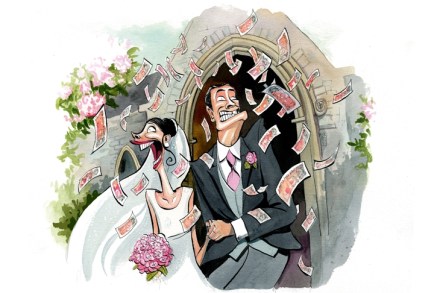
On this week’s episode we’ll be discussing whether marriage is becoming an elite institution. We’ll also be wondering if the Tory glass is half full or half empty, and lamenting the loss of Britain’s tiny train lines. First up: is marriage becoming the preserve of the rich? In this week's magazine, Ed West asks whether Prince Harry's presumably lavish nuptials will be the latest signal that marriage is becoming an increasingly rarefied institution. What can be done to reverse this slump? And ought we to be worrying about traditional unions in the 21st Century? To discuss, we were joined on the podcast by Frank Young, Head of the Family Policy Unit at the Centre for Social Justice, and Rosie Wilby, author of Is Monogamy Dead?

This EU ‘divorce bill’ is more like a ransom

A  ‘bill’ is not commonly subject to negotiation. It arrives after a customer has contracted for the purchase of goods or services, whose price — with the unique exception of American health care bills, which are more like muggings by gangs on mopeds — has been established in advance. For the average upstanding Briton, a bill is not a starting point, subject to haggling. It is something you pay. The Lisbon Treaty’s Article 50 makes no mention of paying financial liabilities in order to leave the EU. Once the post--referendum conversation turned immediately to the ‘divorce bill’, the May government’s big mistake from the off was bickering about its size. A better opening strategy would run not ‘How much?

Theresa May’s inner Cabinet is considering a role for the ECJ after Brexit

‘It’ll be curtains for the process’ if the Brexit talks don’t move on to trade and transition in December, according to one of those familiar with the UK government’s negotiating strategy. In Downing Street, there is a feeling that Theresa May has twice made significant compromises—in the Florence speech and the enhanced financial offer the inner Cabinet agreed on Monday—and if the EU again pockets the concession and says still more is needed, it’ll be hard to see how the UK can stay at the table. Even one of the Cabinet Ministers most keen on a deal with the EU says that ‘we have to get through in December’.

Jeremy Corbyn says the B word during PMQs

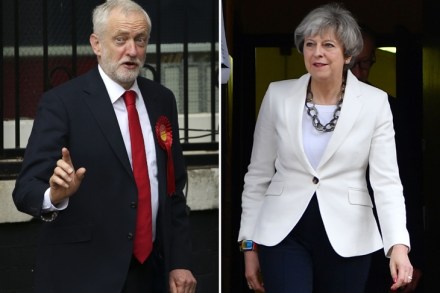
Jeremy Corbyn rarely talks about Brexit at Prime Minister’s Questions, and it is interesting that he chose today’s session, which will get little attention as a result of the Budget, to probe Theresa May on the matter. The Labour leader did have a good stint, quoting a number of European negotiators, Tory backbenchers and Cabinet Ministers who have made comments to the effect that the British government doesn’t know what it is doing on Brexit. He also accused the Tories of blocking measures protecting workers’ rights and acknowledging that animals are sentient beings. But Theresa May was on good form, too, continuing to appear as though she is regaining her confidence somewhat.

The riddle of Theresa May’s Russia policy

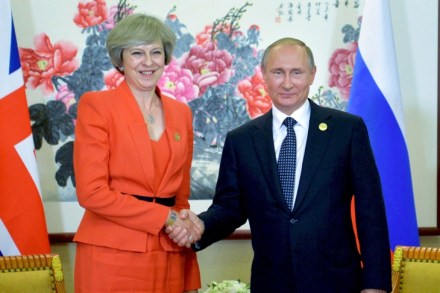
It is just a week since Theresa May used her Mansion House speech to launch a broadside on Russia. During a wide-ranging survey of the international horizon, it was Russia she singled out for special criticism and it was her Russia attack that attracted (and was surely intended to attract) the headlines. Just a reminder of what she said. Russia was 'chief' among those who seek to undermine 'our open economies and free societies'. Not only had it annexed Crimea illegally, but it had fomented conflict in the Donbas, repeatedly violated the national airspace of several European countries, and waged a 'sustained campaign of cyber espionage and disruption'. And this was the climax: 'It is seeking to weaponise information.

The month that will determine Theresa May’s future

Three events in the next four weeks will determine Theresa May’s future as Prime Minister, I say in The Sun today. If May goes 0 for 3 on the Budget, the Damian Green inquiry and the EU Council then she’ll truly be on the skids. But if the Budget doesn’t unravel, Damian Green is cleared and she gets ‘sufficient progress’ to move on to trade and transition in December then she’ll be in the strongest position she’s been in since the election. The Budget on Wednesday is the first of these tests. As I write in the magazine this week, so many Tory political tensions abound right now that it’ll be almost miraculous if it doesn’t go wrong. Not all of the blame for this can be pinned on Philip Hammond’s political tin ear.

Theresa May’s weakness proves costly in the Brexit negotiations

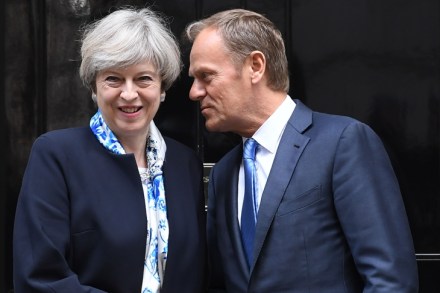
So much for that Friday feeling – Theresa May's day out at the European social summit has proved a slog. First, an increasingly angry Irish Taoiseach threatened to block the progress of Brexit talks over the Irish border – telling hacks that he couldn't 'in any honesty' say that an agreement is close. Then, Donald Tusk issued a stern warning that 'much more progress' will have to be made in order for him to even consider letting the talks progress to trade in December. The European Council president said that while 'good progress' on citizens’ rights is being made, he needs to see 'much more progress' on Ireland and on the financial settlement.

David Lidington is saved by the bell

The Westminster sleaze scandal has resulted in many awkward conversations having to be had across Parliament. However, at yesterday's Press Gallery lunch, David Lidington was on hand to let it be known that this in itself is nothing new. Back when the Tories were in Opposition, the Conservative MP was tasked with updating Ann Widdecombe, then shadow home secretary, on which sexual offences that would be covered by a new piece of legislation: 'I went through cottaging, cruising, incest, bestiality,' he told a room full of lobby hacks. Widdecombe's reaction? 'Her eyebrows were getting higher as her jaw dropped lower'. Happily the pair were saved by the bell when Ann's phone started ringing with La donna e mobile ringing out.

Theresa May’s Scotland blunder

Although it's widely accepted that Theresa May's decision to call a snap election was disastrous, one of the few upshots for the Tories was that it managed to stave off calls from the SNP for a second independence referendum. Alas, whoever is running the Prime Minister's Twitter account doesn't appear to be on the same page when it comes to preserving the 'precious union'. Following May's meeting with Nicola Sturgeon, the Prime Minister tweeted that 'the UK and Scotland must continue to work together to ensure businesses and consumers have the certainty they need as we leave the EU'. Only there's a problem. Unless Nicola Sturgeon gets her wish for independence, Scotland is – and will remain – part of the United Kingdom.

The latest ICM poll shows Corbyn is failing to capitalise on May’s misfortune

After a grim few weeks for Theresa May and her government – which has seen the Prime Minister lose two Cabinet ministers, another put under investigation and calls for Boris Johnson to resign – today's ICM/Guardian poll certainly makes for interesting reading. Rather than the Conservatives falling behind, it shows that Labour and the Tories remain neck and neck. While the Conservatives have gone down by one-point after last week's shenanigans, May can take heart that so has Corbyn's Labour: https://twitter.com/AndrewSparrow/status/930752043823910912 It's a recurring theme. A poll on Friday suggested a beleaguered May is the more popular choice for Prime Minister – actually gaining a point following last week's shenanigans.

Theresa May has outmanoeuvred herself with amendment 381

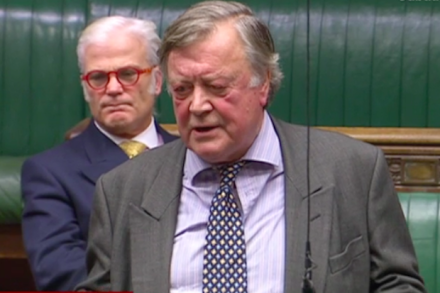
This week a Conservative politician managed to get both the SNP and Labour to applaud them in the Chamber. Unfortunately for Theresa May, it wasn't in response to government policy. Instead it was Europhile – and Tory grandee – Ken Clarke, who took the opportunity to explain why he thinks Nigel Farage is the 'most successful politician' of his generation, why bent bananas won't be making a comeback and, most importantly, why MPs ought to oppose Theresa May's Brexit date amendment (also known as amendment 381) to the EU Withdrawal Bill. https://www.youtube.com/watch?
The best Prime Ministers make their own luck

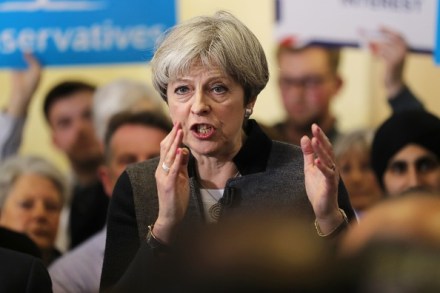
Another week, another Cabinet resignation. Now, as I say in The Sun this morning, there are those saying that Theresa May is just being unlucky right now. As Downing Street aides point out, few would have predicted a few weeks ago that Westminster was going to be engulfed in a sex scandal or that Priti Patel was going to have to resign for running her own, independent foreign policy. Theresa May’s problem, though, isn’t that a black cat walked in front of her. Rather, it is that her government is becalmed. It doesn’t have enough momentum to get through crises, so it gets stuck in them. As a result, the calculation about whether May can stay as Prime Minister is staring to shift.

Stop the rot

Dealing with a hung parliament was never going to be easy, but no one quite foresaw the decay which now seems to have set in to Theresa May’s government. The best that can be said for the Prime Minister is that the past week’s events have weakened her rivals within the Conservative party. No one is talking up Priti Patel as a potential rival any more and a challenge from Boris Johnson is now highly unlikely, following his loose words about a British woman incarcerated in Iran — which the Iranian regime may use as a pretext to increase her sentence. Like John Major, the Prime Minister benefits from the feuding in the Cabinet and is kept in place by the fear that a leadership challenge would see the party rip itself apart.

The Spectator Podcast: Desert storm

On this week’s episode, we turn our attention to the Middle East and the unlikely alliance of Saudi Arabia and Israel as they stare down a common enemy. We also consider whether the old adage ‘the night is always darkest just before the dawn’ holds for Theresa May, and wondering why there hasn’t been a great musical about British history. Last week saw a massive anti-corruption push in Saudi Arabia oust a number of princes. The putsch was initiated by Crown Prince Muhammed Bin Salman, and in this week’s magazine cover story John R. Bradley looks at how the young prince has attempted to align his country with Israeli interests in order to squeeze out a mutual antagonist: Iran.

Why can’t the PM get a grip?

How much longer can things go on like this? That is the question on the lips of Tory ministers and MPs this week. A government that was already facing the monumental challenge of Brexit now finds itself dealing with a scandal that has claimed one cabinet scalp and led to another Conservative MP being referred to the police. At the same time, Priti Patel has been running her own freelance foreign policy. To make matters worse, the Prime Minister’s closest political ally is caught up in the Westminster scandal. Damian Green is under investigation by the Cabinet Office for his personal conduct. If he has to go —and several of his allies in the government are not optimistic about his prospects — it will be a devastating blow to Theresa May.

Welcome to Messminster, where ministers can get away with whatever they fancy

What do you need to do to get sacked in this place? Quite a lot, according to the response from Downing Street to the two rows in Westminster today. First, there’s Boris Johnson, refusing to apologise in the Commons for his blunder last week about Nazanin Zaghari-Ratcliffe. When asked about why Johnson hadn’t said sorry for the distress his mistake had caused, the Prime Minister’s official spokesman argued that the important thing was that ‘the clarity that the Foreign Secretary provided today was clearly helpful, it has been welcomed and the Iranians are in no doubt as to what our view is’.

What did Gavin Williamson mean by that?

The Tory leadership stakes have been upended this week, I say in The Sun today. Gavin Williamson’s elevation to defence secretary shows that he wants to be a contender and that several of those around Theresa May think he might be their best hope. The most interesting question is why Williamson has decided to get out of Downing Street now. He has a sharp political brain and a good feel for the mood of the parliamentary party. So, he’d have known that a reshuffle where he was the only person to enter the Cabinet would put a big target on his back. There are two explanations doing the round in Tory circles for why he has chosen to leave the whips office at such a vital time. The first is that he decided that it was time to get out before things got even trickier.

May has undermined her authority further by promoting Gavin Williamson

To say that Gavin Williamson’s appointment as Defence Secretary has received a mixed reaction is to suggest, wrongly, that there is a balance of opinion on both sides. Most Conservative MPs I have spoken to today are just shocked that someone with no departmental experience is now in charge of the biggest department of all, with some of the biggest budgetary challenges. ‘I’m not sceptical, because that would suggest I hadn’t reached a conclusion,’ said one colleague. ‘I’m appalled. He’s smarmy. He uses bad language about other people. He is not to be trusted.

What to do about returning jihadis

In normal times, the reported return of 400 Isis fighters to Britain would be the biggest story out there. But with policymakers preoccupied by Brexit, and the press examining the sexual culture of Westminster, this news has not received the attention it deserves. The return of these fighters has profound implications. The security services are struggling to keep up with all the possible terrorists at large. Notably, Andrew Parker, the director-general of MI5, has warned that plots are being devised at the fastest rate he can remember in his 30-year career. Though he stressed that the security services have prevented seven attacks since March, he also said they cannot foil every effort. This is simply down to capacity.