Theresa may

The Tories must beware steering leftwards onto the rocks

From our UK edition

That the Tories are having to shift their policymaking far left even of the Milibandesque positions that Theresa May took before the snap election is quite obvious. Today's education speech by the Prime Minister involved an admission that the current system, drawn up by the Conservatives in coalition, isn't working. The problems that the Tories have noticed with that system are largely political, but that's not to say that there aren't flaws in the details, too. But it's not just on tuition fees that the party is having to change its tune from its time in government under David Cameron and George Osborne.

Does Theresa May know what she’s getting herself into?

From our UK edition

What does Theresa May want post-18 education to look like? The Prime Minister’s plans for tuition fees are getting the most attention today, but her big education speech has a lot more in it than just the cost of university degrees. Indeed, May is criticising the ‘outdated attitude’ that university is the be all and end all, and promising reform of vocational training, including apprenticeships. A focus on vocational training is something all prime ministers tend to meander into, before realising that higher education is so devilishly complicated that they retreat before achieving said reform. In May’s case, it may not be the complexity of the sector so much as the confusion in her own government that causes the most trouble.

Theresa May risks conceding the argument to Labour on tuition fees

From our UK edition

After last month's purge of the Department for Education and following months of speculation among Tory MPs, No 10 have finally showed their hand on university education. The Prime Minister is to launch a year-long review of university and adult technical education. The aim is to de-toxify the party among young voters who are worried about the current levels of student debt – be it by appealing to their parents and grandparents. On the menu of ideas being mooted are the return of university maintenance grants ( or 'maintenance support'), lower tuition fees for courses that are cheaper to run such as arts degrees and cuts to student loan interest rates.

There’s a Brexit deal to be done on security

From our UK edition

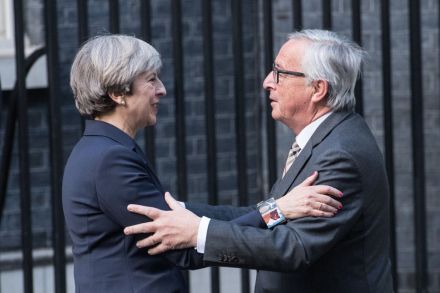
Theresa May was pushing at an open door in her Munich speech when she warned against ‘rigid institutional restrictions’ harming security cooperation after Brexit, I say in The Sun today. Member states are reluctant to follow the Commission’s tough line on this as they know how valuable the UK’s contribution in this field is. I understand that when the Commission told the 27 that the UK would have to be treated like other third countries on security after Brexit, several member states pushed back. They argued that it must be possible to find sensible compromises. Security is where it is most clearly in the interests of EU member states to find an accommodation with the UK in these negotiations.

White heat: How is tech changing politics?

From our UK edition

Jeremy Corbyn began the 2017 election campaign 20 points behind the Conservatives in the polls; he ended it just two per cent behind in the actual vote. The remarkable turnaround has been attributed by many to his effective use of social media, which allowed him to broadcast his message to people whom traditional campaigning fails to reach, people who in some cases may never have voted before. Social media is one aspect of how technology is changing politics – an issue debated at a recent Spectator lunch, in association with Michael Tobin OBE and involving a notable collection of people from the worlds of politics and technology. Do the unexpected results in recent elections really come down to who has the most effective online operation?

Sarah Champion does a Leadsom

From our UK edition

Here we go again. During the last Conservative leadership campaign, Andrea Leadsom came under fire for suggesting that having children made her a better choice to be prime minister than Theresa May. In an interview with the Times, the mother of three said having children meant she had 'a very real stake' in Britain's future. The furore over Leadsom's comments was a contributing factor in her decision to pull out of the contest. Now it seems that Sarah Champion has taken a lesson from the Leadsom rule book. In an interview with the House magazine, the Labour MP suggests that tackling child sexual abuse has taken a back seat since Theresa May became Prime Minister – lamenting that David Cameron had more of an interest because he is a...

Why May might not be so bad for May

From our UK edition

As Brexit tensions continue to simmer in the Conservative party, the May local elections look to be the next big danger point for Theresa May. MPs who are losing patience with the Prime Minister fear that any move now would be near impossible to justify to the public when the Tories remain neck-and-neck with Labour in the polls. The thinking goes that disappointing results in the local elections could provide the perfect cover to oust May from her position. It's true that disappointing results look likely. In London, the Tories expect a bloodbath, with elections analyst Lord Hayward predicting that the party could lose more than half of their London boroughs.

Letters | 8 February 2018

From our UK edition

Stop knocking May Sir: I find this knocking of Theresa May increasingly depressing (‘Theresa’s choice’, 3 February). She has a terrible job which she was dropped into when David Cameron resigned. She was a Remainer, yet she is expected to steer the UK through the Brexit process of leaving the EU with no experience, as it has never happened before. She needs all the support she can get, so please give it to her. No one wants her job right now anyway. Lindy Wiltshire Alton, Hants My NHS experience Sir: I am very glad to hear that Mr Hawkes has had better experiences in NHS hospitals than I did (Letters, 3 February). Perhaps in leafy Bucks there are private hospitals which compete with their NHS counterparts, unlike in this part of the world.

Brexit belongs to the Tories

From our UK edition

The Tory party is the party of Brexit, whether it likes it or not. The referendum was called by a Tory prime minister, Tory politicians led Vote Leave and it is a Tory government that is taking Britain out of the European Union. Theresa May might equivocate when asked if she’d vote Leave in another referendum, but to the average voter, Brexit is a Tory policy. Mrs May’s reluctance to say she’d back Brexit in another vote is revealing of a broader Conservative desire to avoid being too closely associated with the project. A classic example is Philip Hammond’s view that the £350 million a week supposedly promised to the National Health Service is Boris Johnson’s problem, not his.

Why global leaders should keep their mouths shut

From our UK edition

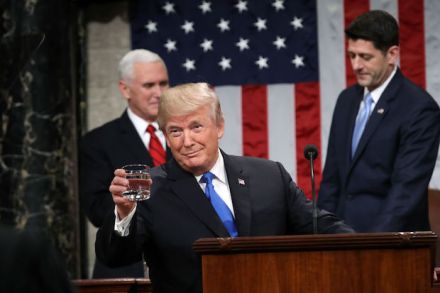
Sometimes as an investor, you wish your Prime Minister or President would keep their thoughts to themselves. Perhaps hold off on that keynote speech about Brexit? Brush over that State of the Union address? Why? You may ask. Because it plays havoc with your investment strategy, that's why. And I don’t think the likes of Theresa May and Donald Trump realise what they might be doing to someone’s investment portfolio. The research from spread-betting firm ETX Capital shows that large fluctuations in the value of the pound can be seen after Mrs May’s speeches. Source: ETX Capital Last year, the pound was weak against a basket of currencies, including the euro and dollar.

Why Osborne was wrong to trash Auntie May

From our UK edition

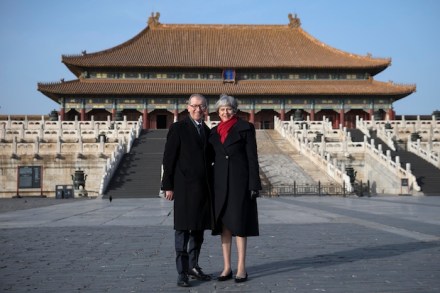
When David Cameron and George Osborne were in government, the pair heralded a new 'golden era' where the UK would be China's 'best partner in the West'. However, since Theresa May moved into No 10, questions have been raised about the health of this partnership. Osborne ally Lord O'Neill has criticised May for a focus on New Zealand when the priority should be China. Meanwhile, just last week Osborne appeared underwhelmed by May's trip to China – telling the Today programme that she needed 'a plan to engage with the rest of the world like China'. Further still, the paper Osborne edits – the Evening Standard – claimed that May had held a chinese symbol for luck 'upside down'.

Theresa May needs to rely on MPs from other parties in order to survive

From our UK edition

Theresa May's MPs are now constantly pressuring her to come up with a 'vision' of what she wants to do, whether it be on Brexit or on the domestic front. Those who are more sympathetic to the Prime Minister's caution, though, argue that her vision is constrained by the parliamentary arithmetic. Why try something that just isn't going to get through the House of Commons? One answer would be that May wouldn't lose all that much by trying and failing than she thinks. As I wrote last week, she is currently more in danger of weakening her authority by not trying at all. But another is that the Prime Minister could work with that parliamentary arithmetic to get reforms in place using a cross-party consensus.

‘Divide and rule’ is a dangerous game for a Prime Minister with no majority

From our UK edition

It's crunch week for Theresa May. The Prime Minister is under pressure to finally decide what the government's negotiating position ought to be going into the second round of EU negotiations. In order to work out what the UK's trade relationship with the EU should be after Brexit, May will meet with her Brexit war Cabinet on Wednesday and Thursday to try and agree a position on post-Brexit trade. There's hope that this will bring an end to the drift which has led Brussels figures like Angela Merkel to joke about May's 'make me an offer' approach to the talks. The crux of the issue relates to whether the UK will be in a customs arrangement of some kind with the EU.

The best way to avoid a Tory split? Decisive leadership

From our UK edition

At political Cabinet this week, the chief whip warned ministers how difficult it was to hold the Tory party together, I write in The Sun this morning. Julian Smith warned them that noises off from the Cabinet made it even more of a struggle to maintain unity. Smith is right. The Tory party is dangerously divided, a split is a real possibility. He’s also right that ministers sounding off over Brexit heighten these tensions. But what he didn’t mention is the most important thing, the need for leadership. Ministers are putting forward their views on Brexit so publicly because there isn’t a clear government position. They think everything is still to play for, so a bit of public lobbying is justified.

What do Tory MPs really think about Theresa May?

From our UK edition

It's not a good sign when a party finishes the week with MPs making the same complaints as they did at the start. Yet that is where the Conservatives are now, with the malcontents still fretting that there is no sense of vision or authority from the leadership. One thing that has changed is that the Tory party now seems rather more noticeably split over how MPs should be behaving. There is the camp who say, either privately or publicly, that Theresa May should go because things are only going to get worse under her leadership. But then there are others who are furious with anyone agitating for a change at the top, whether publicly or privately, because they think it is making everything far worse than it should be.

The right stuff | 1 February 2018

From our UK edition

Geoff Norcott is lean, talkative, lightly bearded and intense. Britain’s first ‘openly Conservative’ comedian has benefited enormously from the Brexit vote and he’s popular with television producers who need a right-wing voice to balance out the left-leaning bias of most TV output. ‘It’s funny meeting TV types,’ he tells me. ‘They say, “We really want to hear alternative viewpoints.” And I’m thinking, “By alternative you mean majority,”’ Norcott, 41, was raised on a south London estate. ‘Both my parents were quite political. My dad was a trade unionist who got quite high up in the NEC [Labour’s national executive committee] and my mum ran as a Lib Dem councillor.

The Spectator Podcast: Lead or go

From our UK edition

On this week’s episode we're wondering whether Theresa May can weather this latest storm, speaking to a robot expert (and a literal robot), and getting the inside story of male allyship workshops. The Prime Minister’s fortunes have ebbed and flowed since her disastrous election, but a yuletide season of relative calm has been replaced by her greatest challenge yet. 'Lead or go': that’s what James Forsyth says in this week’s cover piece, as pressure mounts on Theresa May to cobble together something resembling an agenda. He joins the podcast along with Giles Kenningham who worked at No.10 under David Cameron.

Theresa’s choice

From our UK edition

The Brexit ‘inner cabinet’ met on Monday. It was meant to be an important meeting, one which made some real progress on deciding what kind of economic relationship with the EU the UK is seeking. Senior civil servants had been told that the crucial topic of the Irish border would be on the agenda. This is one of the hardest parts of the Brexit equation to solve, and the answer will reveal plenty about the kind of trade deal the UK is seeking and the trade-offs it is prepared to make. But when the agenda for the meeting was circulated on Friday night, Ireland was not there. This left only data and security — the two least controversial of the nine questions that the Brexit cabinet is meant to address.

Tory leadership crisis: where are the whips?

From our UK edition

Despite having to answer questions about whether or not she is a 'quitter', Theresa May must be reasonably glad that she's got a few days' escape from her domestic agenda while she is visiting China. But being away does mean that she has left her party to stew without her, and it's not clear that those around her are doing much to calm things down. Over the past few days, I've spoken to a range of Conservative backbenchers and ministers who either privately or publicly hold concerns about the way May is leading (or isn't, as the case may be). All agree that things are rather critical for the Prime Minister, and have a number of thoughts about how she might survive. But barely any of the MPs I spoke to have had any sort of contact from the Tory whips.

Theresa May must lead or go

From our UK edition

The Brexit ‘inner cabinet’ met on Monday. It was meant to be an important meeting, one which made some real progress on deciding what kind of economic relationship with the EU the UK is seeking. Senior civil servants had been told that the crucial topic of the Irish border would be on the agenda. This is one of the hardest parts of the Brexit equation to solve, and the answer will reveal plenty about the kind of trade deal the UK is seeking and the trade-offs it is prepared to make. But when the agenda for the meeting was circulated on Friday night, Ireland was not there. This left only data and security — the two least controversial of the nine questions that the Brexit cabinet is meant to address.