Theresa may

Theresa May accuses Russia of an unlawful use of force against Britain

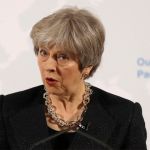
Theresa May has given Russia until Wednesday to explain why a nerve agent that it has developed was used in the Salisbury attack. She told the House of Commons that it was ‘highly likely’ that Russia was responsible for the poisoning of Sergei Skripal and his daughter. She said that Boris Johnson had summoned the Russian Ambassador and put it to him that were only two explanations for what had happened, one that the Russian government itself was responsible or that Moscow has lost control of its stock of deadly nerve agents. I think it is safe to assume that no explanation, at least not one that would satisfy a reasonable observer, will be provided before Wednesday.

A ‘reckless and despicable act’: Theresa May’s statement on Salisbury attack

From our UK edition

Mr Speaker, I share the impatience of this House and the country at large to bring those responsible to justice - and to take the full range of appropriate responses against those who would act against our country in this way. But as a nation that believes in justice and the rule of law, it is essential that we proceed in the right way – led not by speculation but by the evidence. That is why we have given the police the space and time to carry out their investigation properly. Hundreds of officers have been working around the clock – together with experts from our armed forces - to sift and assess all the available evidence; to identify crime scenes and decontamination sites and to follow every possible lead to find those responsible.

Watch: Maybot’s awkward International Women’s Day interview

From our UK edition

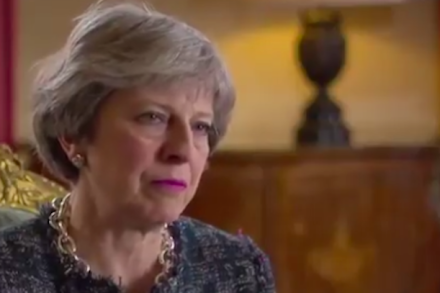
Happy International Women's Day. To mark the occasion, there are several events taking place across Westminster this evening – with Liz Truss opening up the Treasury to leading businesswomen. So, how would the Prime Minister like to mark the occasion? That's the question that left Theresa May flummoxed today in an interview with ITV. The Maybot appeared rather taken aback when Julie Etchingham innocently asked what May would do to let her 'hair down' on her 'perfect get-together' with her 'girlfriends': https://twitter.com/itvnews/status/971803875870113792 Time for a reboot?

How Theresa May had a surprisingly strong PMQs

From our UK edition

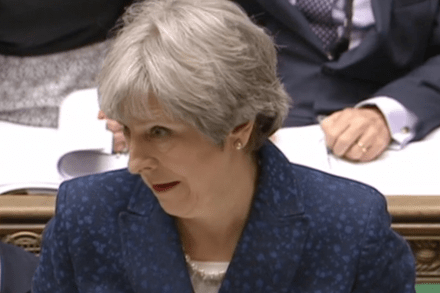
Theresa May should have had a rather difficult Prime Minister's Questions today. Jeremy Corbyn chose to lead on the visit of Saudi Crown Prince Mohammad bin Salman, and then moved onto rough sleeping. Both matters are vulnerabilities for May, and ones Corbyn has consistently made a great deal of noise about. But there were two flaws in Corbyn's approach which allowed May to have one of her strongest sessions as Prime Minister. The first was that of course she had guessed the Labour leader was most likely to lead on Saudi Arabia, and so she turned up well-prepared to offer a robust defence of Britain's ties with the Kingdom.

How Theresa May’s reforming ministers are constrained

From our UK edition

When Theresa May gave her big housing speech today, in front of a rather strange fake brick backdrop that made the Prime Minister appear to be emerging from a chimney, she was trying to speak to two audiences. The first was those who believe, as she says she does, that the housing crisis is one of the biggest barriers to social justice in this country. The second was those who may agree with the first sentiment in abstract, but who are very worried about inappropriate development and destruction of our green and pleasant land. It's a tricky game, playing good-cop, bad-cop all by yourself, but that's what the Prime Minister had to do in order to announce anything at all on housing.

Michael Heseltine’s lone Brexit intervention highlights the Tories’ new-found unity

From our UK edition

Was Theresa May's big Brexit speech simply a string of 'phrases, generalisations and platitudes'? That's the claim from Michael Heseltine over the weekend. The Conservative peer made the Observer front page with an attack that's said to break the Tories' short-lived Brexit unity. He says May's pitch on Friday fell flat as it only 'set out the cherries that Britain wants to pick' and complains that rightwing Tory MPs held 'a knife to her throat'. But if anything, Heseltine's lone criticism highlights the Tories' newfound unity over Brexit. If you'd told Theresa May this time last week that the most prominent Tory to criticise her plans after her speech would be Heseltine – a man she previously sacked over Brexit – I doubt she would have believed you.

Theresa May’s masterclass in mutual dissatisfaction

From our UK edition

Theresa May's speech today won't have left any portion of her party ecstatic. As the Prime Minister promised 'ups and downs in the months ahead', she warned that 'no-one will get everything they want'. With compromises coming down the track, May made sure to dish today's disappointment out in an even-handed manner. For the Remain side of her party that meant their hopes for a customs union compromise – as Isabel reported earlier in the week – were dashed. She not only re-iterated her stated position that the UK would leave the customs union but said that the UK should be able to set its own tariffs. That suggests not even a partial customs union is possible. There was also strong wording that there would not be a 'soft' Brexit that accommodates the City.

May tries to strike an optimistic tone on what Brexit can do for Britain

From our UK edition

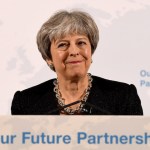
Despite the rather muted colours for the staging of her Road to Brexit speech, Theresa May tried to make her address as upbeat and cheerful as it was possible to be. She started by talking not about Brexit but about her agenda, restating a great deal of what she said on the steps of Downing Street when she became Prime Minister. Perhaps this was because May is worried that people have forgotten what her domestic mission is, or perhaps it was because she felt it would be best to suggest that Brexit could play a large part in making Britain a better, happier and less divided country. She said that her Downing Street pledge 18 months ago 'is what guides me in our negotiations with the EU', and then offered a very strongly values-based list of what she felt was important in the negotiations.

Theresa May’s Brexit speech: full text

From our UK edition

I am grateful to the Lord Mayor and all his team at the Mansion House for hosting us this afternoon. And in the midst of the bad weather, I would just like to take a moment before I begin my speech today to thank everyone in our country who is going the extra mile to help people at this time. I think of our emergency services and armed forces working to keep people safe; our NHS staff, care workers, and all those keeping our public services going; and the many volunteers who are giving their time to help those in need. Your contribution is a special part of who we are as a country – and it is all the more appreciated at a moment like this. FIVE TESTS Now I am here today to set out my vision for the future economic partnership between the United Kingdom and the European Union.

May’s Brexit Speech: David Davis pushes back against a ‘binding commitment’ to align with EU rules

From our UK edition

The Cabinet met earlier today to discuss Theresa May’s big speech on Brexit tomorrow. I understand that in a lengthy meeting most ministers applauded the speech. But there is one particular area of controversy, I hear. Both David Davis and Boris Johnson pushed back against the idea that the UK should make a ‘binding commitment’ to align with EU rules and regulations in certain sectors. The Brexit Secretary, I am informed, led the charge against this idea which the Brexiteers feels go further than what was agreed at the Chequers meeting of the Brexit inner Cabinet.

No 10’s new tactics

From our UK edition

The DUP were shown an early draft of Brussel's proposed legal text by the UK government ahead of its publication on Wednesday. After the painful lesson of December when Arlene Foster almost pulled the plug on Theresa May's plan to achieve 'sufficient progress' after she was not consulted on the wording, the government is learning from its mistakes. So, when the DUP got up at PMQs and asked what the Prime Minister thought of it, they already knew the answer. 'They've learnt their lesson from the last time,' a DUP source explains. 'That wording from Brussels was like a letter to santa, it's a fiction. But we knew it was coming.' It's not just the DUP who the government is taking more care with nowadays.

Theresa May’s Westminster correspondents’ dinner speech: Cameron, Rudd and Press Commissar Milne

From our UK edition

What says ‘Theresa May’ more than a comic speech at a boozy dinner for a room full of journalists? That was the question the Prime Minister found herself asking a room of well hydrated hacks at last night's Westminster Correspondents Dinner. May took a break from the Irish border to regale journalists with a speech poking fun at her former colleagues, current colleagues, the lobby and ... Theresa May. To some surprise, May cracked several – successful jokes. She even found time to praise the Spectator's James Forsyth. Alas, not everyone was in such a jolly mood – Labour's Barry Gardiner was overhead muttering warnings to the press about what will happen to them (spoiler: not good) come PM Corbyn.

Are we tired of Brexit yet?

From our UK edition

If you wish to understand this government you might begin with Robert Conquest’s third law of politics. Namely, that 'The simplest way to explain the behaviour of any bureaucratic organisation is to assume that it is controlled by a cabal of its enemies'. This is certainly a more plausible hypothesis than any obviously available alternative. Indeed, there are times when you begin to think this government’s mission must be to persuade us that, contrary to the evidence hitherto presented, a government led by Jeremy Corbyn might be no bad thing. Or, at any rate, no worse than the government we have now.  Take Liam Fox and Boris Johnson, for instance, notionally two of Brexit’s 'Big Four' though increasingly, like Arsenal, relegated to sixth place.

Rumour about May’s customs union stance excites Remainers

From our UK edition

Could the Conservatives crash out of government in the next few months? That's certainly a prospect that Theresa May's allies want to talk up in order to scare would-be supporters of Anna Soubry's amendment on Britain staying in 'a' customs union after Brexit. We discuss whether making the amendment a confidence issue is really the smartest move on our latest Coffee House Shots podcast - and in today's Evening Standard I report that Remainers really do think the whips would be calling their bluff by adopting this strategy. But I've also picked up an interesting theory doing the rounds among would-be rebels, which is that Theresa May will use her Road to Brexit speech on Friday to announce a concession on the matter of Britain having 'a' customs union arrangement of one sort or another.

How many Conservative MPs would risk Prime Minister Corbyn over Brexit?

From our UK edition

Although Theresa May's Cabinet has finally managed to reach a loose agreement on what they would like to achieve from the upcoming negotiations, the Prime Minister's troubles look set to continue for the foreseeable. With Jeremy Corbyn expected to confirm that his party backs the UK staying in 'a' customs union post-Brexit, there's growing concern in Whitehall that May's government could collapse this year. The most imminent threat comes from the Remain side of her party. The Sunday Times reports that Julian Smith, the chief whip, told May there is a 'very real threat' that Labour could unite with 15 to 20 Tory rebels to defeat the government on their decision to rule out membership of a customs union.

How Theresa May could demonstrate her commitment to tackling domestic abuse

From our UK edition

Could domestic abuse be the latest policy area to fall foul of the government's inability to get anything done? It certainly seemed so yesterday when Theresa May told MPs at PMQs that the planned Domestic Violence Bill would not be published in draft form in the next few weeks, as ministers had previously suggested, but that there would be a consultation first. I say in the Sun today that this means we won't see even the draft legislation until the autumn, and so the full bill will come still later. On one level, announcing a full public consultation on the new legislation before going to a draft bill before legislating for real is a very admirable thing to do.

Downing Street vs Stormzy

From our UK edition

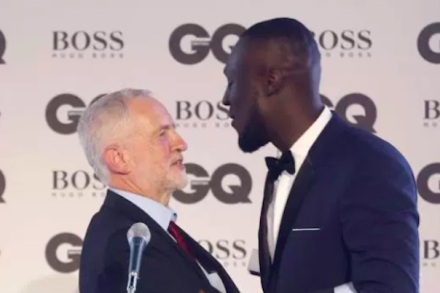
Theresa May has a lot on her plate this week. As well as today's crunch Brexit Cabinet away day, she is facing a Tory backlash over her university funding review and working to stave off a rebellion on the customs union. Now she has another problem to deal with: Stormzy. Yes, the Prime Minister has awoken to find herself in a full-blown row with Stormzy. The grime artist – and Corbynista – used a performance at last night's Brit Awards to accuse the Prime Minister of turning her back on the Grenfell fire victims: 'Theresa May, where’s the money for Grenfell?

Does John Bercow think politics is illegal?

From our UK edition

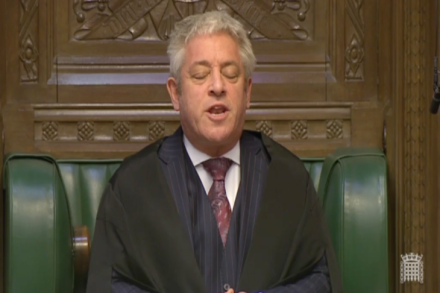
Bit of a rum PMQs today. Jeremy Corbyn, who has always loathed the EU and now pretends to admire it, asked May about Brexit. May, who has always admired the EU and now pretends to loathe it, fobbed him off with glib sound-bites. ‘Take back control of our borders,’ ‘protect workers’ rights,’ and so on. Corbyn asked a long question about the Government’s ‘desired outcome’. He got a four-word answer: ‘A bespoke economic partnership.’ Mr Speaker decided that he should be the star-turn today. Perhaps he sought to wow a posse of French MPs who were witnessing the bun-fight from the gallery. Quelling an early outbreak of shouting, the Speaker got down from his high chair and delivered one his longest ever speeches. ‘Please!

The ERG’s so-called ‘ransom note’ could be a lot worse for May

From our UK edition

It's red letter day for Theresa May. Only rather than a happy momentous occasion, the Prime Minister's red letter day consists of receiving a letter listing all the Brexiteers' red lines on the EU. With the inner Cabinet due to meet on Thursday for their 'away day' to decide a Brexit negotiating position, the influential European Research Group have sent May a letter listing their 'Brexit demands'. Signed by 62 backbench MPs, the letter – in which the group pledge their 'continued, strong backing' for May and her Brexit plan as per the Lancaster House speech – kindly offers the Prime Minister a list of suggestions on how to achieve the best Brexit.

Theresa May’s tuition fees plan is rotten politics

From our UK edition

I don’t really object to bad policy, it’s the rotten politics I can’t stand. There would be something almost amusing about a Conservative prime minister gravely intoning, in effect, 'Labour are right; please don’t vote for them' if it weren’t so head-thuddingly stupid.  Remarkably, however, this is the position into which Theresa May has put herself. Labour’s policy on university tuition fees may be a) ruinously expensive and b) a boon to the most affluent but it is c) easily understood. Labour would – or, rather, say they would – scrap tuition fees.  Responding to this – and, more broadly to their problem with 'younger' voters (i.e.