Theater

The power of the walkout

To walk out of a public performance before the end – be it the theater, a concert or a lecture – is not the done thing. It’s considered an antisocial act that disrupts the performance and thus other people’s pleasure. To walk out provokes tuts of disapproval and scowls of indignation. And yet while it’s something we all disapprove of (at least in theory) it’s also something we all secretly long to do. Who hasn’t sat and squirmed in their seat at some tedious piece of theater and wondered: how much more of this must I suffer? And who hasn’t been subjected to one of those long, sycophantic interviews with some self-adoring author flogging their latest book and not prayed for the courage to make a run for it?

walkout

Keith McNally: ‘big-name’ stars are wrecking Broadway

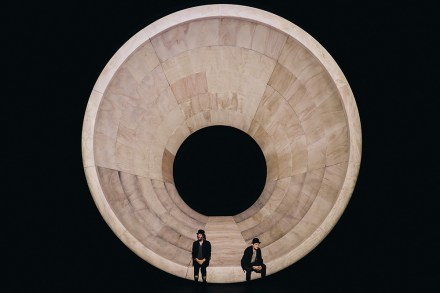
“WAITING FOR GODOT IS A RUBBISH PLAY.” So declared Keith McNally in an Instagram post that caught my eye. “I urge you not to see Waiting for Godot.” Accompanying the statement was an image of the two stars who headlined this fall’s production at Broadway’s Hudson Theater, Keanu Reeves and Alex Winter. The play is the latest in what regular theatergoers and visiting tourists may have started to recognize as a recurring theme in New York’s theater scene: an overwhelming number of big-name Hollywood screen actors dotting their playbills. These players are here to make their bones and increase their prestige as “true” thespians, often by attaching themselves to tired and familiar productions. This has certainly not been lost on McNally.

mcnally

The new Tom Hanks play is a drag

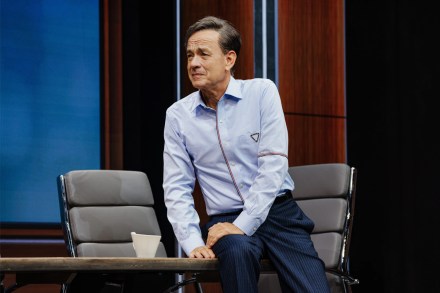
In This World of Tomorrow – the new play starring and cowritten by Tom Hanks, currently on at The Shed in Manhattan – Tom Hanks plays a classic, well, Tom Hanks character.  Bert Allenberry (Hanks) is the nicest guy in the room: he’s the kind of great guy who will escort a lady home in a taxicab, even if it will make him late. And in This World of Tomorrow being late matters a lot. Bert, you see, is a successful but dissatisfied scientist from the future who travels back in time to the 1939 New York World’s Fair in Queens. Once there he has complete free rein, except for one thing. He must return to his hotel at a certain hour to be whisked back to the future – or risk mortal bodily damage.    Love, of course, gets in the way.

Tom Hanks in This World of Tomorrow (Photo: Marc J. Franklin)

Stoppard, Sappho and me

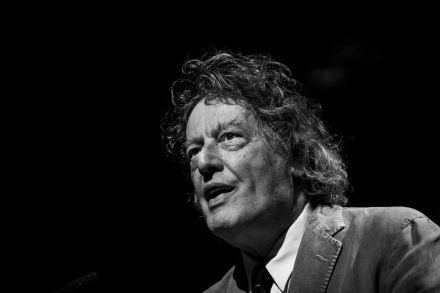
Many years ago, and well retired, I was working in my study at home when the phone rang and a voice said, “This is Tom Stoppard. David West put me onto you.” David was the professor of Latin at Newcastle University and it emerged that Tom used him when he had queries about Latin, but now had a question about the ancient Greeks. When he couldn’t answer it, David suggested that Tom should call me. I felt a vast chasm of ignorance opening in front of me and have no memory of what the question was – but my reply must have satisfied him because he continued to throw the odd leg-break my way. To give some idea of his range of interests, on one occasion he became interested in the Greek perfect tense. Don’t ask me why, but that was at least something I could do.

tom stoppard

The theater of Washington

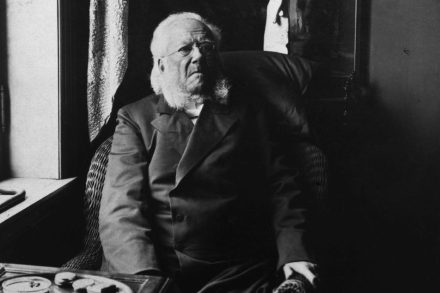
Suddenly it’s Ibsen season in Washington, DC. It’s true that only Shakespeare’s plays are performed worldwide more often than Henrik Ibsen’s. But to have two of the great 19th-century Norwegian playwright’s works running at once in the nation’s capital is unusual. And the works in question – An Enemy of the People and The Wild Duck – deliver contradictory messages. Together they say something not only about the state of the arts in Washington, but also about the state of the liberal mind. Politics is very much a presence on the capital’s stages. The city’s two main Shakespeare organizations, the Shakespeare Theatre Company and the Folger Theatre, last year presented seasons heavily influenced by the presidential election.

henrik ibsen

Tom Stoppard was himself to the end

"Tom Stoppard is dead." For anyone who cares for the theater, the English language, and especially for those of us who knew him, these words are as unthinkable as they are hard to bear. How can such a force of nature, such a generosity of spirit, such a voice of sanity, have fallen silent? And yet he has gone. To the end, his body emaciated by cancer, he was still the old Tom: self-deprecating but full of ideas and plans. He might have one more play inside him, he told me, but his fingers could no longer physically write and dictation somehow stopped the words from flowing. He was cared for by his magnificent wife Sabrina, who entertained us tirelessly.

A new Phantom comes to Broadway

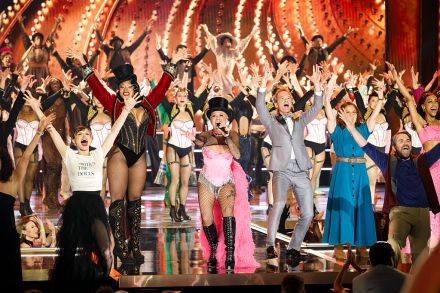
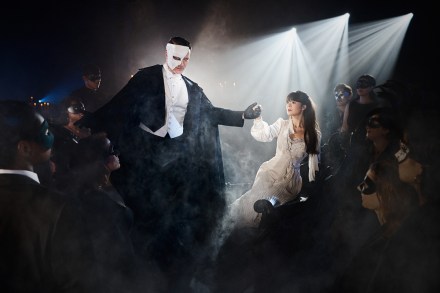
Around midway through Masquerade – the new immersive adaptation of The Phantom of the Opera, which sees a small audience whirled through a labyrinth of rooms and sets – I feel a hand on my shoulder. Smiling, I turn, expecting to see my friend – and immediately recoil. A tiny circus freak grins at me, revealing teeth like sharpened screwdrivers and a painted face lifted straight from Día de los Muertos. Later, in a carnival scene, that same freak hammers three nails into her face and an ice-pick up her nose. The carnival sequence is not in the original Phantom. It is one of the largest and perhaps most important of Masquerade’s additions.

phantom

Sam Shepard’s life was as dramatic as his theater

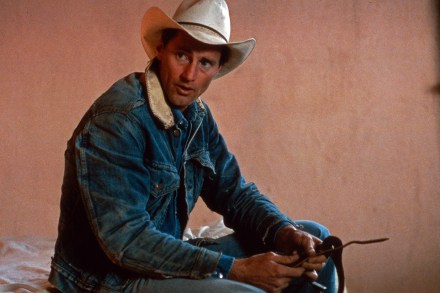
Sam Shepard and I crossed paths several times when we were both living near Charlottesville, Virginia, he with Jessica Lange and their family, and me as a student at the University of Virginia. He towered over passersby on the Downtown Mall, walking as if invisible spurs should be clinking on his bootheels, mane of dark floppy hair pushed back off his forehead and behind his ears, keen eyes above a quick grin. I last saw Shepard 20 years later, having a coffee and reading the Daily Racing Form in a Greenwich Village restaurant; he looked even better then. He was a true Renaissance man. There he was, on Bob Dylan’s Rolling Thunder Revue tour in 1975, charged with writing a screenplay for a movie somehow set in the concert tour.

sam shepard

It’s a shame that Crooked Cross isn’t better

It’s Christmas Eve in a small German town. In a cozy wood-paneled living room, a brother and sister named Helmy and Lexa are decorating the tree, half chatting and half squabbling, the way siblings do. As they light candles, Lexa’s fiancé, Moritz, pounds on the door, demanding jauntily to be let him. He’s as excited as a small child to see the festivities – and to kiss his bride to be. So opens the off-Broadway production of Crooked Cross.  It's a joyous scene, full of promise. Quickly, though, things begin to go south. Moritz Weissman, a surgeon, is accomplished, smart, and well-liked. But while he was raised Catholic, his name, taken from his professor father, is Jewish.

Crooked Cross

Viola’s Room is beguiling

What is theater? For most people it’s live performance, whether solo or in a troupe. Punchdrunk, the immersive theater company led by Felix Barrett, is not most people. Take its latest iteration now on at the Shed: Viola’s Room features no real-time actors. There is no stage and no seated audience. In this creepy gothic fairy tale, the story is narrated through headphones; the audience moves (sometimes walking, sometimes crawling) through a maze of spaces and the senses – including touch, smell, sight and sound – are as central as the script. Viola’s Room is intimate, small and contained. Every detail, every sound, every object feels intentional. Indeed, much of what makes Viola’s Room so beguiling is the rare sensation of giving up control.

Viola's Room
Over the Moon

Over the Moon renders the present with an eye toward the timeless

Audiences are hard to please. Give us too much of modern life in a work of art, and we find it shallow. Give us too little, and we are prone to call it stuffy and academic. There is a sweet spot between realist exposé and classically restrained theater. This is the case with Over the Moon, a new play written and directed by Matthew Gasda. In the witty, self-undercutting, and absurdly clinical language that is the contemporary speech of the young, the play’s Generation Z and millennial protagonists navigate the confusing vagaries of love. The action remains in one place: the shared uptown Manhattan apartment of 20-something cousins Eden (Lilly Brown) and Cody (Spencer Cramer). They recently moved in together after breaking up with their boyfriends.

The problem with Heathers: The Musical

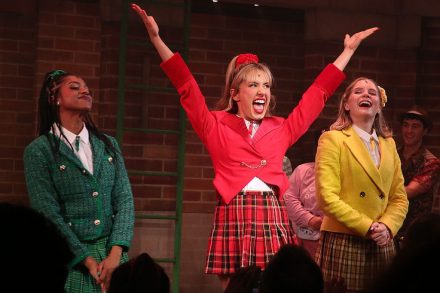
There is a euphoric moment in Heathers: The Musical, based on the cult 1989 film of the same name, when anything seems possible. It happens when 17-year-old Veronica – facing ostracism from the popular clique for barfing on the group’s tyrannical leader, Heather Chandler – climbs through the bedroom window of her crush, J.D. He’s in bed, asleep. As she mounts him, she sings the sassy, come-hither “Dead Girl Walking.” She’ll be toast come Monday morning, she’s “hot and pissed and on the pill,” and J.D. is her “last meal on death row.” Cue the boldest sex scene I’ve ever seen on stage. Veronica straddles J.D. and takes charge, ripping open her shirt to reveal her bra.

Heathers

Dead Outlaw is sharp-witted and irreverent

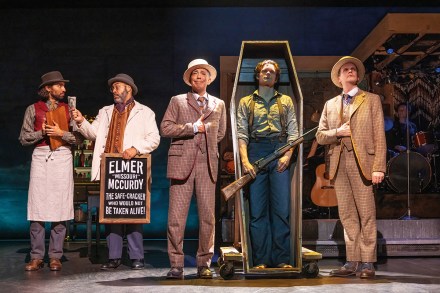
In 1976, the TV series The Six Million Dollar Man arrived to shoot at an amusement park in California. A central attraction was the funhouse ride, where screaming thrillseekers hurtled past a red mannequin hanging garishly from a noose. It was only when a crew member touched the body – and an arm fell off, revealing bone – that they realized the mannequin was, in fact, a corpse. Painted in phosphorus and slathered in wax, it had been suspended, unnoticed, for years. So began a frenzied investigation into who this mystery cadaver was. An autopsy revealed that the man had died from a bullet wound. His jaw was wired shut; inside his mouth were ticket stubs to a crime museum and a penny dating back to 1924. He had been preserved using arsenic.

Dead Outlaw

The Picture of Dorian Gray is headache-inducing

The Picture of Dorian Gray begins on an unadorned note. Sarah Snook sits alone on an otherwise empty stage, facing a camera which projects her image on to a giant vertical screen. Chameleon-like, she switches instantaneously between two characters: the awkward but sincere painter Basil and his more debonair – and dastardly – friend Lord Henry. Snook may be Australian and a woman, but borne on her considerable gifts we are transported to Victorian England. With no props save a paintbrush for Basil and a cigarette for Lord Henry, Snook chops and changes between the two men: she contorts her face into nervy, painful subservience for Basil and her voice into a high, febrile whine.

Dorian

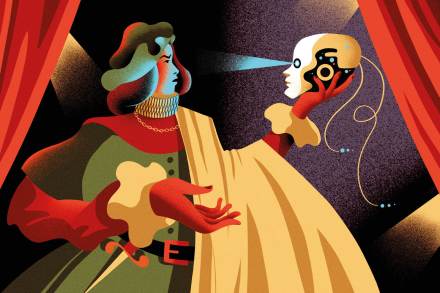
Doomers looks at what AI means for the future

I wrote my play Doomers partly because, the night Sam Altman was fired, I was performing in a play called Zoomers. Someone — I forget who — suggested the idea of Doomers as a joke, and I thought it was a good one. My method for some, if not all, of my plays over the past few years has been to take some kind of mimetic material — downtown, Gen Z, polyamory — and to find what is surprising or human inside the meme. I try to locate a universal story in what might otherwise seem like a surface-level idea that feels niche, obnoxious or both. Sam Altman and the autistic tech world, in particular, represent opaque surfaces that I believe conceal something deeper.

Doomers

James Shapiro’s timely account of the rise and fall of an influential public theater

James Shapiro, a distinguished Shakespeare scholar, has turned his attention to the seeds of today’s culture wars in this fascinating, timely and deeply researched book. He unearths them in the demise of the New Deal’s Federal Theatre Project, brought down by a Red-hunting congressional committee. Shapiro’s is an unexpectedly gripping tale, as he exposes the “playbook” of the Texas Democratic congressman Martin Dies, a white supremacist and glory hound who seems to have settled on destroying the Federal Theatre simply as a means of boosting his profile, while also exploring the relationships between politics, plays and propaganda. The Federal Theatre was a utopian project of galactic size, of a kind which, in these days of funding cuts, now seems impossible.

Shapiro
Jedermann

The Jedermann, the myth, the legend

The telephone was ringing. On the other end was Markus Hinterhäuser, artistic director of the Salzburg Festival. “Robert, would you like to direct a new production of Jedermann for us next year?” A new Jedermann at the Salzburg Festival, but with only a few months to prepare? I hesitated for about one second before saying I would be delighted and honored to direct. Jedermann is the complex, frightening, inspiring and fascinating German adaptation by the great Austrian writer and poet Hugo von Hofmannsthal of the English medieval morality play Everyman. Hofmannsthal’s adaptation premiered at Berlin’s Circus Schumann theater in December 1911.

Gatsby

A new adaptation of The Great Gatsby is enrapturing and impressive

In F. Scott Fitzgerald’s classic 1925 novel The Great Gatsby, Daisy Fay is a mercurial character. The popular rich girl from Louisiana — married to Tom Buchanan, an adulterous brute — is ravishing and entrancing and, at times, cruel. It is her voice that most draws Jay Gatsby to her years after their initial fling when he was a poor officer, as he longs for her across the bay. As Fitzgerald describes it, Daisy’s is a voice that rises in dramatic swells and falls to intimate murmurs, coaxing its listeners to draw closer. Gatsby, the nouveau-riche rumored bootlegger from an impoverished farming family, is obsessed with Daisy: her class, her beauty, her unattainability, her voice. It is a voice, he tells the book’s narrator Nick Carraway, that is “full of money.

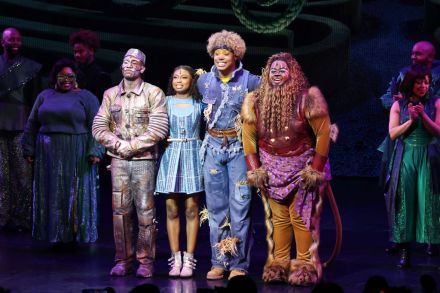
The new revival of The Wiz is psychologically bland

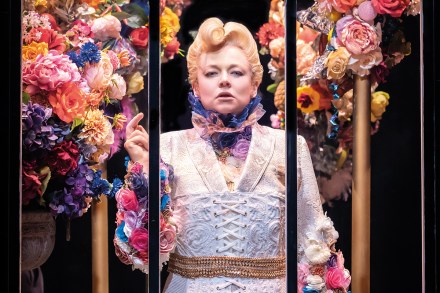
When The Wiz first graced Broadway in 1975 it positioned itself as a gutsy ode to black culture. The adaptation of The Wonderful Wizard of Oz, with a book by William F. Brown and music and lyrics by Charlie Smalls, not only featured songs infused with R&B, gospel and soul but a fully black cast.It became a long-running hit, won seven Tony Awards, including Best Musical, and inspired a 1978 movie of the same name, starring Michael Jackson and Diana Ross. The Wiz’s storied beginning and genre-busting premise only makes this revival feel more deficient. Directed by Schele Williams, with updated writing by comedian Amber Ruffin, The Wiz comes to the money-spinning Marquis Theatre following a national tour which visited thirteen cities.

Wiz

An Enemy of the People is hit-or-miss

As I entered the lobby of Circle in the Square Theatre, now showing Broadway’s hottest ticket, An Enemy of the People, staff were upselling booze. “Do you want to buy a shot?” offered one enthusiastic barman, waving a bottle of bracing Linie aquavit. He added, grinning: “It’s what the actors drink on stage.” Sam Gold’s revival of Henrik Ibsen’s didactic and stuffy morality play aims to draw direct comparisons between past and present, including what alcohol we consume (more on that later). In late nineteenth-century Norway, a town finds itself prosperous by selling access to the local spa baths, which supposedly have curative properties. When Dr.

jeremy strong enemy people