Theater

Finally, a version of Merrily We Roll Along that works

Merrily We Roll Along starts in 1976, at a party held by big-shot Hollywood producer Franklin Shepard, who is surrounded by stars (not least his second wife, a veteran Broadway siren, and his young lover, the nubile leading actress of his latest hit movie). It ends in 1957, with stars of a different kind: constellations in an inky sky that provoke awe and inspiration for a younger, more naive Frank, as he sits on a rooftop with friends Mary and Charlie, dreaming about their future. The juxtaposition — of celestial bodies with shiny, obnoxious celebrity — helps to frame this musical about the loss of innocence.

Merrily

One-on-one with Broadway powerhouse Betsy Aidem

For the last few years, Betsy Aidem has immersed herself in historical trauma. In 2022, the Broadway powerhouse starred in Leopoldstadt, Tom Stoppard’s Tony Award-winning play, which follows the lives of a Jewish family in Vienna in the first half of the twentieth century.  The same year, she took on a part in a similar vein: that of the feisty Marcelle in Joshua Harmon’s Prayer for the French Republic, which ended its Broadway run on March 3. The action flits between 2016 France, when antisemitism is on the rise and the far-right Front National leader Marine Le Pen is gaining traction as a presidential candidate; and the 1940s, when Marcelle’s grandparents hide from the Nazis in their Parisian apartment.

betsy aidem

Spring’s hottest theatrical openings on Broadway

Since closing its doors during the pandemic in 2020, Broadway has struggled. The Phantom of the Opera lowered the curtain in April last year after more than thirty-five years. Andrew Lloyd Webber’s new musical, Bad Cinderella, shut in June, less than three months after it opened, and other musicals, such as the tortuously-named Britney Spears-inspired Once Upon a One More Time, have fared little better. Meanwhile, productions are still scrambling to get butts on seats: audience numbers are down 17 percent from their pre-pandemic highs. And yet, for theater aficionados, there is hope.

theater

Beauty, terror and banality are uneasily juxtaposed in Harmony

If there is a central message in Harmony, it is that old cliché that evil flourishes when everyday people stand by and do nothing. That idea is returned to repeatedly, with increasing angst, as the central characters in the musical get swept up, and finally tossed aside, in Nazi Germany. Harmony revives the true story of the Comedian Harmonists, six men — three Jewish, three Gentile — who created an ensemble in 1927 during the waning days of the Weimar Republic. The group, who melded physical comedy with singing, sometimes using their vocal cords to mimic entire orchestras, became a surprise hit. They sold millions of records, appeared in movies, and performed worldwide.

Harmony

Stereophonic is a love letter to creation

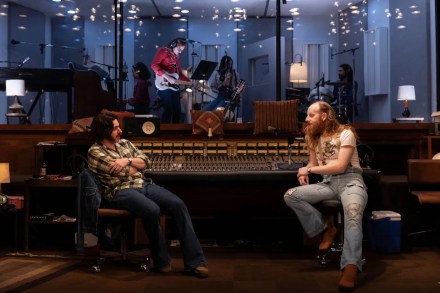
A chart-topping album. A drummer that can’t stand up straight without the aid of his giant bag of coke. Bickering bandmates and lovers. A rock band on the verge of break-up. These are some of the things on offer in just the first few minutes of Stereophonic. While I’m far from The Spectator’s resident theater critic, I do see my fair share of plays each year. Sometimes I’m compelled to write about them, but only when I’ve found something truly delightful. So let me start by saying this: Stereophonic is the best play I’ve seen in years.  On its surface the play is the story of a mid-Seventies rock band coming to terms with success while navigating tumultuous internal relationships with each other.

stereophonic

The birth, death and rebirth of American Psycho: The Musical

American Psycho was never supposed to be a hit. Bret Easton Ellis thought Glamorama would be his big seller, and Psycho was just an odd interlude; an experiment with form that mocked the disconnection, inanity and opulent obliviousness of America’s new, young, hyper-materialist upper crust. It was also a cloaked reflection of repressed homosexuality, written by a gay author who once dated a closeted financier. It’s not even that violent. Most of it is just the interior monologue of this cold man listing the clothes and food and bad music that occupies his hollow mind. And it was intensely funny, but dryly, darkly so. In short, it wasn’t an obvious literary smash.

american psycho musical

Once Upon a One More Time is pat, prepackaged feminism

Britney Spears has always been mired in narrative, created by her managers, fans and the media as much as by herself. She has been, at different times, a virgin pop princess; a mega-stadium pop queen; a “cheating” girlfriend (on Justin Timberlake, no less — a falsehood drummed up by the tabloids); a girl gone off the rails; a mother; a “bad” mother suffering a mental health crisis. More recently, as interest in Spears has grown following her emergence from a thirteen-year legal conservatorship, the story is simpler: she was lost and now she is found. A victim and a hero. This summer another label got added to the list: feminist cultural icon with a legacy to protect.

spears

Here Lies Love is too scared to be serious

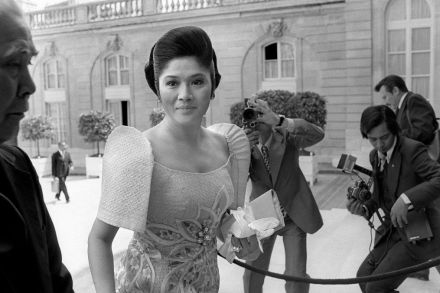
Imelda Marcos allegedly wants three words inscribed on her tombstone: Here Lies Love. It’s a poetic expression made grimly baleful by the reality of the Marcos regime: Imelda and her husband Ferdinand ruled the Philippines with an increasingly iron fist from 1965-86, committing countless human rights abuses as they robbed the country’s coffers. Yet the phrase has been borrowed by David Byrne and Fatboy Slim as the title of their musical about the Marcoses, Here Lies Love, now playing on Broadway (it premiered off-Broadway in 2013). Whether the phrase is used in earnest or irony is never quite clear in a show that apparently positions itself as a fun and fabulous karaoke dance party.

Here Lies Love

Jane Clark Scharl delivers artful truths in Sonnez Les Matines

As preface to his verse play King Victor and King Charles (1842), Robert Browning made a striking assertion about the claims poetry has on truth. In dramatizing King Victor Amadeus II of Sardinia’s abdication and subsequent attempt at re-accession, Browning said, he had produced a “statement” on the subject “more true to person and thing than any it has hitherto been my fortune to meet with.” Naturally, that “statement” — peculiar word for poetry — differs considerably from the historical record. Yet the merits Browning ascribes to his version — not surpassing beauty, but truth to “person” and “thing” — we would tend to call prosaic, the province of history or science or some other species of nonfiction.

sonnez

What’s happening with the SAG-WGA strike?

Christopher Nolan’s latest film, Oppenheimer, is about the second biggest bang in history. Yet at its London premiere on Thursday, there was another explosion that, in its own way, was no less seismic than anything put on screen. Its star-studded cast, including Cillian Murphy, Emily Blunt, Matt Damon and Robert Downey Jr., assembled dutifully on the red carpet for interviews and selfies, but by the time that the film itself was about to screen, none of the actors were anywhere to be seen.  As Nolan said of his “incredible cast” in his introductory talk, “You’ve seen them here earlier on the red carpet.

strike

Taking in Good Night, Oscar and New York, New York

Mental illness is horrifying and hilarious, like politics or killer clowns. And unlike those two subjects, it can be staged without tackiness or gimmicks. King Lear’s all the more tragic for losing his marbles and out-fooling the Fool. I was nevertheless surprised to see a show exploit the premise as heartily as Good Night, Oscar does, for laughs and gasps alike. The new play about the mid-century pianist, actor, comedian, and all-around firecracker Oscar Levant gets more mileage out of old-school “mental-health struggles” — alcoholism, drug addiction, schizophrenia, OCD, wifebeating, electroshock therapy — in a taut hundred minutes than Dr. Phil could in a whole season.

Oscar

Bringing back Stephen Sondheim and enduring a new Andrew Lloyd Webber

On Sunday April 16, the curtain went down on Andrew Lloyd Webber’s Phantom of the Opera for the last of 13,981 performances on Broadway, a titanic thirty-five-year run grossing north of $1.3 billion. The end of an era? Not quite — dating back to the 1979 opening of Evita, Lloyd Webber musicals have run continuously on the Great White Way for forty-four years. That streak is now hitched to the fortunes of Bad Cinderella, which opened just weeks before Phantom closed. The show gets a lift from a lush score and some winning numbers, as well as sumptuous set design. The whole premise, however, turns out to be a pumpkin, and it may spell midnight for the composer’s magical run within the year.

Lloyd webber

Broadway brings back Bob Fosse’s Dancin’

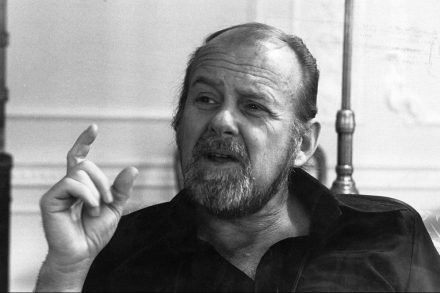
To kick off the new revival of Bob Fosse’s Dancin’, a lone performer comes onstage to inform us that, per the recommendation of the WHO, the CDC, the US Surgeon General and sundry others, the evening’s proceedings will not include any plot, message, or moral. I pinched myself. Wearing Fosse’s signature bowler hat, the speaker, played by Manuel Herrera, promises nothing but “dancing, some singing... and more dancing” — and for the most part, this dazzling two-and-a-half-hour musical revue lives up to that promise. Directed and staged by Wayne Cilento, who danced in the original production, the first revival of Dancin’ on Broadway is a treasure trove for Fosse fanatics, a smart introduction for the unfamiliar and a delight for everyone between.

bob fosse
coward

Noël Coward, the English playwright who loved all things American

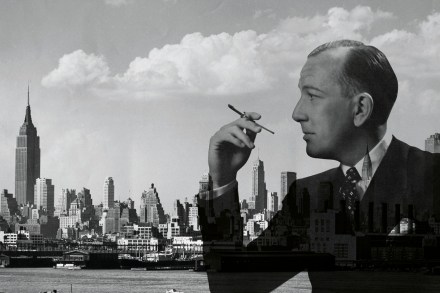
Half a century after his death, the playwright, songwriter, actor, director and general Renaissance man Noël Coward is regarded, with some justification, as the quintessential English polymath. His best-known plays and songs, from Private Lives and Present Laughter to “Mad Dogs and Englishmen” and “London Pride,” seem so steeped in their Britishness — even if Coward was catering to a country that loved seeing a distorted, exaggerated version of itself — they could be placed in a time capsule as perfectly executed microcosms of the national identity. Any man who could write “Wouldn’t it be dreadful to live in a country where they didn’t have tea?

& Juliet and Titanique: two newly minted cult classics

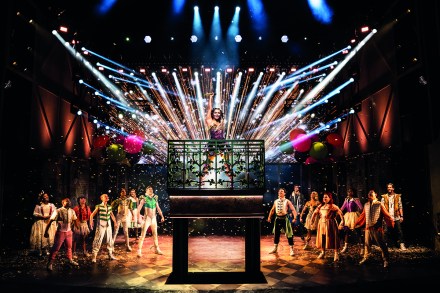
Fears that the new pop-parody musical & Juliet would be a vehicle for steamrolling Shakespeare are understandable but unfounded. It’s true that, on Broadway as in the rest of the arts, holding dead white males up for flagellation is now almost a cherished ritual — a recent example being last season’s Six, a glitzy feminist paean danced on the grave of Henry VIII. There’s a healthy dose of girl power in & Juliet, too, and I don’t doubt that a few heedless theatergoers came with tomatoes in hand, hoping to find the Bard pilloried. Let me tell you a secret: the theater world still adores Shakespeare, even in 2023. To renounce him is to swear off your mother’s milk.

Juliet

The Some Like It Hot revival is cream-puff theater

The new Some Like It Hot on Broadway has bass player Jerry (J. Harrison Ghee), disguised among Big Sue’s Society Syncopators as “Daphne” to hide from the Chicago mob, decide to embrace the drag lifestyle and elope with his elderly suitor Osgood (Kevin Del Aguila) by the show’s end. (The 1959 film closes with Jerry straining to extract himself from Osgood’s clutches.) Many theatergoers will not expect this update, setting up a bit of dramatic irony too delicious to be unintentional. What’s a drag show, after all, without a few surprises? To my knowledge, this irony has gone entirely uncapitalized by headline-writers across the nation. Some Like a Hot Dog! Speakeasy, Don’t Tell! Billy, but Wilder! Jack’s Lemon!

some like it hot

Ebony and ivories

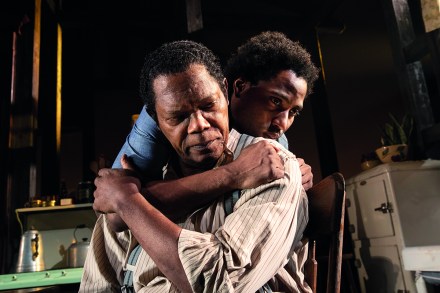
In the early going of The Piano Lesson (1987) there’s mention of a merchant buying up musical instruments in the black neighborhoods of 1930s Pittsburgh. When offers for the titular family piano are rejected by its current proprietor, Berniece, her brother Boy Willie, who has arrived from the south, hopes to sell it to him behind her back. It’s a coy reference to that great Broadway salesman of band equipment, Meredith Willson’s Music Man (1957), and the reversal gives you some idea of playwright August Wilson’s method. Where Meredith built a full musical around a musical zero (Harold Hill is tone-deaf), August composed a stage play from the music of the blues, which he called the “sacred book” of black literature.

piano

An ingloriously dumb adaptation

There’s always been a market for nostalgia. Keats, the huckster of Greek glories, put it best: “Heard melodies are sweet, but those unheard are sweeter.” But the peculiar achievement of Lester Bangs, the cantankerous rock critic played by Philip Seymour Hoffman in the film Almost Famous (2000), is to sell us some self-confessedly unsweet music. True rock and roll, the Bangs character tells us, is “gloriously and righteously dumb” and could suffer no worse fate than to become an “industry of cool.” Of course, by his lights, the golden age has passed; all that remains is “the death rattle, the last gasp, the last grope.” If nostalgia is a drug, he has mainlined the stuff. What are you on, man, and where can I get some?

almost famous

An unapologetically Jewish Fiddler on the Roof returns to New York

Fiddler on the Roof is a study of Eastern European Jewry: it is based on Yiddish writer Sholem Aleichem’s short stories and is set in a Yiddish-speaking village in early twentieth-century Imperial Russia. Yet, in the hit musical, which premiered on Broadway in 1964, Sheldon Harnick’s lyrics only feature a handful of Yiddish words. Harnick later confessed that the creators downplayed the Jewishness of the story — something they thought might be too sticky; too specific — in order not to put off American audiences. As scriptwriter Joseph Stein said: “These were stories about characters who just happened to be Jewish.

The cast of Fiddler on the Roof (New World Stages)

Baldwin and Buckley clash on the New York stage

It’s fair to ask what James Baldwin would have made of Baldwin and Buckley at Cambridge, the Public Theater’s recent presentation of his famous 1965 debate against William F. Buckley Jr. It’s not that the show doesn’t strain mightily to champion Baldwin in the contest — it does — but the novelist viewed what he called “problem” or “protest” art with particular scorn. This was a writer who torched fellow travelers Harriet Beecher Stowe and Richard Wright in the same breath for perpetuating, in his view, the same “monstrous legend” of racial inferiority. To call Baldwin an activist or a champion of civil rights doesn’t quite cover it: the man operated on a theological plane, aiming at spiritual transformation. His standards for art were notoriously exacting.

baldwin buckley