The queen mother

Was the Queen Mother ever really funny?

From our US edition

Was the Queen Mother ever really funny? She was clearly extremely good company: an attentive listener, full of enthusiasm and affection, right up until her death, aged 101, in 2002. She was also the ideal queen for an unconfident George VI, undermined by his stutter and caught unawares by his accession to the throne, thanks to the abdication of his appallingly selfish brother, Edward VIII. The only time I ever saw the Queen Mother — when she was eighty, at her Clarence House home — I was only eight, but I remember her clearly. A tiny figure, she beamed away, spreading goodwill among strangers when so many people that age have lost mobility, let alone the ability to cheer up other people. Grumpy George V had thought much the same of her charm nearly sixty years earlier.
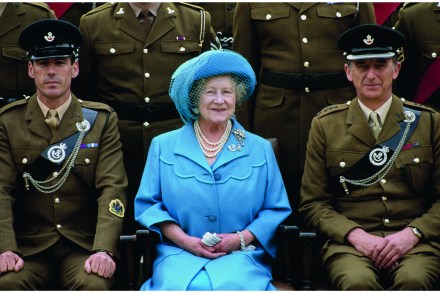
queen mother

How Cecil Beaton offended the Queen Mother

In December 1979, the 28-year-old Hugo Vickers, dining with a friend, declared: ‘I see little point to life these days.’ The following day, an editor at Weidenfeld & Nicolson rang to tell him that Cecil Beaton, seriously debilitated by a stroke, was looking for a biographer. Vickers visited Beaton three days before his death in January 1980 and, shortly afterwards, was confirmed as his official biographer. This was to give point, along with glamour and excitement, to his life for the next five years. Beaton’s sister, Lady Smiley, exhorted Vickers not to make it ‘one of those gossipy books. There’s so much more.

The Wallis Simpson I knew – by Nicky Haslam

One would have thought this particular can of worms might, after nearly 80 years, be well past its sell-by date. But books about Mrs Simpson and her infatuated king appear with thudding frequency, each with some ever more far-fetched theory about this curious union. Now comes the leaden hand and leaden prose of Andrew Morton, with yet another: that Wallis was, all her life, in love with another man long before, during and after her experience of vitriolic abuse, first as the besotted prince’s obsession, then scapegoat for his abdication, and object of vilification during her years as his wife. This love (to borrow words from her step-great nephew, ‘whatever love is’) may well have been real. The man in question was Herman Rogers.