The godfather

The movie brats who changed popular cinema

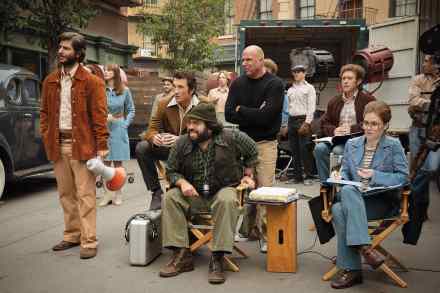
For some people it’s Star Wars; for others it’s Jaws or Close Encounters of the Third Kind. For me not a year goes by without watching Chinatown and the first two parts of The Godfather. This urge to repeatedly live through familiar narratives surely starts with bedtime stories; and though it diminishes in early adulthood as we push ourselves out into the world, the habit returns before long. So, although The Last Kings of Hollywood, Paul Fischer’s partial history of American movie-making focusing on Francis Ford Coppola, Steven Spielberg and George Lucas, tells a familiar story, it will be read by the same people who have already worked their way through the holy scriptures on the period.
From street urchin to superstar: the unlikely career of Al Pacino

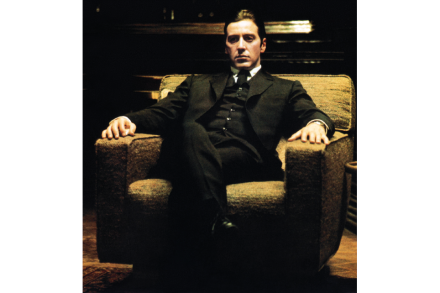
Ellen Barkin, Al Pacino’s lover-cum-prime- suspect in his comeback movie Sea of Love (1989), once dismissed the artifice of the British acting tradition (by way of an oddly ill-tempered pop at Nigel Havers) by comparing it with the immersive naturalism of the greats of post-war American cinema: Marlon Brando, Meryl Streep, Robert De Niro and Al Pacino. It’s a questionable claim, especially given that in Pacino Barkin had perhaps the least naturalistic co-star imaginable. He is forever searching for the off-beat, the syncopation that will spring the line open Pacino is – albeit in his own highly idiosyncratic way – no less theatrical an actor than John Gielgud, more invested in the musicality of his line readings than in fidelity to the real.

Megalopolis and the strange art of negative marketing

From our US edition

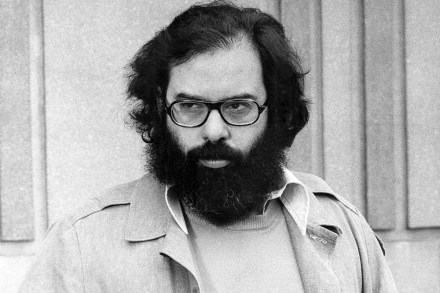
After a fairly barren summer movies-wise (I’m just waiting for the Alien: Romulus backlash to begin, and will be only too pleased to join in with it), there are more promising movies coming our way this fall. Yet the one that’s attracted more attention and interest than possibly anything else this year, maybe even this decade, is the grand return of Francis Ford Coppola with Megalopolis, a self-funded, wildly ambitious folie de grandeur that premiered at this year’s Cannes Film Festival to predictably mixed reactions and an overall consensus that, alas, the one-time visionary genius of theater is no longer a force to be reckoned with, however loopily wild his latest (and, one reluctantly assumes, last) movie is.

megalopolis

Las Vegas’s Mob Museum revels in the city’s gritty past

From our US edition

A generation or two is usually enough time for a family whose fortune may have been built upon a crime to bury its heritage. Not Las Vegas. It’s proud of its inglorious past. Housed in a four-story former federal courthouse and US post office in downtown Las Vegas, the Mob Museum revels in Sin City’s storied, unconventional and very criminal past. The building’s basement, for example, has been converted into an immersive exhibit redolent of the Prohibition era, complete with a fully operational speakeasy featuring a menu of 1920s-style cocktails. Gin-based Bee’s Knees and other drinks are served, and a traditional whiskey Old-Fashioned will be delivered hidden in a book. You’ll be invited to tour an onsite distillery where 100-proof corn moonshine is made.

mob

Bram Stoker’s Dracula was a grand and glorious folly

From our US edition

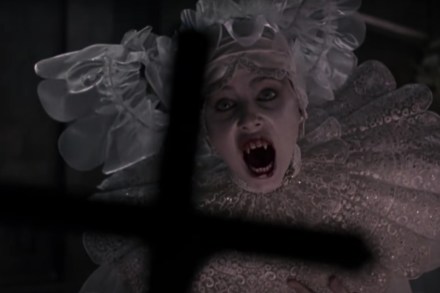
Thirty years after it was first released in America, Francis Ford Coppola’s Bram Stoker’s Dracula is returning to theaters, appropriately enough for a Halloween re-release. (It also serves as a soft preview for Coppola’s newly announced passion project, Megalopolis, an epic drama starring Adam Driver and Aubrey Plaza.) It is hard to overstate what a difference the past three decades have made in Dracula's popular reception. Although it was a significant commercial hit upon release, thanks in part to Annie Lennox’s enormously popular theme tune "Love Song For a Vampire," it was critically derided as poorly acted, overblown, excessively bloody without being frightening and a travesty of the original novel.

The making of The Godfather was almost as dramatic as the film: Paramount+’s The Offer reviewed

It’s hard to imagine in the wake of GoodFellas, The Sopranos and Gomorrah but there was a time, not so long ago, when the very existence of the Mafia was widely dismissed as an urban myth. What changed was Mario Puzo’s 1969 bestselling novel The Godfather, which sold nine million copies in two years. You might assume, not unreasonably, that the 1972 movie version – now acknowledged as one of the greatest films of all time – was one of the most obvious commissions in Hollywood history. But it was dogged by so much controversy and plagued by so many disasters that it was very nearly stillborn.

Film’s most unforgettable scene

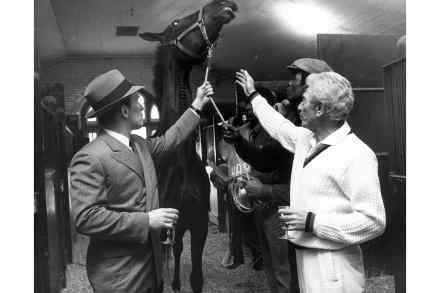
The actor never knew they would use a real horse’s head. This was May 1971 and John Marley was preparing to perform in the most infamous scene in The Godfather, playing the corrupt movie producer who wakes up to find a horse’s head in his bed. Reportedly, Marley assumed this would just be a plastic prop. But the director, Francis Ford Coppola, had other ideas. In a note to himself, Coppola observed: ‘If the audience does not jump out of their seats on this one, you have failed.’ So he quietly sent an assistant to a dog-food factory to pick up a genuine head, newly hewn from the shoulders of a racehorse. She brought the stinking object back in a freezer box and it was slipped into the bed with Marley for maximum authenticity.

Why The Sopranos remains the greatest gangster drama of all time

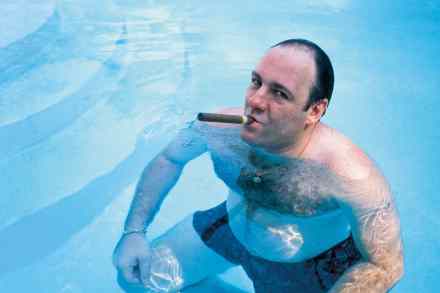
The Sopranos is called the greatest television show in history. It is the tale of Anthony ‘Tony’ Soprano, a middle-aged man in psychotherapy who also happens to run a New Jersey crime family. Anthony means ‘priceless’; the choice of name is surely deliberate. The Sopranos is complex — all masterpieces are — but it is fundamentally about greed: for money; for sex (the crew inhabit the Bada Bing! lap-dancing club, where breasts are landscape); for alcohol; for power; for the base drug of food. In the first episode Tony, who is played by James Gandolfini as a human devil, all need and charm (he is defiantly sexy with his fat hands and dachshund’s eyes), is almost human-looking. By the end, he is immense.

Eliminating Qasem Soleimani was Donald Trump’s Middle East farewell letter

From our US edition

In July 55 BC, in the midst of his campaigns to civilize Gaul, Julius Caesar was troubled by the Germans. They would cross the Rhine, wreak havoc, and then disappear back across the mighty river, whose depth and swift currents made the Germans regard it as an impregnable barrier. To teach them that it wasn’t, Caesar had his engineers construct a bridge across the Rhine. As Caesar recounts in Book IV of his commentaries on the Gallic War, they did this in an astonishing 10 days. Caesar and his troops crossed over, stayed for a few days in German territory, 'burned all their villages and other buildings, and cut down the grain in their fields'. They then crossed back over and destroyed the bridge.

qasem

The embarrassment of Fredo Cuomo

From our US edition

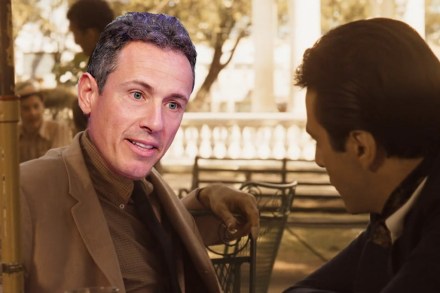
First of all, it is not true — at least, I can find no evidence — that the Don kissed Chris 'Fredo' Cuomo on both cheeks and handed him a one-way ticket to a fishing jaunt on Lake Tahoe. I wish people would stop spreading these vicious rumors. As I write, thousands of Chinese troops are massing on the border of Hong Kong, but this week the world is mesmerized by the spectacle of CNN anchor Fredo Cuomo screaming threats and obscenities at some hapless chap who called him 'Fredo.' What Donald Trump accurately described as Fredo Cuomo’s 'lunatic ranting, raving, & cursing,' did not, as far as I know, include the painful objection that 'I can handle things. I’m smart. Not like everybody says — like dumb. I’m smart and I want respect!

fredo cuomo