The beatles

Persistent gossip about Brian Epstein’s death risks defining his life

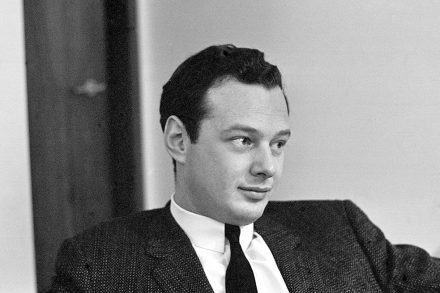
We know the facts about Brian Epstein’s death. The Beatles’ manager died in bed at his Belgravia home on August 27, 1967, six years after he struck gold in a Liverpool cellar, a month before his contract to manage the Beatles was due to end and four weeks after homosexual acts between men were partly decriminalized. At the time of his death, the 32-year-old Epstein was addicted, adrift and depressed – not least as a result of a long effort to hide his sexuality and the low-level anti-Semitism he encountered everywhere. One moment he was manically active, the next he was in despair, according to those around him. He had overdosed in the past and had been treated at a psychiatric hospital. On the day he died, his blood contained alcohol, antidepressants and barbiturates.

brian epstein

Persistent gossip about Brian Epstein’s death risks defining his life

We know the facts about Brian Epstein’s death. The Beatles’ manager died in bed at his Belgravia home on 27 August 1967, six years after he struck gold in a Liverpool cellar, a month before his contract to manage the Beatles was due to end and four weeks after homosexual acts between men were partly decriminalised. At the time of his death, the 32-year-old Epstein was addicted, adrift and depressed – not least as a result of a long effort to hide his sexuality and the low-level anti-Semitism he encountered everywhere. One moment he was manically active, the next he was in despair, according to those around him. He had overdosed in the past and had been treated at a psychiatric hospital. On the day he died, his blood contained alcohol, antidepressants and barbiturates.

None of McCartney’s new songs will trouble his setlist for long

On May 30, 1966, the Beatles released “Paperback Writer” – a fortnight after “Paint It Black” by the Rolling Stones and only days before Bob Dylan released “I Want You” as a single. Paul Simon wrote and recorded (with Art Garfunkel) “A Hazy Shade of Winter” not long after. Yes, yes, what bliss it was in that dawn etc. But anyone predicting back then that, 60 years later, all four artists would still be releasing new music and touring to large and appreciative audiences would have been laughed clean out of the Bag O’Nails. Even when glossy monthly music magazines such as Q started appearing in the 1980s, 40 was regarded as the dark side of the moon for the foundational pop stars of the 1960s.

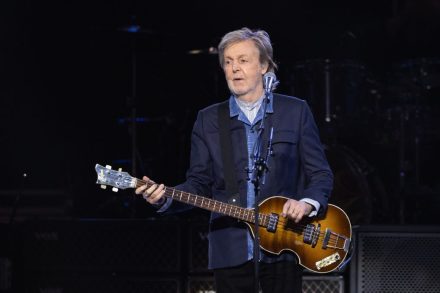
paul mccartney

A Beatles show without the love

From our UK edition

Please Please Me is a play about Brian Epstein whose brief and troubled life remains relatively unknown. Tom Wright’s linear script opens with the teenage Epstein enjoying secret affairs with teddy boys while working at his dad’s record shop on Merseyside. When he spotted the Beatles at the Cavern, he was smitten by their homoerotic energy rather than their music or their potential for making tons of cash. He put them in suits to soften their image while encouraging their talent for witty backchat. ‘A little pinch of naughty but family friendly,’ was his branding message. But he lacked artistic vision and he cut a lousy deal to sell plastic Beatles dolls which cost the band a fortune and angered Paul McCartney.

The nightmare of filming A Hard Day’s Night

It would be easy to dismiss A Hard Day’s Night, the Beatles film made in 1964, as a throwaway period piece. The plot hurls the Fab Four into a meta narrative, playing themselves while a director – a seething Victor Spinetti – panics as the boys are delayed on their way to a televised variety performance by mishaps, distractions and stampeding fans. The film was thrown together to fit the group’s breakneck schedule – scripted over a few weeks in January by Alun Owen, shot by Richard Lester by May and out in cinemas in July. In her absorbing, concise book, Samira Ahmed sees the film not as a cursory promo but as a watershed in British culture – ‘a kind of cinematic big bang’.

bob dylan

The photographer who connects Bob Dylan and the Beatles

MAX JONES: “What do you think of the Beatles as artists and people?” BOB DYLAN: “Oh, I think they’re the best. They’re artists and they’re people.” —Melody Maker, March 1965 For more than 60 years, people have been fascinated by the connections between Bob Dylan and the Beatles. All were born during World War Two. All loved the music of Little Richard and Elvis Presley and Eddie Cochran; all were blues fans swept off their feet by rock and roll. Dylan was a Minnesota boy who early in his life became the avatar of the American folk scene, and then a protean man containing multitudes, both musically and otherwise.

David Bowie and why we love working-class pop stars

From our UK edition

The only time I ever saw David Bowie live was at a ropey festival in an old airfield near Stratford-upon-Avon in the latter half of the 1990s. Frankly, I thought he was pretty awful. It was the peak of Britpop, electronica and trip hop were in the ascendency and the campsite and smaller stages that weekend were fervent with fast beats, French crops and chemical ingestion. Bowie, to my late-teenage eyes and ears, seemed like an embarrassing dad, attempting to remain ‘with it’ via his recent drum and bass-infused song ‘Little Wonder’. I sloped off before the end to go and watch Goldie instead. I’ve listened to much more Bowie since then, and although I maintain that at least 50 per cent of his vast output is distinctly average, the best bits are transcendent.

Let the Beatles be

From our UK edition

Like most freelance writers, I have a notepad full of jottings which come under the loose category of ‘Ideas I Probably Won’t Get Round To Doing As I Doubt Anyone Will Be Interested, They’re A Bit Rubbish Anyway And It Probably Wouldn’t Pay Much’. Around halfway down this list is a book provisionally entitled A Hard Day’s Fight, in which I espouse my opinions on a plethora of Beatles-related debates, and add a few new ones of my own.

When will the Beatles bandwagon end?

The Beatles broke up in 1970, but you wouldn’t know it from the activity of the last few years. In no particular order, we have had an underwhelming valedictory single, “Now and Then,” raised from the dead thanks to the wonders of artificial intelligence and Peter Jackson alike; an eight-hour – eight!– documentary, Get Back, resurrected from the footage of the Let It Be sessions; and now, an all-singing, all-dancing reissue on Disney+ of the Nineties Anthology documentary series, which has been promoted with the fourth volume of offcuts and rare tracks from the band’s career, appropriately titled Anthology 4.

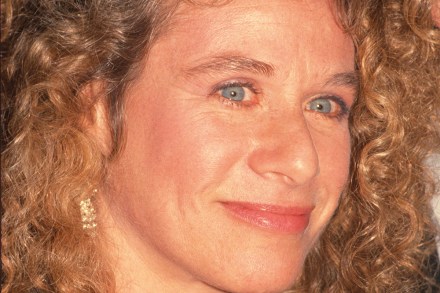
How the teenage Carole King struck gold

From our UK edition

On 7 December 2015 the Kennedy Centre Honours were awarded to Carole King, George Lucas, Rita Moreno, Seiji Ozawa and Cicely Tyson. King sat by the White House Christmas tree during the afternoon reception wearing her medal and laughing as Barack Obama recited the most familiar of her thousands of song lines: ‘You make me feel like a natural woman.’ Obama grinned: ‘I think I just became the first president ever to say that... It sounded better when Aretha said it.’ That evening the tribute to King as a singer-songwriter included performances from James Taylor and the cast of the Broadway spectacular Beautiful: The Carole King Musical and concluded with an astounding performance by Aretha Franklin of ‘(You Make Me Feel Like) A Natural Woman’.

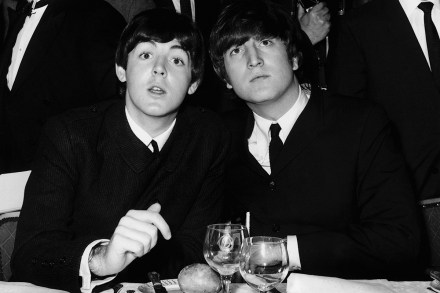
Unpacking John Lennon and Paul McCartney’s complex relationship

Fifty-five years after they broke up, what is there left to say about the Beatles? There have been so many books written about the group and so many obsessively detailed websites devoted to exploring every song, every public utterance, every twist and turn in their history, that the average rational man or woman might think they know all there is to be known about them. Craig Brown’s magisterial 2020 volume 150 Glimpses of the Beatles was a pop-cultural dive into their peerless influence and standing; Ian MacDonald’s still legendary Revolution in the Head dives into the 241 songs that they recorded (although, of course, it should be 242, thanks to the emergence of “Now And Then” in 2023) and does so with grace, intelligence and slightly frightening attention to detail.

John

Letters: In praise of the post office

From our UK edition

Reeves’s road sense Sir: Is it stubbornness, denial, inexperience or some other agenda that prevents Rachel Reeves changing course in the face of uncomfortable facts? A multitude of surveys have told her that punitively taxing the rich means they will leave (‘The great escape’, 17 May). Recently I had lunch at a fashionable London club that was half-empty. When asked why this was, our waiter commented that he now rarely sees his previous international regulars, and if he does, they are only in town for a short stay. Endless business surveys have also told Reeves that her employer taxes will cost jobs, close companies, weaken growth and raise inflation, yet she has continued with these too, despite evidence that those fears are now coming to pass as these taxes bite.

Amid the alien corn: Beautyland, by Marie-Helene Bertino

From our UK edition

‘I am an Adina,’ the four-year-old protagonist of Marie-Helene Bertino’s Beautyland writes to her extraterrestrial superiors on Planet Cricket Rice, which is light years away from Earth. ‘Yesterday I saw bunnies on the grass,’ she adds, using the fax machine her mother retrieved from their neighbour’s trash. ‘DESCRIBE BUNNIES,’ they respond, sparking a dialogue that continues well into her adulthood. Adina’s premature birth in September 1977 coincided with the departure of the Voyager 1 probe, which was launched with a phonograph record of sounds intended to explain human life to intelligent extra-terrestrials. The timing is significant because Adina was sent to Earth from Planet Cricket Rice to report on human life.

Sleepless in Shangri-La

“You are suffering from what we call an ‘Alice in Wonderland’ effect,” Dr. Sankar informed me as I climbed out of a rabbit hole. I was late for a very important date to discuss my sleep (or lack thereof). “When you fall asleep,” he continued, “your thoughts race, and you think: What should I be doing? What do I need to do? Where am I? Where am I going?” I had fallen head-first into another wonderland: Ananda in the Himalayas. Located in the foothills of the Himalayas in northern India, Ananda – which translates to “happiness” in Sanskrit – is a world-renowned holistic retreat that towers above the bustling city of Rishikesh and the sacred Ganges River.

Poor little rich girl: the extraordinary life of Yoko Ono

From our UK edition

David Sheff first met Yoko Ono in 1980 when Playboy commissioned him, then aged 24, to interview her and John Lennon. She asked him to send her his astrological and numerological charts before summoning him to the Dakota, where she and John occupied six apartments. (Elton John, a friend of theirs, wrote an excellent spoof: ‘Imagine six apartments/ It isn’t hard to do./ One is full of fur coats/ Another’s full of shoes.’) Yoko told him that his charts were good – ‘these are strong numbers’ – and that he would get on well with John. So they fixed a time to meet the next day. The interview lasted three weeks, during which Sheff went everywhere with the Lennons and got to know them and baby Sean well.

Across the universe – John and Paul are in each other’s songs forever

From our UK edition

The world’s love affair with the Beatles began, arguably, with the release in October 1962 of the group’s first single ‘Love Me Do’, full-blown Beatlemania following hard on its Cuban heels. Will we still need them, will we still feed them, when they’re 64? The answer appears to be a resounding and remunerative yes. Beatlemania is for life, not just for Christmas. Beatles books increasingly obtain to the condition of poetry, in that more people want to write them than read them. Yet still they keep appearing in bookshops. And every time a new volume about the group is published – like all those of sound mind, I have loved their music, films and minutiae since childhood – I ask myself: what is different about this one? Will it be in the style or the substance?

The weirdness of the pre-Beatles pop world

From our UK edition

Quizzed about pop by the teen music magazine Smash Hits in 1987, the year of her third consecutive electoral victory, Margaret Thatcher singled out ‘Telstar’, a chart-topper from a quarter of a century earlier, for special praise. She pronounced it ‘a lovely song… I absolutely loved that. The Tornados, yes.’ As a whizzily futuristic sounding instrumental ode to a transatlantic communications satellite, and only the second British recording to top the American Billboard charts, its charm for Thatcher was perhaps as much political as musical. That it was the work of an independent producer might also have appealed to her love of freewheeling, self-reliant private enterprise.

A new solo album by a former Beatle that – astonishingly – demands repeated plays

From our UK edition

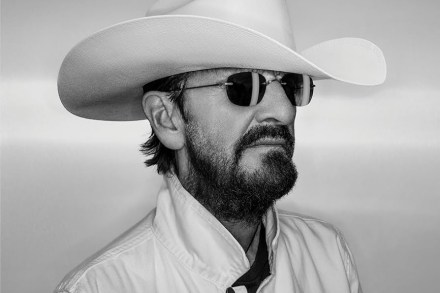
For artists lacking any obvious feel for the style, ‘going country’, similar to mainstream white artists dabbling in reggae in the 1970s following the breakthrough of Bob Marley, tends to elicit the sour whiff of a morning after the last chance saloon. Particularly at a time when a slick multi-hyphenate brand of country music is the pop trend du jour, carpetbagging and bandwagonism abounds. The lyrics on Look Up are elementary to the point of banality, which is as it should be Ringo Starr needn’t worry. Starr is the cowboy Beatle. He has loved this music from a young age, which is a long time. The Beatles wisely facilitated his enthusiasm. Starr sang a Buck Owens cover on Help!

The problem with Paul McCartney is he wrote too many good songs

From our UK edition

Don Bradman, the greatest cricketer of all time, was once asked if he reckoned he could have maintained his batting average of 99.94 against the fearsome West Indian bowling attack of the time. Oh no, he said. Not a chance. He’d probably be hitting in the 50s, like the very best batsmen of the time. But then again, he added, he was in his late 60s so it was unrealistic to expect better. Seeing the Stones is the only thing that compares to the human-jukebox effect of McCartney live That’s the position Paul McCartney occupies in the world of pop. No, at 82 years old he is not going to make a new Revolver or Abbey Road. And no, he can’t do the Little Richard scream like he used to 60 years ago. But he is still, as they say in sport, the Goat. The undisputed champion of the world.

A rare combination of humour and pathos: the sublimely talented Neil Innes

From our UK edition

Fans of that beloved British cultural institution Doctor Who are wont to talk about ‘their’ doctor – that is, which iteration of the character was their entry point to the franchise. The same might be said of fans of Neil Innes, the much loved songwriter, musician and comedian who died in 2019, aged 75. Creating happiness seems to have been one of Innes’s gifts, in public as well as private In the 1960s, Innes was a key member of the exhilaratingly unpredictable Bonzo Dog Band, whose blend of verbal, musical and visual humour remains matchless in its absurdity, breadth and daring.