The beatles

The great lost Beatles album

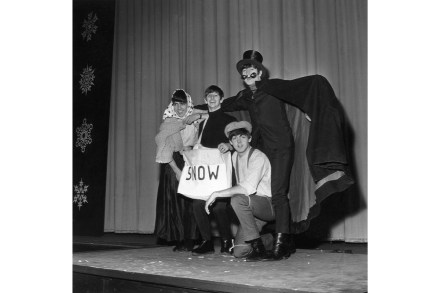
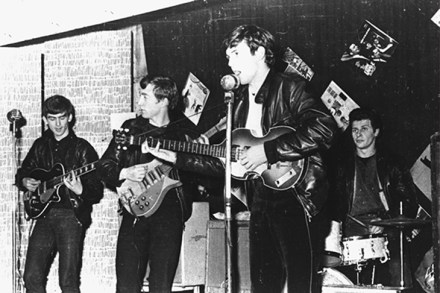
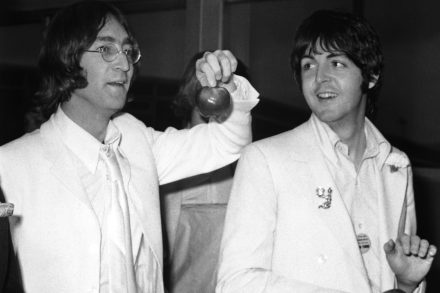
The Beatles never had a proper Christmas number one, only seasonal number ones with unseasonal bangers: ‘I Want To Hold Your Hand’, ‘I Feel Fine’, ‘We Can Work It Out’/‘Day Tripper’ (1963-65) and ‘Hello Goodbye’ (1967). Though they never made a traditional Christmas record, the Fabs loved Yule — and you know you should be glad. Between 1963 and 1969, they recorded an album-worth of charming Christmas nonsense. Welcome to the semi-secret hinterland between the legal and bootleg worlds: the Beatles’ Fan Club Christmas flexi discs. The flexis have only had one official release since their private circulation to the ravenous Brit-Beatle fan club.

beatles

No one ‘got’ the Sixties better than David Bailey

From our UK edition

What caught my eye towards the end of Look Again was this conversation between David Bailey and the shoe designer Manolo Blahnik. They are talking about a brief golden age, a perfect moment in their lives: Blahnik: So sometimes I just have to sit down and say: ‘God, did all this happen?’ All the excitement, it doesn’t exist any more, maybe because I’m old.Bailey: It’s not because you’re old. It doesn’t exist. This is the autobiography of David Bailey, as told to James Fox (‘my collaborator’). It starts with Bailey as a child in the East End, and ends with Bailey returning there as an old man.

From cheeky mop tops to long-haired holy men: The Beatles come of age in America

From our UK edition

In his latest book, the veteran pop commentator David Hepworth is concerned with satisfaction, its acquisition and maintenance. On record, satisfaction was something the Rolling Stones found notoriously hard to get — ‘an itch you could never quite scratch’. In reality, it was a commodity the groups spearheading the British invasion of the 1960s — the Stones, the Beatles, the Dave Clark Five and others — discovered to be plentiful in the USA. And as Hepworth notes, it was ‘Satisfaction’ itself, a huge hit in America, which delivered the very thing Mick Jagger bemoaned the lack of in the song.

We loved them, yeah, yeah, yeah

When the Beatles’ first authorized biographer, Hunter Davies, clinched the deal in 1967, his publisher remarked that ‘we know everything we could possibly know about the Beatles and they’ll disappear soon’. In that same year, the philosopher Bryan Magee adopted an incredulous tone in the Listener: ‘Does anyone seriously believe that Beatles music will be...part of daily life all over the world in the 2000s?’But here in the recently released statistics for the Top 10 global recording artists of 2019, among the Taylor Swifts and the Ed Sheerans, 50 years after they broke up — let me introduce you to the band you’ve known for all these years.

beatles glimpses

Meet Dion, one of the last living links to the earliest days of rock ’n’ roll

From our UK edition

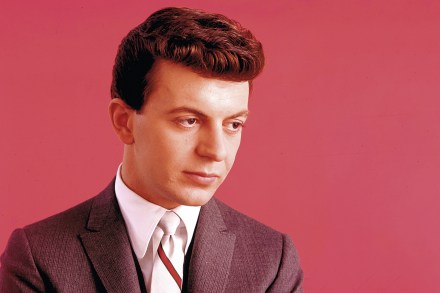
Only two of the Beatles’ pop contemporaries are depicted on the cover of Sgt. Pepper’s Lonely Hearts Club Band. One is Bob Dylan. The other is Dion DiMucci. In a pleasing third-act twist, Dylan contributes the liner notes to Dion’s new album Blues With Friends — an act of deference that the recipient is still processing. ‘I asked him, I didn’t know if he had the time, but he sent me back those paragraphs and said that I knew how to write a song.’ He whistles. ‘That’s from a Nobel Prize winner. I thought, I’ll take it, I’ll take it!’ So he should. Dion — like Kylie, a single moniker suffices — is one of the last living links to the early days of street-corner rock ’n’ roll.

The musical benefits of not playing live

From our UK edition

Glenn Gould considered audiences ‘a force of evil’. ‘Not in their individual segments but en masse, I detest audiences.’ He retired from public performance on 10 April 1964, at the age of 31, having given fewer than 200 public recitals. The Canadian classical pianist had longstanding philosophical objections to the ritual of performing live. He found applause automatic and insincere, and often asked spectators not to bother. He even wrote a (partly) tongue-in-cheek manifesto, the Gould Plan for the Abolition of Applause and Demonstrations of All Kinds, in which he called for clapping to be banned. Gould believed that the most useful and honest response to music came following a period of solitary reflection, rather than as instantaneous public display.

Letters: The ban on public worship has enabled more of us to experience spiritual riches

From our UK edition

Divine works Sir: Luke Coppen writes that livestreamed services ‘lack the vital communal dimension of worship’ and ‘are, at times, excruciatingly dull’ (‘Risen again’, 11 April). I would beg to differ. Catholics, at least, have had the rare opportunity to tune in to some beautifully sung Latin Masses in the Extraordinary Form which they would otherwise struggle to attend. As a Hampshire resident, for example, I have greatly appreciated the Birmingham Oratory’s livestreams. When celebrated well, these Masses are divine works of art in themselves, but are also highly prayer-focused and God-centred, with the celebrant facing the same way as the congregation — towards the altar.

The last great purveyors of a vanishing art form: Green Day’s Fathers of All… reviewed

From our UK edition

Grade: B+ It is an eternal mystery to me why Britain has never had much time for power pop, seeing as we gave this often charming genre to the world through the Beatles and, to a lesser extent, Badfinger. But we never really swung for it, post-Abbey Road. When power pop had its mild renaissance in late ’78, we looked away, bored, tugged by disco on the one hand and po-faced boring angular post-punk on the other. The Knack’s ‘My Sharona’ — the epitome of power pop — got in the charts, sure. But there was no groundswell. In the USA it was different. Almost everything labelled punk that wasn’t art rock (i.e. Television and Talking Heads) was actually power pop, none more so than the Ramones. We remained aloof.

Did Radio 2 really need to give us four days of the Beatles to celebrate Abbey Road?

From our UK edition

This Changeling Self, Radio 4’s lead drama this week, clearly ought to have gone out in August. It’s set — and was recorded — at the Edinburgh Festival and would have been a gift to marketing. ‘I love the festival!’ coos She. ‘All these millions of conversations, listen, listen, oh and stories, lots of stories, the different ways of telling…!’ No one in the real world speaks like this. But it’s just about OK, because she isn’t quite real either. She is a Fairy Queen, come to Edinburgh to spirit away a young pianist named Tam, as in Tamlin, who is a bit wet but really rather nice. The story is a modern retelling by Linda Marshall Griffiths of an old Scottish ballad that couldn’t be better suited to radio.

Distress signals

From our UK edition

It’s an increasingly common lament that computers have ruined everything, and a longing for the days before Google and Twitter, when everything was somehow more organic and authentic, is on the rise. As someone who can remember writing early reviews on an electric typewriter and then going to the library to fax them to a literary journal, I’m partial to this kind of unplugged nostalgia myself. But it can get out of hand. So it does in this book — ambitiously titled to evoke John Berger’s classic of art criticism, Ways of Seeing — which explains that computers have wrecked music along with everything else.

All you need is love | 27 June 2019

From our UK edition

Yesterday is the latest comedy (with sad bits) from Richard Curtis, directed by Danny Boyle, about an unsuccessful singer-songwriter, Jack, who wakes up to discover that he’s the only one who remembers the Beatles so can now steal all their tunes, if he’s of that mind. Unusually for Curtis, the lead is an Asian and there is no Bill Nighy (not a sign, not a whiff), which is an advance. And there are some funny moments — when Jack first plays ‘Yesterday’ to some friends, one sniffs: ‘It’s not exactly Coldplay, is it?’ But. It’s all intertwined with a romance that is not just generic but also intolerable.

The secret of their success

From our UK edition

Which of the Beatles would you most like to have been? Not either of the dead ones, presumably. Nor the one continually derided for his alleged lack of talent. Definitely not the embarrassing, gurning, two-thumbs-up uncool one… Anyway, it’s a trick question. The correct answer, at least it is for me after watching The Beatles: Made on Merseyside (BBC4, Friday), is Pete Best — the drummer who got ousted just before the band got big because he was too good-looking, too quiet and, some say, because Brian Epstein couldn’t handle his mum’s pushiness. Best, I’d always imagined, was the unluckiest man in history.

Loved and lost | 21 March 2019

From our UK edition

On 19 June 1948, the modern LP was unveiled at a press conference by the Columbia Records president Ted Wallerstein, who, as Billboard magazine reported, ‘demonstrated listening qualities of both 10- and 12-inch vinyl microgroove platters’. The company issued Frank Sinatra’s long-player, The Voice of Frank Sinatra, a week later. The title of David Hepworth’s new book might therefore imply a starting point of 1948 — similar to the approach taken by Travis Elborough’s excellent 450-page history of the album, The Long Player Goodbye (2007) — but Hepworth’s book is both narrower and more autobiographical, largely confined to the years 1967 to 1982.

They say it’s your birthday? It’s my birthday too, yeah!

The White Album is one the greatest works of 20th century art, executed by the greatest exponents of the 20th century’s greatest popular and unpopular art: pop music. Which is why connoisseurs of this work of high magik know that there is nothing new to say about The Beatles, which, as everyone also knows, was The White Album’s official title. The minutiae of The Fabs’ mind-boggling State Of The Universe address from 1968 have been dissected and analyzed so completely that armies of middle-aged divorced male White Album necrophiliacs now roam the pub and bars of the West, clashing over the rallying cry, ‘But should it have been a single album?

white album

That’ll be the day

From our UK edition

We’ve had Alan Johnson the lad from the slums of north Kensington, Alan Johnson the postman and Alan Johnson Member of Parliament and cabinet minister. Now comes the sequel: Alan Johnson the rock and roll years. Actually, it’s not quite a sequel since it covers much of the same territory as two of the previous volumes, albeit from a slightly different angle. Although Johnson went on to hold five cabinet posts, politics was never part of Johnson’s life plan. All he ever wanted to be was a rock star and, who knows, it was an ambition he might have realised but for the fact that his musical instruments kept being stolen. As recounted in This Boy, his wonderful and hugely successful first volume of memoirs, Johnson’s start in life was, to put it mildly, unpromising.

Having your cake

From our UK edition

For those in the know, Jimmy Webb is one of the great pop songwriters of the 1960s and 70s, up there with Lennon and McCartney, Brian Wilson, Goffin and King, Holland, Dozier and Holland, and Bacharach and David. The hits he wrote for Glen Campbell alone earned him his place in the Songwriter’s Hall of Fame: ‘By the Time I Get to Phoenix’, ‘Galveston’ and of course ‘Wichita Lineman’, the dying fall of which — ‘And I need you more than want you/ And I want you for all time’ — is so perfect that I am fighting back tears even as I type it. The song was written in an afternoon at the request of Campbell who, after the success of ‘Phoenix’ was looking for ‘something about a town’.

The dark side of creativity

From our UK edition

In Eureka, Anthony Quinn gives us all the enjoyable froth we could hope for in a novel about making a film in the 1960s — champagne, drugs, threesomes, gangsters, a Silver Cloud Rolls-Royce, hula-hooping girls and Pucci scarves flung over smears of vomit. Underneath, however, lies an intellectual question. The film is an adaptation of Henry James’s ‘The Figure in the Carpet’, a story about obsessively trying to understand the secret key that unlocks an author’s work: ‘The idea that governs the whole and gives it meaning… a string that my pearls were strung on.’ (Ought I admit that I enjoyed Quinn’s saucy 1960s screenplay, spliced between chapters of the novel, more than James’s original?

Days of frantic strumming

From our UK edition

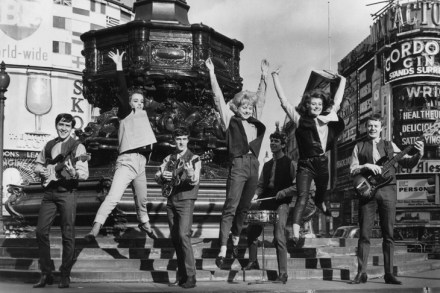
‘It was easy, it was cheap, go and do it,’ sang the Desperate Bicycles on their self-funded debut single in 1977, summing up the punk belief that you didn’t have to be the world’s best musician before getting up on stage or making a record. Twenty years earlier, a previous generation learned a similar message from the skiffle explosion, which put guitars in the hands of many future members of the key British rock groups of the Sixties. It therefore seems appropriate that a musician first inspired by seeing The Clash has eventually written a book about skiffle.

The great rock’n’roll swindles

From our UK edition

Birds have been giving me a lot of grief of late. There’s Tappy — the blue tit who has built his nest just underneath my bedroom window and makes rat-like scuffling noises that bother me at night and wake me early in the morning. And Hoppy, a mistle thrush fledgling who can’t quite fly yet, which means we have to keep the cat indoors, which means I have to deal with its horrible shit in the litter tray every day before breakfast. And the rookery in the big ash, whose inhabitants are very vocal, especially when one of their babies falls out of the nest and gets devoured by the dog. I may be only a couple of dawn choruses away from losing it altogether, as my fellow Brummie Ozzy Osbourne once famously did with a pair of white doves.

The terrible truth

From our UK edition

Here’s the bad news. One day you or someone like you will be shopping in a mall or enjoying a concert or about to catch a train when the first sudden, sharp crack will rend the air and your world will change forever. Around you, people will start to crumple and as the panic and horror finally dawn the screams will begin while the automatic rifle fire escalates and those still standing will begin to flee — but where to? If you run away from the gunfire you’re being herded into a trap. If you run towards it you’ll be shot, either killed immediately, or casually, later, as you lie wounded, probably by knife to save ammo.