Terrorism

It is not enough for Muslims to say ‘we condemn terrorism’

From our UK edition

It is not enough for Muslims to say ‘We condemn terrorism’. Sure – we believe you. But something more is needed. What? It’s easy to get bogged down in the slightly wrong issue of violence and war. We should not expect Muslims to condemn all violence that claims a religious justification – for most war does tend to claim such justification, and an element of this lingers in the West, and few of us are complete pacifists. What we need to hear from British Muslims is that they reject the vision from which terrorism comes. It is a vision of society unified by one political and religious ideology. It is a vision of pluralism, and secular politics, swept aside by this vision. It is a theocratic vision.

‘British Values’ won’t help in our fight against terrorism

From our UK edition

Steve Hilton has called for Theresa May to resign as Prime Minister, blaming her for the security failures that lead to the three recent terror attacks. Without intimate knowledge of the workings of the Cameron administration it's hard to know where blame does lie. And there certainly has been a large increase in the number of terror plots for the authorities to deal with this year. The security services have an awesome job in keeping track of as many as 23,000 individuals, and so we may now be facing a sort of Israelification of British life, with barriers going up on London's bridges this morning. Already we now have bag searches around London museums and the occasional appearance of armed policemen outside cathedrals.

Blind, bovine hope will get us nowhere – it’s time to change our response to Islamic extremism

From our UK edition

Last Sunday, I appeared on the BBC’s Sunday Politics to discuss the aftermath of the Manchester attack. I said what I thought, and various Muslim groups promptly went bananas. This was not caused by my suggestion that this country should finally crack-down on British officials who spend their retirements working as shills for the House of Saud. Nor by my ridiculing of that modern European tradition whereby someone blows us up and we respond by singing John Lennon songs (and now Oasis too). Rather they objected to my simple two-word suggestion that we could all do with ‘less Islam’. In a short film preceding the studio discussion, I mentioned that countries like Poland, Hungary and the Czech Republic have very little Islam and very little Islamic terror.

Letters | 1 June 2017

From our UK edition

Ignoring the hadith Sir: Douglas Murray and Jenny McCartney (‘The known wolf’ and ‘A war on joy’, 27 May) are correct to cite hatred of women and young girls and fear of their independence as a trigger for terrorist violence — witness Malala Yousafzai. But it is of course not the only trigger since, denial notwithstanding, it is against the generic and non-gender-specific ‘infidel’ that the Koran fulminates. The prohibition said to exist against killing women and children in war is not found in the Koran (of divine infallibility) but in the hadith (of debatable provenance on a case-by-case basis).

High life | 1 June 2017

From our UK edition

I feel like an obituary writer, what with Nick Scott, Roger Moore, Alistair Horne — all great buddies — and now my oldest and closest friend, Aleko Goulandris, dead at 90. Mind you, they all had very good lives: plenty of women, lots of fun, accomplishments galore, and many children and grandchildren. And they all reached a certain age — what else can you ask of this ludicrous life of ours? Well, I won’t be writing about the high life this week, but scum life instead. And I’ll tell you why: those innocent young children slaughtered by that Islamist scumbag in Manchester, that’s why.

Too much of everything

From our UK edition

Arundhati Roy has published only one previous novel, but that one, The God of Small Things, won the Booker Prize. That was 20 years ago. Early success did not, however, block Roy into neurotic silence: instead, it offered her a platform for verbally intemperate political activism. She is an impassioned campaigner against globalisation, industrialisation and all forms of the arch-enemy capitalism, and a critic of US foreign policy, Israel and the government of Sri Lanka. Her Booker prize money was donated to the campaign against the Narmada Dam project. To Indian critics who condemn her hyperbole as ‘hysterical’ she retorted: ‘I am hysterical, I’m screaming from the bloody roof tops.

Jeremy Corbyn always blames Britain first

From our UK edition

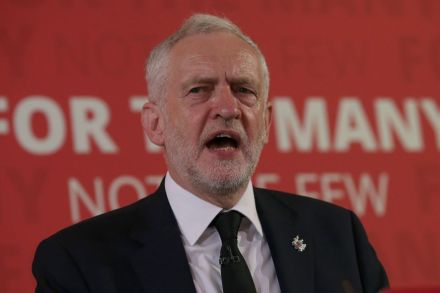
Jeremy Corbyn and his crowd always blame Britain first, I argue in The Sun today. They view the West as being responsible for the world’s ills. It was this worldview that led Corbyn to say in his first speech since the Manchester attack that British foreign policy increases the risk of terrorism at home. Now, to my mind, his view is wrong headed for the reason I outlined here. If Corbyn were to become PM, the country would be led by someone who regards Britain as part of the problem, not part of the solution. Up to now, the Tories haven’t been vocal enough about making this point. Yesterday, with Fallon, Boris Johnson and Theresa May’s words they began to. But they need to hammer this message home in the next 12 days.

A proper discussion about terrorism is the best way to honour Manchester’s dead

From our UK edition

Until last week, it was thought that the jihadi threat was subsiding and the security services were increasingly able to disrupt any serious plot. The recent attacks involved knives or rented cars – deadly in the wrong hands but a far cry from the 7/7 attacks, or the seven-aircraft Heathrow aircraft bomb plot thwarted in 2006. Yet now, for the second time in our history, a suicide bomb attack has been perpetrated against the public. And this might show that things are getting worse. That as Isis is forced into retreat in Iraq and Syria, the jihadists are preparing to return to Britain with deadlier skills and tactics. While al-Qaeda focused on military and economic targets, Isis considers young girls at a pop concert to be ‘crusaders’.

Nothing hurts Jeremy Corbyn more than being right

From our UK edition

With Labour closing the gap on the Tories in the polls, it was only a matter of time before an act of self-immolation returned them to square one. This morning, Corbyn gave a speech in which he drew a link between British foreign policy and terrorist attacks on home soil. This will surely go down like a lead balloon with the party’s working-class base, particularly in the north of England which is still reeling from their worst terror attack in modern history. But in London and the home counties, there might be whispered recognition of the fact that Corbyn is, essentially, right, even if he’s wrong to say it. It seems that nothing is more destructive in British politics at the moment than being right.

Jeremy Corbyn’s speech is a trap for the Tories

From our UK edition

The most dangerous thing about Jeremy Corbyn’s speech today, blaming terror attacks in Britain on wars we have fought abroad, is that it is partly true. The temptation for the Conservatives will be to show outrage at the words: 'Many experts, including professionals in our intelligence and security services, have pointed to the connections between wars our government has supported or fought in other countries and terrorism here at home' and to accuse Corbyn of exploiting the Manchester bombing for his own political gain. But they would be extremely foolish to do so because they will be unable to argue away the assertion that British military involvement in the Middle East has increased the risk of terror attacks at home.

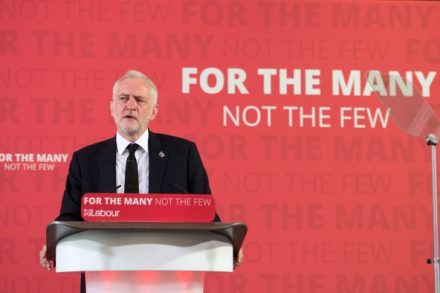
Jeremy Corbyn’s speech on terrorism, full transcript

From our UK edition

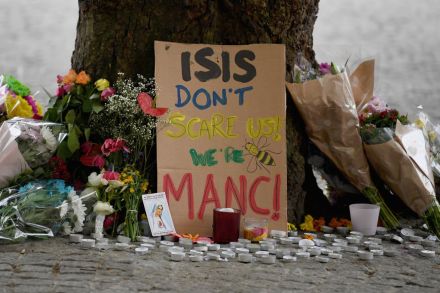
Our whole nation has been united in shock and grief this week as a night out at a concert ended in horrific terror and the brutal slaughter of innocent people enjoying themselves. When I stood on Albert Square at the vigil in Manchester, there was a mood of unwavering defiance. The very act of thousands of people coming together sent a powerful message of solidarity and love. It was a profound human impulse to stand together, caring and strong. It was inspiring. In the past few days, we have all perhaps thought a bit more about our country, our communities and our people. The people we have lost to atrocious violence or who have suffered grievous injury, so many of them heart-breakingly young .

The known wolf

From our UK edition

The meeting place of the two worlds could not have been more sharply defined. In Manchester Arena, thousands of young women had spent the night singing and dancing at a show in Ariana Grande’s Dangerous Woman tour. Songs such as the hit ‘Side To Side’ were performed: ‘Tonight I’m making deals with the devil/ And I know it’s gonna get me in trouble…/ Let them hoes know.’ Waiting for them in the foyer as they streamed out was Salman Ramadan Abedi, a 22-year-old whose Libyan parents settled in the UK after fleeing the Gaddafi regime. A man whose neighbours said he must have been radicalised in Manchester, ‘all those types’ having been driven out of Tripoli.

Portrait of the week | 25 May 2017

From our UK edition

Home  Twenty-two people were killed and 59 wounded by a man who blew himself up, with a bomb containing metal fragments, in the foyer of Manchester Arena as crowds were leaving a concert by the American singer Ariana Grande, aged 23, who has a strong following among young girls. Of the wounded, 12 were children. Police named the suspected murderer as Salman Ramadan Abedi, aged 22, a Mancunian whose family come from Libya, which he had recently visited. Isis said it was behind the attack. A 23-year-old man was arrested the next day. The official threat level was raised to ‘critical’, meaning that an attack was expected imminently. Soldiers were deployed in the streets to support armed police.

The Spectator’s notes | 25 May 2017

From our UK edition

In most parts of the world, we have now supped so full of terrorist horrors that the death of 22 people in such a terrible way does not feel decisively worse than what has gone before. You can tell this by the rather pro forma things that politicians say to condemn the attacks. Yet again, the attack is described as ‘cowardly’. This is simply untrue: it must require immense, though repellent, courage to blow yourself up. The other word to avoid is ‘innocent’. It is a word naturally, and rightly, applied to children, but it carries the dangerous implication that some terror attacks might be aimed at the ‘guilty’, and therefore be more forgivable.

Ukip’s tough talk on terror comes with a big risk

From our UK edition

Ukip's success in pursuing the Tories over Brexit will be remembered for a long time. Now, the party thinks it has a new bone of contention with which to go after the government: keeping Britain safe. In the wake of Monday’s night’s attack, Ukip wants to paint itself as the only party serious about rooting out Islamic fundamentalism and tackling terrorism. As if to make that point, while the Tory and Labour national campaigns remained suspended this morning, Ukip pressed ahead with its manifesto launch today. Nuttall came under pressure at the event over this decision, and was asked repeatedly whether he was trying to capitalise on the attack by focusing so squarely on the terror threat.

Should there be troops on the streets?

From our UK edition

In the wake of terrorist outrages such as Monday's bombing, the British public tends to keep calm and carry on. We saw it in London after the Westminster attack in March; we saw it yesterday on the streets of Manchester – a stirring sight. That calmness in the face of evil is an attitude that has almost always been reflected by those who govern and lead us. Think of Margaret Thatcher’s steely response to the Brighton bombing. It’s the British way. But it has, until now, also been the British way not to put troops on the streets unless absolutely necessary. It’s a delicate balance: a prime minister has a duty to reinforce the police, and after a terrorist attack it’s also natural that any democracy would be put on the highest form of alert.

Killing time | 18 May 2017

From our UK edition

Jez Butterworth’s new play The Ferryman is set in Armagh in 1981. Quinn, a former terrorist, has swapped the armed struggle for a farming career and now lives with his sick wife, their countless kids, his sister-in-law and her only son. But the IRA, who murdered his brother as punishment for his disloyalty, are due to pay a visit with unknown intentions. More violence, perhaps? Protection money? Or both. Well, neither, it turns out. They merely want Quinn to refrain from blaming his brother’s death on them. Rather a low price to ask. And yet Quinn is willing to defy them even though he knows they repay disobedience with murder, and he now has a dozen vulnerable dependents to protect. These plot elements don’t quite stack up.

Flee or die

From our UK edition

Every nation has the right to control its borders, but we in the West are getting a bit too comfortable dehumanising other humans for failing to fill out forms in triplicate before fleeing the carpet-bombing of their cities. In recent months, Theresa May has rejected Calais’s child refugees; Donald Trump has seemingly tried (unsuccessfully, twice) to ban Muslims; and Australia has gone full ‘Dickensian judge’ and chucked its refugees on a prison island.

Islamism isn’t the only terror threat Germany is facing

From our UK edition

Since December, when Islamic terrorist Anis Amri drove a truck into a Berlin Christmas market, Germans have been waiting fearfully for the next Islamist attack. However right-wing terrorism is also a growing concern in Germany, and the latest case to come to light shows how this extremist movement may be evolving. Germany's Military Intelligence is currently investigating 275 cases of right-wing extremism, but surely none of them is quite so disconcerting as the peculiar case of Franco A. The investigation began in January, when a maintenance worker at Vienna Airport opened a toilet ventilation duct and found a pistol hidden inside it. The police attached an alarm to the air duct, in February a man set off the alarm, and was duly arrested.

Terrorism teaches a lesson that some still refuse to learn

From our UK edition

Another knife-attack was thwarted yesterday in Westminster. Overnight there were anti-terror raids in Kent and London. These were unconnected, but police say that they have foiled an ‘active terror plot.’ All this will blend into the background soon, as much as last month’s attack in Westminster already has. Not because we don’t remember anything, but because we never learn anything. After last month’s attack in Westminster there seemed to be an even more concerted effort than usual to say that the perpetrator – a Muslim convert called Khalid Masood – probably suffered from some mental illness, was a mere madman, criminal or drug addict.