Terrorism

Jeremy Corbyn’s speech on terrorism, full transcript

From our UK edition

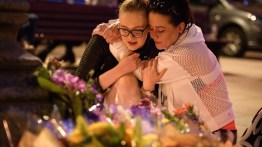
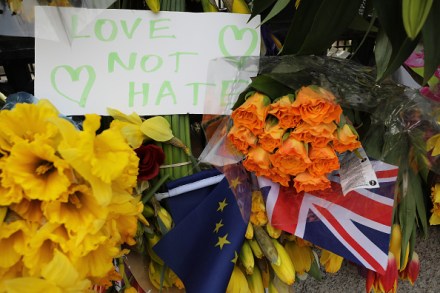
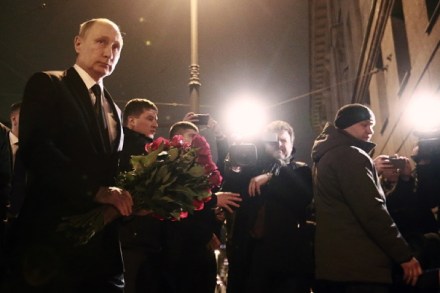
Our whole nation has been united in shock and grief this week as a night out at a concert ended in horrific terror and the brutal slaughter of innocent people enjoying themselves. When I stood on Albert Square at the vigil in Manchester, there was a mood of unwavering defiance. The very act of thousands of people coming together sent a powerful message of solidarity and love. It was a profound human impulse to stand together, caring and strong. It was inspiring. In the past few days, we have all perhaps thought a bit more about our country, our communities and our people. The people we have lost to atrocious violence or who have suffered grievous injury, so many of them heart-breakingly young .

The known wolf

From our UK edition

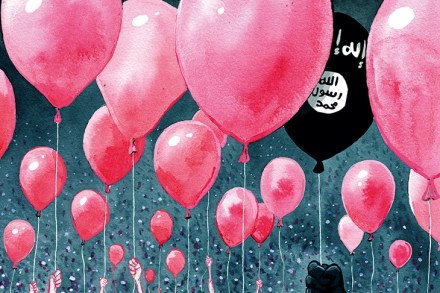
The meeting place of the two worlds could not have been more sharply defined. In Manchester Arena, thousands of young women had spent the night singing and dancing at a show in Ariana Grande’s Dangerous Woman tour. Songs such as the hit ‘Side To Side’ were performed: ‘Tonight I’m making deals with the devil/ And I know it’s gonna get me in trouble…/ Let them hoes know.’ Waiting for them in the foyer as they streamed out was Salman Ramadan Abedi, a 22-year-old whose Libyan parents settled in the UK after fleeing the Gaddafi regime. A man whose neighbours said he must have been radicalised in Manchester, ‘all those types’ having been driven out of Tripoli.

Portrait of the week | 25 May 2017

From our UK edition

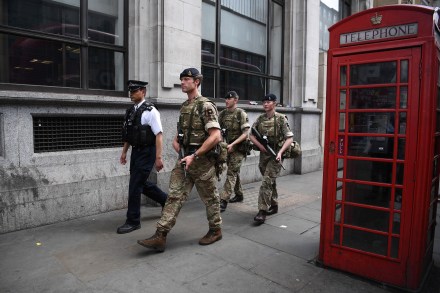
Home  Twenty-two people were killed and 59 wounded by a man who blew himself up, with a bomb containing metal fragments, in the foyer of Manchester Arena as crowds were leaving a concert by the American singer Ariana Grande, aged 23, who has a strong following among young girls. Of the wounded, 12 were children. Police named the suspected murderer as Salman Ramadan Abedi, aged 22, a Mancunian whose family come from Libya, which he had recently visited. Isis said it was behind the attack. A 23-year-old man was arrested the next day. The official threat level was raised to ‘critical’, meaning that an attack was expected imminently. Soldiers were deployed in the streets to support armed police.

The Spectator’s notes | 25 May 2017

From our UK edition

In most parts of the world, we have now supped so full of terrorist horrors that the death of 22 people in such a terrible way does not feel decisively worse than what has gone before. You can tell this by the rather pro forma things that politicians say to condemn the attacks. Yet again, the attack is described as ‘cowardly’. This is simply untrue: it must require immense, though repellent, courage to blow yourself up. The other word to avoid is ‘innocent’. It is a word naturally, and rightly, applied to children, but it carries the dangerous implication that some terror attacks might be aimed at the ‘guilty’, and therefore be more forgivable.

Ukip’s tough talk on terror comes with a big risk

From our UK edition

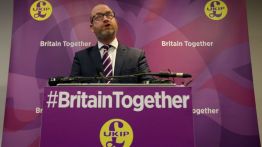
Ukip's success in pursuing the Tories over Brexit will be remembered for a long time. Now, the party thinks it has a new bone of contention with which to go after the government: keeping Britain safe. In the wake of Monday’s night’s attack, Ukip wants to paint itself as the only party serious about rooting out Islamic fundamentalism and tackling terrorism. As if to make that point, while the Tory and Labour national campaigns remained suspended this morning, Ukip pressed ahead with its manifesto launch today. Nuttall came under pressure at the event over this decision, and was asked repeatedly whether he was trying to capitalise on the attack by focusing so squarely on the terror threat.

Should there be troops on the streets?

From our UK edition

In the wake of terrorist outrages such as Monday's bombing, the British public tends to keep calm and carry on. We saw it in London after the Westminster attack in March; we saw it yesterday on the streets of Manchester – a stirring sight. That calmness in the face of evil is an attitude that has almost always been reflected by those who govern and lead us. Think of Margaret Thatcher’s steely response to the Brighton bombing. It’s the British way. But it has, until now, also been the British way not to put troops on the streets unless absolutely necessary. It’s a delicate balance: a prime minister has a duty to reinforce the police, and after a terrorist attack it’s also natural that any democracy would be put on the highest form of alert.

Killing time | 18 May 2017

From our UK edition

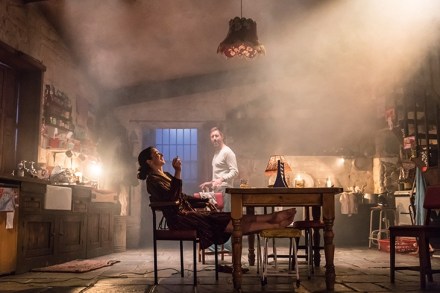
Jez Butterworth’s new play The Ferryman is set in Armagh in 1981. Quinn, a former terrorist, has swapped the armed struggle for a farming career and now lives with his sick wife, their countless kids, his sister-in-law and her only son. But the IRA, who murdered his brother as punishment for his disloyalty, are due to pay a visit with unknown intentions. More violence, perhaps? Protection money? Or both. Well, neither, it turns out. They merely want Quinn to refrain from blaming his brother’s death on them. Rather a low price to ask. And yet Quinn is willing to defy them even though he knows they repay disobedience with murder, and he now has a dozen vulnerable dependents to protect. These plot elements don’t quite stack up.

Flee or die

From our UK edition

Every nation has the right to control its borders, but we in the West are getting a bit too comfortable dehumanising other humans for failing to fill out forms in triplicate before fleeing the carpet-bombing of their cities. In recent months, Theresa May has rejected Calais’s child refugees; Donald Trump has seemingly tried (unsuccessfully, twice) to ban Muslims; and Australia has gone full ‘Dickensian judge’ and chucked its refugees on a prison island.

Islamism isn’t the only terror threat Germany is facing

From our UK edition

Since December, when Islamic terrorist Anis Amri drove a truck into a Berlin Christmas market, Germans have been waiting fearfully for the next Islamist attack. However right-wing terrorism is also a growing concern in Germany, and the latest case to come to light shows how this extremist movement may be evolving. Germany's Military Intelligence is currently investigating 275 cases of right-wing extremism, but surely none of them is quite so disconcerting as the peculiar case of Franco A. The investigation began in January, when a maintenance worker at Vienna Airport opened a toilet ventilation duct and found a pistol hidden inside it. The police attached an alarm to the air duct, in February a man set off the alarm, and was duly arrested.

Terrorism teaches a lesson that some still refuse to learn

From our UK edition

Another knife-attack was thwarted yesterday in Westminster. Overnight there were anti-terror raids in Kent and London. These were unconnected, but police say that they have foiled an ‘active terror plot.’ All this will blend into the background soon, as much as last month’s attack in Westminster already has. Not because we don’t remember anything, but because we never learn anything. After last month’s attack in Westminster there seemed to be an even more concerted effort than usual to say that the perpetrator – a Muslim convert called Khalid Masood – probably suffered from some mental illness, was a mere madman, criminal or drug addict.

Man arrested in Whitehall on suspicion of terrorism offences

From our UK edition

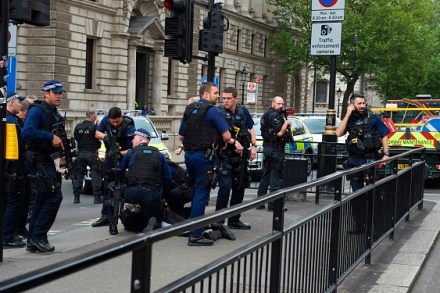
A man in his late twenties has been arrested on Whitehall today and is being detained under the terrorism act. The BBC are reporting that the man was known to the police. Photos from the scene appear to show a knife on the ground. The police are saying that following this arrest there is no immediate known threat. There doesn’t seem to be any particular concern inside the Palace of Westminster; everything here seems pretty calm right now. But, obviously, following the appalling murder of PC Palmer and four others just over a month ago there is a heightened sense of the risk of a low-tech terrorist attack. It is important, though, that life continues as normally as possible. After all, one of the aims of terrorism is to disrupt our way of life.

Sweden is divided in the wake of the Stockholm attack

From our UK edition

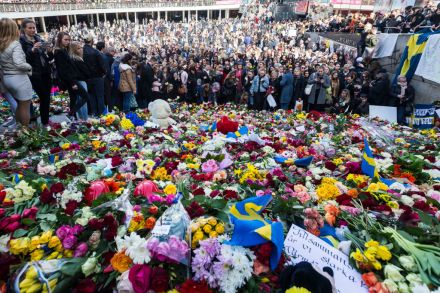
Last Friday, only hours after the terrorist attack in central Stockholm, police found themselves pelted by rocks in the city’s largely immigrant Tensta neighbourhood. The following evening, officers were once again attacked, this time in Hammarkullen in Gothenburg. On Sunday, a familiar story: rioters aimed Molotov cocktails and a fire bomb at police as unrest broke out in the area. In the days following the truck attack, Swedish newspapers had been full of defiant headlines: ‘Stockholm stands united’ and ‘Love conquers all.’ But the subsequent violence put paid to much of that: ‘Unity’ and ‘love’ are, for many Swedes, not the words that spring instantly to mind.

German football keeps calm and carries on

From our UK edition

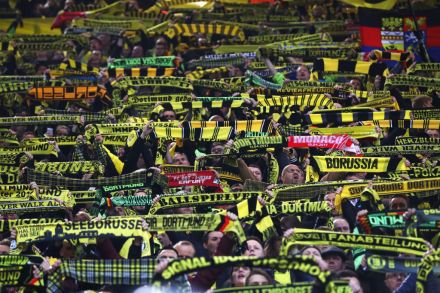
Germany lost a football match but won a moral victory last night, when Borussia Dortmund were defeated 3-2 at home by Monaco, in the first leg of the quarter finals of the Champions League. To restage a major fixture just 24 hours after a terrorist attack was a remarkable achievement. To restage it when the Dortmund team bus had come under direct attack, landing one of its players in hospital, was nothing short of incredible. Dortmund fans gave bed and board to stranded Monaco supporters, Monaco fans sang Dortmund songs in the stadium, and both teams gave it their all (every Dortmund player was given the option not to play, but all played regardless). A thrilling game was the best response, and the result was incidental. This was European sport at its finest.

Portrait of the Week – 12 April 2017

From our UK edition

Home Boris Johnson, the Foreign Secretary, having cancelled a trip to Moscow over the Syrian poison gas incident, consulted other foreign ministers at the G7 summit at Lucca in Italy about how to get President Vladimir Putin of Russia to abandon his support for President Bashar al-Assad of Syria. The Scottish Medicines Consortium accepted for routine use by NHS Scotland a drug called Prep which, at a cost of more than £400 a month, can protect people at risk of contracting the HIV virus through unprotected sexual activity. In England, 57 general practitioners’ surgeries closed in 2016, Pulse magazine found, with another 34 shutting because of mergers, forcing 265,000 patients to move.

Inmates and Islamism

From our UK edition

In response to the Westminster attack, a 100-strong new counter-extremism taskforce has been announced to deal with the terrorist threat in prisons. I’m taking some credit for this badly needed focus. In the autumn of 2015, the then Justice Secretary, Michael Gove, asked me to lead an independent review of the threat posed by Islamist extremism in prisons, the probation service and the youth justice system. I used to be a prison governor in what was known until just a few days ago as the National Offender Management Service, so I agreed on the understanding that I reported only to him and that I had his full support to go where the evidence led me, without interference from bureaucrats. To his credit, he agreed immediately. Gathering information was a complex task for a small team.

Russia is a new front for radical Islam

From our UK edition

Moscow Russia’s REN TV, which published the first image of a person who planted a bomb on a train in St Petersburg’s metro, reported that the security services are not ruling out the possibility that his clothes and beard may have been a disguise used to fool the authorities. But since racial profiling is practised as a matter of course in Russia, it would seem peculiar for a would-be terrorist to dress up in an Islamic disguise, especially considering that there are even more police than usual out on the streets and in the metros of major Russian cities after the recent anti-corruption protests.

We should worry more about Putin’s Russia than Muslim fanatics

From our UK edition

Last week’s events in London raised a recurrent dilemma for journalists, including me. It is a huge story when a terrorist kills four people then is shot down in Palace Yard, Westminster. Yet dare we say how fortunate we are that since 9/11 Muslim terrorists have proved incapable of mounting an attack remotely as lethal as that on the Twin Towers? An intelligence officer told me recently that he worries far more about Russia than about Muslim suicidalists, and this must be the rational assessment. The public needs awakening to the menace posed by Vladimir Putin’s adventurism. Meanwhile, Khalid Masood’s dreadful deed reflects the flailings of a death cult.

When our armed police open fire have we got their backs?

From our UK edition

I walked past Parliament, five days after Khalid Masood’s fatal attack. I looked at all the armed policemen on all the gates visible to the public. All were talking to one another rather than surveying the scene in front of them. As I write, the only person, so far as we know, being actively investigated by the authorities for his part in the events of last week is Sir Michael Fallon’s close protection officer, who shot Masood dead. Under our rules, it is automatic that the Independent Police Complaints Commission investigates any officer who shoots anyone. It is hard to know whether to admire this as a mark of civilisation or gasp in exasperation.

Diary – 30 March 2017

From our UK edition

Last week’s events in London raised a recurrent dilemma for journalists, including me. It is a huge story when a terrorist kills four people then is shot down in Palace Yard, Westminster. Yet dare we say how fortunate we are that since 9/11 Muslim terrorists have proved incapable of mounting an attack remotely as lethal as that on the Twin Towers? An intelligence officer told me recently that he worries far more about Russia than about Muslim suicidalists, and this must be the rational assessment. The public needs awakening to the menace posed by Vladimir Putin’s adventurism. Meanwhile, Khalid Masood’s dreadful deed reflects the flailings of a death cult.

Portrait of the week | 30 March 2017

From our UK edition

Home Theresa May, the Prime Minister, wrote a letter to Donald Tusk, the President of the European Council, with formal notification of Britain’s withdrawal from the European Union under Article 50 of the Lisbon Treaty. If no agreement is made sooner, Britain would cease to be a member in two years. The other 27 member states had celebrated the 60th anniversary of the Treaty of Rome. Asked by the BBC if Mrs May would be the ‘elephant in the room’ at the shindig, Jean-Claude Juncker, the president of the European Commission, said: ‘She’s not an elephant.