Terrorism

Islamists have failed to divide France. Will they succeed in Britain?

From our UK edition

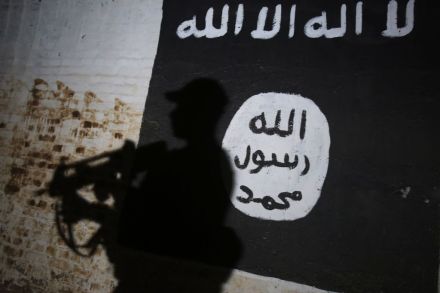
Islamic State will be delighted by what happened outside Finsbury Park mosque in the early hours of Monday morning. In the space of three months they've achieved in Britain what they failed to pull off in France during five years, and provoked a retaliatory act. This is what they want. When the Syrian intellectual, Abu Moussab al-Souri, published his 1600-page manifesto in 2005, 'The Global Islamic Resistance Call', his stated goal was to plunge Europe into a war of religion.
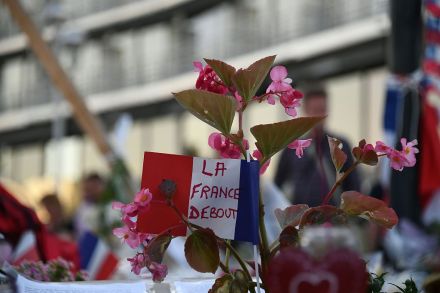
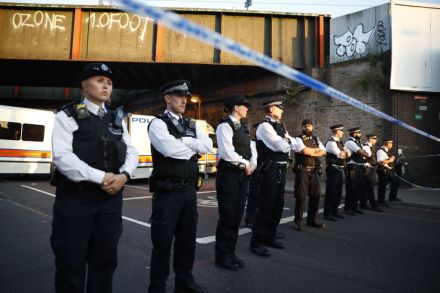
Finsbury Park attack: We need a consistent response to terror

From our UK edition

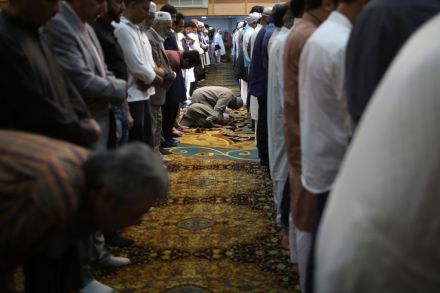
So it seems that it has happened again. A third terrorist attack in as many months on London’s streets. Once again using a vehicle. Once again aimed at Londoners. Except that this time it seems the terrorist himself is not a follower of Isis. Indeed, reports suggest that the attacker may have been a non-Muslim deliberately targeting Muslims. On top of whatever other extremist motivations this attacker may have had, he was also unwittingly doing the work of Isis and similar groups. For if the attack in Finsbury Park was indeed aimed at Muslim worshippers as they were leaving their Mosque then this is exactly the sort of despicable attack that Isis would want to happen, to foment discord.

Kissin in action

From our UK edition

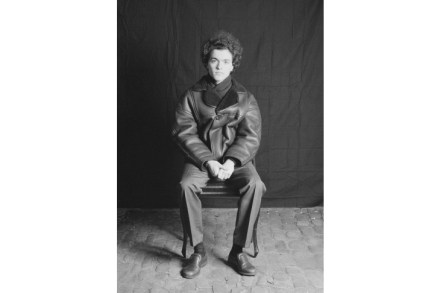
Is Evgeny Kissin, born in Moscow in 1971, the most famous concert pianist in the world? Probably not, if you stretch the definition of ‘concert pianist’ to encompass the circus antics of Lang Lang, the 34-year-old Chinese virtuoso who — in the words of a lesser-known but outstandingly gifted colleague — ‘can play well but chooses not to’. But you could certainly argue that Kissin has been the world’s most enigmatic great pianist since the death of Sviatoslav Richter in 1997 – though, unlike the promiscuously gay Richter, his overwhelming concern with privacy does not conceal any exotic secrets. He has recently married for the first time, but chooses not to publicise the fact.

High life | 15 June 2017

From our UK edition

I was busy explaining to a 23-year-old American girl by the name of Jennifer why the election result was not a disaster. She is a Spectator reader and wants to work in England, preferably in politics. She called the result the worst news since her father had abandoned her mother. I begged to differ. Actually, it was a far better result than it would have been had the Conservatives won a majority of 100, I told her. She gasped in disbelief, but soon enough she was hooked. Do not be alarmed, dear readers. I have not taken LSD. Nor am I suffering from populist-nationalist rage at global elites and starting to hallucinate.

High life | 8 June 2017

From our UK edition

New York   Main Street is a place, but it’s mostly an idea. It’s where locally owned shops sell stuff to hard-working townies, as we used to call the locals back when I was at boarding school. The townies had dependable blue-collar jobs in auto plants and coalmines. Their sons played American football hard, cut their hair short, and married their high-school sweethearts. I went back to my old school recently with my old buddy Tony Maltese, a wrestler who never lost a match. We had a nostalgic lunch with the wrestling coach and talked about old times. The feeling was one of community and of having control over your life. I talked about Britain, and how the Brits have lost control of their lives because of open borders.

The Spectator Podcast: The jihadi next door

From our UK edition

On this week's episode, we discuss the relationship between Islam and violence, question why Brexit hasn’t been a factor in this election, and ask you to embrace the darkness. First up: in this week’s cover story, Tom Holland considers why Theresa May was wrong to dismiss the London Bridge terror attack as ‘a perversion of Islam’ rather than interrogating its roots in the history of the religion. He joined the podcast along with Christopher de Bellaigue, author of The Islamic Enlightenment. As Tom writes: "Last Saturday night, religiously motivated killing returned to London Bridge.

To catch a jihadi

From our UK edition

My taxi was about 90 seconds behind the murderers who struck on London Bridge last week. My wife and I saw their victims on the road. It made no sense until we stopped and got out. Then with horror we realised what we were witnessing. As everyone has already said, the emergency services’ response was flawless. A police 4x4 screeched up behind and two officers jumped out with submachine-guns. Within minutes, we learnt afterwards, the jihadis had been shot dead — but only after they had killed eight people, and injured scores more. Hundreds of others will have been on that bridge or in Borough Market. I suspect all of us will be thanking the police, but also wondering how it came to this.

Is enough enough? Then let’s start deporting

From our UK edition

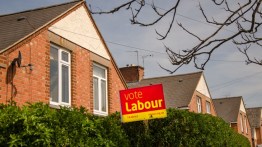
I divide my time between two constituencies, the first a rock-solid Conservative seat in the south-east of England, the other a Labour-held marginal (which the Tories expected to take) in the north-east of England. And the thing I have not seen in either place is a nice blue placard or poster saying ‘Conservative’. Not one anywhere — completely absent. There are loads of them about for the other parties — mainly Labour, but a fairly broad scattering of that vacuous washed-out orange favoured by the Lib Dems and, in the southern constituency, a fair few for the Greens. I suppose you might argue that Conservative voters think it vulgar to advertise their political allegiances.

Is Islam really the ‘religion of peace’?

From our UK edition

On Sunday, in the hours after the London Bridge attack, Christians celebrated Pentecost - recalling when the Holy Spirit inspired the Apostles to come out of hiding and proclaim the Good News. In light of the terrorist atrocity, my parish priest spoke on the fruits of this Spirit – love, joy, peace, forbearance, kindness, goodness, faithfulness, gentleness, and self-control – as the correct response to such horror. It struck me that while we have become used to proclamations of Islam as the 'religion of peace', it's this message which sets Christianity apart in the face of persecution, and many of us forget the impact that the peaceful philosophy of Christianity has had on the world as we know it today.

Italian government: We told UK that terrorist was on his way 

From our UK edition

The third London Bridge attacker has now been named by police as Youssef Zaghba. A 22-year-old Moroccan-Italian, Zaghba was stopped at Bologna Airport in March 2016, heading to Turkey on a one-way ticket. When he was questioned at the airport, he is said to have made his intentions clear: ‘I’m going to be a terrorist,' Politico are reporting that he said. Having been stopped in his tracks, Zaghba was then investigated in Italy on suspicion of terror offences. But last April, proceedings were halted and no further action was taken against him.

It is not enough for Muslims to say ‘we condemn terrorism’

From our UK edition

It is not enough for Muslims to say ‘We condemn terrorism’. Sure – we believe you. But something more is needed. What? It’s easy to get bogged down in the slightly wrong issue of violence and war. We should not expect Muslims to condemn all violence that claims a religious justification – for most war does tend to claim such justification, and an element of this lingers in the West, and few of us are complete pacifists. What we need to hear from British Muslims is that they reject the vision from which terrorism comes. It is a vision of society unified by one political and religious ideology. It is a vision of pluralism, and secular politics, swept aside by this vision. It is a theocratic vision.

‘British Values’ won’t help in our fight against terrorism

From our UK edition

Steve Hilton has called for Theresa May to resign as Prime Minister, blaming her for the security failures that lead to the three recent terror attacks. Without intimate knowledge of the workings of the Cameron administration it's hard to know where blame does lie. And there certainly has been a large increase in the number of terror plots for the authorities to deal with this year. The security services have an awesome job in keeping track of as many as 23,000 individuals, and so we may now be facing a sort of Israelification of British life, with barriers going up on London's bridges this morning. Already we now have bag searches around London museums and the occasional appearance of armed policemen outside cathedrals.

Blind, bovine hope will get us nowhere – it’s time to change our response to Islamic extremism

From our UK edition

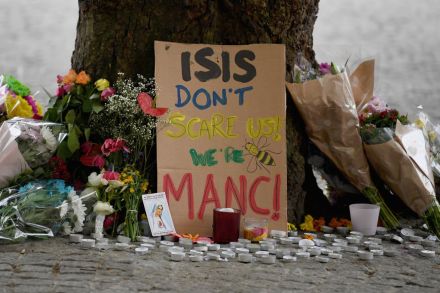
Last Sunday, I appeared on the BBC’s Sunday Politics to discuss the aftermath of the Manchester attack. I said what I thought, and various Muslim groups promptly went bananas. This was not caused by my suggestion that this country should finally crack-down on British officials who spend their retirements working as shills for the House of Saud. Nor by my ridiculing of that modern European tradition whereby someone blows us up and we respond by singing John Lennon songs (and now Oasis too). Rather they objected to my simple two-word suggestion that we could all do with ‘less Islam’. In a short film preceding the studio discussion, I mentioned that countries like Poland, Hungary and the Czech Republic have very little Islam and very little Islamic terror.

Letters | 1 June 2017

From our UK edition

Ignoring the hadith Sir: Douglas Murray and Jenny McCartney (‘The known wolf’ and ‘A war on joy’, 27 May) are correct to cite hatred of women and young girls and fear of their independence as a trigger for terrorist violence — witness Malala Yousafzai. But it is of course not the only trigger since, denial notwithstanding, it is against the generic and non-gender-specific ‘infidel’ that the Koran fulminates. The prohibition said to exist against killing women and children in war is not found in the Koran (of divine infallibility) but in the hadith (of debatable provenance on a case-by-case basis).

High life | 1 June 2017

From our UK edition

I feel like an obituary writer, what with Nick Scott, Roger Moore, Alistair Horne — all great buddies — and now my oldest and closest friend, Aleko Goulandris, dead at 90. Mind you, they all had very good lives: plenty of women, lots of fun, accomplishments galore, and many children and grandchildren. And they all reached a certain age — what else can you ask of this ludicrous life of ours? Well, I won’t be writing about the high life this week, but scum life instead. And I’ll tell you why: those innocent young children slaughtered by that Islamist scumbag in Manchester, that’s why.

Too much of everything

From our UK edition

Arundhati Roy has published only one previous novel, but that one, The God of Small Things, won the Booker Prize. That was 20 years ago. Early success did not, however, block Roy into neurotic silence: instead, it offered her a platform for verbally intemperate political activism. She is an impassioned campaigner against globalisation, industrialisation and all forms of the arch-enemy capitalism, and a critic of US foreign policy, Israel and the government of Sri Lanka. Her Booker prize money was donated to the campaign against the Narmada Dam project. To Indian critics who condemn her hyperbole as ‘hysterical’ she retorted: ‘I am hysterical, I’m screaming from the bloody roof tops.

Jeremy Corbyn always blames Britain first

From our UK edition

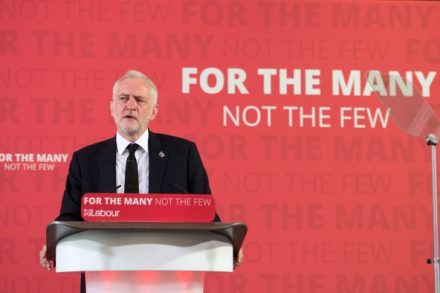
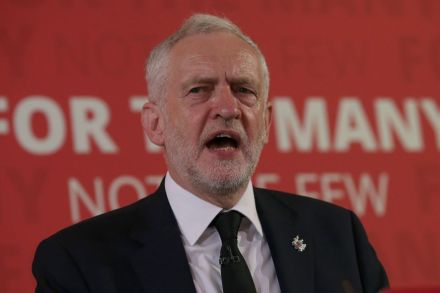
Jeremy Corbyn and his crowd always blame Britain first, I argue in The Sun today. They view the West as being responsible for the world’s ills. It was this worldview that led Corbyn to say in his first speech since the Manchester attack that British foreign policy increases the risk of terrorism at home. Now, to my mind, his view is wrong headed for the reason I outlined here. If Corbyn were to become PM, the country would be led by someone who regards Britain as part of the problem, not part of the solution. Up to now, the Tories haven’t been vocal enough about making this point. Yesterday, with Fallon, Boris Johnson and Theresa May’s words they began to. But they need to hammer this message home in the next 12 days.

A proper discussion about terrorism is the best way to honour Manchester’s dead

From our UK edition

Until last week, it was thought that the jihadi threat was subsiding and the security services were increasingly able to disrupt any serious plot. The recent attacks involved knives or rented cars – deadly in the wrong hands but a far cry from the 7/7 attacks, or the seven-aircraft Heathrow aircraft bomb plot thwarted in 2006. Yet now, for the second time in our history, a suicide bomb attack has been perpetrated against the public. And this might show that things are getting worse. That as Isis is forced into retreat in Iraq and Syria, the jihadists are preparing to return to Britain with deadlier skills and tactics. While al-Qaeda focused on military and economic targets, Isis considers young girls at a pop concert to be ‘crusaders’.

Nothing hurts Jeremy Corbyn more than being right

From our UK edition

With Labour closing the gap on the Tories in the polls, it was only a matter of time before an act of self-immolation returned them to square one. This morning, Corbyn gave a speech in which he drew a link between British foreign policy and terrorist attacks on home soil. This will surely go down like a lead balloon with the party’s working-class base, particularly in the north of England which is still reeling from their worst terror attack in modern history. But in London and the home counties, there might be whispered recognition of the fact that Corbyn is, essentially, right, even if he’s wrong to say it. It seems that nothing is more destructive in British politics at the moment than being right.

Jeremy Corbyn’s speech is a trap for the Tories

From our UK edition

The most dangerous thing about Jeremy Corbyn’s speech today, blaming terror attacks in Britain on wars we have fought abroad, is that it is partly true. The temptation for the Conservatives will be to show outrage at the words: 'Many experts, including professionals in our intelligence and security services, have pointed to the connections between wars our government has supported or fought in other countries and terrorism here at home' and to accuse Corbyn of exploiting the Manchester bombing for his own political gain. But they would be extremely foolish to do so because they will be unable to argue away the assertion that British military involvement in the Middle East has increased the risk of terror attacks at home.