Technology

Let AI eat the universities

College is extraordinarily expensive and becoming less useful, and those who insist otherwise are working from a model of the labor market that stopped describing reality sometime in the 1990s. Four-year courses at private institutions often cost more than $70,000 a year, and it should come as no surprise that student debt has tipped over $1 trillion . This situation is ridiculous for a film student, but it is also ridiculous for a computer science graduate whose program could not keep pace with the industry it was preparing him for – and who learned more in four months on GitHub and dicking around on X and Repl.it than in four years of lectures. It’s sad, but how many people were attending school for “the life of the mind” to begin with?

The Pope’s AI intervention shames our politicians

I was born into a sternly Presbyterian culture. Politically, I’m more Orange than Donald Trump’s skin tone. But today I am on my knees giving thanks to the Pope. He has produced the most powerful political document of the year, taking on the greatest challenge of our times. His first encyclical, Magnifica Humanitas, deals with the changes which will be wrought to all our lives by artificial intelligence in the months and years ahead. AI will transform our economies and societies massively and irrevocably; it will change what it means to be human; it may even mark the end of humanity itself. If it takes the Pope to alert us to this revolution then perhaps the Reformation wasn’t such a good idea after all.

Why drones will carry out the next 9/11

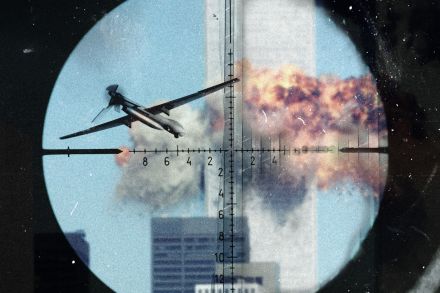
Few know more about drone warfare than Brett Velicovich. During the Iraq war, the former Delta Force intelligence analyst lived in a “black box” in the Iraqi desert using Reaper and Predator drones to pinpoint and track high-value terrorists – before sending in Tier 1 special forces teams, or a Hellfire missile, to end their lives. Most notable among the scalps he claimed were ISIS founder Abu Omar al-Baghdadi and the leader of Al Qaeda in Iraq Abu Ayyub al-Masri. “I feel like there's going to be another 9/11, but this time without the martyrs because you don't need humans anymore to cause sensational damage” Velicovich’s days in the "black box” were some of the last that America could control the skies with drones.

TV doesn’t ruin childhood, but phones might

When I was a nipper, a staple of children’s television was a show called Why Don’t You? The full title, as the theme song made clear, was: “Why don’t you just switch off your television set and go and do something less boring instead?" Very “meta”, as we didn’t then say. And, of course, generations of children sat on the sofa gormlessly drinking Um Bongo while we watched the show’s cast demonstrate all the wholesome arts-and-crafts activities we could have been doing instead of watching TV. This was a few years before our parents discovered the joys of eating microwave TV dinners while watching Master Chef. A previous generation feared that the rise of television would put an end to children reading. It didn’t I start with this to give a bit of context.

The ‘airport effect’ that’s ruining modern life

The phrase ‘computer says no’ now has its own Wikipedia page. The first recorded use dates back to a Stasi-era 1970s East German film segment titled ‘Der Computer Sagt: Nein’. However, its idiomatic use arose in 2004 via a series of sketches in Little Britain, each illustrating an example of technology-enabled bureaucratic intransigence, typically flying in the face of common-sense human judgment. It is perhaps the 21st-century equivalent of ‘jobsworth’. To behavioural scientists, the phrase illustrates something known as ‘defensive decision-making’, whereby the primary motivation for a decision is not the likely quality of the outcome but the decision-maker’s often unconscious urge to use any available means to offload accountability for his actions.

A meditation on reality: Transcription, by Ben Lerner, reviewed

From our UK edition

Near the beginning of Ben Lerner’s new novel the unnamed narrator recalls visiting an exhibition of botanical models made by the father-and-son glass artists Leopold and Rudolf Blashka in Dresden in the 19th century. Like Zeuxis’s grapes, so lifelike that birds would come and peck at them, the models, ‘impossibly delicate things’, challenge the narrator’s sense of the real: I kept seeing the flowers as organic one instant and as artificial the next, a kind of duck/rabbit effect, not between things the object might represent but between nature and culture, the given and the constructed. Transcription, like Lerner’s previous three novels, is an autofiction about the tension between the given and the constructed. It is arranged in three acts.

The new AI system causing panic over cybersecurity

It’s tempting, even fashionable, to pooh-pooh the hyperbole from our tech overlords. The release in 2022 of ChatGPT, the first mass-market conversational AI system, unleashed a volley of supercilious put-downs. The chatbot was not intelligent. It was merely hallucinating, manipulating statistics, regurgitating phrases from the internet: it was a ‘stochastic parrot’. Well, over the next three years, ChatGPT became unputdownable. It learned to handle photographs and videos, extract wisdom from dense textbooks, sound like Scarlett Johansson, write everything from code to songs to emails and offer tips on fixing washing machines. Not bad for a parrot.

Fighting technology is futile

A 20-year-old from Spring, Texas, named Daniel Alejandro Moreno-Gama has been charged with attempted murder after he was accused of throwing a Molotov cocktail at the gate of Sam Altman’s San Francisco home on April 10. He then allegedly walked toward OpenAI’s Mission Bay headquarters and told employees he intended to burn the building down as well. He was reportedly carrying a manifesto – a “three-part series,” according to Fox News – that included a list of other AI executives and investors and their home addresses and documents discussing potential risks that AI poses to humanity, with a section titled: “Some more words on the matter of our impending extinction.

technology

Farewell to the final phone-free haven

From our UK edition

Shortly before Christmas, I visited Australia for the first time. It’s quite some journey but I was fortunate enough to fly business class with Cathay Pacific – and very plush it was, too. On the first leg to Hong Kong (a mere 12 hours or so), I was just settling into my pod (they don’t call them seats) and was about to nod off when there was something of an altercation across the aisle. ‘I understood that wi-fi would be available for the entire journey,’ said a grumpy middle-aged man, who looked like he was from the Middle East. He might well have owned much of the Middle East for all I knew. ‘We’re sorry, sir,’ said the air hostess. ‘It should be up and running shortly. One of the crew is looking into it.

The arrogance of the tech-skeptics

If you’ve been paying attention to social media lately, then you already know the score: smartphones are corrupting our children, we need legal intervention immediately. Roughly half of US states have enacted some form of age-gating for social media or pornographic content. Australia banned under-16s from social media platforms outright, France and Indonesia followed suit and the United Kingdom is now asking people for their papers to read moderately offensive blog posts. You don’t need me to rehash this. The phones have nuked the interior lives of Gen Z, Gen A and the hitherto unborn Generations B and C. Every opinion lands somewhere between “protect the children” and “this is Reefer Madness for iPads.

The age of the aircraft carrier is over

Ever since World War Two, America’s aircraft carrier fleets have served as imposing instruments of imperial power, roaming the oceans to cow recalcitrant nations into obedience. Favored by the Trump administration for this purpose, current experience indicates their day is done thanks to the proliferation of anti-ship missiles and the increasing ubiquity of drones. In America’s last Middle Eastern war but two, against the Yemeni Houthis in 2025, the carrier USS Harry S.Truman, complete with its attendant escorts, was driven into retreat, leaving antagonists in control of the Red Sea. On one occasion, the carrier’s desperate maneuver to avoid a Houthi drone caused an $80 million Hornet jet fighter to slide off the deck and topple into the sea.

Your AI Granny will speak to you now

There’s a trend on YouTube at the moment for videos in which older people give advice. They speak directly to camera, frankly and without pretension. One can almost sense the care home staff hovering in the background, coaxing their barely extant charges into making one last testament of their time on Earth. The videos have titles such as ‘Things I’d tell my 30-year-old self’, ‘Harsh realities of being an 85-year-old woman’, ‘A girl and a woman talk about life’, ‘Lessons learned’ and ‘How to deal with loneliness.’   The commenters below the videos respond, largely, with gratitude and a surprising lack of trollery. ‘I’m terrified of dying,’ one commenter writes. ‘I fear many things, but nothing scares me as much as death does.

Why Emmanuel Macron has declared war on X

Investigators from the Paris prosecutor's cyber-crime unit raided the offices of X in the French capital on Tuesday in what Elon Musk described as a "political attack." The raid was part of an inquiry into whether X, which Musk has owned since 2022, has violated French law. In particular, the prosecutor’s office said it was investigating complicity "in possession or organized distribution of images of children of a pornographic nature... sexual deepfakes and fraudulent data extraction by an organized group." X has denied any wrongdoing. Musk and the former chief executive of X, Linda Yaccarino, have been asked to attend hearings in April. Yaccarino, who left the company last year, echoed Musk’s declaration, accusing France of waging "a political vendetta against Americans.

macron x

A lament for the landline

From our UK edition

Two years ago my quality of life began to go downhill. It happened when BT Openreach gave our old copper landline a compulsory upgrade to ‘Digital Voice’, meaning all calls would be made over wifi. A succession of visiting engineers failed to resolve the crackling and the cutting out on the new digital line or the uninstructed diversion of incoming calls to voicemail. Worse, the new digital service wouldn’t extend to the bedroom: ‘It’s an old cottage, you see, with thick walls.’ Never mind that for decades I had spent many happy hours per day lying in bed (like Mrs Stitch, my role model) organising jobs and romantic partners for friends, jigsawing together the data – unearthed by longform chatting over the copper landline – to make the matches.

US special forces’ secret weapons

By using a sonic weapon in the mission to capture Nicolás Maduro, as Donald Trump appears to have confirmed, Delta Force commandos not only triggered a paradigm shift in warfare, but served poetic justice. When asked whether such a weapon had been used, the President replied: “It’s probably good not to talk about it.” But then added: “Nobody else has it, we have some amazing weapons that nobody knows about.” The following morning, at Davos, Trump said: “They weren’t able to fire a single shot at us. They said, ‘What happened?’ Everything was discombobulated.

sonic

Greenland and the new space race

Donald Trump’s desire for Greenland is not just about access to oil, minerals and control of the new strategic and commercial corridors opening in the region. It’s also about data. Specifically, the most important data in the world. For decades, Pituffik Space Base – formerly Thule – in Greenland has been central to US space defense and Arctic strategy. It’s the US military’s only base above the Arctic Circle and their most northerly deep-water port and airstrip. It’s home to the 12th Space Warning Squadron. Its massive AN/FPS-132 radar has 240 degrees of coverage surveying the Arctic Ocean and Russia’s northern coast, especially the Kola peninsula where it has concentrated its strategic nuclear weapons.

greenland

The speed-camera approach to government

From our UK edition

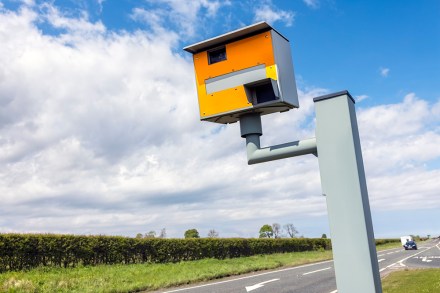
I was recently shown an AI analysis of long-term trends in the public’s attitude to government. The AI had been designed to look at changing attitudes to brands, but its creator had been curious to see what it revealed if the brand in question was The State. It was remarkably insightful. ‘New behavioural data reveals a structural shift: The State has moved from episodic authority to ambient friction.’ And ‘modern governments are, on the whole, stable – but increasingly so for structural rather than relational reasons. Stability is maintained through procedure… and compulsion, not persuasion… Authority now operates in an environment that never turns off – and never waits’.

Hegseth’s vision is more Starship Troopers than Starfleet Academy

​“Welcome to Starbase, Texas,” Elon Musk said from the stage Monday night, as the crowd whooped. “This is a city. It’s actually legally a city that thanks to the hard work of the SpaceX team, we built out of nothing. And it’s now a gigantic rocket manufacturing system. For people out there who are curious to see it, we’re actually on a public highway, so you can come and visit. Drive down the road and see the epic hardware. I think this is the first time that a rocket development program has actually been on a public highway.

How ticks became bioweapons

On December 18 last year, Donald Trump signed into law an order to “review and report on biological weapons experiments on and in relation to ticks [and] tick-borne diseases.” The investigation is long overdue but even so, the facts it uncovers will come as a shock to many. A growing body of evidence shows that during the Cold War ticks were tinkered with and used as delivery mechanisms for biological warfare agents. And these weaponized ticks may have been released both intentionally and unintentionally on an unsuspecting public by the US military. Ticks and the diseases they transmit (such as Lyme) pose a growing threat to Americans, the military and to agriculture. Record numbers of tick bites have been reported in New York (in 2024), Maine (in 2024), and Wisconsin (in 2023).

Is this the end of the cold case?

On March 6, 1959, nine-year-old Candice "Candy" Rogers of Spokane, Washington, went out after school to sell campfire mints door-to-door. Sweet-natured with strawberry blonde curls and a button nose, she was small for her age. Her mother, Elaine, had one clear rule that Candy must be home before dark. But Candy never came home. Her disappearance triggered a 16-day manhunt involving thousands of people, the Marines and the US Air Force. In fact, three airmen lost their lives on the second day when their helicopter hit high tension cables and plummeted into the Spokane River.  After two weeks of searching for Candy, all detectives could find were her scattered mint boxes.