Tariffs

Could Trump target Britain with tariffs?

25 min listen

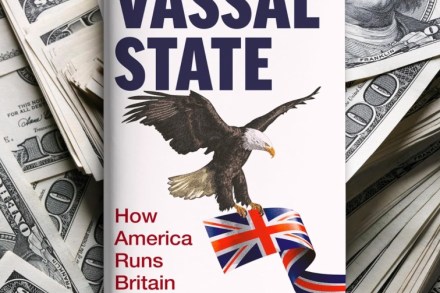
Angus Hanton, author of Vassal State: How America Runs Britain, joins Freddy Gray to talk about the economic relationship between Britain and America. As the world adjusts to the new US administration, every day seems to bring news of new potential tariffs. Is the UK a prime target for Trump? What could the impact of tariffs be? And what are the long-term questions facing British politicians about both the economic and political relationship with the US? Produced by Megan McElroy and Patrick Gibbons.

Europe should be careful in wishing for their own Trump

From our US edition

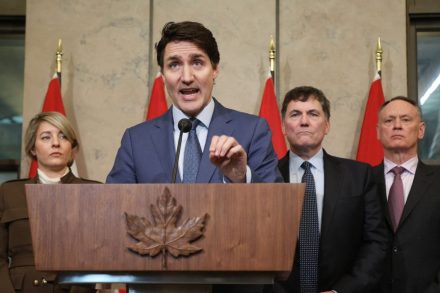
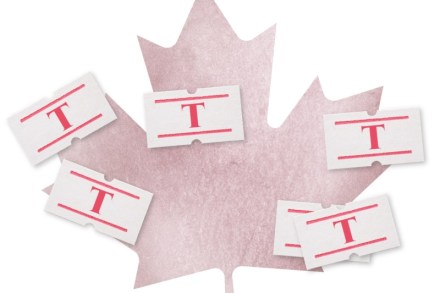
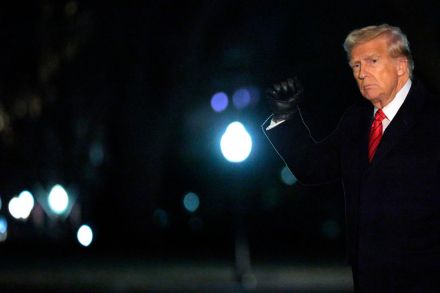
When I visited Toronto with a UK delegation last winter, conversation focused on the issues of immigration, housing and inflation that were contributing to the unpopularity of Justin Trudeau, who finally announced his resignation as prime minister last month. The prospect of Donald Trump’s return to the White House was the slumbering python in the chandelier above the conference table: I sensed our hosts preferred not to think about how bad it might turn out to be. Well, now they know. In response to Trump’s declaration of 25 percent tariffs on Canadian goods, plus 10 percent on imported energy, Trudeau retorted with tariffs on many billions worth of US products.

Trump

What’s next for DoGE fever?

From our US edition

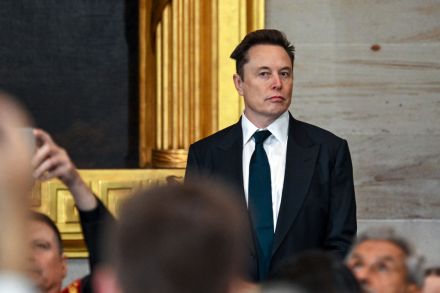
Washington, DC has been struck with DoGE (Department of Government Efficiency) fever — just as everyone started getting over the bugs they all caught at from Trump’s inauguration. Elon Musk and his gang of twenty-something whiz kids are making their mark across the federal government, starting with USAID, which Musk has repeatedly criticized in strident terms as being the core of the corruption he’s seeking to root out.

Are Trump’s tariffs really that bad?

34 min listen

The Spectator's economics editor Kate Andrews and Social Democratic Party leader William Clouston join Freddy Gray to try and make sense of Donald Trump's decision to impose tariffs on Canada, Mexico and China. He has since threatened the European Union, and has warned the UK. Is this a negotiation tactic or something more? What political philosophy underpins the decision? And what will the impact be? Produced by Patrick Gibbons and Megan McElroy.

How Trump’s Mexico and Canada tariffs could change trade history

From our US edition

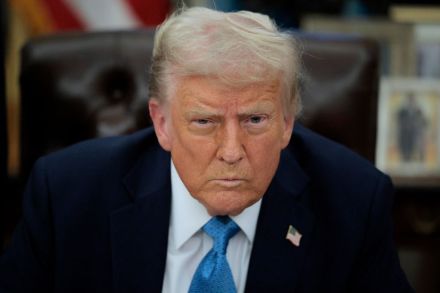
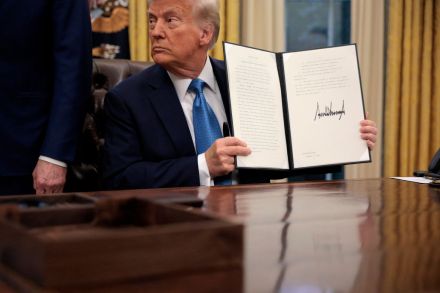
President Donald Trump has set Saturday as the deadline to impose 25 percent tariffs on Canadian and Mexican imports. From the Oval Office earlier this week, Trump explained that the move aims to push the US’s neighbors to take swift action to curtail illegal immigration and fentanyl, as well as to address growing trade deficits. The tariffs may or may not include oil, with Trump saying Thursday that determinations were still being made. Following Trump’s tariff feud with Colombian president Gustavo Petro Sunday, with the Trump forcing his Colombian counterpart to welcome deportees, his latest move signifies an expansion of his revamped “FAFO” foreign policy.

Get ready for Trump’s ‘FAFO’ foreign policy

From our US edition

President Donald Trump posted an AI-picture of a gangster version of himself on Instagram at around 3 p.m. Sunday. Behind the fedora-clad figure, the text “FAFO” — short for “fuck around and find out” — appears alongside a smiling face.  What happened earlier that Sunday, and the machine-made picture that followed, tells us a lot about how Trump 2.0. will deal with the world.  After two planes carrying Colombian illegal aliens departed the United States this weekend, self-proclaimed humanist and former guerrilla fighter Gustavo Petro, Colombia’s president, refused to allow the plane to land. “I deny the entry of American planes carrying Colombian migrants into our territory,” Petro said on X.

Colombia yields to Trump’s tariff threats

From our US edition

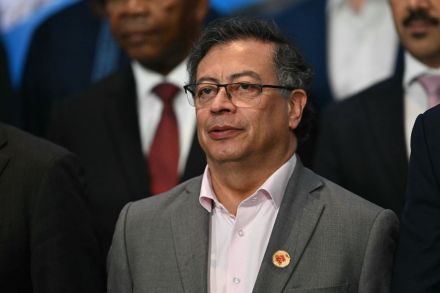
President Donald Trump and Colombian president Gustavo Petro feuded yesterday over the return of immigrants living illegally in the US, but after Trump’s threats of tariffs, Petro agreed to send his own plane to pick up the criminals. Trump’s plans to return the immigrants back to their country of citizenship were temporarily thwarted by Petro, who denied the flights permission to land. He claimed he rejected the repatriation flights because of the lack of “dignity and respect” shown to these Colombians, as they would have arrived on military planes while handcuffed. Petro stated, “We will receive our fellow citizens on civilian planes, without treating them like criminals.

Is Biden working to sabotage Trump’s transition?

From our US edition

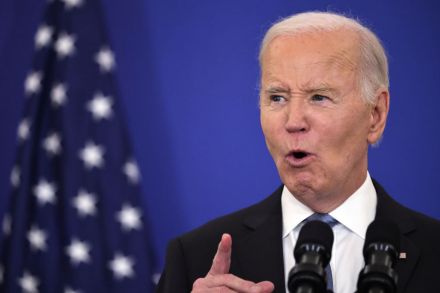
President Joe Biden has taken actions that will make former and President-elect Donald Trump’s transition into the White House difficult, slowing him down with federal rules and other roadblocks, according to inside sources and Trump himself.  Last week, Trump talked to reporters outside of Mar-a-Lago about the departing Biden administration.  “They’re trying everything they can to make things more difficult,” Trump said.  He also told reporters that Biden was being “sneaky,” despite the current president’s public pledge to cooperate with the incoming administration’s transition into the White House.  “They try to be sneaky,” Trump said at a press conference.

trade war

There’s a long way to go before Trump can declare victory in his trade war

From our US edition

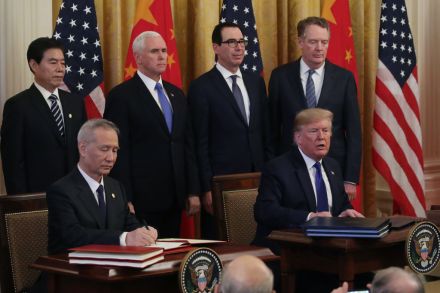
There is no shortage of quotes by Donald Trump that his opponents have tried to use against him — few of which have so far damaged him politically, still less embarrass the man himself. But there is one which really does have the potential to cause him harm in this year’s presidential election: his claim, in March 2018, that ‘trade wars are good, and easy to win’. That isn’t looking quite so clever now, two years later when the trade war that Trump started with China is still far from won. The deal signed today by Trump and Chinese vice premier Liu He brings a respite in hostilities, but there is a long way to go before the US can be claimed to have won, or even to have restored trade to what it was prior to 2018.

Trump’s tariff threat

From our US edition

President-elect Donald Trump’s threat of 25 percent, across-the-board tariffs on Mexico and Canada has already shocked the system. The US dollar rose against its neighbors’ currencies, as stocks dropped and rose.Floating an additional tariff on China is one thing, but adding America’s two neighbors makes the move especially ambitious. If implemented, the US would effectively levy tariffs against its top three trading partners, which together make up around 40 to 50 percent of total trade between America and the world. That’s revolutionary.One thing that’s for certain is that tariffs would hurt the countries they target more than they hurt the US. More than 75 percent of Mexican and Canadian exports are to the Land of the Free.

Free markets are part of the American tradition

From our US edition

Election aftermaths are always an opportunity for taking stock. Since the 2022 midterms, we’ve heard prominent Republicans stressing the need to revisit questions ranging from electoral strategy to how to engage the culture wars. What desperately needs discussion on the American right, however, is conservatism’s approach to economic policy. Since 2015, American conservatives have been deeply divided over economics. Conservative skepticism about markets predates Donald Trump, but there’s little question that Trump shattered the favorable views of free markets that had prevailed since Ronald Reagan’s presidency.

It’s time for the US to revoke China’s ‘normal trade’ status

From our US edition

In April 2022, six weeks after Moscow’s invasion of Ukraine, President Biden signed legislation to suspend Russia’s Permanent Normal Trade Relations (PNTR) status. “Revoking PNTR from Russia,” he said, “is going to make it harder for Russia to do business with the United States… The free world is coming together to defeat Putin.” PNTR status, also known as Most Favored Nation (MFN) status, is a designation granted among World Trade Organization members. Receiving nations are awarded all trade advantages that any other nation receives. Revoking PNTR status from Russia was a strategic move. It opened the door to deliver comprehensive economic strikes against Moscow and sent a clear signal to markets.

Manufacturing in the US shouldn’t be so hard

From our US edition

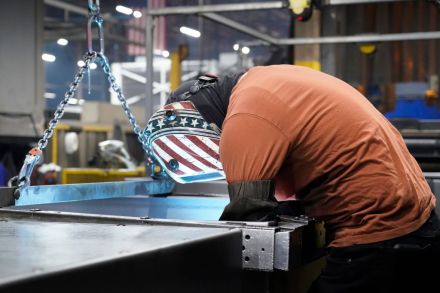
There’s an automotive parts manufacturer in my hometown. The company has grown over the course of its 19-year life, from around 20 employees two decades ago to 45 full-time employees today. Despite the dirty nature of much of the work, the facility is kept clean, open, airy, and bright. There are no shavings on the floor or fumes in the air. The men who weld, bend, blast, and powder coat the metal parts and send them to the warehouse for packaging and shipment do so energetically. “Honestly, [the work] is very satisfying,” the shop’s lead welder, Joe, told me during a recent tour of the facility. “I’ve always wanted to do things with my hands, and I’ve always enjoyed welding.

Can protectionism bring back my father’s world?

From our US edition

My father was born in 1948. He’s the same age as Jackson Browne: ’65 I was 17, ’69 I was 21. His plan was to graduate from his Western Pennsylvania public high school and join the Marine Corps. The local draft board came damn close to saving him the trouble of enlisting. But near the end of his high school career, it was discovered that his girlfriend was “in a family way.” His parents briefly floated the idea of obtaining an illegal abortion. Fortunately, my 17-year-old father, his soon-to-be in-laws, and his Episcopal priest (in those days such men could be depended upon) stood firm. He and his girlfriend were married. Soon after, my half-brother was born and my father enrolled in an apprenticeship program with the International Brotherhood of Electrical Workers.

Boycotting China is not that easy

From our US edition

China’s various human rights abuses, their treatment of women, their savagery toward religious people and their chokehold on Taiwan and Hong Kong, has long made them a target for economic boycotts by Westerners. But executing a successful one is exceedingly difficult to achieve. In 2003, disappointed that the George W. Bush administration reaffirmed their ‘One China’ policy in regards to Taiwan, I launched my own boycott of Chinese goods. It was difficult but felt worthwhile to spend extra time looking for the ‘made in’ label on goods I was buying. And then I needed a shower curtain. I visited store after store and could not find one made anywhere except in China. I lived without a curtain for months before giving in and buying a Chinese-made one.

boycotting

The Chinese trade deal is a Christmas gift to Xi

From our US edition

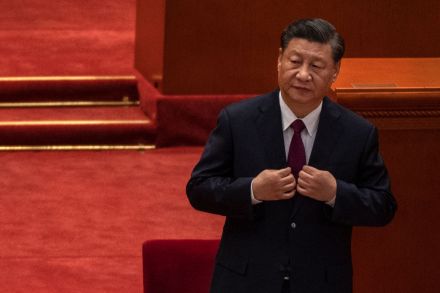
If Donald Trump wanted to deliver a seasonal gift to his ‘good friend’ Xi Jinping, the ‘Phase One’ trade deal reached this weekend fits the bill pretty well.  From the viewpoint of the Beijing leadership, it vindicates the Chinese refusal to budge during the long months of trade negotiations despite the threat of escalating duties. What has resulted is less the kind of overall trade agreement originally aimed at by the Trump administration and feared by China as interference in its economy —  and more of a purchase agreement accompanied by reduced tariffs.

xi

Trump’s Chinese tariffs are simply a scare tactic

From our US edition

Ever since Donald Trump began his trade war with China there have been two possibilities: firstly, that he intends tariffs to form a permanent feature of the landscape in relations between the US and China: a protectionist device designed to protect American jobs indefinitely; or secondly, that he sees his tariffs as a shock tactic devised to draw China into talks which it would otherwise be loathe to join, and with the ultimate aim of freeing up trade. The latest development, halving a set of tariffs which had been in place since September and canceling another set which had been due to come into place this week, points heavily to the latter.

chinese tariffs

They may take our wine, but they’ll never take our brie-dom

From our US edition

I was poking at a dessicated branzino at the Union League yesterday, half-listening to a schoolmate drone on about international alternatives, when he mentioned off-hand that the United States and France are gearing up for a trade war. Bordeaux could cost a bomb; brie could break the bank. I dare say, it shook me to my coeur. Thank God it’s not Sancerre season. They’re decorating the club for Christmas, so I worried I was delirious from the smell of brass polish. I excused myself and discreetly logged on to see that, alas, the dreadful news is true. It’s bad enough that they’re banning foie gras in New York, which is as civilized as burning churches. Now the feds are getting in on the act too.

wine brie

America should kidnap pandas to end the trade war

From our US edition

It’s near the witching hour as the wolves begin to howl, the Tasmanian devil spins itself into a frenzy, and the red-eyed tree frog blinks into glass. The zoo is oddly quiet as US commandos (trained in zoology) scale the walls and deploy a well-placed and tiny explosive gum inside the lock to pop open the enclosure. The sleepy giant simply rolls over with dreams of bamboo and blasé dancing in its head. A bearded captain pulls out a black sack and pulls it over the animal’s head as they tranquilize the heavy sleeper — the panda rendition is complete. That’s right, I am proposing kidnapping the American domiciled pandas to expedite an end to the US-China trade war.

pandas

Are inside-traders profiting from the US-China trade war?

From our US edition

Of all the 9/11 conspiracy stories, one of the most persistent is the suggestion that al-Qaeda funded its operations by short-selling the shares of airline companies in the days before the attack. Inevitably, airline shares plummeted that day, netting short-sellers vast profits. While there was an increase in short-selling before the attack, no-one has proved one way or the other whether that was history’s most audacious case of insider-dealing or just a reaction to an industry which was already in trouble for purely commercial reasons. But is someone now trying on the same trick with the US-China trade war?

inside-traders