Taiwan

What does Ukraine really mean for Taiwan?

From our US edition

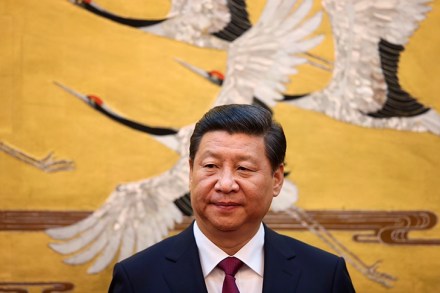
No one should think that Vladimir Putin’s invasion of Ukraine means that Xi Jinping will decide to use force against Taiwan anytime soon, if ever. China is not Russia, nor Taiwan Ukraine. Yet neither should policymakers presume that Beijing will not be influenced by what happens on the other end of Eurasia. Washington must consider whether and how Putin’s aggression has raised the stakes in defending Taiwan from the People’s Republic of China. At the least, US strategists will seriously have to assess whether a global environment in which norms of international behavior are regressing may serve to spur Beijing to military action that once seemed unlikely.
taiwan

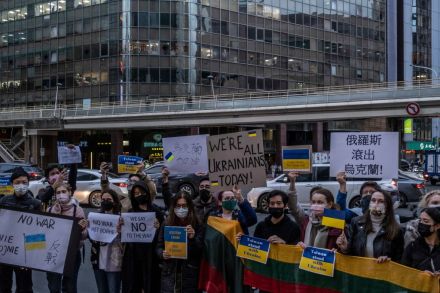
No, China isn’t about to invade Taiwan

From our US edition

I have a medal for winning the Cold War. And I'm not alone — they were awarded to all members of the military and federal civilian employees who served during the Cold War. That included me, at the tail end, with the State Department. Ironically, my so-called Cold War service was in Taiwan. I probably should return the thing; the Cold War is far from over. Part of the Cold War's real conclusion is playing out in Ukraine in real time. Is Taiwan, another hanging chad from that era, next? Is President Xi watching a weakened America giving in to the Russians and seeing his chance to seize Taiwan? Nope. Taiwan is not Ukraine is not Taiwan. The two places only exist next to each other in articles like this one because both are the results of American policy.

China and Russia are an alliance of disruptors

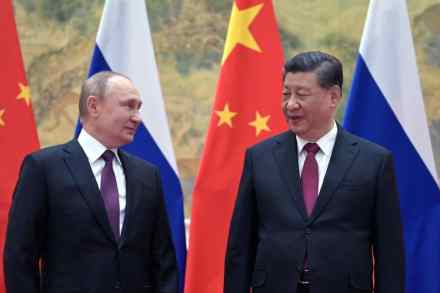
Four years ago, Vladimir Putin and Xi Jinping made pancakes together in Vladivostok while thousands of their military forces conducted joint exercises in Siberia. This month, as China hosted the Olympics, Putin and Xi announced that a ‘new era’ in international relations had begun, one in which the two great authoritarian powers of the 21st century will reshape the liberal international order established in 1945 and reaffirmed in 1991. Some call it Cold War II, yet the blossoming relationship between Moscow and Beijing may best be thought of as an alliance of disruptors.

The dangerous alliance between Russia and China

The growing alliance between Russia and China is something we shouldn’t lose sleep over, their long history of mutual suspicion runs too deep – or so we are told. Such a view is too complacent by half. China and Russia’s mutual hostility towards the West and their opportunism also run deep. And even if their burgeoning alliance is a marriage of convenience, it is still a very dangerous one. As Russia has massed more than 100,000 troops near the Ukrainian border, the nightmare for western strategists is that Vladimir Putin’s actions are being coordinated with those of Xi Jinping in and around the Taiwan Strait, where China’s military intimidation of Taiwan has reached new levels of intensity.

The NFL bends the knee to China

From our US edition

The National Football League is the latest American sports league to cave to Chinese interests while pushing woke policies at home. The league announced Wednesday that it was expanding internationally by allowing eighteen of its thirty-two teams to market abroad. However, a map detailing the marketing agreement labeled Taiwan as part of China. Taiwan considers itself an independent country, but China has been aiming to take control and considers Taiwan one of its many provinces. In 2018, China demanded that international companies list Taiwan as a Chinese province or risk losing the ability to do business in China. The NFL has clearly accepted this attempted power grab in exchange for being able to market its games and merchandise in China.

NFL commissioner Roger Goodell (Getty Images)

Talking turkey with William F. Buckley Jr. on Quemoy

From our US edition

Sixty years ago, as a college student, I spent Thanksgiving on the island  of Quemoy off Formosa (as Taiwan was still called) eating Taiwanese turkey with Taiwanese generals, William F.  Buckley, Jr.  and chopsticks. Present-day college students — or even their parents — may not have heard of Quemoy — or its twin island, Matsu — until now. Or even Buckley, the highly articulate founder of modern conservatism, for that matter. Xi Jinping has been taking a hard and measured look at President Biden and our Department of State since last March when the Chinese Communist Party had Andrew Blinken and Jake Sullivan all but kowtowing to the CCP’s foreign affairs chief, Yang Jiechi, at a summit in Anchorage, Alaska.

quemoy

China has begun its campaign to take Taiwan

Normally, if the response to a speech of mine was that it had been a ‘despicable and insane performance’ from a ‘failed and pitiful politician’, I’d question what went wrong. But since the comments came from Chinese communists about an address I’d made in Taiwan, it’s hard not to feel some pride. Two years ago, I’d been asked to speak at the Yushan Forum, the Taiwanese government’s annual showcase for their international links. Then, I was worried about the optics of calling out Beijing’s behaviour from Taipei so I pleaded diary difficulties. I didn’t want to be accused of complicating Australia’s relations with our prickly largest customer.

Biden’s State Department is a laughingstock

From our US edition

Last week, the State Department learned that twice this summer China had tested a new hypersonic missile weapon with nuclear capabilities. According to the Financial Times, the rocket employed a “fractional orbital bombardment” that also had the guidance ability to “glide” around the earth in orbit. The test reportedly stunned the Biden administration, and comes on the heels of a string of embarrassing global events for the US, including the fall of Afghanistan and Russia opting not to raise natural gas supplies to Europe after the completion of the Nord Stream 2 pipeline. Secretary of State Tony Blinken reacted with a series of “deeply concerned” letters. The State Department had once again been caught flat-footed. But fear not: Blinken has his priorities straight.

state department

There is no Russia-China axis

You should be careful what you wish for, because you might just get it, so the old cliché goes. In diplomacy at the moment, it seems you should be careful of the threats you prepare for, because you may end up producing them. There is a growing trend in the West towards treating Russia and China as some single, threatening ‘Dragonbear’ (a reference to the two countries' national animals). This underrates the very real tensions between Moscow and Beijing, but risks pushing them even closer together. The most recent case in point was Nato secretary-general Jens Stoltenberg’s interview in the Financial Times, in which he criticised ‘this whole idea that we either look Russia, or to China… because it goes together.

The sleepwalkers

From our US edition

It is customary for presidencies to lose vitality and purpose in their last months. It is unprecedented for a presidency to lose its way in its first year, and when it still holds a majority in both houses of Congress. The Biden presidency has donned Jimmy Carter’s cardigan of shame in only nine months. If, that is, it ever was the Biden presidency. It was sold from the get-go as the ‘Biden-Harris presidency’. Double-barreled names are an inveterate mark of snobbery, and in this case the snobbery is that of the higher tokenism. Even the Democrats’ own members didn’t want Harris on the card in 2020. Harris’s symbolic merits as a woman of color seem to have been outweighed by her blatant falsity and opportunism.

biden

Taiwan could spark a war between America and China

From our US edition

Some time between now and the next 10 years war between the United States and Communist China is certain. The only questions are when and how it will start — and how many millions of people will die. Why would I dare make such a bold prediction? Simple. History has conspired to create the perfect mix: trillions of dollars in trade up for grabs, a geopolitical rivalry, military tensions, bad blood, competing national egos and a quest for tech dominance. Washington and Beijing seem on the way to a world war the likes of which mankind has never before seen. And the most likely spark for this war is Taiwan.

taiwan china

Xi threatens Taiwan because he’s weak

Over the weekend, China sent waves of warplanes racing towards Taiwan in numbers not seen before, forcing the democratic self-ruled island to scramble fighters and ready its air defence missiles. The United States says it is ‘very concerned’ by Beijing’s ‘provocative’ actions and reiterated Washington’s ‘rock solid’ commitment to the island. According to Taiwan’s defence ministry, 38 Chinese aircraft, including nuclear-capable bombers and J-16 fighter jets, entered its air defence identification zone on Friday, and another 39 did so again on Saturday — the largest incursion to date. Some 16 more were sent on Sunday.

Would Japan defend Taiwan from a Chinese attack?

In a parliamentary debate in early June about Covid, Japan’s prime minister Yoshihide Suga said that Australia, New Zealand and Taiwan had been 'imposing strong restrictions on privacy rights.’ Whether by mistake or on purpose, Suga had crossed the Rubicon of acceptable China-Japan diplomatic language by implying that Taiwan was a country. If it was a mistake, it was one he repeated several times. China’s response was immediate. A foreign ministry spokesman, Wang Wenbin, accused Suga of a flagrant breach of ‘the Sino-Japanese Joint Statement and its solemn and repeated commitment of not seeing Taiwan as a country.

Britain’s duty to Taiwan

It’s not often that a brass plate sparks a diplomatic incident, as happened this week in Vilnius. Lithuania invited Taiwan to establish a ‘Taiwan representative office’ in the capital. Beijing told Vilnius that the name was unacceptable, and ordered the government to replace the word ‘Taiwan’ with ‘Taipei’ or ‘Taipei City’. Lithuania held its ground, whereupon Beijing withdrew its ambassador and simultaneously expelled Lithuania’s woman in Beijing. There is more to this, as you might imagine, than meets the eye. Since its election of a centre-right government last October, Lithuania has been steadily reaching out to Taipei.

John Cena’s car-crash Taiwan apology

From our US edition

In an unforgivably cringeworthy mea culpa delivered in surprisingly fluent Mandarin, John Cena has apologized to his fans in China. He had said in a promotional interview with a Taiwanese media outlet that Taiwan would be 'the first country that can watch' his new Fast & Furious movie, F9. Uh oh. To the Chinese Communist party and a billion Chinese citizens, the slightest hint of Taiwan’s sovereignty is considered blasphemy in the highest order. 'I made a mistake,' the former WWE champion said in a groveling video posted to the Chinese social media platform, Weibo. 'Now I have to say one thing which is very, very, very important: I love and respect China and Chinese people.' He continued: 'I’m very sorry for my mistakes. Sorry. Sorry. I’m really sorry.

john cena

Is Britain heading for war over Taiwan?

It is billed as a once-in-a-generation review of Britain’s foreign policy and defence strategies. ‘Global Britain in a Competitive Age’, Boris Johnson’s ‘new chapter’ for Britain, identifies two main adversaries: Russia — an ‘acute threat’ — and China — a ‘systemic competitor’. And while it nods at a geopolitical ‘tilt’ towards the Indo-Pacific, the more hawkish Tory MPs are disappointed, thinking Beijing should have also counted as a threat. They should perhaps be careful what they wish for. The Prime Minister is sending more than harsh words in China’s direction.

How the UK can help Hong Kong

Those of us who spent our formative China-watching years reading Chinese Communist party publications learnt early on that the word ‘basically’ was a synonym for ‘not’. ‘The party has basically succeeded in…’ meant that there was a problem. Hong Kong is basically an autonomous region. Xi Jinping is satirised by liberal Chinese as the ‘Accelerator-in-Chief’, whose policies are hurtling the CCP’s regime towards collapse. This could be wishful thinking on their part. Certainly, he has sped up the demise of the ‘one country, two systems’ concept.

How Britain can tame China

Chinese leaders love to use the phrase ‘win-win’, but they actually hope to win twice and leave other nations in positions of relative disadvantage. The Chinese Communist party’s behaviour during the Covid-19 crisis is a case in point. In the midst of the global pandemic, the People’s Liberation Army and the Ministry of State Security have conducted cyber-attacks against hospitals, pharmaceutical companies and medical research facilities developing Covid-19 therapies and vaccines. Triumphing in the race for a vaccine would help China emerge from the crisis in a position of relative advantage economically and psychologically, while reinforcing the idea that China’s authoritarian mercantilist system is superior to democratic free market systems. Win-win.

Does classical Athens give us a clue to China’s next move?

In 1984, China agreed a ‘one country, two systems’ treaty with the UK, designed to control the relationship between Hong Kong and China for 50 years after Britain ceded control of the colony in 1997. It has now broken the treaty, for no other reason than that it can. So what next in that tinderbox? Classical Athens was at war three years out of four, and if arbitration had failed to solve the treaty problem, it would have gone to war. No Greek preferred war to peace, but fighting for life and territory was simply a given of the ancient world.

Is Taiwan the next Hong Kong?

The fate of Hong Kong should make us worried about Taiwan. China’s introduction of a new security law for Hong Kong — which hollowed out the spirit of the ‘one country, two systems’ notion — is a powerful reminder of the importance of sovereignty for the Chinese Communist party. We should ask whether Taiwan is next on the list. In the past few months, as the world battled to control the Covid-19 pandemic, Beijing indulged in increased military activity across the Taiwan Strait. The purpose was to remind the newly re-elected Taiwanese president, Tsai Ing-wen, that Taiwan is an inherent part of China and that there is no alternative to reunification with the mainland by 2049.