T.s. eliot

Preacher and prosecutor

From our UK edition

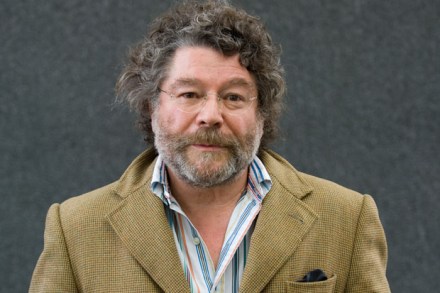
Craig Raine is a pugnacious figure in the fractious world of contemporary poetry. When his poem ‘Gatwick’ appeared in the LRB (2015), social media had one of its habitual spasms. Here was a piece which indulged the male gaze and celebrated lustful yearning — an older man for a younger woman. Hardly new ground one might have thought; but to be fair it’s actually rather more subtle than that, and Faber’s former poetry editor responded to the howls of protest by saying: ‘Of course the stupid are always with us.’ In fact Raine rather likes a scrap and My Grandmother’s Glass Eye, in which poets and critics are mauled routinely for their inability to read poems correctly, reminds us that the poet’s father was a boxer.

Polly’s pleb adventure

From our UK edition

Down and Out in Paris and London is a brilliant specimen from a disreputable branch of writing: the chav safari, the underclass minibreak, the sojourn on the scrapheap that inspires a literary monument. Orwell’s first book was turned down by Faber boss T.S. Eliot, who received the script under its original title, Confessions of a Dishwasher. New Diorama’s dramatisation brilliantly captures the raffish sleaziness of Paris in the 1920s. Orwell’s crew of thieves, parasites and drifters come across as comradely and charming in this magnificently squalid setting. The austere lighting and the ingenious stage effects are done with tremendous economy. There are flashes of bleak humour too.

Witness to the truth

From our UK edition

George Bell (1883–1958) was, in many respects, a typical Anglican prelate of his era. He went to Westminster and Christ Church, and passed his career in the C of E’s fast stream. Never a parish priest, he became, first, chaplain (and later, biographer) of the Archbishop of Canterbury, Randall Davidson; next, Dean of Canterbury; finally, Bishop of Chichester. He was not an intellectual or a contemplative. He was an effective, energetic leader, strongly interested in public affairs, a natural candidate to end up as an archbishop of the established church. This did not happen, probably because Bell opposed ‘area’ Allied bombing of Germany in the second world war. Such carpet-bombing threatened ‘the roots of civilisation’, he said.

In the wrong club

From our UK edition

Groucho Marx was delighted when he heard that the script for one of his old Vaudeville routines was being reprinted in H.L. Mencken’s The American Language. ‘Nothing I ever did as an actor thrilled me more,’ he said. Indeed, argues Lee Siegel in his brief biographical study of the most verbal Marx Brother, Groucho’s ‘greatest regret in life … was that he had become an entertainer rather than a literary man’. How else to explain that excruciating evening in June 1964 when Groucho and his wife dined at the home of Mr and Mrs T. S. Eliot and Groucho thought to lecture Eliot on King Lear? To be fair, it was Eliot who, three years earlier, had written to the then 71-year-old Groucho requesting a photograph of his favourite funnyman.

Could a piece with no singing be the future of opera?

From our UK edition

Nowhere are human beings so magnificently self-assertive as in opera.  Everything about operatic characters is outsize; their bodies, their flowing gowns and capacious cloaks, and their desires. No sooner has the hero set his eyes on the leading lady than he trumpets his desire to possess her; when the villain spots his victim, he tells us how he longs to send him to hell. All this fervent emotion is channelled through those great ringing voices, aided and abetted by the orchestra’s surges and swells. It’s exhilarating to behold, partly because we envy these creatures their unbuttoned emotional life. We, by contrast, are held back by a thousand scruples and doubts. The question T.S. Eliot put into the mouth of J. Alfred Prufrock – ‘Do I dare to eat a peach?

Roaming in the gloaming

From our UK edition

One of the epigraphs to Peter Davidson’s nocturne on Europe’s arts of twilight is from Hegel: ‘The owl of Minerva begins to fly only at dusk’, an image of philosophy as posthumous, able to explain things only after we have experienced them. Or an image of dusk as threshold, the blue hour when light transforms itself, and other worlds become possible. The Last of the Light is a cultural companion to such notions. A cabinet of curiosities — paintings, poems, music — framed by the idea of Europe as an archipelago of regret, many of whose most vital artefacts have dealt in echo and obscure longing, translated into a feeling for light. This is a trail going back to Virgil, poet of shadows, or else starting from Christian ideas of a crepuscular fallen world.

The great inscape

From our UK edition

‘I am 12 miles from a lemon,’ lamented that bon vivant clergyman Sydney Smith on reaching one country posting. He was related to Gerard Manley Hopkins, a priest who, in the popular imagination, would quite possibly balk at the offer of a lemon. After all, 30 years before Prufrock, Hopkins did not dare to eat a peach, fearful of its delicious savour when offered one by Robert Bridges in a Roehampton garden. Hopkins was a complex man who delighted in simple things. Our sense of his view of the world has been complicated by the circumstances of his publication. Forbidden to publish his great ‘The Wreck of the Deutschland’, he largely squirrelled away, or burnt, his work.

In a class of their own

From our UK edition

Painters and sculptors are highly averse to being labelled. So much so that it seems fairly certain that, if asked, Michelangelo would have indignantly repudiated the suggestion that he belonged to something called ‘the Renaissance’. Peter Blake is among the few I’ve met who owns up to being a member of a movement; he openly admits to being a pop artist. The odd thing about that candid declaration is that I’m not sure he really is one. A delightful exhibition at the Waddington Custot Gallery presents Blake in several guises, including photorealist and fantasist, but — although one of the exhibits is an elaborate shrine in honour of Elvis Presley — ‘pop’ is not the term that comes to mind.

The best children’s authors of 2015 — after David Walliams

From our UK edition

The easy way round buying books for children at Christmas is just to get them the latest David Walliams and have done with it. And indeed, Grandpa’s Great Escape (Harper Collins, £12.99), about the sympathetic friendship of a grandfather and grandson, is funny, productive of intergenerational goodwill and spikily illustrated by Tony Ross, though, as my son observed, it’s a pity so many nice people in Walliams’s books end up dead at the end. Or else you could get any of these: Jacqueline Wilson’s Katy (Puffin, £12.99), a take on What Katy Did, which my daughter liked because the heroine is a tomboy; the latest ‘Tom Gates’ from Liz Pichon (Scholastic, £10.

Charles Williams: sadist or Rosicrucian saint?

From our UK edition

Charles Williams was a bad writer, but a very interesting one. Most famous bad writers have to settle, like Sidney Sheldon, for the millions and the made-for-TV adaptations and the trophy wife. Williams had a following, and in the 1930s and 1940s some highly respected literary figures declared him to be a genius. But why did Williams appeal so strongly to a particular age — and what, if anything, can he offer us now? He belonged to that wonderful generation liberated by the 19th-century spread of education. He came from a family with no resources, but a terrible, pathetic yearning for literature. His father, Walter, managed to scrape into print, writing moralising short stories and sentimental poems for the cheapest magazines.

Lines of beauty | 24 September 2015

From our UK edition

David Jones (1895–1974) was a remarkable figure: artist and poet, he was a great original in both disciplines. His was an art of ‘gathering things in’ that engaged imaginatively with history and myth, with his Welsh heritage and the Christian religion. But art also comes out of conflict, and the tension between the two sides of Jones’s creative nature was the motive force that powered so much, both visual and written. Thus it can be misleading to separate his writing from his painting, for they form and express a single vision. However, Jones is presently most celebrated for his writing, particularly his first world war epic poem, In Parenthesis.

Time out of mind

From our UK edition

There can hardly be two novelists less alike than Sebastian Faulks and Will Self, in style and in content. Faulks writes in the grand tradition of realist fiction: a list of his themes might include the brutality and waste of war, France and, of course, romantic love. Self, meanwhile, has created dystopias in which to satirise different aspects of humanity, while conjuring with all manner of stylistic invention. The one area of shared interest has been the history of psychiatry. Here, with Faulks’s new book, their preoccupations further converge. A student of literature on the lookout for a dissertation topic could do a lot worse than The Psychotic Century: 20th Century Ideas of Mental Illness and the Traumatic Effects of War in mid-period Faulks and Self.

Reducing poetry to a science

From our UK edition

Is it possible to tell a good poem from a bad one? To put the question another way: are there objective, even scientific, standards for evaluating literature? Helen Vendler has no doubts. Her spiky new collection of essays begins with the insistence that it is possible to prove how one poem is ‘superior’ to another, and ‘those who suppose there are no criteria for such judgments merely expose their own incapacity’. That’s a bold claim, but in her hands, literary criticism is a science, and anyone who disagrees with her judgments is put sharply in their place.

The same old song

From our UK edition

T.S. Eliot liked to recall the time he was recognised by his London taxi driver. Surprised, he told the cabbie that poets weren’t often recognised. ‘I’ve an eye for celebrities,’ the driver replied. ‘I ’ad that Lord Russell in the back o’ the cab the other day. I said to ’im, “All right, then, Bertrand, so wossit all about?” And, you know what, ’e couldn’t tell me.’ I’ve always felt the story reflects well on the cabbie. While it may have been asking too much of Bertrand Russell to condense his philosophy into the length of a taxi journey, he surely ought to have been able to say something useful. George Steiner is a public intellectual almost of Russell’s stature.

Tom Eliot — a very practical cat. Did T.S. Eliot simply recycle every personal experience into poetry?

From our UK edition

The musical Cats reopened in the West End in December, with a judge from The X Factor in the lead role. The music is by Andrew Lloyd Webber and the songs are, of course, by T.S. Eliot. Eliot died 50 years ago this year, and retains a curious kind of fame, which encompasses West End musicals and scholarly collections of his letters, lovingly published by Faber (most recently, Volume 5: 1930–1931. At 800 pages, this is for true Eliot-fanciers only). In 1948, a line from one of his poems was used in an ad for Esso petrol (‘Time future contained in time past’). In 1956, he gave a lecture on literary criticism in a baseball stadium in Minnesota, and 14,000 people turned up to listen. He was and remains a strange, paradoxical figure: a famous serious poet.

What unites Churchill, Dali and T.S. Eliot? They all worshipped the Marx Brothers

From our UK edition

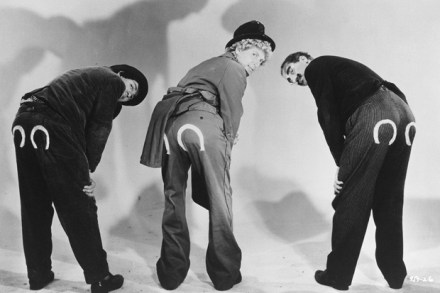
‘I had no idea you were so handsome,’ Groucho Marx wrote to T.S. Eliot in 1961 on receiving from him a signed studio portrait. The Missouri-born Eliot was the Marx Brothers’ devoted fan; three years later, in June 1964, Groucho called on the 75-year-old poet at his home in London. Eliot was interested in the Marx Brothers’ first undisputed film masterpiece, Animal Crackers (1930), while Groucho wanted only to quote from ‘The Waste Land’; however, the men agreed that they shared a love of cats and fine cigars. Winston Churchill was another who admired the Marxes and their deliciously mad repartee. During an air attack on London in May 1941 he found himself watching Monkey Business (1931), and was ‘glad of the diversion’.

Enjoy gin but don’t read books? Or read them only while drinking gin? This is the book for you

From our UK edition

Gin Glorious Gin: How Mother’s Ruin Became the Spirit of London is a jaunty and diverting history of ‘a wonderful drink that embodies the best of London’, which is a judgment that would raise eyebrows even at closing time in Soho. It is not a remotely scholarly book. There are no notes or index, and on the second page Olivia Williams informs us that the first citation for gin in the OED is from 1714, as ‘an infamous liquor’. It’s actually from 1723, as ‘the infamous liquor’ — mere details, but still. I stopped checking things after that.

Sorbet with Rimbaud

From our UK edition

The Bloomsbury of the title refers to the place, not the group. The group didn’t have a poet. ‘I would rather be a child and walk in a crocodile down a suburban path than write poetry, I have heard prose writers say,’ wrote Virginia Woolf, albeit tongue-in-cheek (maybe). Nonetheless, unsurprisingly, these non-poets steal the first chapter of this amuse-bouche of a publication. They are allowed to so that the author, or rather his sources, may describe the rather dull area of London that abuts the eastern end of the Euston Road to the north, and to the south High Holborn. ‘A cold grim house in a cold, grim district,’ wrote Harold Nicolson of Virginia and Vanessa Stephens’s house in Gordon Square.

The mad, mum-fixated maiden aunt of modernism

From our UK edition

Marianne Moore’s poems are notoriously ‘difficult’ but her personality and the circumstances of her life are as fascinating today as they were to the avant-garde writers and artists of 1920s New York. Much of the fascination lies in the contrast between what Linda Leavell calls Moore’s ‘maiden-aunt persona’ and her position as a ground-breaking modernist, whose highly idiosyncratic verse and technical experimentation dazzled and baffled her contemporaries.