T.s. eliot

The Sun Also Rises is still a great American novel

To pinpoint the precise moment Ernest Hemingway came up with the idea for his first novel, The Sun Also Rises, which is celebrating its centenary this year, is not difficult. All we have to do is follow the trail back to Pamplona. In 1925, after a cold winter in Paris, a 25-year-old Hemingway was keen to return to the San Fermín bullfighting festival in the Basque town of Pamplona, near the northern coast of Spain. He had yet to make his mark as a writer, although he was surrounded by some of the heavyweights of expatriate literature: Ezra Pound, F. Scott Fitzgerald, Gertrude Stein and Ford Madox Ford, all of whom believed Hem had a future as a novelist.
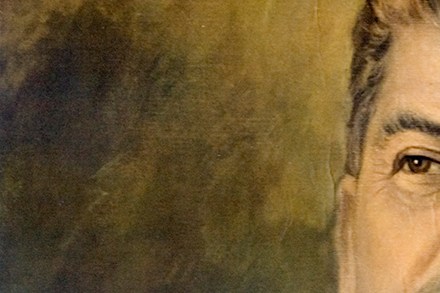
The typo that spelled death in the Soviet Union

From our UK edition

‘As anyone who has gleefully spotted a typo in a prestigious publication, felt a flicker of schadenfreude at a pompous critic’s downfall, or secretly enjoyed a literary scandal knows, it is possible to love books while delighting in their disasters.’ The sentiment expressed in Rogues, Widows and Orphans is familiar to this reviewer. Rebecca Lee, who has been an editor for two decades, knows very well how words ‘get good’ (to quote the title of her earlier book) and what happens when they go wrong. Her new work ‘offers a lick of every flavour of ick lit’, leaving the reader craving more. Errors and omissions in print have consequences for everyone involved.

W.H. Auden’s virtuosity masked careful craftsmanship

From our UK edition

‘Begin with the name,’ begins Peter Ackroyd. ‘Wystan is singular and arresting. Auden himself... confessed that he would be furious if he found that anyone else possessed it.’ It is certainly a name on which much ink has been spilt. Ackroyd’s biography comes barely 18 months after Nicholas Jenkins’s The Island, an exhaustive study of the poet and his work up to 1939 and his flight to America. Unlike Jenkins’s book, Ackroyd’s has the advantage of being a life rather than a half-life, though it accelerates through the later years as Auden tipped into ‘premature old age’. The frequent quotations also help the pacing, though we might have wanted chunkier extracts from, say, ‘September 1st 1939’.

Frederic Prokosch – the man who seemed to know everyone

From our UK edition

One day Frederic Prokosch wrote a novel. He was 27 years old, living with his parents in New Haven, Connecticut, and desperate to be published. Leafing through an old atlas, he had visions of Lebanon and Syria, of the apricot trees of Damascus, the pilgrims travelling from Transcaucasia, and the Orontes River flowing among the rocks. His visions grew more vivid and the voices clearer: ‘I leaned forward in my chair and started to write as though mesmerised.’ The resultant book, The Asiatics, was an immediate success, praised by the likes of Thomas Mann, Albert Camus and André Gide. Others, however, were less sure. How could one write about Asia without ever having been there? Prokosch, it seemed, had quite the imagination.

Christmas I: Katy Balls, Craig Brown, Kate Weinberg, Craig Raine, Lisa Haseldine and Melissa Kite

From our UK edition

37 min listen

On this week’s Christmas Out Loud - part one: Katy Balls runs through the Westminster wishlists for 2025 (1:26); Craig Brown reads his satirist’s notebook (7:06); Kate Weinberg explains the healing power of a father’s bedtime reading (13:47); Craig Raine reviews a new four volume edition of the prose of T.S. Eliot (19:10); Lisa Haseldine provides her notes on hymnals (28:15); and Melissa Kite explains why she shouldn’t be allowed to go to church (31:19).  Produced and presented by Patrick Gibbons.

The Trump trial is a precursor to how a republic ends

Among the many great lines in T. S. Eliot’s Four Quartets, is this mournful observation from “The Dry Salvages,” the third of the bunch: “We had the experience but missed the meaning.” How much happens to us that we only half register or undergo without really twigging its significance? One example that is both pedestrian and historical: the criminal trial in Manhattan of Donald Trump.  As I write, Trump is leading slightly in the polls, which means he is not only at the head of the chief opposition party, but also that he represents an existential threat to the future of the regime that is persecuting — er, prosecuting him.  The trial, brought by Soros-funded district attorney Alvin Bragg is often described as being about “hush money,” i.e.

donald trump trial

The English were never an overtly religious lot

From our UK edition

Generalisations about national characteristics are open to question. Nevertheless, the overwhelming impression one gets from reading the major works of English literature, or from studying the famous English men and women of politics, the military or the academic world, is that the English have not been an especially religious lot. Or, if you think that a strange judgment of a nation that produced the finest Gothic cathedrals in Europe and the hymns of Charles Wesley, then you could rephrase it and say that they have not generally worn their religious feelings on their sleeve. Jane Austen’s hilarious novels do not quite prepare us for her letters in which she confesses her sympathy for evangelicalism.

Has America lapsed into a gerontocracy?

Although I write at high summer, by the time you read this another school year will be upon us. I wonder: do students still read T.S. Eliot? They should. A lot of what he wrote continues to reverberate with significance. Consider, to take just one example, these lines from his poem “Gerontion.” History has many cunning passages, contrived corridors And issues, deceives with whispering ambitions, Guides us by vanities. Think now She gives when our attention is distractedAnd what she gives, gives with such supple confusionsThat the giving famishes the craving.Gives too lateWhat’s not believed in, or if still believed,In memory only, reconsidered passion.Gives too soonInto weak hands, what’s thought can be dispensed withTill the refusal propagates a fear.

gerontocracy

T.S. Eliot’s The Waste Land at 100

In the United States a century ago, a single poet dominated the literary sphere. He was not only the recipient of the first ever Pulitzer Prize for Poetry — which he would win twice more during the course of an internationally distinguished career — but would be nominated for the Nobel Prize for Literature on four separate occasions. He was beloved by presidents, described by one admirer as “more artful than Hardy and more coy than Frost” and found himself one of the bestselling writers in America. His reputation seemed assured forever.

waste land

Claude Vivier ought to be a modern classic. Why isn’t he?

From our UK edition

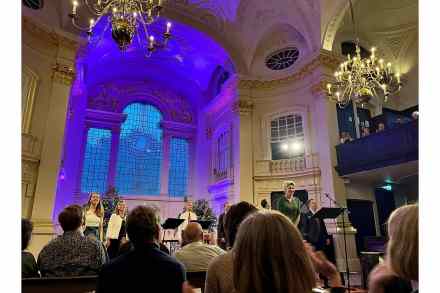
April is the cruellest month, but May is shaping up quite pleasantly and the daylight streamed in through the east window of St Martin-in-the-Fields at the start of I Fagiolini’s latest concept-concert, Re-Wilding The Waste Land. The centenary of Eliot’s poem is the obvious hook. But whether you’re counting from the Rite of Spring riot in 1913, Schoenberg’s Skandalkonzert the same year, or further back to Strauss’s Salome or Debussy’s Faune, music’s modernist moment occurred some time earlier. Which is helpful, in a way, because it freed the group’s director Robert Hollingworth from the limitations of chronological programming and gave him scope to do something a bit more interesting, and possibly a bit more Eliot-esque.

The nightmare of making films about poets

From our UK edition

Television and film are popular mediums. Poetry has never been popular. This is Sam Weller’s father in Pickwick Papers, when he discovers his son writing a valentine, alarmed it might be poetry: Poetry’s unnat’tral; no man ever talked poetry ’cept a beadle on boxin’ day, or Warren’s blackin’, or Rowland’s oil, or some o’ them low fellows; never let yourself down to talk poetry, my boy. In 1994, I made a short film about Kipling. The director, Tony Cash, a man with a first-class Oxford degree in Russian, objected to a two-second reference to Aristotle’s ‘pity and terror’ in my script. ‘If you mention Aristotle, they [the TV audience] will think you’re an arsehole or an idiot.

Bob Dylan’s and T.S. Eliot’s search for truth

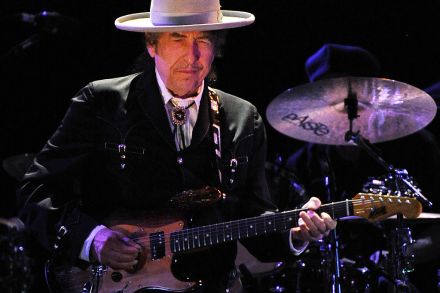
The fact that the master songwriter Bob Dylan is a fan of a literary allusion should come as no surprise. This is the man who, in his autobiography Chronicles Vol. 1, declared that reading the French symbolist poet Arthur Rimbaud made “bells [go] off.” (Incidentally, it was Suze Rotolo, his first love whom he so cruelly lambasted in “Ballad of Plain D,” who introduced him to the poet. One feels that Dylan should have paid her a little more retrospective credit than the all-but-bitter love songs on The Freewheelin’ Bob Dylan.

Nymphomaniac, fearless campaigner, alcoholic – Nancy Cunard was all this and more

From our UK edition

The title of Anne de Courcy’s riveting new book might give the impression that Nancy Cunard had no more than five lovers. In fact she had many, many more. Born in 1896, Nancy was the only child of fantastically ill-matched parents. Her mother, Maud – she later changed her name to Emerald – was an American heiress and socialite. Her father, Sir Bache Cunard, was a fox-hunting squire busily engaged in spending the fortune he inherited as the grandson of the founder of the shipping line. Maud neglected Nancy, leaving her in the charge of an odious governess. The only person who had any time for the lonely little girl was the writer George Moore, her mother’s lover. Some said he was Nancy’s father, but this seems unlikely.

Et in Arcadia ego

"Oxford I do not enjoy,” wrote T.S. Eliot to Conrad Aiken in February 1915. “The food and the climate are execrable, I suffer indigestion, constipation, and colds constantly.” The poet was clearly having one of his bad days. Since arriving at the university the previous October, he had found himself in and out of love with the place, which was hardly surprising, given the timing. Most of the undergraduates at Oxford had either left or were on the verge of leaving to fight for their country, meaning that the lecture and tutorial rooms were almost empty, the sports fields green through lack of use, and the centuries-old traditions stalling like motor cars on the long stretch of the High.

Oxford

Ocean Vuong’s immature poetry

Time is a Mother — Ocean Vuong’s second poetry collection — should have been a scene-stealer, a much-awaited literary event of the type normally reserved for a J.K. Rowling. The collection has been talked about in the breathy, excited terms not normally associated with poetry — the least glitzy of the literary genres — and in a way not heard of since the blockbuster release of Ted Hughes’s Birthday Letters (1998). Vuong, rightly, won the T.S. Eliot prize in 2017 with Night Sky With Exit Wounds. The collection had flashes of brilliance and was a mark of a young poet making his way in the world. It also won the Forward Prize for best first collection, and, in 2019, Vuong was awarded a MacArthur “genius” grant.

Disappointingly conventional and linear: BBC radio’s modernism season reviewed

From our UK edition

This week marks the beginning of modernism season on BBC Radio 3 and 4, which means it’s time for some pundit or other to own up to abandoning Ulysses at page seven, or to finding T.S. Eliot a bore, or to infinitely preferring the landscapes of J.M.W. Turner to the repetitive squares of Kazimir Malevich. That pundit, however, won’t be me. Modernism is rather like the birth of the Roman Empire. It could be seen as a brilliant sloughing off of everything that had decayed in favour of sensible revolution, or as the predictably reactive consequence of years of wrangling over a loss of identity.

When did postmodernism begin?

From our UK edition

There’s a scene in Martin Amis’s 1990s revenge comedy The Information in which a book reviewer, who’s crushed by his failures and rendered literally impotent by his best friend’s success, is sitting in a low-lit suburban room beside a girl (not his wife) named Belladonna: ‘She was definitely younger than him. He was a modernist. She was the thing that came next.’ Stuart Jeffries argues in his new book that the thing that came next was in fact a thing that started a couple of decades before Amis wrote The Information. In Jeffries’s telling, postmodernity can be dated to 13 August 1971, when Richard Nixon held a closed-door meeting that led to America’s abandonment of the Bretton Woods policy of gold-backed currencies.

The National has become the graveyard of talent: Manor, at the Lyttelton, reviewed

From our UK edition

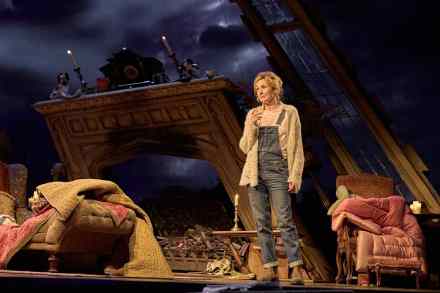
Somewhere in the wilds of England a stately home is collapsing. Rising floodwaters threaten the foundations. Storms break over the leaking roofs. Inside, an argument rages between a snooty moron, Lady Diana, and her drunken Marxist husband who used to be rock star. This is the chaotic opening of Moira Buffini’s country-house drama Manor. The angry husband picks up a hunting rifle and blasts ornaments to smithereens. Then he chases his wife to the top of a staircase where she hits him with a candlestick. Once the fight ends, more commotion erupts as various groups of evacuees rush in through the front doors. Two women arrive from south London. They’re soaking. A daft local priest shows up, followed by a white supremacist with a broken ankle.

To the brownstone born: WASPS, by Michael Knox Beran, reviewed

From our UK edition

It was only in 1948 that the term WASP was coined — by a Florida folklorist, Stetson Kennedy. Yet White Anglo-Saxon Protestant never satisfactorily defined this all-but-extinct breed of American Brahmin. In his sweeping, teeming study of the WASP, Michael Knox Beran concedes that the acronym fumbles its origins. For one thing, it excludes the Celts and Anglo-Dutch Patroons, several of whom lent gravitas and grit to the term and tribe. For this reason too, ‘Wealthy English Episcopalians’ does not work. It may extract the sting but it is belittling, so why tinkle with it? It is sufficient to say that to be a WASP one should have been descended from the well-to-do classes of colonial and early republican America.

Poems are the Duracell batteries of language, says Simon Armitage

From our UK edition

Ezra Pound in ABC of Reading: ‘Dichten = condensare.’ Meaning poetry is intensification, ‘the most concentrated form of verbal expression’. Simon Armitage saying the same thing, memorably, genially, metaphorically, democratically: ‘How much power and force could be stored in — and retransmitted by — such compact shapes. Poems as the Duracell batteries of language.’ Both poets go straight to the point. But a shift has taken place — in tone, in attack — which can be illustrated also by the photographs Armitage found as a ‘sleep-walking’ teenager leafing through Worlds, a sampler of seven contemporary poets, edited by Geoffrey Summerfield: ‘Norman MacCaig watched television and smoked fags.