Surrealism

Rauschenberg is a bore

Pity the security guard at the Guggenheim who must patrol the gallery in which Robert Rauschenberg: Life Can’t Be Stopped is installed. Mounted in commemoration of the artist’s centennial – Rauschenberg was born in Port Arthur, Texas, in October 1925 – Life Can’t Be Stopped includes “Revolver II” (1967), a set of plexiglass discs with images overlaid. A cord leads from the back of this contraption to a pedestal on which there is a control panel – a set of buttons placed in proximity to the viewer. These switches set the plexiglass discs in motion, and they beg to be pushed. On my trip to the museum, visitor after visitor was shushed away from “Revolver II” with the age-old plaint: “Please don’t touch the art.

man ray

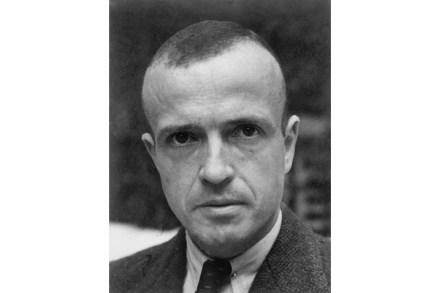
Man Ray is alluring in the way a psychopath is

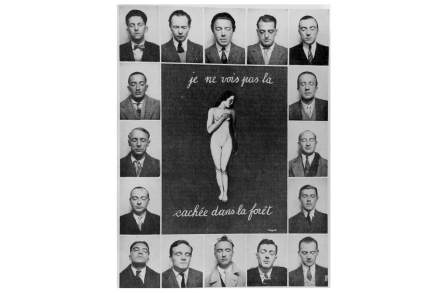
Down to his chosen name, Man Ray (born Emmanuel Radnitzky in Philadelphia in 1890) worked hard to squash anything about him you might call human. At least that’s what is suggested by the Met’s exhibition Man Ray: When Objects Dream. The show spans much of his career – he was associated with surrealism and dada, held a day job as a commercial photographer and experimented with almost every medium imaginable – but coheres around his so-called rayographs, also known, in less egotistical fashion, as photograms. Many will know this medium from elementary school: place objects on top of a light-sensitive sheet and expose them to light to yield white silhouettes against a dark background.

Sixties Surreal at the Whitney is a bad trip

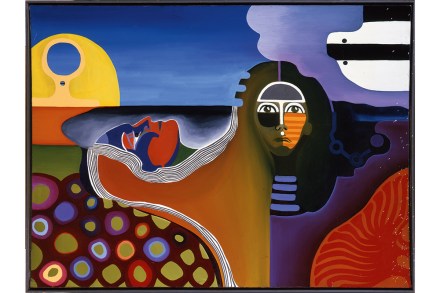
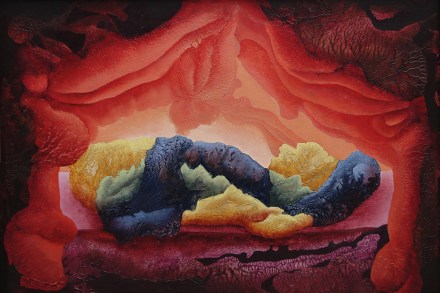
The Whitney’s Sixties Surreal is not about Surrealism. I spent about a week trying to figure out what it might actually be about, before I gave up. The show claims to seek to answer a simple question: what if Surrealism, rather than Cubism, had been the dominant thread in modern American art? This is funny to me, as Dalí’s melting clocks are far better known in America than any Cubist painting. Regardless, the museum never provides an answer. Instead, the Whitney jumps right to its agenda: reviving what it deems an overlooked thread of countercultural art. Ah, yes, the woefully neglected subject of… counterculture in the 1960s.

sixties surreal

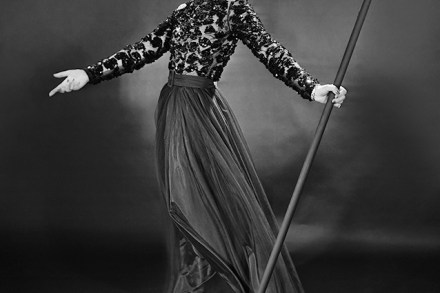
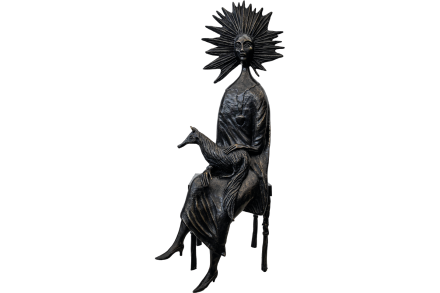
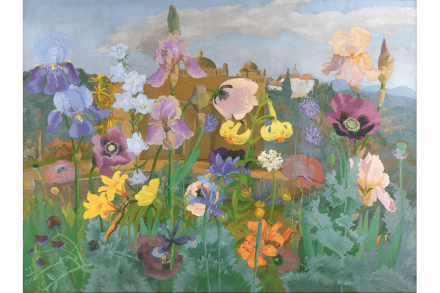
The surreal life of Leonora Carrington

"It’s the belief that nothing is ordinary, that everything in life is extraordinary. And being old is no more, no less, extraordinary than being young.” When the artist and writer Leonora Carrington was asked in 2006 what “Surrealism” meant to her, this was her reply. It was a remarkably frank statement from an artist who had, at other points in her career, declared that she “was never a Surrealist,” even memorably asserting that the Surrealist link between women (the femme-enfant) and the muse was “bullshit.” Perhaps it owes its frankness to the interviewer: sitting across the kitchen in Carrington’s house in Mexico City was her cousin, the journalist and author Joanna Moorhead.

carrington