Students

Universities challenged

From our UK edition

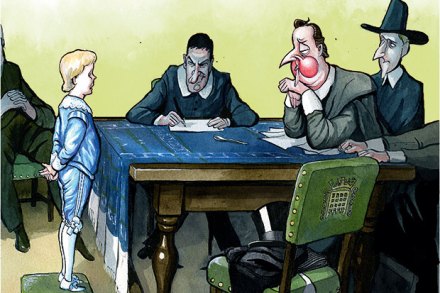
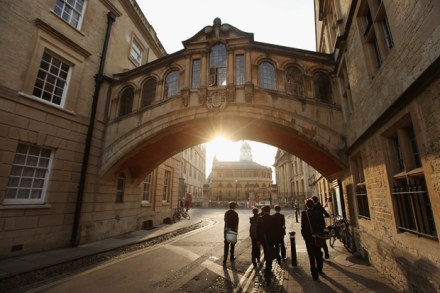
On the face of it, this year’s Nobel Prize awards have been a triumph for British scientists. No fewer than five laureates come from these shores: three physicists, one chemist and an economist. But before anyone starts praising our higher education system, there is one small snag: all five are currently working at US universities. David Thouless, who was awarded half the Physics prize, has followed a typical career path. After taking a degree at Cambridge, he took a PhD at Cornell University and a postdoc at the University of California before heading back to Britain, where he worked for 13 years at the University of Birmingham. There, he started the work that would eventually win him his Nobel prize.

The students fight back

From our UK edition

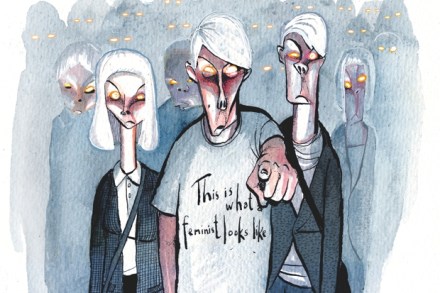
Last week, students at York University staged a walkout from the sexual consent classes organised by their student union women’s officers. A quarter of the freshers decided they didn’t want to be lectured to by union worthies about when it’s OK to have sex. So they got up and left. ‘These talks are inherently patronising of both genders,’ said Ben Froughi, a third year accounting student at York, who had stirred up sex class dissent by handing out leaflets telling students the classes were optional and they didn’t have to attend. But sex consent classes are mandatory at some universities, including Cambridge and Oxford. Young people are being chaperoned through the minefield of sexuality, often against their will.

Mrs May the ‘Student Killer’ should count the cost of her visa crackdown

From our UK edition

In the post-Brexit landscape whose shape was barely glimpsed in G20 discussions at Hangzhou, one thing is clear: soon we’ll have to stop waffling about trade deals and start pushing British products the world wants to buy. One such is education, at our universities, independent schools and English-language colleges — an export sector calculated in 2011 by the now defunct Department for Business, Innovation and Skills to be worth £17.5 billion. Not only does this sector attract foreign exchange, plug funding gaps for cash-strapped universities and support thousands of jobs, it also lays the ground for future relationships with students who return home to embark on business careers.

Students are turning to sugar daddies and fetish sites to make ends meet

From our UK edition

‘I've slept with people for money and I've been on dates with disgusting guys and put myself at risk just so I could have dinner and some leftovers for the next day.’ These are the harrowing words of a female first-year student describing the extraordinary lengths she went to in order to pay her way at university. She found herself turning to ‘sugaring’ websites, which mostly introduce older wealthy men willing to lavish expensive gifts and cash to young women in return for company and often – but not always – sex. And as well as partnering ‘sugar daddies’ with bright, young things, the websites also connect ‘sugar mummies’ to them too.

Animal crackers

From our UK edition

The other evening I was driving back in heavy rain from my pilates class when I noticed something rather upsetting in the gated road that goes through our estate. I stopped and got out of the car for a closer look. Yes, as I feared, it was a dead duck. Some bastard had squished her flat. What made me more upset still was that I could see her mate — a mallard drake — swimming forlornly in the ditch next to the road. I loved those ducks like Tony Soprano used to love his ducks. Especially the stupid way they waddled blithely across your path, forcing you to slow down and always making you smile whatever mood you were in. But clearly the tosser who did this was in too much of a hurry: either a van driver or someone in a 4 x 4, I guessed.

Universities’ war against truth

From our UK edition

Young people today are very reluctant to assume that anything is certain, and this reluctance is revealed in their language. In any matter where there might be disagreement, they will put a question mark at the end of the sentence. And to reinforce the posture of neutrality they will insert words that function as disclaimers, among which the favourite is ‘like’. You might be adamant that the Earth is spherical, but they will suggest instead that the Earth is, ‘like, spherical?’ Whence came this ubiquitous hesitation? As I understand the matter, it has much to do with the new ideology of non-discrimination.

Student loans are taxes in disguise, exclusive research for Spectator Money reveals

From our UK edition

It’s ten years since I graduated and I’ve just managed to clear my student loan, which isn’t a bad achievement on a journalist’s salary. The day I finished my politics and economics degree, my debt stood at £11,500. That covered the course and living costs for three years of study and a year spent in industry – for which I still had to pay half the annual course fee despite not setting foot on campus. In the years that followed, interest started to mount up and added another several thousand pounds onto my repayments. I count myself lucky to have repaid my loan after such a relatively short period compared to how long it could take those graduating right now.

The Spectator podcast: David Cameron’s purge of the posh | 4 June 2016

From our UK edition

To subscribe to The Spectator’s weekly podcast, for free, visit the iTunes store or click here for our RSS feed. Alternatively, you can follow us on SoundCloud. Naming the best columnist in Britain is like naming you’re the best Beatles song: it varies, depending on what kind of mood you’re in. But who would deny that Matthew Parris is in the top three? The quality of his writing is, itself, enough to put him into the premier league but that’s just part of the art. What sets Matthew apart is his sheer range, and his originality. You never know what he’ll be writing about, whether you’ll agree with him, or virulently disagree. Most columnists join arguments; Matthew Parris starts arguments.

The snowflake factory

From our UK edition

Another week, another spate of barmy campus bans and ‘safe space’ shenanigans by a new breed of hyper--sensitive censorious youth. At Oxford University, law students are now officially notified when the content of a lecture might upset them. In Cambridge, there were calls for an Africa-themed end-of-term dinner to be cancelled just in case it caused offence to someone somewhere. It all seems beyond parody. ‘What is wrong with these thin-skinned little emperors?’ we cry. But while we can harrumph and sneer at Generation Snowflake’s antics, we miss a crucial point: we created them. First, it is important to note that young people who cry offence are not feigning hurt — generational fragility is a real phenomenon.

The Spectator podcast: David Cameron’s purge of the posh

From our UK edition

To subscribe to The Spectator’s weekly podcast, for free, visit the iTunes store or click here for our RSS feed. Alternatively, you can follow us on SoundCloud. Naming the best columnist in Britain is like naming you’re the best Beatles song: it varies, depending on what kind of mood you’re in. But who would deny that Matthew Parris is in the top three? The quality of his writing is, itself, enough to put him into the premier league but that’s just part of the art. What sets Matthew apart is his sheer range, and his originality. You never know what he’ll be writing about, whether you’ll agree with him, or virulently disagree. Most columnists join arguments; Matthew Parris starts arguments.

Carry on campus

From our UK edition

Town halls and unringfenced government departments are feeling the pinch, but one corner of British public life is conspicuously flush. Visit almost any university in the land and you will find a small city bursting with Portakabins, scaffolding and cranes. If you dare to raise your eyes from the mud puddles, you will see vast hoardings displaying images of glass palaces. Higher education is in the throes of its biggest building boom since the 1960s. Whether it is wise or not, whether the financial and academic calculations add up, are questions rarely asked, so loud is the self-congratulation of those pioneering the expansion.

David Cameron defends £9m spend on EU leaflets

From our UK edition

David Cameron has defended the £9m government leaflet promoting the EU as ‘money well spent’ and ‘necessary’, as the Tory party erupts into fury once again. What’s interesting about this new row - over a leaflet sent to all homes which sets out ‘why the Government believes that voting to remain in the European Union is the best decision for the UK’ - is that it has incensed not just those usual suspects who are annoyed that the Remain side already has a natural advantage in the referendum campaign in that it can wheel out the Prime Minister for guaranteed media attention whenever it likes.

Safe space in ancient Athens

From our UK edition

Brilliant Oxford undergraduates argue that it is right to prevent us saying things they object to, because speech they do not like is the equivalent of actions they do not like. They had better not read classics, then. There is no safe space there. Greeks made a clear distinction between logos (‘account, reckoning, explanation, story, reason, debate, speech’, cf. ‘logic’ and all those ‘-ologies’) and ergon (‘work, deed, action’). For a Greek, to reject logos was to reject the expression of thought; and so to close down any possibility of people giving an account or reason for why they were thinking and acting as they did; and therefore to prevent any way of combating them — except, of course, by force.

Bored of the dance

From our UK edition

[audioplayer src="http://rss.acast.com/viewfrom22/thespectatorpodcast-politicalcorrectness-budget2016andraves/media.mp3" title="The Spectator Podcast: The end of raving" startat=1080] Listen [/audioplayer]At 19, I dropped out of university to pursue a career as a rave promoter. I went into business with a schoolfriend. We rose through the ranks of party promotion, founded a record label, and started an annual dance music festival. After more than ten years, though, we’ve regretfully decided to close down. And here’s why: young people these days just don’t know how to rave. They are too safe and boring. Rave, like all youth movements, was meant to be about freedom, rebellion and pissing off your parents.

Why does no one speak up for poor white boys?

From our UK edition

David Cameron can be a frustrating figure at times. He wrote an article for the Sunday Times this week in which he drew attention to the under-representation of disadvantaged students in Britain’s universities, which he was quite right to do. But he is wrong about the ethnicity of those students and wrong about where the problem lies. It’s working-class white boys who fare the worst, not black boys, and when it comes to broadening access, the track record of our tertiary education sector is pretty good. It’s state schools that could be doing more. First, a few facts.

Brighton’s gone Brideshead

From our UK edition

[audioplayer src="http://rss.acast.com/viewfrom22/projectfear/media.mp3" title="Julie Burchill and Tim Stanley discuss Brighton's Brideshead set" startat=1352] Listen [/audioplayer]My adopted hometown of Brighton and Hove has always had a somewhat well-to-do image, it’s fair to say. Though we have pockets of poverty, I was surprised by the size of the houses and gardens — room for a pony! — when I started going to house parties on the notorious Whitehawk estate. The old Cockney phrase ‘You think your aunt’s come up from Brighton!’ to denote a person who is free and easy with their money pays tribute to this agreeable state of affairs. But although B&H may appear affluent, it hasn’t really been posh since the Prince Regent pushed off.

Why ‘safe’ is Dot Wordsworth’s word of the year

From our UK edition

‘Makes me feel sick,’ said my husband, referring not to the third mince pie of the morning (in Advent, supposedly a penitential time of preparation), nor to accepting a glass of champagne after having earlier accepted a glass of whisky at another house. No, what made him feel sick was the seasonal greeting: ‘God bless, and be safe.’ For once, I agreed with him. It was bad enough to be exhorted to drive safely or even stay safe during periods when terrorists had eased off a bit (after peak IRA, but before 2001). But now, with a fashion for shooting civilians in unexpected places, to be told to be safe makes no more sense than to be told to be rich. Yet safe is the word of 2015.

Will you survive the Delingpole Era? See below…

From our UK edition

  Things I am going to ban when, by popular acclaim, I am elected your Dictator For Life in 2016.   1. Onions where the brown skin doesn’t come off easily. You know the ones: where the papery outer layer clings so tightly that you have to pick it off laboriously with a sharp knife and it takes forever. I hate these onions so much. I’m pretty sure they’re all foreign, though I may be mistaken.   2. Slimline tonic water. (See also: Diet Coke; semi-skimmed milk) ‘Oh? Is it really? Sorry about that. I think it’s all we’ve got.’ ‘Aspartame? Oh, is that not good?’ ‘Not sure I can tell the difference, to be honest.’ ‘Don’t blame me. I don’t get any say in the shopping.

Barometer | 8 October 2015

From our UK edition

The death of Diesel The Volkswagen scandal has brought into question the future of the diesel engine. A century ago its inventor, Rudolf Diesel, was himself the subject of scandal. On 29 September 1913 he disappeared from the steamship Dresden on its way from Antwerp to Harwich. He had retired to his cabin after dinner but had not changed into his bedclothes. His body was found off Norway ten days later. He was apparently on his way to discuss selling diesel engines to the Royal Navy for submarines, leading to suspicions that he had been murdered to prevent the technology falling into British hands. His financial situation, however, pointed to possible suicide. The Royal Navy went into the first world war with steam-powered submarines.

The contagious madness of the new PC

From our UK edition

It’s becoming pretty clear, as the year rolls on, that some of our brightest youngsters have gone round the bend. It’s as if they’ve caught a virus, a mental one, a set of thoughts and ideas that might loosely be called political correctness, but seem to me weirder and more damaging than that. Back in the 1990s, PC students would stamp about with placards demanding equal rights for minorities and talking about Foucault. This new PC doesn’t seem to be about protecting minorities so much as everyone, everywhere from ever having their feelings hurt. It came from America, this virus, incubated in the closed minds of the Land of the Free, but it’s here now, and contagious.