Students

Have we hit peak graduate?

From our UK edition

The Tory party has turned sharply against the idea of ever larger numbers going to university. The reasons for this are both economic and political, I say in the Times today. On the economic front, the taxpayer is bearing more of the cost of the expansion of higher education than expected — the government estimates that it will have to write off 53 per cent of the value of student loans issued last year — and there is a belief that the lack of funding for technical education is contributing to the UK’s skills and productivity problems. Politically, the issue is that graduates tend not to vote Tory Politically, the issue is that graduates tend not to vote Tory. At the last election, the Tories beat Labour by 44 per cent to 32 per cent.

Locked-down students are paying a heavy price

From our UK edition

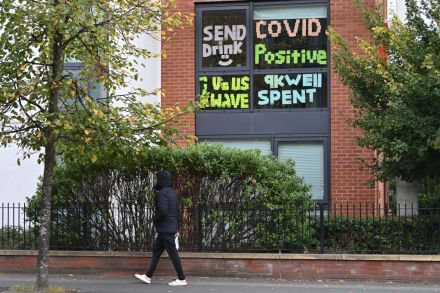
Students are the forgotten victims of lockdown. Having worked hard to achieve their grades, undergraduates have been consigned to their bedrooms to learn online. There's been no socialising, freshers fun or the chance to make new friends. The only thing that has been the same for the Covid class of 2021 are sky high fees. Finally, the government has announced that all university students will be able to return from the 17 May. While some undergraduates may be relieved to get some much-needed clarity, most will be deeply, deeply frustrated. Many students are asking why universities did not open again when schools did.

The trouble with Erasmus is not just the cost

From our UK edition

It was curious to see the explosion of outrage over the UK no longer participating in the Erasmus scheme. We were told it broadened young people’s horizons by sending British undergraduates to study at a European university. We were told our young people are being deprived of this opportunity. But having spent my pre-politics career working with young people, Erasmus and deprivation are not things I’ve ever associated with one another. The outrage is largely coming from a collection of the firmly middle class and affluent anti-Brexit folk – TV broadcasters and QCs among them.

The trans debate could cost this Cambridge porter his job

From our UK edition

This is a story about a man called Kevin Price, who was until last week a councillor and who is, for now at least, employed as a porter at a Cambridge college. The story illustrates two points. First, political conflict over trans rights and women’s rights is far from over, especially in the Labour Party. Second, people who say the wrong thing in this debate can put their livelihood at risk. Mr Price last week resigned from Cambridge City Council. He had sat as a Labour councillor since 2010 and was once the council’s deputy leader. He resigned rather than follow the Labour Group whip and vote for a motion that declared, among other things that: 'Trans women are women. Trans men are men. Non-binary individuals are non-binary.

Students who catch Covid may be saving lives

From our UK edition

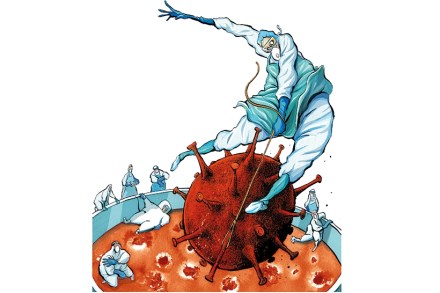
It is counterintuitive but the current spread of Covid may on balance be the least worst thing that could happen now. In the absence of a vaccine, and with no real prospect of eradicating the disease, the virus spreading among younger people, mostly without hitting the vulnerable, is creating immunity that will eventually slow the epidemic. The second wave is real, but it is not like the first. It would be a mistake to tackle it with compulsory lockdowns (even if called ‘circuit breakers’), whether national or local. The cure would be worse than the disease. If you cannot extinguish an epidemic at the start, the best strategy is for the healthy to get infected first. Lockdowns ensure that the vulnerable and the healthy both get infected with similar probability.

Ofqual boss’s algorithm malfunction

From our UK edition

Gavin Williamson has taken a lot of stick for the A-level exams debacle, but Mr Steerpike thinks we should perhaps look to Roger Taylor, the chair of Ofqual, who also happens to be head of the Centre for Data Ethics and Innovation. Not many people think that using an algorithm to decide exam results was the best option, but it becomes even more questionable when you realise that Taylor led a study last year, warning of algorithms propensity to ‘make decisions which reinforce pre-existing social inequalities’. The study states: ‘concerns are growing that without proper oversight, algorithms risk entrenching and potentially worsening bias.

My charter of fundamental rights

From our UK edition

I was chatting to a young medical student, a very bright chap from West Africa, who was nonetheless perplexed by a certain element of his course. The puzzle, for him, was the point of offering cervical smear tests to men who had transitioned to become women. The course module was very clear, he said, that these people must not be left out, despite not possessing a cervix. I hope a later part of the course teaches him how to behave while carrying out a cervical smear test on a non-existent cervix, so as not to cause offence. Poke around a bit with that spatula thing in whatever has recently been excavated, and perhaps comment admiringly, along the lines of: ‘My goodness! What a splendid cervix. I don’t think I have ever seen one quite so robust or pristine.

How to survive the Eleven Plus: a parents’ foolproof guide

From our UK edition

How is Britain seen by outsiders? What marks us out? Humour, self-deprecation, our changing weather, frequent cups of tea. But there’s something else that foreigners say after a spell here: the UK is a place where couples without children worry about where their unconceived children will go to school. As a Scot, I used to think this a bizarre English affectation — until my eldest son announced he’d like to join his friends and take the Eleven Plus set by grammars and private schools. Would I let him? Only then did it dawn on me why prep schools get their name: to prep children for this specific exam.

Freshers week is torture for an ageing academic like me

From our UK edition

A fellow academic once said that working at a university is one of only a few places where you grow older while everyone around you stays the same age. It was this remark that occupied my mind this week as I trundled through campus, smiling and greeting our ever-younger-looking first-year undergraduates. The whole idea of ‘Welcome Week’ was no doubt conceived by a university bureaucrat with good intentions. But having experienced it first-hand, and as the one doing the welcoming, I can only conclude that it is torture. Once a year, like clockwork, we older folk must be visibly reminded not only of the relentless passing of time but also of our general insignificance amid life’s great generational churn.

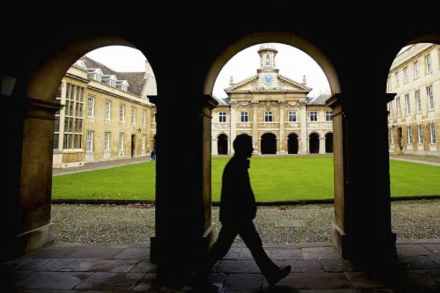
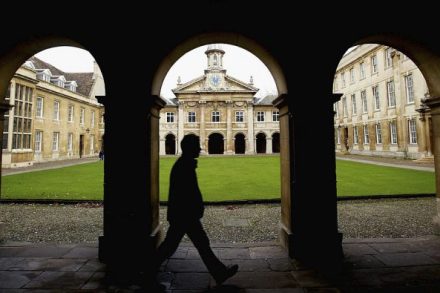
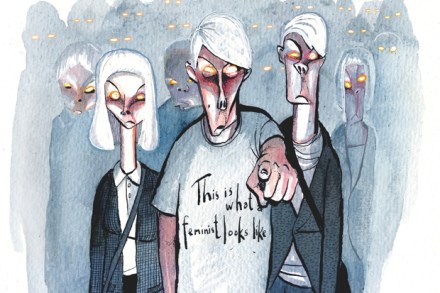
A bruising encounter with Cambridge cry-bullies

From our UK edition

There’s a Tracey Ullman comedy sketch about the extreme and ugly form of political correctness afflicting the youth. It’s set in a self-help group for ‘people who are so woke [i.e. attuned to left-wing grievance politics] they are finding it impossible to have any fun at all.’ A newcomer to the class tells his story: ‘It started with the little things — signing an online petition; going to a march. Well, before I knew it, I was writing to the Guardian about LBGT representation in the Harry Potter books…’ At this point, a prissy young woman interjects: ‘Which is shocking by the way.’ The therapist (played by Ullman) calls her to order: ‘Yes, all right, Libby. We’ve all read your blog.

How de Gaulle prevailed against the student mob

From our UK edition

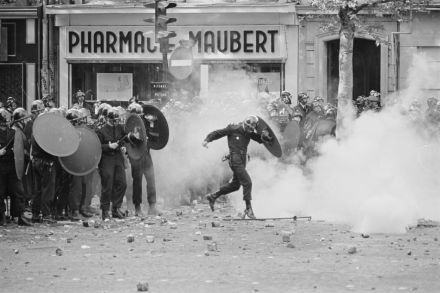
Fifty years ago, ‘les événements’ kicked off in Paris. The students’ complaints were fascinatingly trivial. They were bored stiff at their hideous new university in Nanterre. In a move which would now get them trolled by Time’s Up, the left-wing male students organised a ‘sexual riot’ and marched on the girls’ hall of residence, demanding to be let in. The authorities panicked, and closed the campus, so the students occupied the Sorbonne. Within weeks, strikes and riots threatened to bring down the French government. The BBC rightly reminds us of those May days, but what of the sequel?

Barometer | 12 October 2017

From our UK edition

Cheat sheets The Quality Assurance Agency for Higher Education wants universities to catch out more students who buy essays online. How much do cheats pay for this service? — 1,000 words in seven days to 1st standard £103. Also offers 2:1 standard for £74 and 2:2 standard for £57. This website offers a refund if you don’t get the promised grade. —A rival site offers a 1st standard essay in seven days from just £18.99, with £13.99 for a 2.1 and £11.99 for a 2.2. — From £16.18 per page on a site which says ‘compare our prices with those set by solicitors, barristers, doctors or accountants’. Falling short Where would an early exit leave Theresa May in the prime ministerial ranks?

Reading Latin doesn’t require a trigger warning

From our UK edition

Last week, Brendan O’Neill described in this magazine how students regulate ‘unacceptable’ political views with ‘no platform’ policies, safe spaces and trigger warnings. Two weeks ago a student Latin course (Reading Latin, P. Jones and K. Sidwell) was ‘outed’ by an American PhD student, because the text featured three goddesses, each confidently stripping off, determined to win the golden apple from Paris, and two rapes. Such ‘offensive’ choices, she said, did not help the cause of Latin, ‘or make the historically racist and classist discipline of classics any more accessible’. Both rapes featured in a foundation myth of early Roman history.

Hurricane Harvey is bigger news than the bankers at Jackson Hole

From our UK edition

In Houston last November I spent an evening at the city’s industrial-scale food bank, where I heard a presentation on the Houstonian tradition of offering hospitality to refugees, including 200,000 displaced from New Orleans by Hurricane Katrina. We were also given some positive spin on the strength of co-operation, in time of crisis, between the region’s major oil companies and its state and city governments. Now Houston itself is the victim of Hurricane Harvey.

High life | 24 August 2017

From our UK edition

When the Germans smuggled arguably the world’s most evil man into Russia 100 years ago, they did not imagine the harm they were unleashing on the human race. Once Lenin had prevailed, he decided to forge a new consciousness, New Soviet Man, as the Bolshies called it, someone who would overcome ‘the antinomies of subjective and objective, body and spirit, family and party’. Leave it to a horror like Lenin to design a new human being (although a certain Austrian tried to emulate him less than 20 years later) and you get Yakov Sverdlov, who ordered the murder of the Tsar and his family, and the hanging of their dogs. We hear a lot about the Nazis nowadays, and very little about monsters such as Lenin and Sverdlov, and their enablers.

Giving Malia Bouattia the boot won’t be enough to save the NUS

From our UK edition

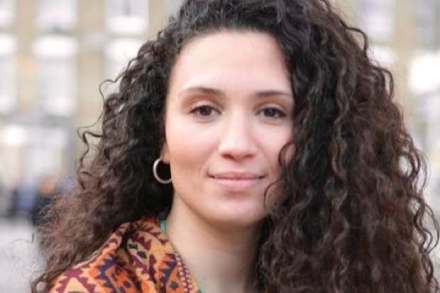
Farewell then, Malia Bouattia. The only president of the National Union of Students to earn herself a condemnation from the Home Affairs Committee, Bouattia has been defeated in her bid to win re-election at the NUS conference in Brighton. Her time in charge of the NUS was ended by Shakira Martin, the Union's vice-president for further education, who received 402 votes to Bouattia’s 272. Malia’s presidency was dogged by scandal. And as deluded as the NUS is, even it couldn’t continue to tolerate a leader who called Birmingham University a ‘Zionist outpost’ and once refused to back a motion condemning Isis, because she thought doing so would justify Islamophobia.

Jewish students are turning their backs on British universities. Who can blame them?

From our UK edition

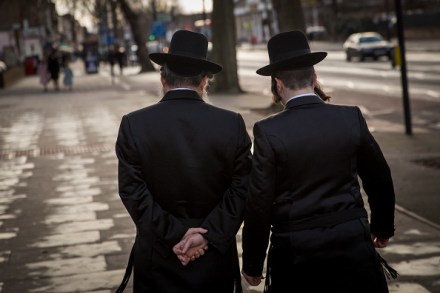
Universities up and down the land are clambering to recruit students in time for the start of the new academic year. International students – those from outside the EU – are the most lucrative market, not least because there are no legal restrictions on the fees that they can be charged; top universities, such as Oxford, can charge as much as £23,000 a year for some courses. But there are also sound academic reasons why we should recruit internationally. We want our campuses - which are places of education as well as training - to be centres of social, religious and ethnic diversity. We also want, of course, to recruit the best students. Yet the signs are that the sector is failing in its mission to make campuses as cosmopolitan as possible.

The great Brexit exodus of EU students isn’t all it’s cracked up to be

From our UK edition

Remember the hoo-ha about the sharp fall in the number of EU students applying to study at British universities? Numbers were down, we were told, and there was only one reason: Brexit. In the months since the referendum, applications from EU students have fallen by seven per cent. Nicola Dandridge, chief executive of Universities UK, told MPs they were ‘concerned about EU numbers’. These Brexit jitters were nothing new; in its initial application stage which ended in October, Cambridge University announced a 14.1 per cent dip year-on-year in students from the continent applying to study there. A spokesman for the university said there was ‘considerable uncertainty’ felt by EU students in the wake of the referendum.

Censorious universities are a bigger problem than Stepford students

From our UK edition

Have you heard the one about the students who said clapping could cause anxiety? Or the students who banned sombreros? Of course you have. You can’t move these days for tales of Britain’s blue-haired belligerents and their campus war on free speech, ‘fascist’ tabloids and fancy dress. Student leaders have become a national embarrassment – and with good reason. They’ve turned everything that was good about being a student – broadening your mind, having fun, being free – upside down. But it’s become a little too easy to bash students, to pretend that a new generation of so-called 'snowflakes' are single-handedly destroying Enlightenment values. Student union politicos are, after all, entirely unrepresentative.

Letters | 3 November 2016

From our UK edition

An MP’s first duty Sir: Toby Young writes (Status anxiety, 29 October) that Zac Goldsmith’s decision to campaign for Leave in the referendum was an example of his integrity, because ‘anything else would have been a betrayal of his long-standing Eurosceptism as well as his father’s memory’. Goldsmith’s loyalty should have been to his constituents, not his deceased father. Ian Payn London SW6 Standing or sitting Sir: Can I suggest that a sitting MP who resigns their seat in the middle of a Parliament is prohibited from standing in the subsequent by-election? As a taxpayer, I resent having to pay the bill for multimillionaire Zac Goldsmith’s self-indulgent posturing.