Strait of Hormuz

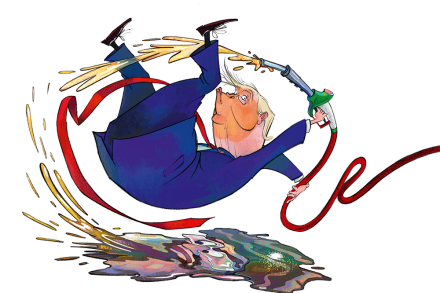
Trump has Iran over a barrel

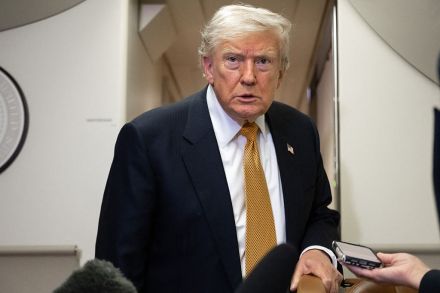
When is a ceasefire not a ceasefire? When the person declaring it is Donald Trump. Opinions differ about the wisdom of the President’s activities with respect to Iran. Some observers tell us he is playing four-dimensional chess. Some say it more like checkers with no kings. What, after all, is he up to? The commentariat proffers several conflicting narratives. The one common thread is the certainty with which these opinions are uttered. Trump is an idiot. Trump is a genius. For those who say that he has thrown in the towel – that Iran has “won” – I’d offer two observations.

Trump Iran

What today’s Iran headlines don’t reveal about ‘Project Freedom’

"Operation Epic Fury is concluded," declared Marco Rubio, holding his first White House press conference yesterday. The Secretary of State explained that the new mission – reopening the Strait of Hormuz – would essentially be a humanitarian operation, resulting in military exchanges only if US ships came under fire while clearing the passage of mines and other obstacles. Later, President Trump went further, saying that "Project Freedom" (the Hormuz operation) had been paused "to see whether or not" a "Complete and Final Agreement can be finalized and signed." “Project Freedom” is unworkable because the Navy cannot complete the de-mining operation Today, the markets have rebounded on news that US and Iranian officials are discussing "a memorandum of understanding.

Does Abigail Spanberger want you to be fat and crazy?

Supreme Court Justice Louis Brandeis coined the phrase “laboratories of democracy” to describe how individual states could act as test cases for different policies and ideas. Judging by its recent track record, Virginia aspires to be the Wuhan Institute of Virology. In November, voters of the Commonwealth elected Governor Abigail Spanberger – a so-called “Blue Dog Democrat” who used to serve in the CIA and railed against socialism and calls to “defund the police” after the Democrats underperformed in the 2020 elections. Virginia Democrats also retained control of the state’s Senate and House.

iran ceasefire

Is the Iran ceasefire crumbling?

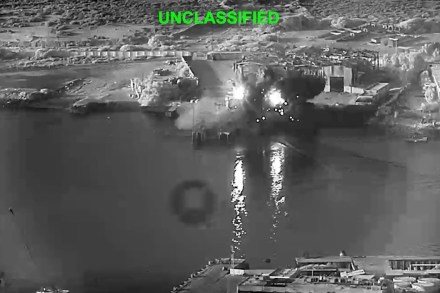
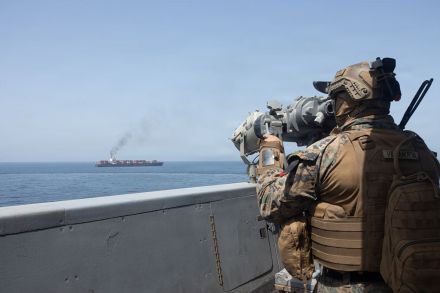
Is the fragile Iran war ceasefire over? It would appear so, with American and Iranian forces exchanging fire in the Strait of Hormuz. The renewed clashes follow President Trump’s launch of "Project Freedom," which aims to use the US military to escort stranded ships out of the critical waterway. Trump said American forces had hit seven Iranian small boats, with the US military claiming to have intercepted cruise missiles and drones launched by Tehran. Trump earlier warned that Iranian forces would be "blown off the face of the Earth" if they targeted US ships in the strait or the Persian Gulf. Tehran says it fired "warning shots" at US warships, and said it would attack any foreign force that tried to enter the strait.

Who is really leading Iran?

In declaring an extension to the ceasefire in the Iran war, President Trump signaled clearly enough that he would prefer to strike a peace deal with Tehran. J.D. Vance, the Vice President, has been kicking his heels, waiting to return to the Pakistani capital Islamabad for another go at achieving a breakthrough. The Iranians keep blowing hot and cold on whether they are ready to play their part. Trump suggested in a social media post earlier this week that he believes this is because Iran’s government is "seriously fractured." His ceasefire extension is aimed at allowing the regime time to deliver a new proposal. Trump may want to hammer everything out in Islamabad, but he is not dealing with an ordinary government operating under a straightforward power structure.

iran

Trump’s costly armchair geography

In the 19th century, the geographer and explorer David Livingstone was scathing of what he described as "easy-chair geographers" – authors and mapmakers who produced maps and treatises about the non-European world without ever leaving their learned society or personal office. Donald Trump is a latter-day armchair geographer. Or judging by photographs repeatedly released by the White House, a president comfortable convening meetings in the Oval Office with large maps displayed by his desk. But whether it is a case of acquiring Greenland or blockading the Strait of Hormuz, maps can be poor substitutes for in-field knowledge and understanding.

armchair geographer

Europe has squandered its energy security

“Europe is desperate for Energy, and yet the United Kingdom refuses to open North Sea Oil, one of the greatest fields in the World.” Donald Trump said this month on Truth Social. It is, to use the President’s phrase, “Tragic!!!” But the necessity of oil hasn’t always been recognized. Back in 2008, while running for the White House, Barack Obama declared that one of the major challenges facing the US is “what we will do about our addiction to foreign oil.” His solution was to switch America to renewables. In that address, known as the “New Energy For America” speech, Obama said, “We simply cannot pretend, as Senator McCain does, that we can drill our way out of this problem.

energy

Sorry, but America still holds all the cards

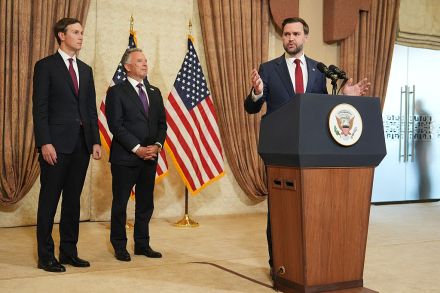
“Negotiations.” Are you heartened or dismayed by that word? Those who remember or who have read up on the seemingly interminable Paris Peace Talks designed to bring an end to the Vietnam War have reason to be dubious. A negotiation, if it is to be successful, requires that both sides be candid and in earnest. The Vietnamese were not candid participants. They stalled. They prevaricated. They acted out. It seems that the Iranians are hoping to reprise that melodrama. They will be profoundly disappointed. On the second weekend in April, Vice President J.D. Vance, Steve Witkoff and Jared Kushner met some 70 Iranian representatives in Islamabad to hammer out a peace deal.

Iran negotiations

If Trump hates the Wall Street Journal, why is its editorial board dictating Iran policy?

For the better part of a decade, Donald Trump has been an avid, if irascible, reader of the Wall Street Journal – particularly the columns overseen by its long-time editor Paul Gigot. Because the Journal is among the few American conservative outlets willing to criticize Trump – on everything from tariffs to temperament – he has developed a habit of denouncing it in public while devouring it in private. The Journal, Trump recently declared on Truth Social, is "one of the worst and most inaccurate editorial boards in the world." The ritual extends to annotated hard copies – margins filled with indignant scrawl – before the offending pages are FedExed back to News Corp headquarters in Midtown Manhattan.

wall street journal

Get ready for Epic Fury Part II

It could be the shortest negotiation in history. The United States and Iran, with their respective peace plans, are so far apart that it’s difficult to see how their differences can ever be squared.  A two-week ceasefire, which has already been broken, brought relief after five weeks of war and steadied the oil and stock markets. But the agreed ceasefire is looking fragile, as US Vice President J.D. Vance admitted. There had been “legitimate misunderstanding,” he said yesterday, over whether the ceasefire extended to Israeli action in Lebanon.

Trump’s fantasy of victory

Among the many gifts the Watergate scandal gave us was Nixon’s White House press secretary declaring: "This is the operative statement. The others are inoperative." That was after months of sticking to increasingly threadbare denials. In Donald Trump’s White House, operative statements become inoperative from one day to the next. That’s especially true of Iran. In 24 hours, from Tuesday to Wednesday this week, Trump went from "a whole civilization will die tonight" to "this could be the Golden Age of the Middle East!!!" TACO: Trump Always Chickens Out, as the meme has it.  The two-week ceasefire agreed this week with Iran is a lesson that you can win every battle but lose the war. (This is the lesson the United States learned in Iraq and Afghanistan, only to forget it again.

Will Trump really obliterate Iran on Tuesday?

Was Donald Trump’s profane and threatening tweet, which included an F-bomb and an allusion to Iran’s leaders as "crazy bastards," on Easter Sunday itself a bunch of BS? Trump is riding high after the daring rescue of an American airman from Iran, but its leadership doesn’t appear to be overly impressed by his tweet threatening a major attack on Tuesday if the Strait of Hormuz is not reopened. On Saturday, Iran’s military leadership indicated that it had no intention of complying with Trump’s demands, dismissing his vow to destroy its infrastructure as a "helpless, nervous, unbalanced and stupid action.

Trump

Iran and America’s new protection racket

"Whoever rules the waves rules the world" – Alfred Thayer Mahan. Would Donald Trump have attacked Iran on February 28 if the Supreme Court had not ruled against his tariffs on February 20? The two issues may seem unrelated. Yet, as a fascinating piece by Captain John Konrad has pointed out, a closer inspection of Trump’s international agenda reveals his administration’s intense focus on trade, energy and maritime control – and that might help explain the otherwise inexplicable folly of the situation in the Strait of Hormuz.  Trump is determined to bring about an American Golden Age. That involves controlling gas and oil, aggressively reducing China’s expanding control of shipping lanes, and establishing US dominance over key maritime chokepoints.

Strait of Hormuz

Iran and the crisis in the European mind

The politics of the Iranian war feature an observable gap between interest and action for nearly all parties. The Americans possessed overwhelming casus belli versus Iran for nearly half a century, and did not act upon it until three weeks past. The Iranians possessed none against America for just as long, but exerted themselves with religious fanaticism to bring this war upon themselves. The Arab autocracies of the Persian-Gulf region find themselves under direct attack from the Iranians, but do not respond in kind. The Chinese observe a core strategic proxy and key commodities supplier taken off the chessboard – for the second time in under 90 days – and refrain from direct engagement.

Europe

Should NATO help America defend the Strait of Hormuz?

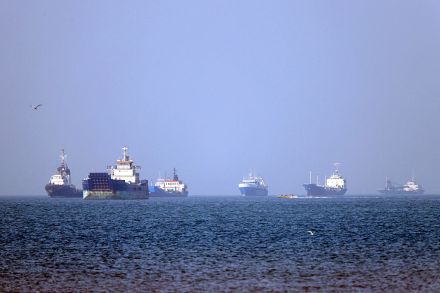
As soon as Operation Epic Fury, America’s latest campaign against the Islamic Republic of Iran, got underway on the last day of February, political, military and economic minds around the world should have turned their attention to the Strait of Hormuz. The waterway provided the only shipping route from the Persian Gulf to the Gulf of Oman and the open seas beyond. That has long made the strait the dagger Iran holds at the throat of the world. At its narrowest, it is less than 25 miles across, and Iran controls the northern shore; to the south is the Musandam Peninsula, shared by the United Arab Emirates and an exclave of Oman.

NATO STRAIT

What Signalgate tells us about Iran

Remember Signalgate? It was quite the story, and worth revisiting now in light of Operation Epic Fury, the ongoing crisis in the Strait of Hormuz and its dire implications for the global economy.  In March last year, Donald Trump’s then National Security Advisor, Mike Waltz, somehow added Jeffrey Goldberg, the editor-in-chief of the Atlantic, to a Signal messaging group for senior government officials to discuss top secret military action against the Houthis in Yemen. The group included the Vice President J.D. Vance, Secretary of State Marco Rubio, Defense Secretary Pete Hegseth, Director of National Intelligence Tulsi Gabbard, White House Chief of Staff Susie Wiles and deputy chief of staff Stephen Miller, among others.

hegseth signalgate walt

The Iran war has exposed the world’s maritime chokepoint

The war with Iran is exposing a vulnerability at the heart of the global gas market: the extraordinary concentration of liquefied natural gas supply in the Persian Gulf. Qatar alone accounts for roughly a fifth of global LNG exports, almost all of it passing through the narrow Strait of Hormuz. The conflict has illustrated how easily a single maritime chokepoint could interrupt a significant share of the world’s gas trade. Even if the war ends soon, the vulnerability it has exposed will not disappear President Donald Trump has suggested the conflict may soon end, describing the campaign as largely achieved and possibly over "very soon." The Gulf monarchies also appear eager for a quick resolution, even as they continue to face missile and drone attacks.

Trump has been caught flat-footed on Iran

Donald Trump has become something of a sole man. His cabinet members and White House visitors report that the president has developed a penchant for handing out $145 Florsheim shoes in an effort to up their sartorial game. In his Life of Johnson, Boswell reported that Dr. Johnson recoiled at an “eleemosynary supply” of shoes as an impecunious student at Christ Church, Oxford and threw them away with indignation. Trump’s followers have no such freedom of action. “All the boys have them,” one official told the Wall Street Journal, which ran a picture of his administration leaders obediently lined up and wearing the same shiny black leather numbers.

Will the war in Iran really weaken China?

Analogies in international politics are tricky and easily abused, yet they remain irresistible because they can illuminate patterns that are otherwise hard to see. Consider the present moment.  Just as Ukraine has become a growing burden for Washington and its Western allies, Iran is now a strategic burden for Moscow and Beijing. The US, particularly under the Trump administration, appears to be placing less emphasis on supporting Ukraine. Something similar may be happening in reverse with Iran.  Moscow continues to provide Tehran with assistance – most notably intelligence on US military targets – but the broader pattern suggests caution rather than deep commitment.

China Iran

The Iran war has exacerbated the failure of European energy policies

The history of the global trading system is a story of narrow and vulnerable waterways: the Suez and Panama Canals, the St. Lawrence Seaway, the Straits of Dover and the Skagerrak, which defends the entrance to the Baltic. But none has the power to seize up the global economy as much as the Strait of Hormuz. Barely 30 miles wide at the narrowest point and bounded on one side by the state of Iran, this passage is used for a quarter of the world’s oil supplies and a fifth of its liquified natural gas (LNG).

energy