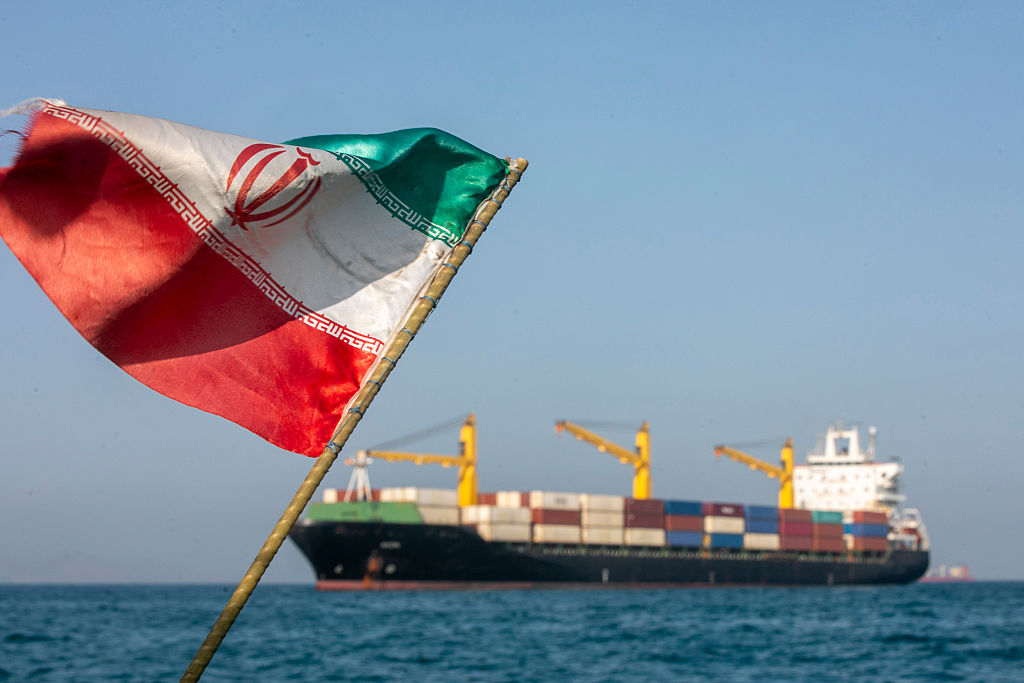
Iran is looking increasingly Danish, which sounds like a strange thing to say. What could Iran (a theological dictatorship which massacred 30,000 of its citizens earlier this year) and Denmark (a social democracy which is one of the world’s most generous foreign aid donors) possibly have in common?
Iran has chosen a great short-term policy in asserting its control over Hormuz, but a mediocre long-term one
But Iran’s theologians like to keep themselves half a millennium back from contemporary mores. It’s not today’s hygge-loving Denmark which Iran resembles, but a previous incarnation: the Denmark which for centuries operated a highly profitable toll booth across the two-and-a-half mile wide Danish Straits, payable at the customs house at Hamlet’s castle, Kronborg, at Elsinore.
The Straits of Hormuz are currently “technically” open; but Iranian State media claims that daily transit numbers are controlled by its forces, and tanker traffic is reportedly “barely moving.” Iran is also reportedly reserving the right to charge “insurance fees” to vessels transiting Hormuz after the war ends, which President Trump yesterday rejected as “unacceptable to me… it would be a game changer.” These fees sound strikingly similar to the “sound dues” Denmark extracted for centuries from irritated traders (also deemed “insurance” fees for ridding the straits of pirates, whose severed heads were displayed at Kronborg).
The Danish Straits became a cash cow in the sixteenth century, when Western Europe’s naval powers found themselves dependent upon goods sourced from the wrong side of Denmark’s chokepoint. Neither Spain’s Armada nor England’s defending fleet could have been constructed without the import of tall Baltic conifers to use as masts, spars and bowsprits; and Spain, having deforested itself in the service of agriculture and prior naval buildups, also needed huge quantities of Baltic pine to deck its ships.
Simultaneously, western Europe had become too densely populated to feed itself alone and relied upon imports of Baltic grain. The Danish Straits became the Hormuz of the era: maritime traffic through Denmark’s chokepoint more than quintupled in a century; customs fees collected at Kronborg exploded, becoming the Danish kingdom’s principal revenue source; and the Danish Court rapidly became Northern Europe’s most opulent.
But the fate of the Danish toll booth serves as a lesson to today’s Iran. No one ever liked paying the Sound Dues, and their circumvention began almost immediately. Some ships smuggled themselves through a longer route between the Danish islands of Funen and Zealand. And in 1516, Hans Brask, the Bishop of Linköping, proposed the 120-mile Göta canal to link the East and West coasts of Sweden, circumventing the Danish Straits completely. This canal was eventually built in 1810, after the Swedes hired Scotland’s Thomas Telford, fresh from engineering the Caledonian Canal.
Circumvention plans are moving far more rapidly in today’s Gulf. Last week, Thani Al Zeyoudi, the UAE’s minister of foreign trade said: “we’re moving towards having zero Hormuz dependency and that’s regardless of whether it’s open or not.” The UAE has ports on both sides of Hormuz and pipelines between them, which some analysts believe could have the capacity to handle far more than just the UAE’s production. Kuwaiti, Iraqi and even Qatari production might conceivably circumvent Hormuz via the UAE’s vast pipeline and storage infrastructure. Elsewhere, plans are being dusted off for a 1,500-kilometre gas pipeline between Turkey and Qatar. Meanwhile, a massive network of land and rail routes is emerging across the Arabian Peninsula.
Iran has chosen a great short-term policy in asserting its control over Hormuz, but a mediocre long-term one.
Beyond circumvention, two other aspects of the fate of the Danish sound dues should concern Iran. Firstly, technology substitution. By the mid-nineteenth century, railways began taking some of the cargo which had transited the Danish straits. This year, the greatest beneficiary of Iran’s brinkmanship at Hormuz has been the electrotech industry, with European electric car registrations rising 34 percent year on year. The Hormuz blockade has not been good news for purveyors of hydrocarbons.
Secondly, the collective power of one’s enemies matters. For centuries, Europe’s naval powers tried and mostly failed to exempt themselves from paying Denmark’s Sound Dues. But eventually a new naval power emerged. In 1854, US President Franklin Pierce used his State of the Union address to state: “we recognize no right on the part of Denmark to levy a tax upon the vessels of other nations for the privilege of passing through the Sound.” The Sound Dues were gone three years later.
Currently, both the world’s superpowers – China and the United States – are equally keen to replenish their strategic oil reserves, and Iran has bombed many of its purported friends in the Gulf. Denmark’s experience suggests Iran should be highly cautious in banking on Hormuz as a long-term asset.



Comments