Sport

Why is sport so obsessed with Goats?

It was late at night in rural France and Martin wanted to discuss Goats. And he didn’t mean livestock. ‘You write about sport,’ he said. ‘Who is the Greatest of All Time?’ I asked if he was talking about my stunning victory in the village boules competition the previous night, but it turned out he was thinking of a certain Serbian tennis player. ‘Novak Djokovic is the Goat,’ he said, with the certainty that comes from a third bottle of Bourgueil. I conceded that Djokovic’s record was a smidgen better than Rafael Nadal’s, though some might prefer the artistry of Roger Federer – but didn’t Bjorn Borg have an even better winning percentage in the grand slams? This pleased Martin’s Swedish wife.

Will Ben Stokes be fit for the Ashes?

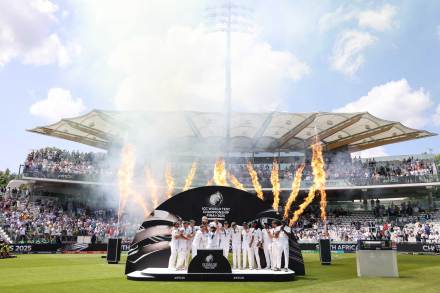
What a marvellous summer this has been for Test cricket, which is sadly at risk of becoming an endangered species. The dramatic world of the T20 franchise, fuelled by the outrageous success of the Indian Premier League (IPL), has pushed traditional Test cricket uncomfortably close to the margins. The Test matches began with South Africa’s remarkable win over Australia at Lord’s in the World Test Championship final in June. This has been followed by a thrilling drawn series against India. These matches have perfectly illustrated the greater variety and more exciting possibilities the two-innings game has to offer. In two-innings cricket a side can be bowled out for 40 in the first innings and go on to win the match.

How bad can August storms get?

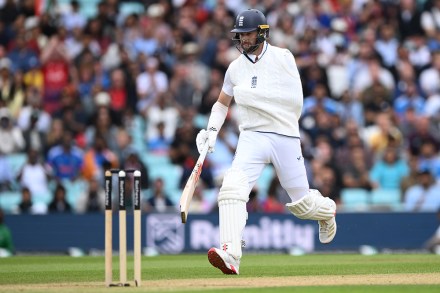
Injury time England bowler Chris Woakes won a standing ovation for coming out to bat against India at the Oval with his arm in a sling after dislocating his shoulder – although in the event he didn’t have to face a ball before England lost. Some other sportsmen who carried on while injured: — Franz Beckenbauer played out half an hour of extra time during the semi final of the 1970 football World Cup, also with his arm in a sling after dislocating his shoulder. — Manchester City goalkeeper Bert Trautmann played the last quarter of an hour of the 1956 FA Cup Final with a broken neck after colliding with a Birmingham City player. His side won 3-1.

It’s hard to beat a drawn Test series

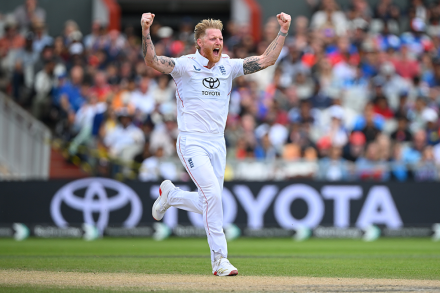
‘You can always tell a proper lover of cricket’, Michael Kennedy, the great music critic, liked to say. ‘It’s whether they can appreciate a draw.’ A hit, a palpable hit. By concluding a magnificent Test series at two matches each, after India’s victory in the fifth game at the Oval, even England’s disappointed players may nod in agreement. They fell seven runs short, but nobody lost. Everybody who took part in this contest of equals should feel proud. ‘Proper’ cricket-lovers will have no doubt, for this contest was one for the annals. All five matches went into the fifth day, and India eventually prevailed by the tightest winning margin in their history after Mohammed Siraj, their leonine fast bowler, took his fifth wicket, and ninth in the match.

The Ashes just got spicy

You don’t have to look hard to find swaths of sports fans around the world who dislike England – England’s men’s teams that is. The women are a different matter. Now, surprise surprise, the Australians have come to the party. If they ever left. The trigger this time is Ben Stokes’s surly behaviour to the Indians at the end of the fourth Test when Washington Sundar and Ravi Jadeja chose to bat on to pick up their centuries, rather than march off for the draw that Stokes wanted. All that was left was sledging: ‘Fucking hell, Washi, get on with it,’ said Harry Brook, who never shuts up; ‘If you wanted a hundred you should have batted like it earlier,’ said Jofra Archer. Why they shouldn’t have wanted to collect their centuries is beyond me though.

The sorry demise of Windies cricket

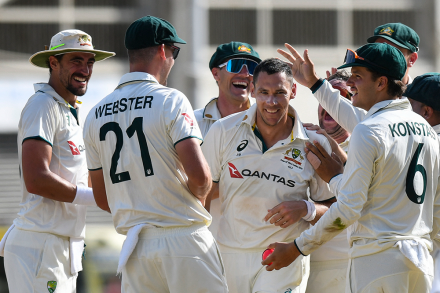
The tub-thumping atmosphere in the Long Room at Lord’s was so raucous late on Monday afternoon as India and England fought out the tightest of Test matches that it made a Millwall home game against West Ham seem like the Albert Hall. So a great triumph for Test cricket, yes? Well, up to a point. While England and India were showcasing the five-day game at its most thrilling and competitive, in front of a sell-out crowd for the fifth day running, one of the sadder events in the history of Test cricket was unfolding in front of no one in Kingston, Jamaica, where the West Indies were being flattened by Australia for 27 in the third match of the series to lose by 176 runs.

Does AI belong on the tennis court?

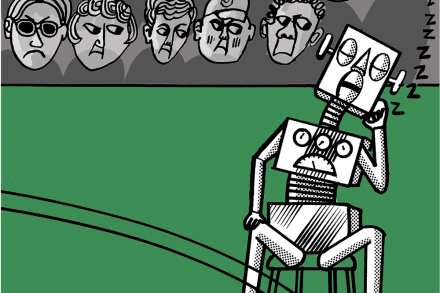
The evidence was clear, the official had dropped a clanger. At 4-4 in the first set of the women’s match at Wimbledon last Sunday, the British player Sonay Kartal should have had her serve broken when she hit a backhand long. Anastasia Pavlyuchenkova saw the ball land well out of court, as did those watching the replay, but the line judge remained mute. ‘Replay the point,’ the umpire said, leading the Russian to complain that ‘they stole the game’. This nameless offender – let’s call him Hugh after Hugh Cannaby-Serious, the official who used to wind up John McEnroe – was napping. It turned out that Hugh had been switched off for a few points. Robots can be human too. Cameras have replaced line judges at Wimbledon after 148 years.

State-school cricket at Lord’s? Bring it on

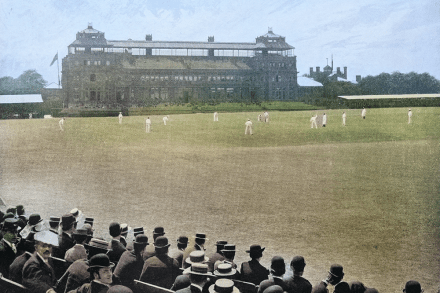
A state-school cricket competition announced last week with a final at Lord’s is such a good idea you wonder why it has taken until now for someone to come up with it. Ever since Lord (George) Byron convinced the authorities to allow the first Eton vs Harrow match to be played at Lord’s in 1805, the public schools have monopolised the cricket played on the game’s most celebrated turf. Byron himself, although crippled with dysplasia and a deformed right foot, played for Harrow in that match and afterwards went to the West End to ‘kick up a convivial row in the Haymarket Theatre’.

The (nearly) lost art of the Test match

If you can bear to turn away from the Fifa Club World Cup, take a moment to ponder cricket and work out how the Bazball top brass have ended up with a team that lacks a proper no. 3 and has a woefully limited pace attack. And that’s after stating that their sole aim was to build a side for the imminent series against India, and then the Ashes this winter. But first things first. The ripples from South Africa’s victory in the World Test Championship will be felt for some time. It was also an outstanding game, which contained a wonderful example of the (nearly) lost art of the traditional Test match innings.

The titans who shaped Test cricket

Cricket histories are a dangerous genre both for writers and readers. They can be incredibly boring, the dullest of all probably being John Major’s weighty tome, which said everything you knew it would say as drearily as you feared. So Tim Wigmore, a young shaver who writes on cricket for the Daily Telegraph, has entered hazardous territory. Speaking as a proud cricket badger, who even has a book by Merv Hughes on his shelf (Dear Merv, 2001), I will admit that I have read rather too many cricket histories, and I swore that it would be a cold day in hell (or possibly at the county ground in Derby) before I would willingly start another. But Wigmore has written a splendid, comprehensive book full of good stories and droll asides.

Sportswashing? Bring it on…

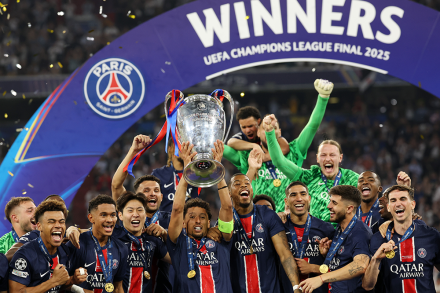
If that was sportswashing, let’s have more of it. The Champions League final, when Paris Saint-Germain vaporised Inter Milan, was a sublime game of football, mesmerising and beautiful in the PSG’s display of sustained excellence. But the win has also generated a fair bit of anguish from many commentators. The club, you see, is owned and financed to the hilt by Qatar. And Qatar has a fairly mixed record, it might be said, on human rights, the role of women, same-sex relationships and all that. Mind you, if sportswashing is meant to be the use of sport to improve a government’s image, it’s not working that well. We still talk about Qatar’s failings – as well as those of Abu Dhabi or Saudi Arabia despite them owning Manchester City and Newcastle United, respectively.

How football found God

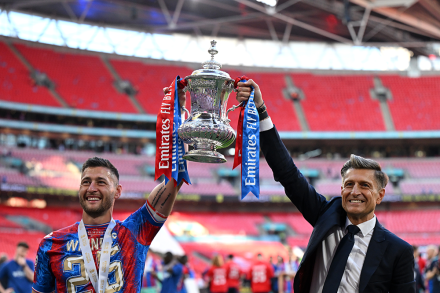
Without wanting to sound like a refugee from the 1950s, it was a shame that last week’s Cup Final was not the climax to the domestic season but sandwiched between a cluster of Premier League games – and kicked off at 4.30 p.m., which must have been unhelpful for those hoping to get a train back to Manchester. Palace wholly deserved to win: they defended brilliantly, broke like lightning and cunningly sabotaged any momentum a ponderous Manchester City might have been trying to develop by hurling themselves to the ground at the slightest opportunity. Never mind: the Palace fans were fantastic and kept Wembley afloat on a rich sea of sound throughout.  As for kick-off timings, don’t expect them to get any better.

The glorious sporting spectacle of snooker

I’m not sure quite what Sir G. Boycott would have made of it, but the People’s Republic of Yorkshire was on its feet to applaud the People’s Republic of China. Kindred spirits brought together at the Crucible, Sheffield, for Zhao Xintong’s victory in the World Snooker Championship over poor Mark Williams, at 50 the oldest finalist ever in the tournament. Zhao may look too youthful to get served in the Crucible bar – though he is actually 28 – but he had the good sense to settle in Sheffield some years ago and his fluent, remorseless snooker is breathtaking. His victory means that snooker is now properly recognised not as a homely British sport played by chubby middle-aged men in waistcoats but as a full-on part of the international sporting scene.

A football regulator would be an own goal

The UK now has a political class that seems to have lost all interest in sport It’s that time of the year again in football when the Championship sweeps all before it: it’s full of joy and life with packed houses, goals, drama and uncertain outcomes. It’s stacked with great names: Leeds, Burnley, Sunderland, Coventry, Blackburn, Norwich, Preston, Derby (take your pick). It’s where Coventry vs Middlesbrough on the last day of the season should be a big, big match. Leeds hammered six past Stoke on Monday, watched by nearly 37,000, and secured promotion to the Premiership, along with Prem regulars Burnley, who were watched by 21,486.

Sports are defying Trump’s trans ban

From our US edition

I was present when President Trump signed the executive order to protect women’s sports. But I knew the fight wasn’t over. In fact, it seems to be getting even uglier.  The American “progressive” faction is digging its heels in to allow men to keep stealing women’s trophies and opportunities – turning hard-won female spaces into political battlegrounds.   This Monday, for the first time, a man ran in the Boston Marathon in the women’s category – and a female athlete who disagreed with his inclusion was sent violent threats, highlighting the farcical state of American athletics.  The rule change means that now it is possible for a man to win the men’s category, the non-binary category and the women’s category.

The Premier League is rubbish

Of the 73,738 benighted souls who pitched up at Old Trafford on Sunday for the Manchester derby – presumably even some, mostly City supporters, from Manchester – how many reckoned they’d got value for money? This was a dire game, devoid of energy, skill and flair. The most exciting thing was probably a low-key sit-in at the end to protest at United’s seat pricing. Even the term ‘derby’ was rubbish: as far as I could see, only one player of note – City’s Phil Foden – was Mancunian. Which is still more than the number of regular starting players from Merseyside in the recent Merseyside ‘derby’. The Premier League likes to boast that it’s the greatest show on Earth. Well if so, it had better make sure there is actually something to put on show.

How to walk away from greatness

How do you walk away from greatness? How do you vacate the position of being literally the best person in the world at something? Most of us never have to face this challenge, but at some point Ronnie O’Sullivan will. In Steve Davis and Stephen Hendry he has contrasting examples of how to tackle it. I’d argue that Davis’s approach is by far the better – and indeed teaches all of us about life and the way it should be lived. ‘If he plays his best, he wins. It’s as simple as that.’ There aren’t many who disagree with Hendry’s verdict on O’Sullivan, his successor as the king of snooker and the greatest player, by common consent, ever to pick up a cue.

Boxing belongs in the Olympics

If there is anything more pointless than signing a five-year contract to be Emma Raducanu’s coach, it is the effort to inject some excitement into England’s interminable qualification campaigns for major football tournaments. Everyone knows they will qualify, almost certainly as top of their group, which usually contains such giants as the Moon, Chad and Tierra del Fuego or, as now, Latvia, Albania, Andorra and Serbia. Good luck, Mr Tuchel, with learning much from those fixtures, though Serbia should be interesting. Sport needs jeopardy: there needs to be doubt about the outcome. Here there’s none. There are marginal debates: is Phil Foden too far out on the right? What will happen when Bukayo Saka is fit? Should everything revolve around Jude Bellingham as much as it does?

The real reason for Scotland’s Six Nations defeat

The confused world of Duhan van der Merwe must seem more confused than usual after last weekend. The Scotland winger with an accent that sounds more Western Cape than Western Isles found himself crowned man of the match despite Scotland’s defeat by England at Twickenham, while at the same time being scapegoated as the man who lost the game and the Calcutta Cup for his adopted nation. Van der Merwe, who at 6ft 4in and nearly 17 stone could easily be mistaken for a lock forward, was roundly criticised for cutting away from the posts rather than towards them when he ran in the try right at the end of the match that took Scotland to within one point of England.

Thank goodness for the Six Nations

The first months of the year are a tough time to inhabit this corner of the planet. First there’s January to contend with – darker than Himmler’s sock drawer and full to the rafters with post-festive self-flagellation. Then we’re into February, which is just more of the same: January by another name. No wonder the powers-that-be decided to shave a few days off it. Fortunately, salvation has arrived – as it does every year, just when we were nearing breaking point amid the relentlessness of winter. I write, of course, of the Six Nations, a great sporting festival devoted to genial national rivalry and daytime binge-drinking in equal double measures.