Sport

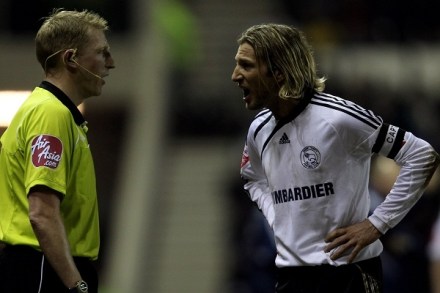
The BBC: ‘It’s professional to cheat’

In this morning’s Observer I write about the collapse of the old notions of honour and fair play in sport, banking, politics, journalism, the law and much else. As I acknowledge right away, hard evidence is hard to find. Football’s rules change: what was a manly tackle in the 1960s is a foul today. Yesterday’s 'Spanish practice' in the workplace becomes today’s criminal offence. The danger of false nostalgia is great. But you should not let the difficulties of comparing the present with the past unnerve you, and I hope I provide evidence that backs up our gut belief that standards have fallen. If anyone doubts my conclusion, listen to yesterday’s 606 from BBC Radio 5 Live. It wasn’t available when my piece went to press, but how I wish it had been.

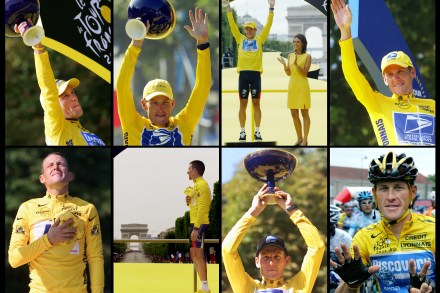
Lance Armstrong, the Greatest Cheat in the History of Sport, Prepares to Admit His Sins – Spectator Blogs

The news, reported by the New York Times, that Lance Armstrong is preparing to confess his sins reminds me of this passage from the Book of Daniel: Thou, O king, sawest, and behold a great image. This great image, whose brightness was excellent, stood before thee; and the form thereof was terrible. This image's head was of fine gold, his breast and his arms of silver, his belly and his thighs of brass, His legs of iron, his feet part of iron and part of clay. Remember, however, that golden-sunned afternoon in Paris in the summer of 2005. On the Champs-Elysees Lance Armstrong, the undisputed titan of his era, stands atop a podium to deliver a message to the masses thronged before him: "I'll say to the people who don't believe, the cynics and the sceptics, I'm sorry for you.

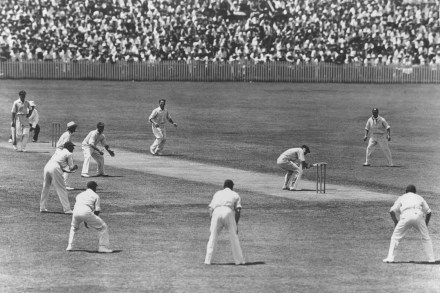
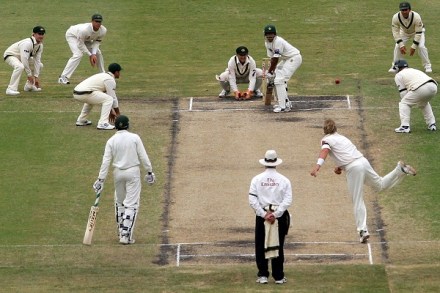
The more Shane Warne practised, the more magical he got

It was a placid start. A tubby kid with peroxide blond hair approached the crease in 6 easy steps. He skipped into the air and pulled his arms backwards to build forward momentum. His left leg hit the ground and he began to rotate his shoulders from right to left. This motion brought his right arm up through the air in a wide arc. He had to hold his left arm out in front of him for balance as the shoulder-turn accelerated. His hips began to follow in the direction of his shoulders, bringing his right flank around to the left. His right arm extended above his head and neared the top of its ascent. At that moment, Shane Warne snapped his right wrist anti-clockwise and released what would become known as the ‘Ball of the Century’.

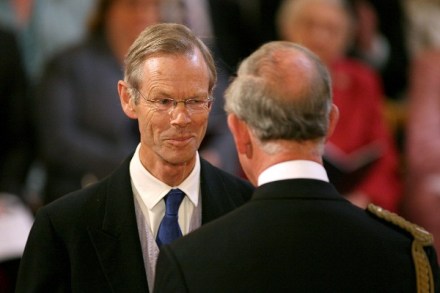
Thank you, Christopher Martin-Jenkins

The children who grew up when Christopher Martin-Jenkins began to commentate on cricket (both in print and on the air) have got old. CMJ’s 40-odd year career has been brought to a premature end by cancer; and the cricket writing world has paid tribute to its companion. The pieces by Mike Selvey, Jonathan Agnew and Michael Atherton are very touching, and very, very funny. CMJ’s innate unpunctuality and disorganisation conspired to make episodes of glorious farce. He arrived at Lords to commentate on a Test Match that was being played at the Oval. He stopped a car journey to make an urgent phone call, only to discover that he had mistaken the TV remote control in his hotel room for his mobile phone.

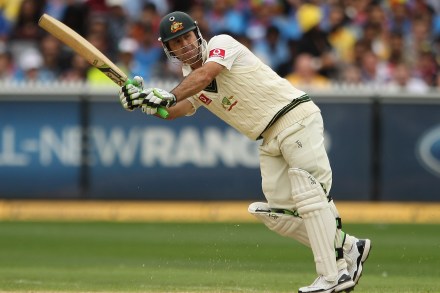
Ricky Ponting’s Recessional – Spectator Blogs

With the Don at three and Keith Miller inked for the all-rounder's role at six there are only two open spots in Australia's all-time middle order. It is a measure of Ricky Ponting's greatness that no-one doubts he's a sensible, worthy contender for one of those places. You may prefer the claims of Clem Hill, Charlie McCartney, Stan McCabe, Neil Harvey or Greg Chappell, but Punter is undoubtedly part of the conversation and only a fool would scoff at including him in this Fantasy XI. That's how good he was. In England I fancy there's sometimes a tendency to forget how fine a batsman Ponting was and instead place a little too much emphasis upon his captaincy. We sometimes forget how important luck is in cricket.

First XI of the Fallen

Who was the greatest sporting star who fought in the first world war? It is a difficult argument to settle at a century’s distance, with nobody still alive who saw them play and only fleeting glimpses from the very first steps of the newsreel era. The names are less familiar now, but contemporary accounts of their exploits and the sporting record books prove that they belong in the first rank of British sporting history. British Future has selected an inevitably subjective ‘1st XI’ of the fallen, to help to bring the names of these sporting greats back into our public consciousness.

Shelf Life: Anton du Beke

Stalwart of Strictly, winner of Rear of the Year 2011 and author of B is for Ballroom: Be Your Own Armchair Dancefloor Expert, dancer Anton du Beke is on this week's Shelf Life. He tells us what he's reading and which self help book would make him foxtrot for the hills. He tweets @TheAntonDuBeke 1). What are you reading at the moment? The Big Miss: My Years Coaching Tiger Woods, by Hank Haney Lady Blue Eyes: My Life with Frank, by Barbara Sinatra Steps in Time: An Autobiography, by Fred Astaire 2). As a child, what did you read under the covers? The Famous Five, by Enid Blyton 3). Has a book ever made you cry, and if so which one? No, I don’t cry! 4). You are about to be put into solitary confinement for a year and allowed to take three books. What would you choose?

The Lad Done Well: Andy Murray Comes of Age – Spectator Blogs

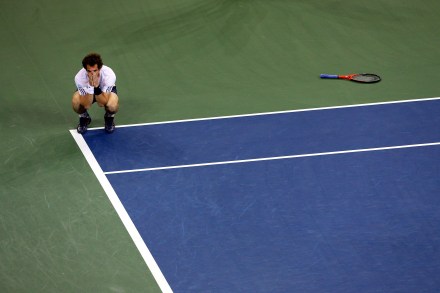
And then there were four. If Andy Murray's accomplishments still make him the least of the great quartet ruling tennis in this golden age that's about as useful a comment as remarking that Roberto Duran was outshone by Sugar Ray Leonard, Marvin Hagler and Tommy Hearns. It may be true but it doesn't matter very much. There have been other great eras in tennis - Borg, McEnroe and Connors for one - but there's never been a quartet quite like Roger Federer, Rafael Nadal, Novak Djokovic and, yes, Andy Murray. Consider this: eight men shared the ten Grand Slam tournaments preceding Roger Federer's first Grand Slam victory (Wimbledon 2003). The subsequent 37 tournaments have been divvied up between eight players.

Lance Armstrong: It Wasn’t Just About the Bike – Spectator Blogs

In one sense, I have some sympathy for Lance Armstrong. He has been hounded by the American anti-doping agency USADA who, like other federal agencies, are remorseless foes. Once they have their hooks in you they never let go. The usefulness of their investigations is another matter. Even so, Armstrong's declaration that enough is enough and that he will no longer bother to defend himself against doping charges will doubtless be seen as a capitulation. Most people, I suspect, will take his silence as an admission of guilt. So it really wasn't just about the bike, was it? Apparently not.

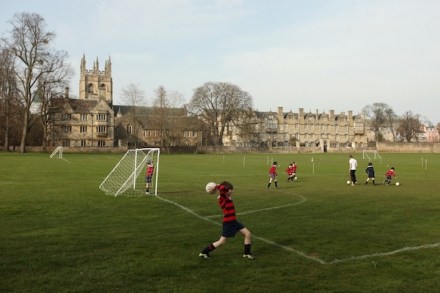
You can’t judge a school by its sports fields

There's a glass case in the hall of Number 10 at the moment which contains a large sports bag with two shiny Olympic medals poking out. This wasn't left behind by a Team GB athlete: it's actually an enormous, elaborate cake, complete with icing zips. Downing Street staffers are looking forward to eating this part of the Olympic legacy soon. A considerably less tasty leftover from the Games is the row over school sports provision. During the Olympics, I argued that the Prime Minister's interventions on the matter were largely unhelpful, but as Fraser and Matthew d'Ancona have pointed out, schools selling off old tennis courts to pay for new gyms, or a proliferation of Indian dancing classes will become more common under the freedoms they now enjoy.

The View from 22 – international justice, school sports and unfair GCSE results

Is there a downside to our glowing era of 'international justice'? In this week's cover feature, Douglas Murray writes that our carefully designed system can trap criminals, giving them no way out and potentially leading to even more horrific acts. In our View from 22 podcast, Douglas expresses some of his issues with how signatories perceive the International Criminal Court: 'It is a replacement for being a serious military power, it's cheaper in the end and gives people this wonderful cloak. Any politician who wraps themselves in the ICC wraps themselves in a wonderful moral aroma that was actually fought for and earned by many hard working people. But it has not been earned by this generation.

Very, Very Special: An Appreciation of VVS Laxman – Spectator Blogs

And then there was one.  Of the four princes who made India the world's best side to watch in the first decade of the 21st century, only Sachin Tendulkar - the first and greatest of them - remains. Saurav Ganguly, the tiger of Bengal, was first to leave the arena. Rahul Dravid, the classicist, departed last year. Now Vangipurappu Venkata Sai Laxman, the most artistic member of India's most formidable quartet, has announced his retirement from international cricket. As Cardus (who else?) wrote of Ranji, Laxman distributed his runs as largesse delivered in silk purses. If he could not claim Ranji's aristocratic lineage, he was still, even in his own time, something of a throwback to an earlier age.

Ministers fail to sell themselves on playing field sell-offs

If you're a minister, or even the Prime Minister, and you take to the airwaves holding a page of figures aloft, it's always a good idea to make sure the figures are actually correct before you enter the studio. When David Cameron read out a break down of playing field sales on LBC radio during the Olympics, he was trying to crush reports that under this government, schools are continuing to reduce their sports facilities in return for money. You can watch the film of Cameron with his sheet of paper here. The problem is that this sheet of paper wasn't actually correct when it said there were only 21 sell-offs, and as Christopher Hope reveals in today's Telegraph, there were actually 35 applications to sell school playing fields, of which 30 were approved.

Sid Waddell, 1941-2012 – Spectator Blogs

Reader TT asks a good question: given your (self-appointed) role as the Spectator's unofficial darts correspondent, why haven't you written anything on the death of Sid Waddell? What can I say? Grief moves one in mysterious ways. Few people can claim to have created a sport, yet that was Waddell's achievement and only nit-pickers and other churls would mock the fact that the sport Waddell created was darts. Before Sid there was nothing and the darts universe is his creation. As he might almost have put it, "God took six days to create his world, Phil Taylor needed just three hours to build his. And Taylor never rests on the Sabbath." Though a Northumbrian by birth, Waddell was an example of the democratic intellect. Had he been Scottish he'd have been considered a "lad o'pairts".

Twigg takes aim at Gove on school playing fields

The Olympics may be over, but the political row over school sports fields is set to rumble on into the autumn. Stephen Twigg today announced that Labour will force a vote on the matter when the Commons returns in September. His motion will demand that the government restore a minimum space requirement for outdoor space in schools. It does take some chutzpah for Twigg to launch this attack, given Labour managed to approve the sale of 42 playing fields in just one year, which is twice the number sold off since the coalition came to power. The Education department insists that of the 21 that have been signed off for sale, 14 belonged to schools that closed, and four were surplus to requirements after existing schools merged.

Labour plays a sensible game on school sport

It would be wrong to say that David Cameron has had a bad Olympics. After all, the Games went extremely well, both in terms of logistics and Britain's wonderful medal haul. The Prime Minister is not responsible for the bouncy mood of the country at the moment, but he's also not having to answer aggressive questions from the media about an awful security breach, total gridlock in central London or worse. But the Prime Minister did rather let himself down by being drawn into the inevitable debate about sports provision in the state education sector during the Games. That discussion started so early into Britain's rise up the medal table that at the time it was impossible to assess whether state-educated athletes were pulling their weight.

Sinophobia, the last acceptable racism

The Chinese have excelled at London 2012, much to the annoyance of their Western rivals. In this week’s issue of the Spectator, Ross Clark argues that the claims against swimmer Ye Shiwen reflect irrational suspicion of her country. Here is an edited version of Ross’s article (you can read the full version here): The story of London 2012 has been that of a country which was once an underachiever in the Olympics but which, through sheer hard work on the part of its athletes, has hauled itself to the top of the medals tables, producing in the process one of the most dramatic world records in Olympic history. I refer, of course, to the People’s Republic of China. But this is not a story you will have picked up from the BBC or the press.

Chariots of fire

When the contestants were lining up for last night’s sensational 5,000 metre race, both of the American contestants waited until the cameras were on them, then crossed themselves and held their hands in prayer. It’s quite some sight to secular Brits, where religious language (even ‘God bless’) and mannerisms have dropped out of our national life and vocabulary. But to quite a few of the Olympians, their faith is of crucial importance, which we have seen this year through their Twitter feeds. Mo Farah, a Muslim, prayed on the track after winning both of his Golds. After Usain Bolt broke the Olympic record for the 100 metres, he did likewise.

Political games

Whilst everybody is enjoying the spectacle of the greatest Games on earth there is one group of people who are doing their level best to spoil it. If there was a gold medal for petty political nitpicking up there on the podium would be the anti-independence politicians and commentators. In rhetoric reminiscent of Labour claims that devolution would kill the SNP ‘stone dead’, time and again over the last two weeks we have heard claims the SNP are opposed to Team GB and that every medal marks a death blow to Scottish independence aspirations. They condemn the Scottish Government for wishing our Scottish athletes well. They then criticise us when a Scottish showcase is opened to fully engage with the Olympics.

Downing Street humbled by Mo Farah

The genius of Mo Farah was only underscored by the plodding stupidity of Downing Street's statements about the "All Must Have Prizes" culture this weekend. If this is the culture which produced Mo Farah then surely we should be celebrating it. But the truth is that it doesn't exist and never has done. How does David Cameron think we managed to get 28 gold medals if not through the promotion of competitive sport in schools? Mo Farah attended an inner city comprehensive his talent was spotted and encouraged. What's wrong with that? Considering the scale of the success of London 2012, it's no surprise that there have been attempts from both ends of the political spectrum to claim this Olympics for their side. It is a rather pointless game to play.