Soviet union

Russia is the West’s great tragedy

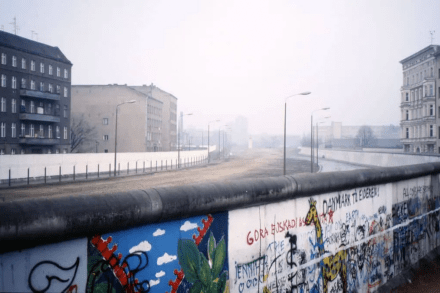
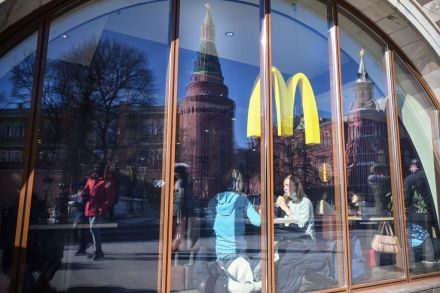
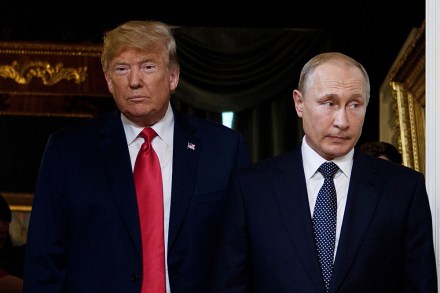
The books written about the tragedy of the Russo-Ukrainian War will be legion. In the meantime, there's another book that ought to have been written 20 years ago about a previous tragedy concerning Russia: how, following the collapse of the Soviet Union in 1991 and with it the demise of the communist regime, Russia and the West failed to “converge” in some way. Why did the two did not come to embrace each other politically, economically, and culturally? The rivalry between East and West has since 1917 been fundamentally an ideological and not a nationalist one. Historically, before the Bolshevik Revolution, Washington had been on cordial terms with Moscow, from which it had purchased the Russian territory of Alaska in 1867.

us-russia

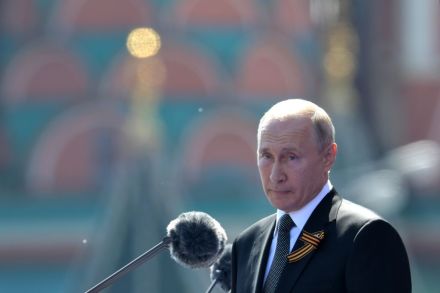
Vladimir Putin, deep statist

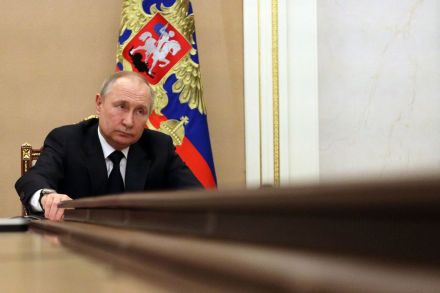
Vladimir Putin's brutality in Ukraine is only going to get worse. The Ukrainians have fought valiantly, far better than anyone expected, but then that only means the Russians will have to up the slaughter in the coming days. As for Putin, he's reportedly fuming over his army's setbacks, threatening reprisals, while hunkering down in — I'm not making this up — his "mountain lair" deep in the Urals. If that makes Putin sound like a Bond villain, then that's just one of the many images of him that's emerged in recent days (the most popular is Putin as Hitler). The seemingly insane nature of his Ukraine invasion has left observers grasping for a reference point. Is Putin addled by cabin fever? Under the sway of extremists? Mentally ill? Who is this Vladimir Putin anyway?

Putin’s Stalinist playbook

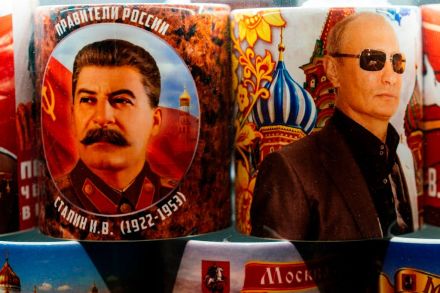
Vladimir Putin's actions have shocked many Western observers over the past few days. But his moves bear all the hallmarks of one of his predecessors: Joseph Stalin. Last Monday, the Russian Duma passed a direct appeal to Putin to recognize the Russian-controlled separatist states of Donetsk and Luhansk. The Russian president first said he would not immediately recognize the so-called republics. The reason for this was he wanted it to appear that when he finally did recognize them as independent republics, he was simply reacting to popular pressure from below. This is straight out of the Stalin playbook.

stalin

America’s long history of sitting out Russian invasions

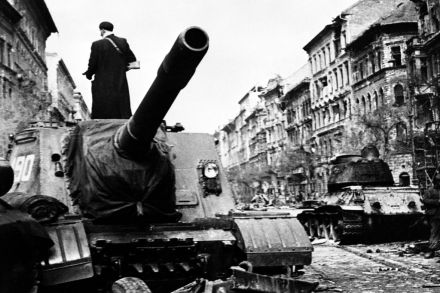
By now, my colleagues in the media may have convinced you that Russia’s invasion of Ukraine has been a “transformative” event, a challenge by a reactionary dictator to the “liberal international order,” if not an end to one historical epoch and the beginning of a new one. The world has turned upside down, nothing will again be the same, blah, blah, blah. When millennials make such apocalyptic observations, I can understand. Like Founding Father Thomas Paine, they assume that each day marks the “birthday of a new world.” But what about baby boomers like New York Times columnist Tom Friedman, who were in high school in 1956 during the so-called Hungarian Revolution, which was very much like what is happening in Ukraine today?

Russia is the lost great power

Lost in the endless debate about whether Russia will invade Ukraine is the real reason that Moscow — armed with nuclear weapons and one of the most advanced militaries on the planet — feels so threatened by its neighbors, the NATO alliance, and ultimately the United States. While the expansion of NATO in the 1990s plays a big role, it is Russia’s everlasting internal debate about its place in the world that is the real source of tension. It's a historical black hole no one wants to get sucked into, but unless resolved it has the potential to be a source of armed conflict the likes of which Europe has not witnessed since World War II. Geography and history are both a blessing and a curse for Russia.

How working from home threatens authoritarian regimes

One of the few good things to come out of the pandemic has been the option to work from home (WFH). According to a Stanford University study of 17,000 employees, 50 percent of respondents who stayed at their jobs without commuting wanted to keep working from home at least part-time after Covid. And a September 2021 survey by OwlLabs, a video conferencing platform, found that one in three people who have worked remotely since the outbreak would likely quit if they could not continue to do so. While undoubtedly pressured by the current worker shortage to accept WFH as an employment benefit, companies have come to appreciate how decentralized staffing can improve productivity and substantially lower overhead.

China is the new evil empire

History does not repeat itself, but it does rhyme. In the 1980s, the gravest threat to America’s freedoms came from the Soviet Union, which President Ronald Reagan called the Evil Empire. That rhymes with today’s equally serious threat from Communist China, the New Evil Empire. Xi Jinping rules China with absolute power, like an emperor. He has complete control over China’s sole political party, the CCP, the government, the economy, the military, the police, the judiciary, and the media. Even over religion: Christian churches must display Xi quotes instead of the Ten Commandments.

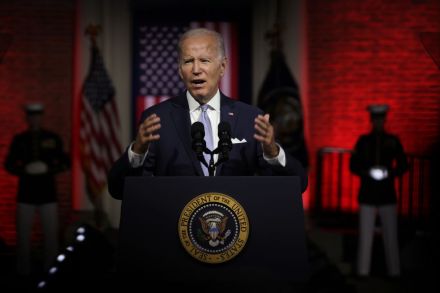
Biden builds back in the USSR

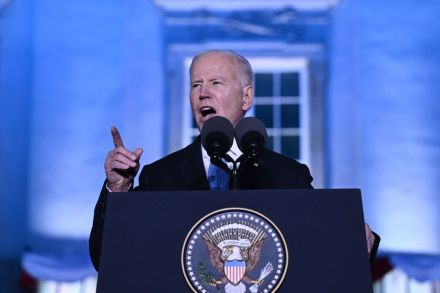
Is it more worrying that President Biden might not be in charge, or that he actually is in charge? Nobody has the power to force a president to undergo the indignities that Biden went through on Thursday night’s CNN town hall. As with the withdrawal from Afghanistan, either someone convinced him to do it or he insisted on doing it. Either way, you could not watch him, clenching his fists as though holding a Zimmer frame while Anderson Cooper spoon-fed him a prompt, without feeling that we are heading nowhere good. On the same day that Donald Trump evoked the ghosts of Soviet propaganda by launching a social-media app called Truth — the Russian translation is Pravda — Joe Biden attempted a Brezhnev-era theatrical of his own.

biden

Joe Biden and the grand battle of ideas

Well, Donald Trump doesn’t seem so bad now, does he? I don’t say that because Joe Biden has turned out to be as competent or less, but because at his press conference in reaction to the fall of Kabul, he sounded Trumpian. By which I mean, honest. Honest that staying in Afghanistan so long was a mistake, that their government was corrupt, that if its army wasn't prepared to defend itself then we shouldn't do it for them, and that this is what a withdrawal looks like: horribly, brutally honest. The endgame was a disaster because America’s intel was wrong, so the US had less time to get out than it thought, and because Biden lacks the acuity to respond to changing conditions. Biden looks like Brezhnev after heart-attack number seven.

biden

Georgians on my mind

Long before Achilles chased Hector around Troy and Homer wrote about the οἶνοψ πόντος, the ‘wine-dark sea’, people living in what is today the republic of Georgia were making wine. Archaeologists have found evidence of wine making there dating from 8000 BC: an impressive statement to the inventiveness to which necessity gives birth. Stretching from the Black Sea to the Caucasus Mountains, Georgia is home to a wide variety of climates, types of soil and geographical physiognomies. Today it is home to some 500 varietals, few of which are familiar to westerners (even though many if not most western grapes probably have precursors in Georgia and the Black Sea ‘cradle of wine’).

georgian wine

Biden’s Brezhnev vibes

Like many other Americans who had the misfortune to live under socialism, I’ve been having lots of flashbacks lately. In particular, I find that the presumptive President-elect Joe Biden gives out serious Brezhnev vibes. The general secretary of the Soviet Union from 1964 to 1982, Leonid Brezhnev was not a healthy man. He was a chain-smoking workaholic who’d been appointed to a series of very stressful positions — you try to rise in ranks under Joseph Stalin. He served in World War Two, when he was wounded, and suffered a concussion. Brezhnev’s mind and body took a toll; his first, minor stroke happened in 1951, when he was still in his forties.

brezhnev

Olivia de Havilland’s Red Scare

Olivia de Havilland, who has passed aged 104, will forever be remembered for the role of Melanie Hamilton in Gone with the Wind, a performance that earned her a Best Supporting Actress nod from the Academy. She would go on to star in acclaimed romantic dramas like To Each His Own and The Heiress, both of which brought her Oscars for Best Actress, but to fans of classic movies she will always be Scarlett O’Hara's sickly cousin, love rival but ultimate ally. She was cinema’s quintessential southern belle: genteel on the surface, steel underneath. Less well known is that de Havilland was a lively anti-communist and worked to expose and counter the influence of Soviet sympathizers in Hollywood.

olivia de havilland

From letter to worse

It is a truth generally acknowledged that any statement of civil principles will now be met with pitchforks and personal attacks, insinuations of racism, sexism, classism and white privilege, not forgetting online guerrilla action by the army of the fashionably aggrieved, led by their crack troops, the transsexuals. Take this week’s letter to Harper’s magazine, ‘A Letter on Justice and Open Debate’.

letter

Gorbachev’s war and peace

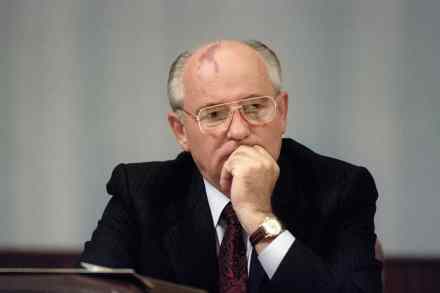
Tolstoy tried to write a history of Napoleon’s invasion of Russia, but found that his story required the broader canvas of fiction. We like to think that fiction emerges from reality, and that a novel, which is as much as species of hallucination as it is a social document, might retain enough of its physicality to be, as we say of War and Peace,’realist’. But the traffic between fiction and reality goes in both directions. ‘What force moves the nations?’ Tolstoy asked in the philosophical coda that, returning fiction to history, he added to the end of War and Peace. The discipline of history, its reliance on facts, was at the heart of the Enlightenment.

gorbachev