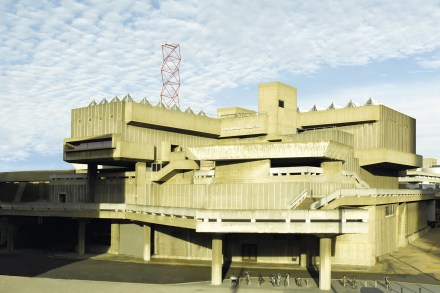
Southbank centre

Who ruined the Southbank Centre?

Europe’s largest hub of the performing arts, which great musicians the world over once called home, is now a grim laboratory, obsessed with a ‘diversity’ that taints everything it touches. We hate, thought Keats, things that have ‘a palpable design upon us’. Under the direction of Misan Harriman, chairman of trustees, the Southbank Centre increasingly resembles a political boot camp, where slackers are herded for re-education. The Royal Festival Hall, its centre-piece, is a dump. Where there used to be a well-stocked bookshop and a place to buy records, there are now battalions of laptop-tapping students and scruffs of all ages, some plainly up to no good. And the transformation has been deliberate. ‘No snobs here’ is the message.

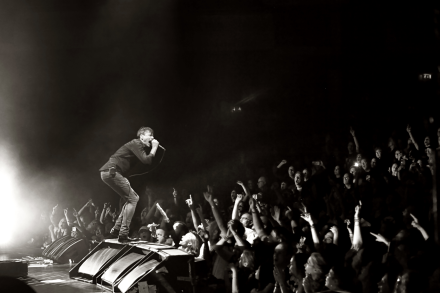
Suede turn their fine new record to mush at the Southbank

I think a lot about Wishbone Ash. A disproportionate amount. Partly because I have had to listen to them for around ten hours while researching a book. Partly because when I was a kid, I always found it curious that Wishbone Ash were advertised in the weekly music press but never reviewed. Back then, broadsheets barely covered rock, so there was no room for their gigs and albums there. But they were never on Top of the Pops or The Tube or even Whistle Test  either. Perhaps Tommy Vance occasionally gave them a spin on the Friday Rock Show, but other than that they were not on Radio 1. They existed entirely outside of what I perceived of as the world of rock. At that point Wishbone Ash were 15 years on from their first album. Suede are 32 years on from theirs.

Both thin and overblown: Royal Ballet’s A Single Man reviewed

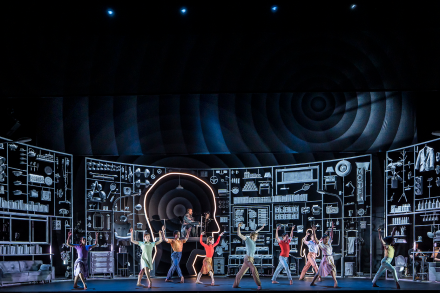
A common flaw in narrative ballet today is the attempt to tell stories that are too complex and ramified for the vocabulary of dance to convey. With Jonathan Watkins’s adaptation of Christopher Isherwood’s slim novella A Single Man, the flaw is the opposite. George, a middle-aged prof, is traumatised and in mourning for his recently killed lover Jim. The consolations of ordinary life fail, but he feels the twinge of desire returning for one of his students. After they spend an erotically charged night together, he can move on. There’s just not enough in this fable to sustain 100 minutes of dance drama. To fill this scenario out, Watkins introduces the ghost of Jim and a spectral corps de ballet, who haunt and mirror George’s grief and anxieties.

Budget Ballets Russes: BRB2’s Diaghilev and the Birth of Modern Ballet reviewed

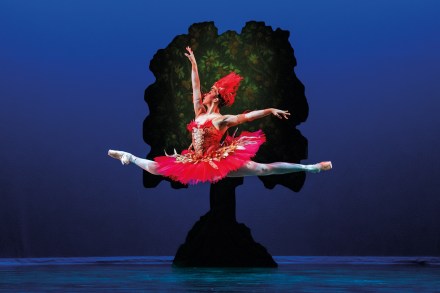
Although I doff my hat to Carlos Acosta’s BRB2, Birmingham Royal Ballet’s junior troupe, for a reminder of what is owed to the Ballets Russes – nothing less than the creation of a new art form – the programme it’s presenting in Diaghilev and the Birth of Modern Ballet is neither well balanced nor coherent. Between some highlights of the most familiar Fokine repertory, an extract from Nijinska’s Les Biches has oddly been inserted, and there was nothing here to suggest the fact that Massine was by far the most dominant choreographer of the Ballets Russes’s interwar era and someone indeed who had personally worked with BRB in its previous incarnation.

The unnerving world of Erik Satie’s 20-hour composition 

Once Igor Levit starts playing Erik Satie at 10 a.m. on 24 April at the Queen Elizabeth Hall, he can expect to be there for a long time. Satie’s Vexations is a piece that looks innocent enough, like butter wouldn’t melt in its composer’s ears. A doleful 18-note theme in the bass is filled in with stately, chorale-like notes in the right hand; the theme repeats, followed by the same chorale except turned upside-down. Nothing too strenuous so far. But Satie’s enigmatic inscription ‘To play this motif 840 times in succession, it would be advisable to prepare oneself beforehand, in the deepest silence, by serious immobilities’ mixes up the variables. Taking him to the letter of his word adds up to a performance duration of anywhere between 14 to 20 hours.

Don’t write off Hofesh Shechter – his new work is uniquely haunting

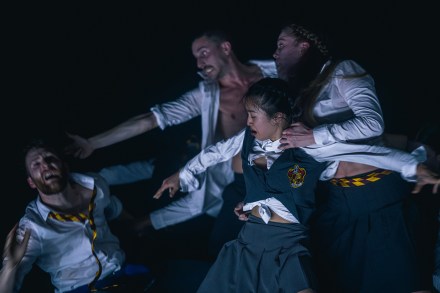
In 2010, when his thrillingly edgy and angry Political Mother delivered modern dance a winding punch right where it hurt, I had high hopes for Hofesh Shechter. Here was an outsider with the courage to make his own rules and engage dance with real-world issues (he had served a traumatising period in the Israeli army) rather than blindly following the fashionable goddess Pina Bausch down the rabbit hole of postmodern irony. He wasn’t interested in playing games. But success has taken his edge off and what has followed has largely been disappointing. Trapped by a limited choreographic vocabulary, Shechter has repeated himself, relying too hard on the brute effect of mere chaos and failing to find sharper images in which to express his rage and anxieties.

Claude Vivier ought to be a modern classic. Why isn’t he?

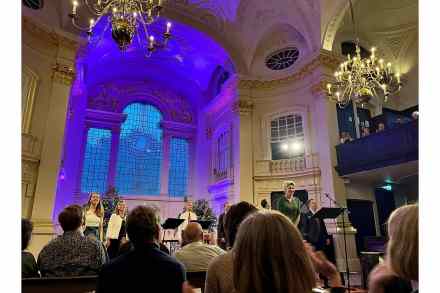
April is the cruellest month, but May is shaping up quite pleasantly and the daylight streamed in through the east window of St Martin-in-the-Fields at the start of I Fagiolini’s latest concept-concert, Re-Wilding The Waste Land. The centenary of Eliot’s poem is the obvious hook. But whether you’re counting from the Rite of Spring riot in 1913, Schoenberg’s Skandalkonzert the same year, or further back to Strauss’s Salome or Debussy’s Faune, music’s modernist moment occurred some time earlier. Which is helpful, in a way, because it freed the group’s director Robert Hollingworth from the limitations of chronological programming and gave him scope to do something a bit more interesting, and possibly a bit more Eliot-esque.

The death of the Southbank Centre

The one thing everyone agrees is that the Southbank Centre is in deep trouble. In May, the institution made an unusually public plea for government help. Management predicted the best-case scenario was ending the financial year with a £5 million loss, having exhausted all reserves, used the £4 million received from the furlough scheme and having gobbled up the remainder of its Arts Council grant. All the while, with the exception of the Hayward Gallery, the 21-acre site on London’s Thameside, incorporating both the Royal Festival Hall and the Queen Elizabeth Hall, remains closed. It was pitiful news, but there was worse to come. With no concerts, performances, talks or readings, drastic staff cuts are in the offing.