Europe’s largest hub of the performing arts, which great musicians the world over once called home, is now a grim laboratory, obsessed with a ‘diversity’ that taints everything it touches.
We hate, thought Keats, things that have ‘a palpable design upon us’. Under the direction of Misan Harriman, chairman of trustees, the Southbank Center increasingly resembles a political boot camp, where slackers are herded for re-education.
The Royal Festival Hall, its centerpiece, is a dump. Where there used to be a well-stocked bookshop and a place to buy records, there are now battalions of laptop-tapping students and scruffs of all ages, some plainly up to no good. And the transformation has been deliberate. ‘No snobs here’ is the message. Snobbery, in this case, meaning those odd folk who want to hear the finest music ever composed in pleasant surroundings.
To mark the hall’s 75th anniversary earlier this month, the Southbank invited Danny Boyle to shake things up. His response was You Are Here, a celebration of British ‘youth culture’ which the film director described as ‘curated chaos’. For Richard Morrison, writing in the Times, the all-day show represented ‘a new low in pointlessness’.
Morrison has subsequently damned Harriman’s five years at the helm as a missed opportunity, and doubted his suitability for the role in the first place. Harriman, a self-confessed ‘activist’, is a photographer by background, who has no knowledge of, nor much interest in, orchestral music.
Those involved with the London Philharmonic and the Philharmonia, the most prominent of the Southbank’s six resident orchestras, are dismayed by what they perceive to be a coldness bordering on hostility. Privately they have expressed admiration for John Gilhooly, the director of Wigmore Hall, which last year declared independence from Arts Council funding.
As chief culture writer at the Times, and before that the paper’s arts editor, Morrison has covered the nation’s artistic life as thoroughly as anyone during the past four decades. Nobody doubts he is an expert witness, or a fair-minded one. He knows the rules of the game have changed, and will not have been surprised that, by drawing attention to Harriman’s Nigerian background and eagerness to ally himself with ‘progressive’ causes, he has in turn been damned.
Harriman is not exactly shy, pumping out torrents of endorsements on social media. In one expression of support, he reheated a comment by Susan Sontag which, in its context, appeared to criticize supporters of Reform with reference to the rise of National Socialism in Germany. As night follows day, the Smartphone Cavalry appeared, joined by Greta Thunberg, to denounce ‘a smear campaign’ designed to ‘traduce’ Harriman.
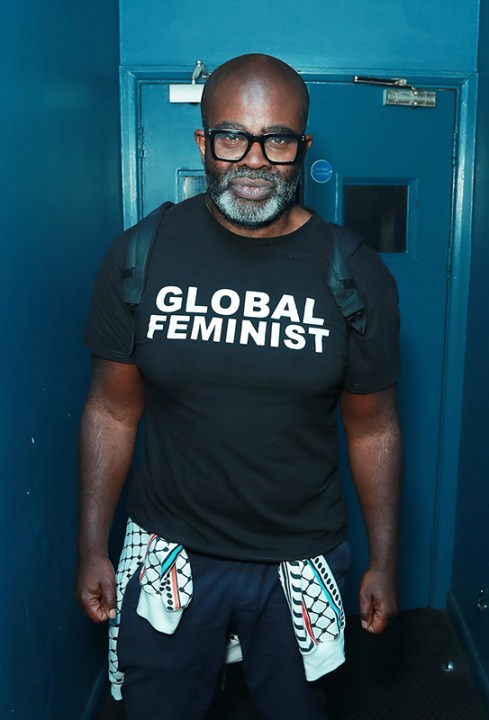
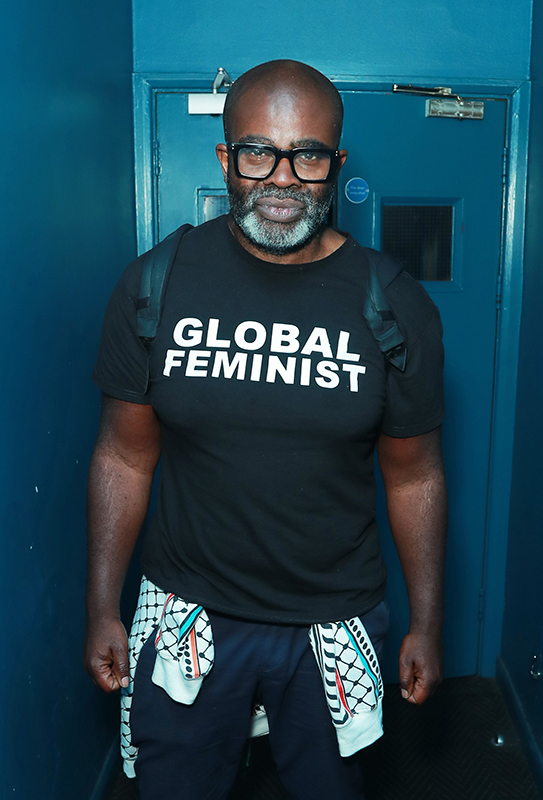
Morrison aimed his dart precisely. If you are the chairman of a board that guards a national institution, funded to the tune of £17 million each year from the public purse, you should not be partial in your pronouncements. Yet Harriman has been pictured in the company of Zack Polanski, has worn a T-shirt proclaiming ‘global feminist’, and has associated with campaigns for Black Lives Matter and Extinction Rebellion. His admirers cannot claim he makes a convincing ambassador for the arm’s-length principle.
The Southbank Center wants fewer orchestral concerts (boring), and many more groovy ‘events’
Some members of Team Harriman will not be budged. One of the most prominent is Afua Hirsch, who used a column in the Guardian to denounce ‘a small group of right-wing white men’ who want to keep people like him – and, by implication, her – out of public life.
Her reference to a fear of black men and women ‘stepping out of line’ will ring bells in the ears of those who are familiar with the lady’s work. Educated privately and at Oxford University, Hirsch has spread so much joy as barrister, journalist, broadcaster and author that one forgives her this rare lapse. Imagine how difficult her life might have been had she ever been the victim of structural prejudice.
The Southbank’s fall from grace is not about race, at least not in the way Hirsch imagines. As Morrison indicated, and as the signatories to a letter in the Times confirmed, it is about finding the appropriate person. Harriman was proposed by Nick Serota, the Arts Council chairman, and endorsed by Oliver Dowden, then the arts minister, who may now repent at leisure. There are no two ways about it. The appointment was an avoidable blunder.
It’s not hard to see how the Southbank Center wants visitors to see it. There will be fewer orchestral concerts (boring) and many more groovy ‘events’ like Boyle’s merry-go-round. For this hub is ‘an engine of creativity’, and its guardians will not let you forget.
The Festival Hall bookshop, located in an area that could pass for a car showroom, is now a set of feeble stalls. The favored authors are Michael Rosen and Brian Bilston, who are deemed to swim against the tide, and there are anthologies of ‘queerness’ and books about music chosen from an approved list. You will find Kate Molleson, who scribbles about overlooked women composers, but not Neville Cardus, whose thing was Bruckner symphonies.
Cardus, brought up in a Rusholme slum, opened ears as music critic of the Manchester Guardian. That was real inclusion, because he invited readers to share the view from a mountain top. Now we are instructed to shelter in the valleys, ‘the sun by clouds covered’, and pay for the pleasure of self-abasement.




Comments