Soho

Norman Balon was much more than ‘London’s rudest landlord’

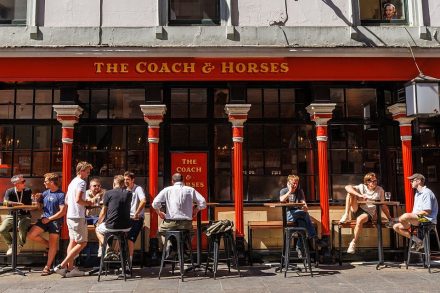
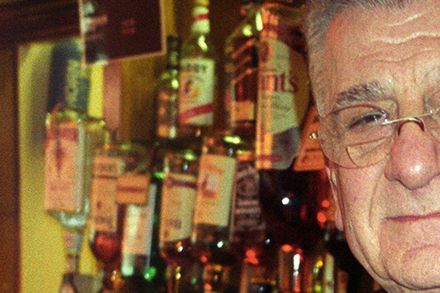
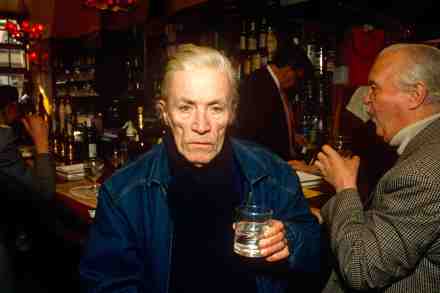
Norman Balon, who has died at the age of 99, missed the point when he defined himself as ‘London’s rudest landlord’. There, I think, he mingled self-publicity and self-defence. People didn’t go to the Coach and Horses, Soho, to be shouted at by him; they shouted at each other quite enough. Really he was the actor-manager of a twice-daily claustrophobic, drunken extemporisation in his pub which embodied bohemianism and self-destruction in the last two decades of the 20th century. Remember that 40 years ago the Coach was thick with cigarette smoke, that many customers were drunk daily, at lunchtime, and that no one was fearful of what they said. Things were not then as they are now. The Spectator contributed a lot to Norman’s decades of celebrity.

Mothers and daughters: I Couldn’t Love You More, by Esther Freud, reviewed

A new novel by Esther Freud — her ninth — raises the perennial but always fascinating question about the use of autobiography in fiction. Since her first novel, Hideous Kinky, Freud has frequently used an underpinning of autobiography, but mostly it’s been discreet. You didn’t need to distinguish what was life, what fiction. But with I Couldn’t Love You More the auto-biographical element has become overt and somehow obtrusive. Freud’s previous novel, Mr Mac and Me, concerned with Charles Rennie Mackintosh’s stay in Suffolk at the start of the second world war, is on the cusp of being an historical novel. This one is close to autofiction.

A careful parody: Noble Rot Soho reviewed

Noble Rot sits in Greek Street, Soho, on the site of the old Gay Hussar, which squatted here from 1953 like a rebuke. Some people loved this Hungarian ‘left-wing’ restaurant, with its terrible food, its library of Labour-themed political biographies, its raging cartoons and fond memories of Harold Wilson. But you can’t eat political biographies — not if you have taste. An attempt to save it by a ‘Goulash Collective’ failed, because the Gay Hussar was a themed restaurant whose theme — a sort of politicised London Dungeon — ran out. In an exquisite metaphor, it closed in 2018, at the height of Jeremy Corbyn’s self-hating — and self-thwarted — grasp for power.

A prolonged love affair: The Two Roberts, by Damian Barr, reviewed

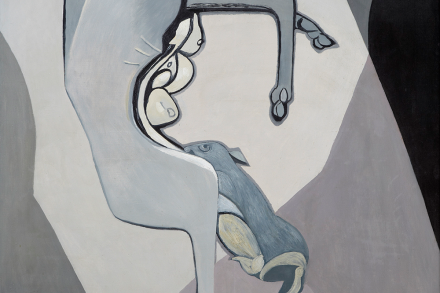
For a time, Robert Colquhoun and Robert MacBryde were at the heart of the in-crowd. Stories of Francis Bacon, Lucian Freud and their wartime circle often make reference to the two young painters from Scotland. Feted in the 1940s for their modernist styles – Colquhoun typically portraying figures, MacBryde preferring still life scenes – they later lapsed into painful, drink-sodden obscurity. Damian Barr’s novel, The Two Roberts, is a tender and evocative act of resurrection. It portrays the men’s lives from the time of their first meeting as students at Glasgow School of Art to the moment in the mid-1950s when, penniless and out of fashion, they retreated to an ancient cottage in Suffolk.

The Two Roberts drank, danced, fought – but how good was their art?

The Two Roberts, Robert MacBryde (1913-66) and Robert Colquhoun (1914-62), are figures of a lost British bohemia. Both born in Ayrshire, they met on their first day at the Glasgow School of Art, becoming lifelong partners and painters. Well-connected in louche literary London, their conversational barbs were recorded by Julian Maclaren-Ross, their jig-dancing antics noted by Joan Wyndham, their drunken fights observed by Anthony Cronin – so that one sometimes forgets what sort of art they made. This show, staged in a former municipal building in Lewes, is a reminder. The work is haunted, unbeautiful British neo-romanticism, second cousin to Piper and Sutherland. They established this angsty, angular modernist style in the 1940s.

An otherworldly London: The Great When, by Alan Moore, reviewed

Is occult knowledge even possible in the age of the internet? If a recondite author obsessed you back in the day, it took hours of fossicking in far-flung dusty bookshops to feed your hunger. Oh, the joys of hunting down a shabby collection of Arthur Machen weirdiana! Now a few keystrokes will do the job. The magic has been lost. Magic is Alan Moore’s business, and he’s also a Machen devotee. The graphic novelist is well known for issuing his illustrators with exceptionally detailed written instructions for series such as The League of Extraordinary Gentlemen and From Hell, which perhaps accounts for the throbbing prose style of this fantasy novel.

How Jeffrey Bernard led me to London’s rudest landlord

On a recent Sunday evening, the Shaftesbury Theatre in Soho was packed to the gills with a crowd celebrating a dramatic tribute to a landlord: the best kind of landlord, the landlord of a pub. And not just any old pub, but the pub he ruled with an iron fist for 63 years until his retirement in 2006. Ladies and gentlemen, I give you Norman Balon, sole proprietor of the legendary Coach and Horses. ‘London’s rudest landlord’, as he was known; it said so on the matchboxes. On for one night only, Norman Balon – It’s All True was a play written by the person who took over the lease, Alastair Choat.

Aleister Crowley was even more beastly than we’d imagined

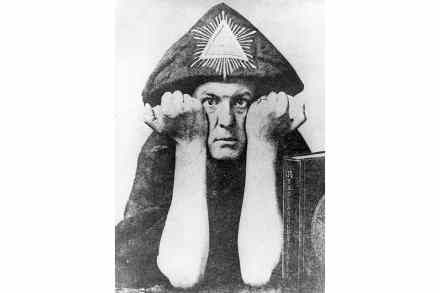
I have never had much time for Aleister Crowley. Magic(k) is nonsense; the mystical societies he founded were simply pretexts for him to take as many drugs and have as much sex as he could. And he was a second-rate writer at best. When the novelist Arthur Calder-Marshall said he had gone ‘from Great Beast to Great Bore’, I thought it a fair summing-up. Crowley initiates were some of the dodgiest people in the western world – either frauds or hucksters themselves or the most gullible of fools. There was always the matter of his self-reinvention. Aleister Crowley was not christened thus: he changed his first name because he thought that a dactyl followed by a spondee conferred the greatest chance of becoming famous. (I cannot say it has done me any favours.

A very watchable doc cashing in on Line of Duty: BBC2’s Bent Coppers reviewed

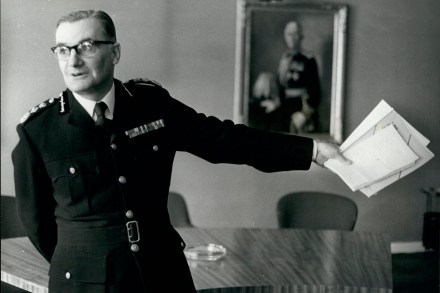
If you’re after an exciting, twisty programme about police corruption that doesn’t also feel a bit like sitting an exam in Line of Duty studies, then Bent Coppers: Crossing the Line of Duty could well hit the spot. As both the timing and subtitle not so much suggest as bellow, this three-part documentary series is an obvious attempt to cash in on its fictional counterpart. Happily, though, it’s a successful one. In Wednesday’s second episode the focus was on 1970s Soho, where the most reliable way to make a fortune was by opening what the narrator Philip Glenister called, in suitably 1970s argot, ‘dirty bookshops’. Of course, there were certain overheads involved, like rent and huge bribes to the police.

Women of the streets: Hot Stew, by Fiona Mozley, reviewed

For a novel set partly in a Soho brothel, Hot Stew is an oddly bloodless affair. Tawdry characters drift in and out of each other’s lives but rarely seem to capture the author’s full imagination. Fiona Mozley’s first novel, Elmet, concerned a self-sufficient family living in Yorkshire and occupying ‘a strange, sylvan otherworld’, and was shortlisted for the Booker Prize in 2017. This second book is a decided change of tack. The prose sometimes has an appealing vagueness: After the war, the concrete came, and parallel lines, and precise angles that connected earth to sky. Houses were rebuilt, shops were rebuilt, and new paving stones were laid. The dead were buried. The past was buried. There were new kinds of men and new kinds of women.

Francis Bacon: king of the self-made myth

In 1953, Francis Bacon’s friends Lucian Freud and Caroline Blackwood were concerned about the painter’s health. His liver was in bad shape, he drank inordinately, his lover had recently thrown him out of a first-floor window in the course of a drunken row, he was taking too many amphetamines and his heart was ‘in tatters’, ‘not a ventricle working’. His doctor had warned if he took one more drink, he informed them over dinner at Wheeler’s restaurant in Soho, he might drop dead on the spot. Then, in ‘an ebullient mood’, the artist ordered champagne. Of course, Bacon (1909-92) didn’t expire on the spot. Instead, he lived, painted, drank and argued for another four decades.

The pleasures and perils of talking about art on the radio

‘I like not knowing why I like it,’ declared Fiona Shaw, the actress, about Georgia O’Keeffe’s extraordinary blast of colour, ‘Lake George, Coat and Red’. O’Keeffe was inspired by the lake in upstate New York but there’s no discernible lake on the canvas and no coat, although there is plenty of red. When Shaw is asked to describe the painting for us, her listeners, by Alastair Sooke, the presenter of The Way I See It, she puts her head in her hands. It’s almost like an amateur painting, Shaw concludes, and yet ‘it absolutely isn’t’. It’s an early work from 1919 when O’Keeffe was 32.

The dark side of Soho

Each suburban soul yearns for the Soho of their youth. It isn’t that Soho was better in the 1990s when I invaded the Colony Room, twitching, and took a fag off Sarah Lucas. It is that I was. This was the view of a friend after I last wrote on Soho restaurants. We once ran holding hands through the sprinklers in St James’s Park laughing at Peter Mandelson, who was passing with his dog, and that is my memory of the Blair years. So Soho, which is thick with metaphor anyway — its very name is a hunting call: death for one and ecstasy for another — is a district to measure your age. The new buildings barely matter in this reasoning, even if I hate them. The stones — and the possibilities — remain. You can’t erase the energy of that much bad sex.

Spectator Podcast: The people vs Brexit

The clamours for a second referendum are growing. But are those calling for a ‘people’s vote’ really interested in what voters think? Or is this just a plot to stop Brexit? Rod Liddle isn't convinced about the case for giving voters a second say. The vote to leave the EU was unequivocal, he says in this week’s cover piece. So why won’t the luvvies just accept it and move on? Rod is joined on this week's Spectator podcast by James McGrory, executive director of ‘People’s Vote’ and Tom Slater, deputy editor of Spiked Online.

The kings of Soho

Christopher Howse has just written a book about Soho. He drank there regularly with Michael Heath, The Spectator’s cartoon editor, in the 1980s. Last week, in the editor’s office, they remembered a vanished world. MICHAEL HEATH: I introduced you to Soho. CHRISTOPHER HOWSE: Well, I don’t know if you’re entirely to blame for that. But you taught me a thing or two. HEATH: There were such things as groupies for cartoonists in those days. There were girls hanging round you in Fleet Street waiting for you to finish the drawings for the following day and then they’d go off with the cartoonists and have meals or go to various clubs. The cartoonists were wealthy, really, because it was cash in hand. You couldn’t get a cartoonist who was stable.

School of Soho

This is an important, authoritative work of art criticism that recognises schools of painters, yet displays the superior distinctions of individual geniuses. Martin Gayford, The Spectator’s art critic, concedes that the identification by R.B. Kitaj, an American painter, of a ‘substational School of London’ was ‘essentially correct’, though in London there was no ‘coherent movement or stylistic group’.The only characteristic shared by London painters has always been merely that they live in London. There have been some influential personal relationships, even cases of a sort of cosiness, especially in the French Pub, the Colony Room and other drinking venues in Soho and Fitzrovia.

How Soho became so-so

Sometimes I fret that Soho House & Co is doing to this column what it does to London. It places its smooth tentacles in my prose and suddenly the column has a pointy beard and is playing table tennis, while doing something monstrous in advertising. But I have no choice. I cannot hide in ghostly seafood bars for ever. (Next time, Bentley’s.) Because now Soho House & Co has invaded Kettner’s, which has duly gone the way of the Odeon West End in Leicester Square, a lovely art deco cinema that these days is only a void. It will become something else — a hotel and maybe a cinema again — but it will remain a void. The transformation of Soho into the kind of advertorial you find in an airport lounge in Dubai goes on.

Poor cows

Sophie’s lives in an old pornographic cinema at the south end of Great Windmill Street, Soho. It is opposite McDonald’s and the Windmill International (‘Probably the most exciting mens club in the world [if you don’t mind paying women to expose their breasts when they might do it for nothing if you were charming]’). Is it so exciting that the patrons do not care that they have been given a semi-consensual sexual experience but denied an apostrophe? It is also pleasingly close to the venue of the Second Congress of the Communist League, which took place in 1847, and prompted the commission of the Communist Manifesto, and all on the first floor of the Red Lion pub which is now a cocktail bar called Be At One. Quite so.

In silent misremembrance

Foxlow is near Golden Square in west Soho, where drunken hacks used to take long drunken lunches before having stupid drunken ideas. My favourite stupid drunken idea was from a Guardian hack and it involved renting an ice-cream van and asking Nick Cohen and A.A. Gill to drive around in it, selling ice creams, bickering and hopefully breaking down, before writing up the experience for a Silly Season special. But drunken hacks no longer take long drunken lunches in Soho. They get drunk at home, if there is one, or drink in the queue at Eat, if they can afford to eat. The piece was not commissioned, the years passed, and I am now a guest at the funeral of my own profession each day. A.A. Gill is dead, Nick Cohen is sober, and even Silly Season has gone.

Un-Italian job

I have been waiting, like a heroine in fiction, for the specialist lasagne restaurant. London has long been heading this way for the benefit of the consumer-simpleton who can only process one piece of information at a time. It is clearly a response to the glut of choice in late capitalism, and so close to Karl Marx’s home in Dean Street that I can almost feel his cackling shadow. Less choice for your aching head, child, but isn’t it really more choice? The choice not to choose? That phenomenon brought us the pop-up Cadbury’s Creme Egg restaurant, which only served food made with Cadbury’s Creme Eggs. Because people are mad, and getting madder, it had queues around the block.