Social media

The rise of toxic femininity

From our UK edition

At the end of last year, the government announced a programme designed to tackle the radicalisation of young men in schools. Teachers will be trained in how to spot misogyny in the classroom and children deemed to be at fault sent on ‘toxic masculinity’ courses – an attempt to ‘re-educate’ white working-class boys that’s guaranteed to spawn 1,000 memes. It was billed as a key component of the government’s strategy to halve violence against women and girls by 2035. Don’t worry about the grooming gangs – the real predators are the knuckle-dragging teenagers, as per Adolescence, which was festooned with Golden Globes by the Hollywood Foreign Press Association last week.

No, the internet is not bad for your child

From our UK edition

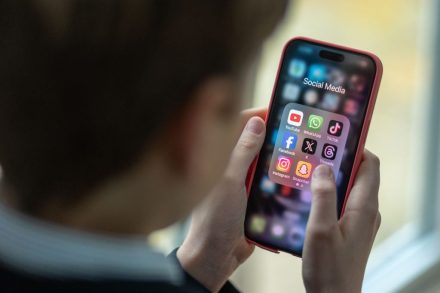
The forces arranged in favour of banning social media for under-16s are powerful and wide-ranging. The unlikely alliance includes the leader of the Tory party, more than 60 Labour MPs, Big Suze from Peep Show and the patron saint of all bad ideas – His Majesty King Charles III. It seems probable that when amendment 94A of the Children’s Wellbeing and Schools Bill is voted on, it will receive support from all these quarters, as well as from Sir Keir Starmer, who has, true to form, launched a consultation on the issue. A handful of mental health charities will tell him that he must really get on with banning social media for teenagers, which he will then promptly and politely do.

Britain’s X crackdown is no joke

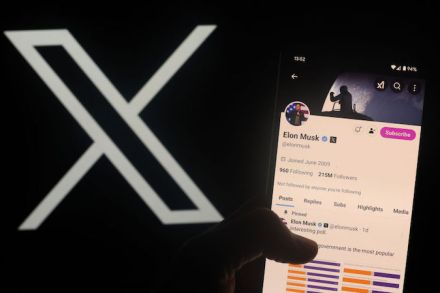
The internet suddenly went down in Iran last night, as courageous Iranians continued to rise up against the Ayatollah. The UK government was apparently inspired. Not by the rebels, whose plight the Prime Minister has remained remarkably quiet about – but by the mullahs’ digital crackdown. Call me a conspiracy loon, but I dare say Labour’s ire for X isn’t simply about the site’s supposedly insufficient safeguarding policies Britain’s Labour party has issued its most serious threat yet to social-media giant X – whose owner, Elon Musk, has become this rudderless government’s go-to bogeyman.

Will tech companies bend to Australia’s social media ban?

It’s all too easy to get hooked by the online world, to fall headlong into it, to spend hour upon hour immersed in it. Cyberspace has its good uses, but it also has its bad ones. Staying in control of your social media life is difficult enough as an adult, but for children it can be an especially dangerous world in which to dwell. Too often children are glued to their phones and devices, staring, scrolling, disengaged from the world around them. Many children are exposed to online harm, including bullying, grooming and shaming. Appallingly, many children are emotionally and psychologically damaged from social media exposure. Terribly, and tragically, some have taken their own lives as a result of what has befallen them online.

Revenge of the invisible woman: Other People’s Fun, by Harriet Lane, reviewed

From our UK edition

Do you have one of those friends who is uncannily conscious of the most subtle signs of insincerity; who quietly witnesses selfish and narcissistic behaviour and drily expresses their observations with devastating wit in a few well-chosen words? Well, Harriet Lane is like that friend, and you don’t have to know her to enjoy her deliciously bitchy awareness of fakery. Her first novel, Alys Always (2012), told the story of a silently sour sub-editor who seizes her chance to better her lot through a tragedy. She inveigles her way into the life of a recently bereaved male writer and exploits the situation to enjoy new-found power and material benefits.

Inside the mind of a modern-day heretic

From our UK edition

When I was growing up, it was generally accepted (unless you were a football hooligan) that, however much you disagreed with someone, they were entitled to their opinion. You listened, occasionally interjecting, and then made your case – sometimes forcefully. In the end, you might agree to disagree, but you didn’t harbour any enmity. These days, the idea that a person is free to hold their own beliefs, especially if they run contrary to your own, is considered laughably old-fashioned. The aim now is to silence that individual. If necessary, you eviscerate them, figuratively – usually online. Sometimes, tragically, their views are deemed so unpalatable that they’re silenced for good.

Hex appeal: the rise of middle-class witches

From our UK edition

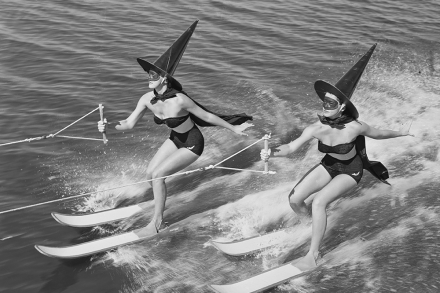
In King James VI of Scotland’s Daemonologie, written in 1597, he vigorously encourages witch-hunting and, in particular, the tossing of witches into the sea. Only the innocent would sink. As a way of identifying witches, it was clear and presumably efficient. These days, we have no such clarity. But witches walk among us. I’m not talking about women in black pointy hats, but something far scarier: the middle-class witch. In the past, she might have been called a depressive, a spinster or a divorcée. Now, she’s probably a middle-aged woman in the Home Counties with a TikTok account, a litany of spells and deep trauma. Modern witchcraft has always invited confusing cliches. Blame L. Frank Baum.

When two worlds collide: Well, This is Awkward, by Esther Walker reviewed

From our UK edition

Esther Walker, an established journalist and writer of non-fiction, opens her debut novel in the business world but segues into the concerns of balancing children and career. It’s a page-turner, silly yet serious; and, as with many good comedies, the humour comes from pain. Mairéad Alexander is a childless 44-year-old social media exec in London, caught in the hamster wheel of corporate work, hair bleaching and ‘buzzkill’ bad dates, when her life is tripped up by the unexpected arrival of Sunny, her 11-year-old niece. When we meet Mairéad she has recently sold her social media business for a packet and is now a consultant for the company that bought it. She finds herself working alongside poisonous colleagues with saccharine overtones and enduring the Gen-Z fashion police.

Motherhood is tougher and lovelier than I could imagine

From our UK edition

My son’s first birthday has arrived, which feels like a much bigger milestone for us than it is for him. I had to let go of any expectations around motherhood early. At eight months pregnant I learnt that I could not have the calm, candlelit water birth I had planned (does anyone actually have one of those?). It transpired that I had a condition called placenta previa, and so would need a planned caesarean. The midwife cheerily told me not to worry about him ‘coming out the sunroof’ – a rather grating expression as it implies an easy way out, when I am, as it happens, a car without a sunroof. Then came the rather startling announcement from the surgeon that my baby was ginger (my husband and I are more Draco Malfoy than Ron Weasley).

New York Fashion Week’s shimmer feels noticeably dimmed

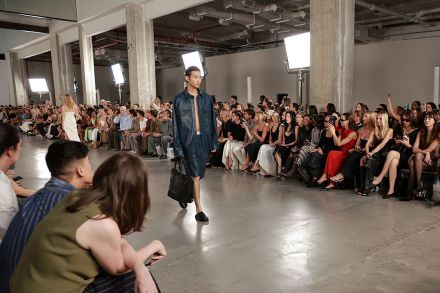
Crossing streets with lattes in hand, camera lights flashing, perfectly curated outfits meant to be noticed, and a crisp chill in the air means one thing: New York Fashion Week has arrived. The September Fashion Week has long stood as the pinnacle of American fashion prestige. As the leaves turn red and brown, style photographers capture eclectic ensembles in motion, A-listers march through the streets and assistants carefully place nameplates on front-row seats beside pristine runways. But this year the week’s shimmer feels noticeably dimmed. The big names still show up – Michael Kors, Calvin Klein, Tory Burch. But in recent years they’ve been eclipsed by smaller, edgier and distinctly New York-based designers.

fashion

What’s really behind Reform’s rise

From our UK edition

It is the question dominating bars and fringe debates this party conference season: what exactly is driving Reform UK’s popularity? Various explanations are proffered: the collapse of the two-party system, fickle voter tastes, the rise of populism across the West. But these are symptoms of a much greater shift: the new information age, unleashed by the internet. In a nation whose politics have long been characterised by venerable institutions, Reform, born in 2020, can claim to be Britain’s first successful e-party. Like most apparent overnight successes, Reform has in fact been years in the making. For much of the 2000s, Nigel Farage struggled to get anywhere with his Eurosceptic messaging.

Social media has automated the nation’s psyche

It feels increasingly, in any conversation on or offline, as if you’re speaking to a robot. Sometimes you are, but more often, and more ominously, the person you’re speaking to is real – it’s just that their thoughts, words and reactions have become robotic. The Botification of the American Mind, you might call it, and for the past five years we’ve been trying to understand how this botification has happened. The most obvious root cause is that our social media is no longer populated by humans, meaning the generative AI revolution has exponentially increased the amount of fake accounts on everyone’s feeds.

social media

The rise of performative reading

From our UK edition

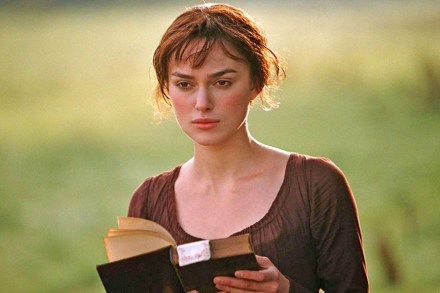
‘To be or not to be’ may be the question but when it comes to eliciting answers, I’ve always preferred Mr Darcy’s epic conversation starter: ‘What think you of books?’ Two hundred years on, it has become harder than ever to find out what anyone actually thinks of books – and not just because our attention spans have been so corroded by dopamine addiction. There are more books published today than ever. TikTok creates relentless literary sensations, and the day after the murder of Charlie Kirk, AI-produced histories were available on Amazon giving ‘the full story’.  If social media is to be believed, everyone is reading so much it’s impossible to keep up. But what matters most is not what you think about books but how your books look.

Stephen King, The Long Walk and Charlie Kirk

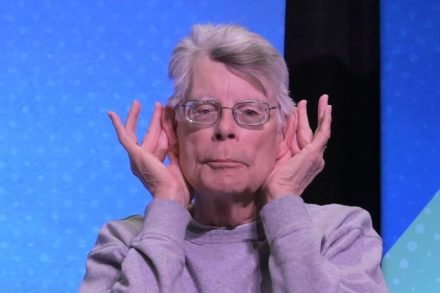
Under normal circumstances, the author Stephen King should have been feeling pretty good about things and himself at the moment. The latest film of one of his works, Francis Lawrence’s horror-thriller The Long Walk, opened in American cinemas this weekend and has been met with almost unanimously rave reviews, many of which have called it a more socially aware, darker Hunger Games. He recently published a Maurice Sendak-illustrated retelling of Hansel and Gretel, which brings his trademark dark and macabre sensibilities to the age-old fairytale. And his last novel, Never Flinch, was, naturally, a bestseller – as all his books have been since he first published Carrie, over half a century ago in 1974.

Back-to-school photos have become a vulgar wealth flex

From our UK edition

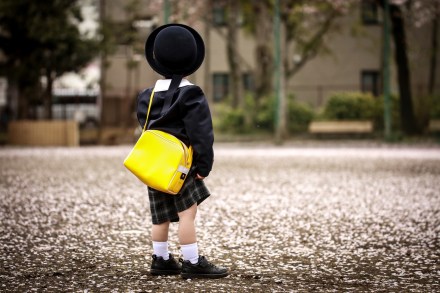
How was National Standing on Doorsteps Week for you? For most, it’s a case of grabbing a picture two or even three days after la rentrée, when you remember that you’ve missed the annual obligation to record the progress of what Mumsnetters call the ‘DCs’ (darling children). Assemble them by the front door, roar at the one who’s kicking off to SMILE and look at ME, lament that you failed to get your sons’ hair cut before they went back as overnight they’ve come to resemble Hamburg-era Beatles, press the button and then bundle them into the car.

Wishing Trump dead only makes him stronger

Maybe you heard that Donald Trump died over the weekend. First, the internet began to buzz over some bruising on the President’s hand during an executive-order signing ceremony. Then people started noticing that no one saw Trump on Friday, and that he didn’t have any events scheduled over the weekend. J.D. Vance gave an interview with USA Today in which he said, “if, God forbid, there's a terrible tragedy, I can't think of better on-the-job training than what I've gotten over the last 200 days.” Trump has become so ubiquitous in our lives that there was only one conclusion to reach from his temporary semi-absence: He is dead. A TikTok video making that claim got 600,000 likes. There were tens of thousands of Twitter posts on the topic, almost trying to will it into reality.

Donald Trump

The coming crash, a failing foster system & ‘DeathTok’

From our UK edition

45 min listen

First: an economic reckoning is looming ‘Britain’s numbers… don’t add up’, says economics editor Michael Simmons. We are ‘an ageing population with too few taxpayers’. ‘If the picture looks bad now,’ he warns, ‘the next few years will be disastrous.’ Governments have consistently spent more than they raised; Britain’s debt costs ‘are the worst in the developed world’, with markets fearful about Rachel Reeves’s Budget plans. A market meltdown, a delayed crash, or prolonged stagnation looms. The third scenario, he warns, would be the bleakest, keeping politicians from confronting Britain’s spendthrift state. We need ‘austerity shock therapy’ – but voters don’t want it.

The unsettling rise of DeathTok

From our UK edition

For teenage girls on TikTok, the makeup routine is an almost sacred ritual. Manicured fingertips dart around at virtuosic speed, applying dabs of foundation, blush and highlighter with precise artistry. Normally the commentary is about the nuances of brushing and blending – but Sophie, a bewitchingly pretty 18-year-old from New Zealand, has something more pressing to discuss. ‘I’d been having headaches for about two months,’ she says, placing dots of concealer under her blue eyes. ‘And then one night – it was my [high school] graduation – I was having a few drinks, which you’re not meant to do when you have glandular fever, which is what we all thought I had. So I kind of expected to wake up hungover.

A Gen Z defense of America

I am twenty-one. Not being on social media, I am ill-informed of the true depth of rage and fear available to the human psyche. Even so, I’ve heard that the planet will overheat. My pastor tells me the churches will sit empty, and the WSJ warns I’ll never buy a home. Boomers bemoan the laziness of my generation. Given these prophecies of doom, it is no wonder that we are a bit anxious. But if we were ever to look up from our screens and allow the evidence within sight to form our perception of reality, we might be pleasantly surprised: America’s social fabric is strong, and so are we.  I went on a run on the prairie today.

gen z

Lives upended: TonyInterruptor, by Nicola Barker, reviewed

From our UK edition

‘Is it any good?’ a friend asked when he saw I was reading this book. ‘Yes,’ I said, ‘but it’s full of wankers.’ By that stage I was only up to page 24, but the remaining 184 pages did nothing to fundamentally alter my view. There is nothing intrinsically wrong with this. The works of, say, Geoffrey Chaucer and Jane Austen, not to mention thousands of others, would be considerably poorer if all the tiresome people were filtered out. But it does make it hard to read TonyInterruptor for more than 30 pages at a stretch. One has to pinch the bridge of the nose and go for a little walk.