G.V. Chappell

Don’t tolerate potholes

From our UK edition

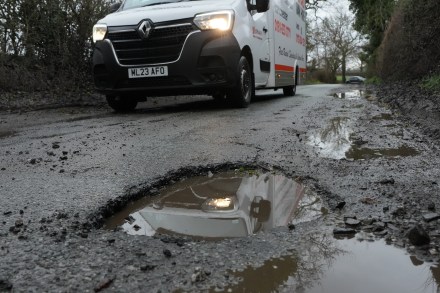
Following Russia’s invasion of Ukraine in 2022, a meme circulated on Facebook suggesting the same thing could never happen here because the potholes would prove too much of an impediment. Given the current state of the roads, I think we can safely say any invasion plans must surely now have been shelved. And thank goodness. Owing to the paucity of our armed forces, potholes would be our first line of defence. The sides of motorways would be littered with abandoned enemy vehicles if anyone were rash enough to mount a ground assault. Dazed POWs would be wondering why they’d been ordered to take over a country with a crumbling infrastructure.
The meaning of life is a bus journey away

From our UK edition

Loelia Lindsay, socialite and former wife of the 2nd Duke of Westminster, is said to have remarked: ‘Anybody seen in a bus over the age of 30 has been a failure in life.’ Well, I’m turning 59 soon and I still use buses. So, by that reckoning, success has so far not only eluded me but given me the widest possible berth.  In my defence, I live in Bristol, which has the worst congestion outside London. Driving here during rush hour is a kind of psychological torture. It’s also a war of attrition between the local council and motorists, with roadworks popping up overnight like molehills. Almost anything is preferable: walking, cycling or the bus. Admittedly, bus travel isn’t glamorous. There’s no bus equivalent of the Orient Express that I’m aware of.

Bring back hats!

From our UK edition

I saw a chap walking down the road the other day looking, unusually for my part of town, the very quintessence of sartorial elegance: polished brogues, tailored pin-striped suit, rolled umbrella. He was a modern-day Beau Brummell. But what really topped off his ensemble – literally and figuratively – was a bowler hat. I haven't seen anyone wearing one of those for decades. In fact, the last time was about 35 years ago when a girl arrived at a party in one. Cruelly, I pointed and said: 'Ha! Charlie Chaplin!' The awkward silence that followed shamed me rather than embarrassed her.  Since the bottom dropped out of the officewear market during Covid, making an effort with daytime dress is unusual enough.

I’ll take a country walk over the gym any day

From our UK edition

Despite having eaten my own body weight in chocolate over Christmas – and vowing to do better in the new year – my inner Augustus Gloop means I still feel duty-bound to finish what’s left. Self-control when it comes to eating has never been one of my strengths. My New Year’s resolution about a healthier diet will have to wait. In addition to buying the usual tubs of festive favourites – Heroes, Quality Street and Roses – I got a ton of confectionery as Christmas presents. I reason that it would be ungrateful not to enjoy it. My New Year’s goals are perennial: eat less and exercise more. I fail every time. I mean, I do a reasonable amount of exercise anyway: at least 10,000 steps a day with the dog, yoga every evening and a martial arts class once a week.

Life is more complex than we like to admit

From our UK edition

In this strange new world we inhabit, where many people appear to struggle with nuance, the oversimplification of complex problems means that any shades of grey are ignored. This informal logical fallacy, in which every situation is presented as having only two possible options when, in reality, more exist, is now standard in politics and across mainstream and social media. However, rather than being seen as a sign of intellectual weakness, taking entrenched positions is considered perfectly reasonable. Think 7 October was depraved and insane? You’re Zionist sympathising scum. Appalled by images of children in Gaza made homeless by the conflict, struggling to lift a spoon to their mouth because they’re shaking so violently from the cold? You’re a pathetic Hamas apologist.

Step forward the undeserving: it’s honours season again

From our UK edition

Once Christmas Day’s out of the way and we’re stuck in that no man’s land between one year and the next – known, tweely, as ‘Twixmas’ or, if you’re posh, the ‘interregnum’ – one thing guaranteed to make the front pages is the announcement of the New Year’s Honours List. News of the worthy – and not-so-worthy – recipients will be released, and we’ll get to see who’s been elevated to the Lords, knighted or handed one of the lesser gongs. Among the very deserving recipients will be those who make you think: hang on a minute – how did that happen? When news broke that former prime minister Tony Blair was to be made a Knight Companion, more than a million people signed a petition calling for the honour to be blocked.

The horror of the festive period

From our UK edition

I was driving my daughter to school recently when we tuned into Heart Breakfast. A caller was attempting to answer five Christmas-related questions that, if successful, would mean that the countdown to the big day could ‘officially begin’. They weren’t hard but when the questions were answered correctly, there was pandemonium in the Heart studios. Everyone gushed with excitement and wished each other a Merry Christmas, co-host Amanda Holden cried, and the first of very many broadcasts of Mariah Carey’s ‘All I Want for Christmas’ began. It was 10 November – more than six weeks before Christmas Day. It was so unseasonably warm that people were still in shorts. The mind boggles. As I’ve aged, I’ve grown more curmudgeonly about Christmas.

Inside the mind of a modern-day heretic

From our UK edition

When I was growing up, it was generally accepted (unless you were a football hooligan) that, however much you disagreed with someone, they were entitled to their opinion. You listened, occasionally interjecting, and then made your case – sometimes forcefully. In the end, you might agree to disagree, but you didn’t harbour any enmity. These days, the idea that a person is free to hold their own beliefs, especially if they run contrary to your own, is considered laughably old-fashioned. The aim now is to silence that individual. If necessary, you eviscerate them, figuratively – usually online. Sometimes, tragically, their views are deemed so unpalatable that they’re silenced for good.

Hands off my wood-burning stove!

From our UK edition

Now that the clocks have gone back and the evenings draw in, those of us lucky enough to own a log burner start thinking about cranking it up. One of the few benefits of returning to GMT, as far as I’m concerned, is the chance to get primal – and have a real fire. Yet, as sure as eggs are eggs, this is also the time of year the media trots out scare stories about the supposed perils of wood stoves. For example, articles have recently appeared in several papers about a report commissioned by the climate charity Global Action Plan and Hertfordshire County Council, which claims that wood-burning stoves and open fires are a significant source of ‘particulate matter’.

How bad do things have to get before the police show up?

From our UK edition

Earlier this year, I wrote here about the arsonist who'd left our neighbourhood looking post-apocalyptic. In the months that followed, the pyromaniac grew ever more reckless. Initially, he'd stuck to torching vehicles on the road, which was bad enough. But then he took it a step further. He set fire to a car on a driveway, which in turn set the house alight. The young family, who were asleep upstairs, escaped with their lives, but their home was destroyed. A collection was started, and we dropped in some cash. The organiser said that in 20 years in the area, he'd never seen things as bad as they were now. He'd installed CCTV after burglars had smashed their way through the bifold doors – now it might come in handy for identifying the pyro.

How to stay grounded

From our UK edition

I was at a party recently where a self-important woman looked disdainfully at my proffered hand before limply shaking it as if it were a wet dishcloth crawling with E. coli. After briefly touching my fingers, her lip curled as she demanded to know who I was and what I did for a living. It felt like an audience with a medieval monarch – the hauteur was extraordinary. As a youngster, such imperious behaviour would have crushed me. But my older self was amused by the Lady Bracknell schtick. Some people, regardless of their exalted position in life, manage to be effortlessly down-to-earth, putting you instantly at your ease. The difference, in my experience, is that the latter don’t take themselves too seriously.

Save our satire

From our UK edition

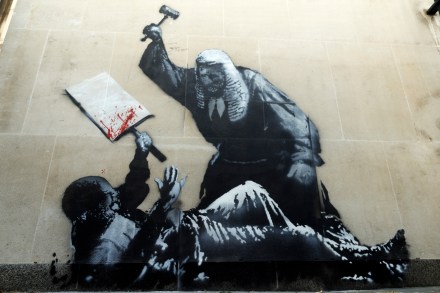
When Henry Kissinger was awarded the Nobel Peace Prize in 1973, musician and satirist Tom Lehrer famously quipped that political satire had become obsolete. Today, many people under 50 would be hard-pressed to say who Kissinger was – let alone why the award was controversial. So perhaps, given recent events, it’s time to update the epigram: satire became obsolete the day an Irish comedy writer was arrested by five armed police officers and questioned for hours over a few offhand remarks he made on X. Personally, I never post anything on X. I don’t have the time or energy. And while I’m an implacable supporter of free speech, I also think it behoves us all to exercise discretion about what we say and write. Poking sticks into wasp nests will, inevitably, get you stung.

No England flags, please – we’re Cornish

From our UK edition

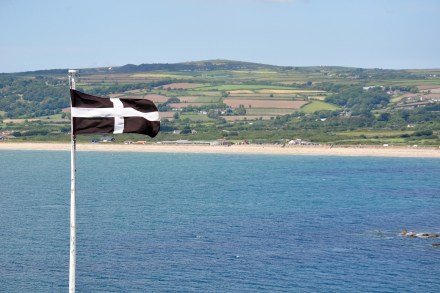
There’s been a lot of talk recently about flags, especially English ones. The start of the Women's Rugby World Cup – a good excuse to bring out the bunting – has coincided with a renewed interest in proclaiming national identity. Some might see it as an outpouring of patriotic pride, while others view it as a far-right provocation. But whether it's ‘Operation Raise the Colours’ or roundabouts painted red and white (although some bright spark in Birmingham managed to paint a Danish flag by mistake), if the sight of a cross of St George sends you into a panic, I have a suggestion: head to Cornwall. If my recent experience is anything to go by, you’ll be lucky to see a single English flag.

Confessions of a student radical

From our UK edition

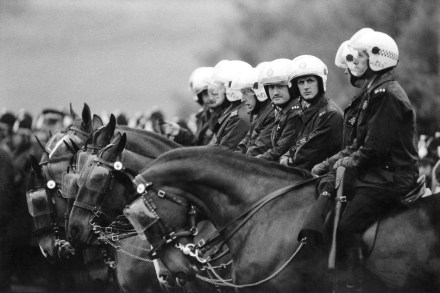
Recently, I was on my way to buy the Saturday papers when my ears pricked up. In the distance, I could hear the unmistakable sound of a protest: whistles, slogans, klaxons. I strained to make out what people were shouting, but, given the grim images recently beamed from Gaza, odds were, it was about the Israel-Hamas conflict. What had promised to be a typical day in suburbia was about to get more interesting. I imagined the ranks of police retreating under a barrage of missiles. The keffiyeh-wearing protesters surging forward, battering the coppers with their homemade placards. As the din grew louder, I wondered if I’d make it to the shops before the street battles began. And then they came into view.

The ballad of broken Britain

From our UK edition

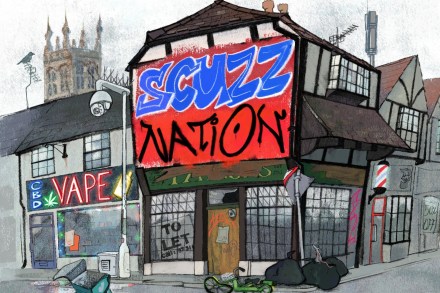
In my corner of Bristol, alongside drug dealers, shoplifters and street drinkers, we now have our very own pyromaniac. They started small – an abandoned office chair, a clothing bank and an old telephone box – before moving on to bigger things. Half a dozen cars have been torched over the past few months, including two on my road, and, most recently, a derelict pub. The other Saturday, hearing a commotion outside, my wife jumped out of bed and flung open the curtains. The scene that greeted us was apocalyptic. In daylight, on a narrow suburban street, the arsonist had set fire to three motorbikes parked in a row, which in turn had set alight a car and a hedge. It was pandemonium.

Meet the Stepford Employees

From our UK edition

In my first ‘proper’ job after university, selling advertising space for a well-known motoring magazine in the early 1990s, one of the few things that alleviated the utter tedium was the banter. Some of the quickfire repartee was ingenious. We were nearly all graduates, intelligent and articulate. Someone would occasionally overstep the mark, but we were civilised people and so self-regulating. We knew what was acceptable and what wasn’t. But for the most part, anything went. We didn’t need an HR function, because, in those days, were weren’t ‘resources’, so we didn’t need someone to police our behaviour. Lunch was often liquid, nearly everyone smoked in the office, and on Friday evenings, we’d head straight to the pub and get wrecked.

When did we become so boring?

From our UK edition

Recently, I found myself trying to explain to a much younger colleague who Oliver Reed was. We’d got on to the subject of the hell-raising actor because I was bemoaning the fact – perhaps rashly – that today’s world is completely anodyne. Fear of offending others means it’s better to keep your thoughts to yourself; after all, who needs the police investigating them for a non-crime hate incident? Brave is the person who brings their whole self to work, as many of us are encouraged to do. The government’s Employment Rights Bill, which some are calling the ‘banter ban’, may mean we’re even more reluctant to speak our minds. This prohibition against saying anything even vaguely controversial extends to all walks of life – including television.

The changing smell of Britain’s streets

From our UK edition

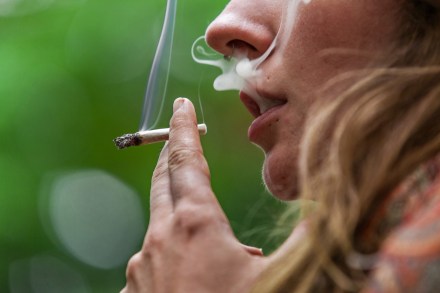
The other day, while on my lunchtime walk, I passed a woman on a mobility scooter holding an impressive-looking doobie. Later, on my bus home, a bloke got on having just extinguished a joint, bringing the overpowering stench with him. Some commuters don’t even bother to put them out. All you can do is sit and tut passive-aggressively, hoping they’re only going a few stops. While cannabis use has slowly declined over the past 25 years, it seems that you can’t escape it in public. Perhaps part of the reason is that so few people now smoke at all, even tobacco. It makes weed far more noticeable. The other reason is that the police don’t bother punishing those caught. Most are either let off with a verbal warning or a fine.

An old codger’s guide to ageing

From our UK edition

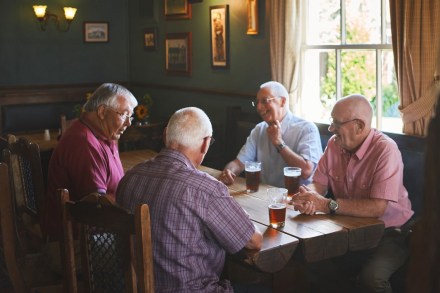
When I was in London recently, I arranged to meet some old university friends at the pub. Now in our late 50s, we’re getting quite decrepit. Hair – if we have any left – is grey or greying; waistlines are expanding. We talked about our deteriorating vision and hearing, high blood pressure, dodgy knees. None of us is retired yet, but it’s a topic that comes up more frequently. Can we afford it? What will we do with all that extra time? Almost no one reaches middle age without life delivering a few sucker punches Once we’d exhausted the gloomy prospects of impending old age, we returned to our favourite topic of conversation – our youth, particularly our university years.

Confessions of a gentrifier

From our UK edition

The backlash against plans for a Gail’s bakery in Walthamstow made me think about my own experience of gentrification. When I moved to my suburb of Bristol nearly 20 years ago, it was still a largely white working-class area. It was also a temporary home to many of the students from the local university. It felt slightly down at heel but, judging by the impressive size of some of the houses, had once been quite prosperous. Black and white photographs from the early 20th century show the now non-existent tram running down a high street populated by soberly dressed Edwardians.