Social media

Children will always get around a social media ban

From our UK edition

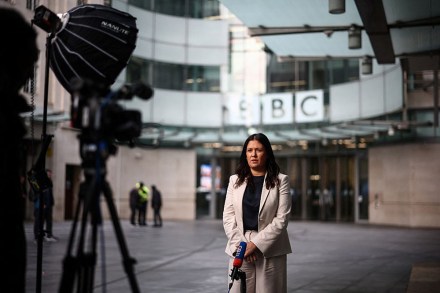
Back in January, I voted for a Conservative amendment to the Children’s Wellbeing and Schools Bill to restrict social media access for under-16s. After a bit of to-ing and fro-ing the amendment was withdrawn, but only because the government had agreed to do it. Now that Lisa Nandy, the Culture Secretary, has announced she’s going to get on with it, I’m beginning to have second thoughts. I had persuaded myself that it would mean fewer restrictions for adult users, given that the most persuasive argument for censoring social media is to protect children from harm. But in retrospect that was naive.
The Social Reckoning is deeply boring

From our UK edition

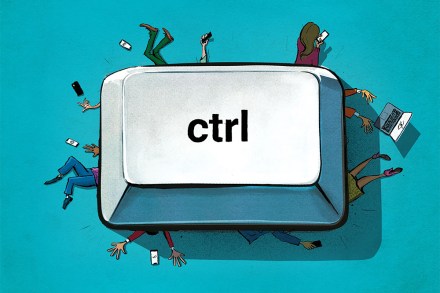
Has anyone in human history inspired more visceral disgust than Mark Zuckerberg? Hard to imagine. I know I used to get a shudder down my spine every time I saw him on TV, being upbraided by some kind of congressional subcommittee. Look at this uncanny demon, white as death, covered in a thin liquid sheen, with his big watery eyes like an uncomprehending animal, his blank inhuman face, his halting and inarticulate speech, and his sinister, gangly form, which didn’t seem to stand up on its own feet so much as it drooped down from the neck, as if he were being hung up on invisible hooks. This is not a human being but an ungainly meat puppet, a shell for some slithering being. Which made sense, really.

Politicians need to learn from Andrew Tate

From our UK edition

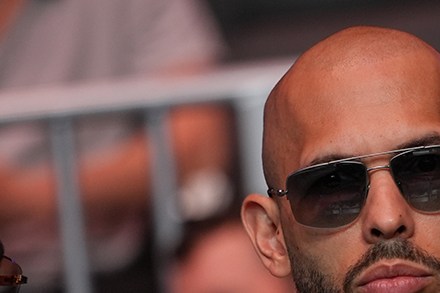
When Mel Stride put out a YouTube Short last month, it got zero views. That, surely, is worth repeating: zero views. Stride’s unloved ‘short’ was a poorly cropped clip of a GB News interview, similar to dozens of other clips he had posted on his YouTube channel before being sacked as shadow chancellor. Most of them have fewer than ten views. Stride was born in 1961, so he can perhaps be forgiven for not being au fait with the latest meta on social media. But most of our MPs have similarly amateurish operations, despite recognising the importance of social media in modern communications.

The insanity of the Lindsay Clancy sympathizers

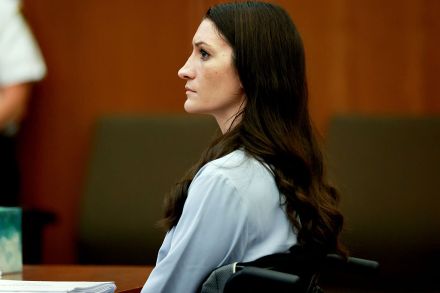
In 2023, Lindsay Clancy, a former labor-and-delivery nurse from Duxbury, Massachusetts, strangled her three children to death with exercise resistance bands in the basement of the family home. She then cut her wrists and neck and jumped from a second-story window, an act that left her paralyzed from the waist down. Her murder trial opened in Plymouth Superior Court in July and is expected to run for six to eight weeks.  Both sides agree Clancy killed five-year-old Cora, three-year-old Dawson and eight-month-old Callan. What is contested is whether she should be held responsible.

lindsay clancy

How have we allowed star ratings to take over our lives?

From our UK edition

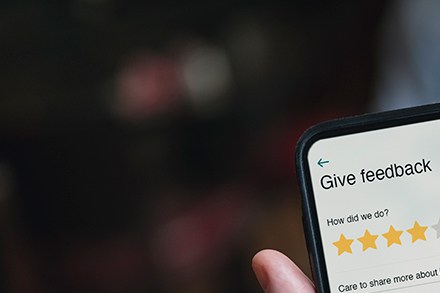
Sometimes I like to imagine who I’d be without the internet. A better person, for sure. A person who has read more novels, possibly written one, and spent considerably less time bickering with strangers. But what if there are other, more profound, ways in which going online has changed me? That’s the question addressed by both Benji Wilson and Kathryn Jezer-Morton in these books, which look at how the commodifying grammar of the internet has insinuated itself deep into our personalities. One explores the way we behave as consumers, and the other examines the way we shape ourselves for consumption: together, they offer a depressing insight into the way we live now.

How the multi-billion-dollar wellness industry is putting us at risk

From our UK edition

No one could accuse Dr Nick Tiller of taking health and wellness issues lightly. In his latest book he recounts an occasion in which a friend asked him whether he was an extrovert or an introvert – the kind of question most of us would treat as small talk to pass the time. Tiller, though, took it seriously. What did she mean by those terms, he asked, hearing in response that it depended on whether he got energy from being around others, or not. OK, then: what did she mean by energy? ‘At this point,’ he writes, ‘she got frustrated and didn’t speak to me for the rest of her wedding. Which was awkward, since I was the best man.

The rise of mediated murder

A few months ago I stumbled across a TikTok series. A distraught older sister. A younger brother who’d committed suicide. And an online girlfriend who had allegedly coerced him – and several others – into taking their own lives. According to the video creator, this was the girl’s modus operandi: target vulnerable people on Roblox, form relationships with them over Discord and find ways to convince them to kill themselves, often on camera. I can’t verify the videos’ claims, but it was a story I felt I’d heard many times before. A young person falls into an intense, online relationship. That person commits suicide. Someone close to the youngster becomes convinced that the other party’s sole goal is to drive people to suicide.

Macron won’t stop at a social media ban for children

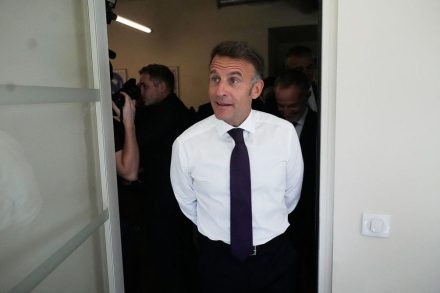
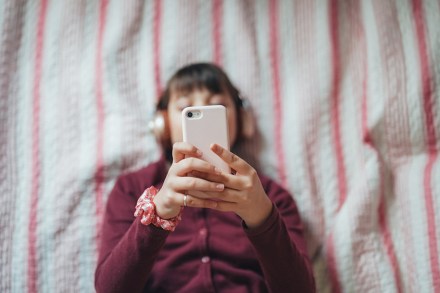
France has become the first European Union country to ban social media access for under 15s. The National Assembly passed a Bill Tuesday evening that will prevent children using platforms such as TikTok and Snapchat. The Bill also bans the use of cell phones in high schools. In a message on X, a jubilant President Emmanuel Macron hailed the legislation and expressed his gratitude to MPs, who approved it by 279 votes to 81. “It’s up to the Constitutional Council to rule, then on to action to make this measure concrete and protect our children online,” he said. Macron would like the legislation to take effect from September, the start of the new school year, but first the Bill will be examined by the Constitutional Council, the highest constitutional authority in the Republic.

social media ban

Inside Labour’s plot to sideline alternative media

From our UK edition

Labour came to power in 2024 with five stated missions: to improve economic growth, the NHS, street safety, clean energy and the distribution of opportunity. If Keir Starmer had been honest about his plans, he would have pledged just one – restricting access to social media. This is the goal the government has pursued obsessively. Starmer turned to it as his premiership collapsed around him, imposing a social media ban for under-16s. As Andy Burnham seizes the reins, he will have to grapple with divisions in his party over defence and welfare – but his MPs remain united in their crusade against so-called online harms.

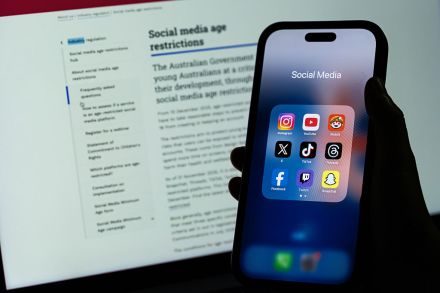
Will Keir Starmer’s under-16 social media ban actually work?

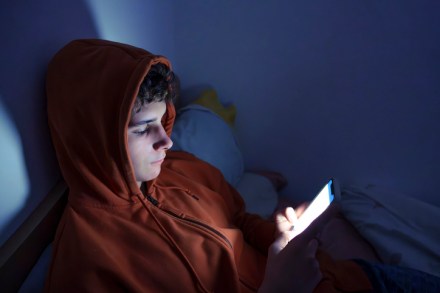
Today, with much fanfare, the British government is rolling out its new policy to protect young people from online harms. Here is a political/legal move for which I am the target audience. I have three teenagers, and for those not so afflicted, let me tell you that keeping them from spending all day, every day goggling at one piece of tech or another is an infernal game of whack-a-mole. Item: Child One, Instagram. Very, very occasionally, she forgets to delete her browser history and Ctrl-H yields page after page after page, hour after hour, of Instagram hits. If you restrict or remove the phone app, it will be re-downloaded or the site opened instead in a browser window.

social media

How iPhones became birth control

A new study has found that smartphones are a likely cause of falling American birth rates. Economists Caitlin K. Myers and Ezekiel Hooper tracked the rollout of the iPhone across the country and found that the more people used smartphones, the further birth rates fell. This was especially true for the youngest cohort of women. Between 2007 and 2011, use of the iPhone was correlated with between 33 to 52 percent of America’s fertility decline. There’s been a lot of discussion about smartphones and falling fertility rates lately. Most arguments go something like this: smartphones and social media are linked to rising rates of anxiety and depression, less sex and less in-person socializing.

iphones birth control

Labour is secretly desperate to keep children on social media

From our UK edition

I’ve spent the last few days composing a response to the government’s consultation on whether to introduce a statutory minimum age for sites like TikTok, Instagram and Facebook. The consultation, announced on 19 January, was intended to spike the guns of Lord Nash, a Conservative peer who’d proposed an amendment to the Schools Bill banning under-16s from social media. It didn’t work and his amendment was carried two days later, although he was later persuaded to withdraw it after the government tabled its own amendment pledging to impose some kind of ban regardless.

The return of animism

There is a wave of books asking how social media platforms shape the stories we tell about ourselves and, through that shaping, what new kind of self they are producing. Megan Garber’s Screen People argues that the language and ethos of entertainment have permeated every aspect of life, so that we now see each other as characters in an ongoing show whose continuity we are responsible for maintaining. Kathryn Jezer-Morton’s The Story of Your Life, out in August, makes the related case that algorithmic platforms have disciplined what counts as a shareable experience into what Jia Tolentino’s blurb calls a rigid, optimized, phone-shaped norm. I haven’t read either yet, but I’m willing to bet they’re basically right.

Lorna Hajdini and the willing suspension of disbelief

"A lie can get halfway around the world before the truth has a chance to get its pants on." That old saw is now hopelessly out of date. These days, an apparent malicious falsehood can become global news in a matter of seconds, especially if it contains suggestions that pants might have come off. Human beings love to share shocking gossip, and internet technology means that we can do so at terrifying speed and scale. Social media now resembles the lower-rent tabloids of old, rife with fantastical pieces about aliens or sex slaves and the occult Take, for instance, the incredible tale of the feline JPMorgan executive who "sexually harassed" a junior male staff member.

Why it’s permissible to betray family secrets

From our UK edition

Blake Morrison is the quintessential man of letters. More exactly, he’s a man of genres – poet, novelist, playwright, essayist, librettist and, most notably, memoirist. (Four memoirs so far, each a prize winner and/or bestseller). Although in the introduction to On Memoir he refutes the notion that he established the genre of life writing in the UK (he was professor of creative and life writing at Goldsmiths University, London for 20 years) or that he has ‘encouraged its growth’, he has somehow become its guru, the critic every literary editor turns to on the publication of yet another raw family story or celebrity revelation.

Iran is winning the meme war

The opening strikes on Iran forced the country’s military to operate without a centralized command structure. Despite this enormous setback, something like a unified approach has emerged, and nowhere is that more evident than on social media.  Iran’s embassies have become meme factories, centers of information warfare churning out images and videos designed to do just one thing: mock the US and Israel and, in particular, Donald Trump. Courtesy of Iran’s overseas missions, we’ve now seen Donald Trump as a minion from Despicable Me; a Lego man fleeing a Lego Jeffrey Epstein; and a Pirate of the Caribbean trying, and failing, to hijack the Strait of Hormuz.

The arrogance of the tech-skeptics

If you’ve been paying attention to social media lately, then you already know the score: smartphones are corrupting our children, we need legal intervention immediately. Roughly half of US states have enacted some form of age-gating for social media or pornographic content. Australia banned under-16s from social media platforms outright, France and Indonesia followed suit and the United Kingdom is now asking people for their papers to read moderately offensive blog posts. You don’t need me to rehash this. The phones have nuked the interior lives of Gen Z, Gen A and the hitherto unborn Generations B and C. Every opinion lands somewhere between “protect the children” and “this is Reefer Madness for iPads.

Age-verification for social media puts kids at risk

The Heritage Foundation’s tech policy team has endorsed European-style age verification laws for social media, likening them to alcohol and tobacco age restrictions. This is a comparison worth taking seriously – just not in the way Heritage intends.Walk into a bar, and a bouncer checks your ID. In about 15 seconds, you’re inside. That’s it. Online age verification would be a very different experience, requiring the collection, storage and verification of sensitive personal documents at scale. This is a breach of privacy and free expression for adults. It also puts minors – a population 35 to 51 times more likely than adults to fall victim to identity theft – at risk.

Age-verification

What do the White House’s cryptic X videos mean?

The White House X account has won notoriety as a coven of young memesters scandalizing the nation. There have been meme images of leading Democrats decked out in sombreros, and clips featuring footage of Iranian military hardware being blown up interspersed with WiiSports.  Now the antics have been taken a step further. There is currently widespread talk of the United States “unleashing hell” on Iran once markets close this weekend, after its initial 15-point peace offer was rejected. There is even some frenzied speculation that things might go nuclear.  Not the best time then, to release a set of cryptic videos that seem to hint at some approaching cataclysm. One, at four seconds long, showed a pitch-black screen overlayed by TV static.

cryptic white house x videos

Charming: The Other Bennet Sister reviewed

From our UK edition

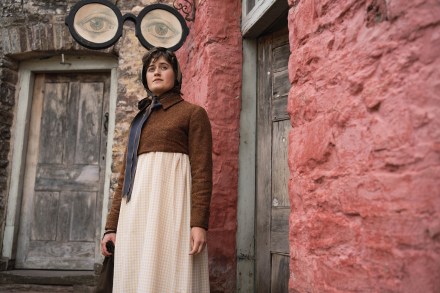
The Other Bennet Sister is to Pride and Prejudice what Tom Stoppard’s Rosencrantz and Guildenstern Are Dead is to Hamlet. The events of the original novel are all there, but the focus is on a character Jane Austen mostly neglected and occasionally scorned. One effect is that the other sisters, including the sainted Lizzy, come across as smug and snooty According to Mary Bennet’s opening voiceover: ‘It is a sad fact of life that if a young woman is unlucky enough to come into the world without expectations, she had better do all she can to ensure she is born beautiful. To be poor and handsome is misfortune enough; but to be penniless and plain is a hard fate indeed.