Snp

Who speaks for Scotland?

Ten years ago, when I was doing my tour of duty as a reporter in the Scottish Parliament, I had a talk with an SNP figure, who shall remain nameless, about their grand plan. Scotland was to be a nation, and that means its politicians perform in certain ways. They wanted to look like statesman, with a state. Their opportunity lay in crisis. “So when there is a disaster overseas, we will have Scottish aid leaving a Scottish airport,” he said. “When a Scot dies overseas, we have the Scottish First Minister sending condolences.” He didn’t say that, when a Libyian murderer wants to be released, the SNP can use this to thumb their nose at Wicked America and posture on the world stage.

Alex Salmond’s Women Problem

No, not that kind, the vote-winning kind. Despite the fact that the party itself has honoured or at least admired warrior queens (in the members' estimation) such as Winnie Ewing, Margo MacDonald and even Nicola Sturgeon, the fact remains that women are much less likely to support the SNP than men and, furthermore, this gender gap causes the party some problems. As Lallands Peat Worrier reminded us: On the constituency ballot, 41% of the male electorate supported the SNP, compared to only 32% of women voters.  On the list, 35% of men voted for the SNP, but only 27% of women. That's a significant gap. Jennifer Dempsie, a former Salmond SpAd, recently had a piece in Scotland on Sunday addressing this very issue.

The SNP was responsible, all the way

A little odd, and certainly inconvenient, that al-Megrahi still lives and breathes. Then again, Scotland's a notoriously unhealthy place and a bit of desert air probably did him some good. Ensconced in Washington, David Cameron will have taken some flak for the Lockerbie bomber’s compassionate release, for which he has the perfect riposte: terrible business, but nothing to do with me. His second line of defence is constitutionally watertight: the decision was Holyrood’s alone. The Lockerbie Papers suggest that al-Megrahi’s inclusion in a Prisoner Transfer Agreement was a precondition of any deal between the UK and Libyan governments, as Saif al-Islam Gadaffi maintains.

The Lockerbie Conspiracy

First things first: it is extremely inconvenient, even embarrassing, that Abdelbaset Ali al-Megrahi is still alive nearly a year after he was released from Greenock Prison on the grounds that he was believed to have not much more, and perhaps fewer, than three months to live. Nevertheless, the fact that he has lived longer than expected does not advance or give any greater credence to the notion that there was some conspiracy designed to free him come what may and regardless of any other considerations. Nor is there any evidence, despite recent press reports, that BP (everyone's favourite whipping boy now) played any role in Kenny MacAskill's decision to send him back to Libya.

Salmond Accepts Reality

A very interesting interview with Il Tartanissimo in the Times today in which Salmond accepts, quite candidly, that independence isn't happening any time soon: “The centre of gravity in Scottish politics currently is clearly not independence,” he admitted. “You must campaign for what is good for Scotland as well as campaigning for independence.” A cynic - not that there are any of those around here - might argue that there's a contradiction in that second sentence but, in this instance, a cynic would be unfair on Eck. It's really quite rare to come across a politician being quite this candid about what is, after all, supposed to be his party's reason for being. Nor did this alarming outbreak of common sense stop there.

Bannockburn Should Be Celebrated

The usually estimable David Maddox has a very strange post up at the Scotsman's politics blog complaining that Alex Salmond wants to exploit the 700th anniversary of Bannockburn. Apparently: While Bannockburn is a battle which Scots should take historic pride in, seeing off an invading English army which had numerical superiority, it nevertheless is symbolic of anti-English feeling which are rife with the SNP and nationalist movement as a whole. So much for the "positive nationalism" which Mr Salmond claims to espouse. It is difficult to escape the feeling that this will be a year long "hate the English" festival in the run-up to a double election in 2015. This is, alas, piffle.

Bercow remains Speaker, as Parliament reconvenes

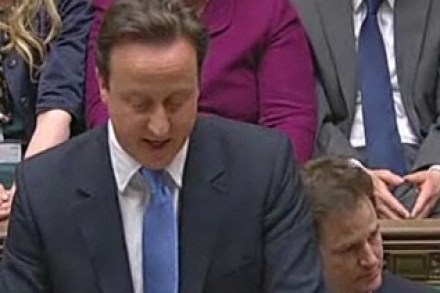
David Cameron sat alongside Nick Clegg on the government benches, with Harriet Harman two sword-lengths away as leader of the Opposition.  Even though the coalition has been around for a week now, it took the images from the Commons this afternoon to bring home just how extraordinary recent politics has been.  I mean, even the SNP's Angus Robertson got to make a speech now that the Lib Dems aren't a party of opposition.  This, plainly, is going to take some getting used to. They were all witness, today, to the re-election of John Bercow as Speaker.  In the end, it was easy for the Buckingham MP, as the "ayes" heavily outweighed a handful of "nos," and he was duly "dragged" to the Speaker's chair without a formal vote.

The developing picture

The emnity between Labour and the SNP is legendary. Scenting opportunity, Angus Robertson has tried to appeal to Labour's progressive instincts and substantial Scottish support to secure protection from cuts. John Reid and David Blunkett have talked sense about the damage a dalliance with nationalists would do to Labour's English position. Now Douglas Alexander has said that he can't envisage an deal with the SNP. This adds to the growing sense that the grand coalition will never form - a minority Lib-Lab coalition remains a possibility but an increasingly unlikely one. Boris has it right. This is the lurid politics of proportional representational laid bare.

This isn’t English

‘The Tories are stuffed,’ a resigned Shadow Cabinet minister tells Gary Gibbon. Endorsing any such view is premature but, with Lib Dem elders counselling Clegg to join Labour, the most likely outcome is a coalition of the losers, albeit nice progressive ones. Ah, the irony of the New Politics – plus ca change and all that. Politics has descended into a grotesque spectacle of blackmail, and bungled devolution is to blame. As James reported last night, talks with the Tories ran aground on sands that are the territory of Holyrood and Scottish Liberals presented every obstacle possible.

Where are Labour’s manners?

For all the feverish political activity in Westiminster today – and beyond the occasional voting reform protest – there's a strange, impermeable calm to the situation.  Everything is going on behind closed doors, and everyone is remaining relatively tight-lipped.  Signs are, we may have to wait a couple of days before any light breaks through the fog of discussion and counter-discussion.   One thing, though, is already becoming increasingly clear: 13 years of tribalism haven't done Labour much good when it comes to cross-party negotiations.  There are, of course, the rumours that Gordon Brown had an – ahem – "unconstructive" meeting with Clegg last night.

Cameron Should Also Talk to Alex Salmond

Whither Scotland? Well, apart from Labour regaining the two seats it lost in by-elections not a single seat changed hands north of the border. Indeed there was a swing to Labour and I suspect that Brown and Jim Murphy won votes when they warned that a vote for anyone else was a de facto vote for the Conservatives. Such is life and it's remarkable how these ancient ghosts still retain the ability to spook the populace. So why should Cameron speak to Salmond? Well, because he should be able to get the SNP to at least abstain on a putative Tory budget. Cameron has already said that the Scottish government's grant will not be addressed this year (because the budget has already been agreed and passed) and that's a decent starting point for talks.

The Scottish Question

The other day a wise friend, lamenting the "madness" of the people carried away with Cleggmania, fretted that it all amounts to the beginning of the end. For the Union, I mean. These days, you see, it's Unionists who are forever whistling an old song and always wondering if it's for the last time. I didn't, I admit, quite follow his argument but it had something to do with the Liberals in power, the advent of proportional representation leading eventually and inexorably to an English parliament and thus loosening the ties that bind to the point that they may be severed with a single blow of a Damoclean sword. Or something like that anyway. Conventional wisdom in Nationalist circles has always been that the independence cause is best advanced by a Conservative victory.

Shock: the SNP are Right to Complain About the Debates

No-one should be surprised that the SNP are going to court to try and change the terms and conditions of this week's final "Leaders' Debate". What may be more surprising is that the Nationalists have a point. A limited point perhaps but a palpable one nonetheless. The BBC would indeed seem to be abandoning its commitment (questionable at the best of times anyway, mind) to "balance" and "fairness" by broadcasting the debates in Scotland (and Wales) without any nationalist involvement. It is not a satisfactory situation. Nor, however is the proposed SNP solution: include an SNP politician in the BBC debate. It is hard to see what value this would add for English viewers who do, after all, make up 85% of the electorate.

Will Cleggcapping Work?

Well, yes, it probably will have some effect. But as Jonathan Freedland argues Clegg may survive the press's assault with his dignity and credibility more or less intact. Indeed, the entire episode might have the effect of firming up some support for Clegg. There willl be some voters who see it as proof that the Liberals must be doing something right and others who feel that it will be worth endorsing Clegg just to spite everyone else. It occurs to me that the Liberal Democrat surge is not quite unprecedented. That is, it can reasonably be compared, in some respects at least, to the SNP's campaign during the Scottish parliamentary elections in 2007.

The Land That Time Forgot

That would be Scotland, of course. Dear old Scotia, meek and mild and quiet as a well-nursed child. There was another YouGov poll released at the weekend and this Scotland on Sunday survey had its own startling findings. To wit: Labour - 40% SNP - 20% Lib Dems - 19% Tories - 16% Others - 5% You read that correctly. After 13 years and the worst fiscal apocalypse in 70 years 40% of my compatriots will still, like so many zombies, endorse the Labour party just as their faither did before them and, god knows, perhaps his faither before him too. True, this poll may slightly under-estimate currrent levels of Lib Dem support since half of it was conducted before last week's debate.

Small Drama at Holyrood; Not Many Bothered

A reader asks for a comment on the Scottish Budget "debate" at Holyrood. Well, I'm always sometimes happy to oblige: It passed. OK: the Tories and the Greens supported the SNP in return for promises to publish details of government expenditure online and set up an independent budgetary review commission (Tory demands) and bung more money to people wanting to insulate thier lofts (the Greens' sweetie).  But this was a phoney budget and not just because so much depends upon what happens to the block grant handed down from Westminster. Longer-term questions weren't even addressed, let alone answered. And, ultimately, a budget that dispenses spending but doesn't raise money isn't a real budget. Which is one reason why Holyrood needs fiscal autonomy.

Rompuy wants the EU to slither onto the world stage

Well hello there, Rompuy. We haven’t heard much from the new EU president so far – he was upstaged by Barroso at the Copenhagen conference, showing that the EU stage only has room for one super-ego*. But with the Lisbon Treaty ratified, in defiance of public opinion in Britain (and Labour’s manifesto pledge), he now has powers to advance the EU project further. His idea today: the possible development of a "humanitarian rapid reaction force" for the EU. This rung a bell with me. When I did my tour of duty in the Scottish Parliament, this was a goal of the SNP. They want to creep on to the world stage, without asking permission. One step is to send “observers” to various committees. But aid is the softest target.

Today Wales! Tomorrow Scotland?

Iain Dale says he has absolutely no idea why the Scottish Tories have failed to make as much headway as their Welsh counterparts. A new opinion poll puts the Conservatives on 32% on Wales, only 3% behind Labour, and a massive 11% up on the last general election. However, in Scotland, the Conservative ratings are only marginally up on 2005, Why is this? Why are Welsh Conservatives so much more successful than their counterparts north of Hadrian's Wall? We've ridden these marches here before, but another trip can't do any harm. The first and most obvious answer is that the SNP is a much stronger beast than Plaid Cymri for reasons that have plenty to do with the last 700 hundred years of history and the fabric of the Union since its foundation.

Christmas Scandal: Bute House Edition

Why do so many people hate politics? Partly because politicians insist upon making everything a matter of wearying, partisan, sillyness. Take this painting for instance. Hardly a masterpiece, not least because the young girl looks as though she knows she's marching off to doom and that is the consequence of yet another episode of national folly. But, still, it's just a picture and, in the end, only a Christmas card. But it's Alex Salmond's official Christmas card and so, natch, a matter for bickering and seasonal tomfoolery.

The odds on independence

Whenever a London bookmaker made odds on Scottish politics, my former colleagues at The Scotsman used to make easy money*. The world of Holyrood, where yours truly served a one year tour of duty, has its own political weather system that it’s hard to understand from a distance – so likelihoods are given very high odds. But today Ladbrokes gives odds that I think are pretty fair: 20-1 on independence before 2015. The SNP’s rout in Glasgow North West a fortnight ago is part of a wider reluctance to separate from England. The financial crisis, and the way that RBS somehow became the new Darien Scheme, has spooked everyone.