Skiing

The noble work of chairlift diplomacy

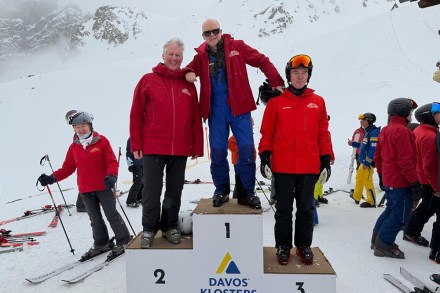
In 1956, three British MPs encountered a group of Swiss politicians in the bar of the Hotel Fluela in Davos and after a few drinks challenged them to a ski race. A timed slalom contest took place the following day, with the three-person Swiss team beating the Brits by a combined four seconds. Not willing to take this lying down, the MPs insisted on a rematch the following year and thus was born the Anglo-Swiss Parliamentary Ski Week, which celebrated its 70th anniversary last week. I heard about it from my friend Dan Hannan shortly after I became a peer, and immediately put my name down, imagining it to be a massive freebie. Not so. The Graubunden canton provides you with a free lift pass, and the local ski school, which organises the races, throws in some complimentary guides.
Never pass up a chance to ski

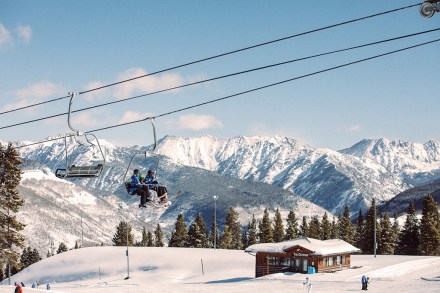
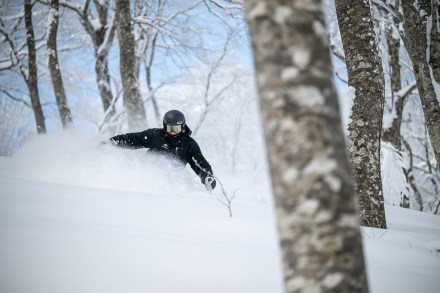
The snow is deep and crisp and even, the sky bluer than blue, and beneath my Black Crow skis there’s the soft hiss of fresh powder. I’m rehearsing my excuses as I carve my wiggly way down a well-upholstered piste. ‘I’ve gone skiing by mistake,’ I try out on the pure mountain air. I’m almost embarrassed by my own excess as this is my second ski break of the year, and to go twice before Easter during a war and an energy crisis is peak first-world indulgence. Still, as I like to say, I have not one but two Agas, ‘just not in the same house’, so what the heck. Here goes. My two ski trips in two months, then. Last month, we rented a chalet for the annual Dawnay-Johnson family ski holiday. We played Perudo and ate hugely both on and off the mountain.

Don’t wait for the chairlift – try a ski ‘safari’

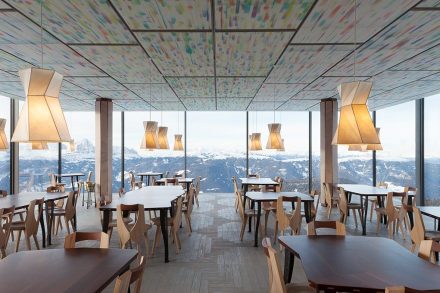
The problem with conventional ski holidays is that every day is more or less the same. You step eagerly out after your hotel breakfast to take the same ski-lifts and ski on the same slopes every day, and return to the same room every night. It can feel like a work commute, albeit a bit more fun.  Ski ‘safaris’, by contrast, offer a far less humdrum experience; but the terrain must be right. In the case of the Dolomites, a ski safari works precisely because the ski area is made up of loosely interconnected resorts with, crucially, a series of rifugi (mountain huts) high up on the slopes providing food and accommodation for an overnight stay.

Class is melting on the ski slopes

It’s that time of year again. No sooner have you recovered from Christmas than the posh start talking about their skiing jaunts planned for the February half-term. But let’s use the term posh advisedly, because – make no mistake – skiing is now anything but. Where once flinging yourself down the Cresta Run may have been a solid-gold toff signifier or ‘the Sloanest sport’, according to class anthropologist Peter York, now it simply means that you’re rich. No snow cannon pumping out snow on the low slopes can fool anyone. The fact that ski resorts are now melting before our eyes seems to be where this social morality tale ends. Skiing and British class have long been caught in a complicated embrace.

Faith – and why mountains move us

Sylvain Tesson’s White unfolds the story of a gruelling ski journey across the Alps during which the author aims to fulfil ‘a long-held dream of transforming travel into prayer’. Born in Paris in 1973, Tesson is a well-known adventure writer whose previous books include The Consolations of the Forest: Alone in a Cabin on the Siberian Taiga, which won awards on both sides of the Channel and was made into a film. As a public figure associated with the far right, Tesson remains divisive in his homeland. His political views do not seem to have dented book sales or literary coverage: one wonders if the same would be true if a travel writer of similar persuasion popped up here.

How to combine a ski holiday with a city break

There’s always part of me that dreads the start of a ski holiday. Not because of the skiing (I adore that), but because of the journey. As a child it meant 16 hours in the middle seat jammed between brother and sister as we argued over who felt most car-sick. Nowadays it means faffy transfers and days off eaten up by travel. This year, I decided to try something different: why not make the journey part of the holiday? Rather than undertaking a mammoth day’s travel, I would split it up with a break – a city break to be precise. Austria immediately sprang to mind. Excellent skiing – naturally – and smaller than France and Italy (with more cultural caché than Switzerland), so resorts are bunched close to great cities. I considered the options and settled on Salzburg.

Snow question: Europe’s most reliable ski resorts

It’s every skier's holiday nightmare. You turn up to the slopes and, instead of fresh white powder, you’re greeted by a mass of sludge slowly liquefying into green-brown mud.  The Alps have had a torrid season, with higher-than-average temperatures and heavy rain forcing many resorts to close, sometimes within weeks of opening. For long stretches it was too warm even to operate snow cannons, which can magic up artificial snow but require low temperatures to work. While snowfall has picked up in time to save the season in some places, in Italy alone there are now 200 fewer ski resorts than in the 1980s.  But there are still some pockets that can offer a reliable season.

Fresh air and fascism in the Bavarian Alps

The village of Oberstdorf lies in the Bavarian Alps, geographically remote but, as this gripping book demonstrates, deeply etched by the politics and violence of the Third Reich. Julia Boyd and Angelika Patel have used diaries, letters, newspaper reports and the official papers of Oberstdorfers as a lens through which to look at the rise of Nazism in Germany. The result is a fascinating and often surprisingly discordant cacophony of experiences. Oberstdorf was a small village but it had a wide range. By the early 1920s it was a favoured tourist spot: its population of 4,000 was swelled to 9,000 by visitors who came for health cures and winter sports. There were several hotels, a cable car, a cinema and a sanatorium.

The perils of a sex party

Gstaad I cross-country ski the old-fashioned way, not skating but on machine-made narrow tracks. It is known to be the best exercise in the world. Both upper and lower body get the maximum workout as one churns along a beautiful course in Lauenen, a tiny nearby village that looks like Gstaad did 60 years ago. I used to bring my children to the lake here during the summer, warning them time and again about a horrible monster that lived underwater and specialised in grabbing little kids. They screamed and screamed in terror until they got a bit older, told me to stop talking nonsense and swam to their heart’s content. Disrespectful little jerks, but such are the joys of fatherhood.

How to combine skiing and wine tasting in the Dolomites

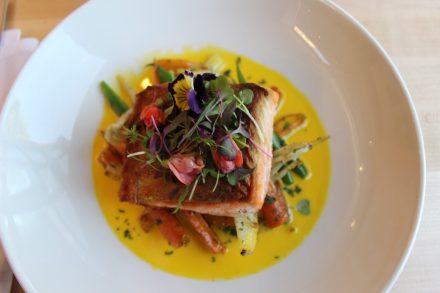
When planning a food and wine tour to Italy, the first ideas that spring to mind might be a road trip through the Tuscan hills or feasting at a sun-soaked villa in Puglia. Few would imagine themselves hurtling down a red slope amid rugged snow-capped scenery. And yet, unbeknownst to many, the Dolomites is arguably the gastronomic (and viticultural) capital of Italy. South Tyrol, the local region, has 19 Michelin-starred restaurants (24 stars in total) – making it the most decorated province in Italy. In the small resort of Alta Badia alone, there are four Michelin stars –all attached to one restaurant, the St. Hubertus. Up till recently it had another two star-studded eateries. Not bad for a resort with a population half the size of the Isle of Skye’s.

Why everyone should be shouting about Dave ‘Rocket’ Ryding

As we digest another Ashes thrashing for England’s cricketers in Australia, and wonder whether the 1966 World Cup victory will forever be the solitary success for one of Britain’s national football teams, the triumphs of individual Brits continue to astound. In the past year GB punched well above its weight in finishing fourth in the Olympic medals table with 22 golds, mostly in individual events. Teenager Emma Raducanu rocked the world with her out-of-nowhere win at the US Open tennis, though she is beginning to need a reset now. And then last weekend, even more extraordinarily still, came Dave ‘Rocket’ Ryding’s amazing made-in-Lancashire gold medal in the showpiece Kitzbühel World Cup slalom in Austria.