Sigmund freud

All in the mind’s eye

From our UK edition

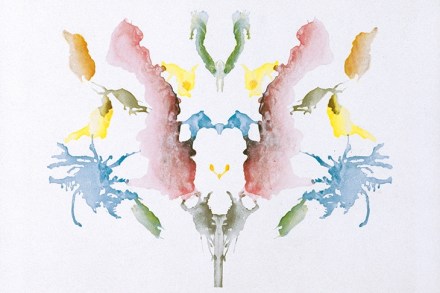
Everyone knows what the Rorschach tests are. Like Freudian slips, boycotts, quislings and platonic friendships, however, it was long ago forgotten that they had been named after an individual human being. Hermann Rorschach was a Swiss doctor and psychiatrist with curiosity about the visual arts, a contemporary of Freud and Jung. He created the tests in a book published in 1921, and a structure for evaluating patient responses to them before dying of appendicitis the following year. Rorschach’s life has its interests, and certainly casts some unexpected light on the Europe of his time. His father wrote an artistic treatise which sounds extraordinarily like the Bauhaus writings of Paul Klee, decades later.
Paintbrushes at the ready

From our UK edition

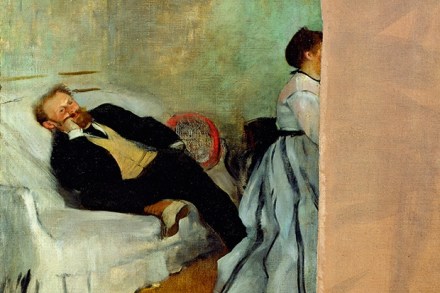
When the old curmudgeon Edgar Degas died in 1917, a stunning trove of works by Edouard Manet — eight paintings, 14 drawings and 60 prints — was discovered in his studio. There, too, was a portrait of Manet and his wife Suzanne, painted by Degas 50 years earlier. But its right-hand third was missing — which included half of Suzanne’s body and all of the piano she was playing. For some reason, Manet had put a knife through the canvas and sent Degas packing with what remained. The duo’s relationship is one of four ‘friendly rivalries’ considered by the Boston Globe art critic, Sebastian Smee, in his new book (Matisse vs Picasso, Pollock vs de Kooning and Bacon vs Freud being the others).

A rose between two thorns

From our UK edition

Emma Rauschenbach was the daughter of rich Swiss industrialists — a plump, good-natured girl, nicknamed ‘Sunny’, who married young without knowing what she was letting herself in for. Her husband, Carl Gustav Jung, was revered after his death as a guru as much as a doctor — as the mystic and visionary that Freud might have become had he not been so fixated on the role of the libido. As a husband, a father and a younger man, however, Jung appears to have been close to intolerable. He was physically large, selfish, bullying and loud of voice; he cheated at games, had a vile temper and appalling table manners; he thought men should be polygamous but that Emma should be his alone.

High life | 22 June 2016

From our UK edition

I always thought the Freuds a pretty sordid bunch, and after the latest revelations it seems I wasn’t far off. I first met Clement Freud when John Aspinall employed him as an adviser for food and wine. He was lugubrious and aggressive, and none of us punters liked him one bit. He was not a gambler but talked as if he were a big one. While crossing the Atlantic on board the QE2 back in 1974, he tried to pRlay the tough guy with me over — yes, you guessed it — a lady, but it didn’t work. But there’s no use giving him the business now that he’s dead, so all I will say is that I found him just a bit less loathsome than his painter brother and leave it at that.

High life | 17 September 2015

From our UK edition

 Gstaad Last week I dreamt of a girl I met in the summer of 1953, in Greece. I had never dreamt of her before. We spent two months together and had a platonic love affair. She got married and died soon after. She was older than me, but not by much. I had turned 16 that summer and had been to bed with a couple of ‘nice’ girls by then, but the rest had been mostly hookers. Her name was Maria Agapitou, and she was a rare beauty, at least in my inexperienced eyes. The ghastly but undeniably brainy fraud Sigmund Freud defined love as overvaluing the object but undervaluing reality. Freud was a complex-ridden smartypants who probably never experienced the sudden glow, the chemical effect that random attraction is all about.

Hero or collaborator?

From our UK edition

Steve Silberman’s stunning new book looks across history, back to Henry Cavendish, the 18th-century natural scientist who discovered hydrogen, Hugo Gernsbach, the early-20th-century inventor and pioneer of amateur ‘wireless’ radio, and countless other technically brilliant but socially awkward, eccentric non-conformists, members of the ‘neurotribe’ we now call the autism spectrum. He argues passionately for the ‘neurodiversity’ model rather than the medical disease model, for society to stop trying to ‘cure’ or ‘normalise’ those with autism, but to recognise them as neurologically differently wired, to accept difference, and support their disabilities when these surface in certain environments.

Filling in the Bloomsbury puzzle

From our UK edition

In March 1923 a large birthday party was held in a studio in Bloomsbury. It is often assumed that the eponymous Group was habitually glum or intense; but there were a lot of parties. The artists were Vanessa Bell and Duncan Grant, and the birthday was David Garnett’s 31st. David (known as Bunny) was a handsome, fair-haired fellow of bisexual charm, beloved by Grant, among others. His second novel, Lady into Fox, inspired and illustrated by his wife, Ray, had been a literary sensation the year before. There was much energetic dancing, and a floorshow was provided by the Russian ballerina Lydia Lopokova, Maynard Keynes’s wife, and by Harriet Bingham, a new friend of Bunny’s, a recent arrival from a very different world.

One vast, blaring cultural circus

From our UK edition

In the late 1980s Peter Ackroyd invited me to meet Iain Sinclair, whose first novel, White Chappell, Scarlet Tracings, I had greatly admired. Ackroyd initially knew Sinclair as a poet, author of Lud Heat, an influence on his own wonderful novel Hawksmoor. Passionately interested in London, the three of us began to meet regularly. Sinclair was an admirer of the French situationist Guy Debord (The Society of the Spectacle) and popularised psychogeography in Britain. In his blending of myth, literature and close social observation, I felt he combined the virtues of Orwell and Pound.

Vienna is a crossroads of the world again – but something’s missing

From our UK edition

People get the wrong idea about Vienna and I blame Johann Strauss. His plinky-plonky waltzes have become the soundtrack to the city, cementing Vienna’s public image as a place of balls and carriages and cream cakes. It’s an image the tourist board is keen to cultivate, and it makes good business sense. Tour groups visit the Spanish Riding School and the Vienna Boys’ Choir, eat a slice of Sachertorte and depart contented. It makes for a happy holiday, but Vienna is much more interesting than that. Like a lot of stereotypes, Viennese clichés have some substance. Once upon a time, this was the mecca of modern music: Schubert was the local hero; Haydn, Mozart, Beethoven, Brahms and Wagner hung out here.

What does it say about Owen Jones that he isn’t interested in scientific research?

From our UK edition

Owen Jones writes in the Guardian today on the subject of trans rights, making a revealing statement in the process. He says: ‘In truth, debates over the latest scientific research are of little interest to me: what matters is that the happiness, security and even lives of a minority are at stake, and all too little has been done about it.’ I’ve no desire to get involved in this particular debate, partly because I don’t know enough and I also don’t want to spend ten years getting harassed and threatened like Julie Bindel. One should never underestimate the threat of violence in shifting public debate, not just in religious matters.

How consumer habits are subject to the law of unintended consequences

From our UK edition

Some time in the 1960s, a group of people in an advertising agency (among them Llewelyn Thomas, son of Dylan) found themselves debating the direction of causation in the purchase of electric drills. Their dispute revolved around one question: do men a) conceive a need for making a hole and therefore go and buy a drill or b) buy an electric drill in a shop because it looks cool and then wander around the house desperately looking for any excuse to make holes in things. (One joy of working in advertising is that you get paid to have the kind of conversations when sober which other people are only allowed to have when drunk or stoned.) Yet the question is not quite as silly as it sounds: your approach to selling drills would differ depending on which of these two theories is true.

Brian Aldiss unpicks the Jocasta complex

From our UK edition

What if the gods of Greek myth had parallels with Freud’s notion of the unconscious? This is just one idea explored in Brian Aldiss’s sassy retelling of the stories of two prominent women of Thebes. In two novellas, Jocasta, Wife and Mother and Antigone, Aldiss puts both women and their emotional lives centre-stage, as they grapple with events familiar to us from mythology and the plays of Sophocles. Jocasta in particular is presented to us as on the cusp of two worlds, embedded in a lusty and violent culture governed by animal instincts, yet deeply thoughtful and curious about her own feelings.

Sabina Spielrein: from psychiatric patient to psychoanalyst

From our UK edition

Sabina Spielrein was a psychiatrist and psychoanalyst with groundbreaking ideas about the role of the reproductive drive in human psychology and the link between Darwinism and psychoanalytic theory. She was a pioneer of play therapy for children, and the first hospitalised psychiatric patient to progress to practising psycho-analysis. She worked with, among others, Freud, Jung and Piaget; she was regarded as Freud’s standard-bearer. Yet she is remembered, if at all, as Jung’s mistress, a hysteric with a taste for spanking; David Cronenburg’s film A Dangerous Method, with Keira Knightley as Spielrein, has provided the only readily available version of her.

The lesson of the young men fighting for Isis: evil is in all of us

From our UK edition

I had an interesting discussion with my friend Aidan Hartley earlier this week about whether the young men fighting for the so-called Islamic State are psychopaths. (This was before the news broke of Steven Sotloff’s beheading.) Aidan is better placed than most to answer this question, having worked as a war correspondent for many years and written a classic book on the subject called The Zanzibar Chest. His view is that the Islamic radicals attracted to IS are not run-of-the-mill jihadis, but a particularly nasty sub-species. Without in any way trying to defend the activities of terrorist groups like al-Shabaab, whose handiwork he’s witnessed close up, he thinks of them as being more like the IRA.

Two narcissists trapped in one static caravan

From our UK edition

I was two days alone in the caravan and no signal or reception of any sort. It was like a Buddhist silent retreat, where you have to listen in horrified amazement to your own thoughts. During the day I walked the cliff path; in the evenings I sat on the caravan steps wishing I had a rook rifle. On my walks, I did acquire a book, however: Sigmund Freud’s essay On Narcissism. It was on a community book-swap shelf in a disused telephone box. I’ve been picking up Freud and putting him down again perplexed and defeated for most of my adult life. But when I opened this one and glanced inside, I thought here at last was something I might be able to get to grips with.

It’s a stupid lie to say we’re all bisexual

From our UK edition

It was lust at first sight and love after the third martini. Over a get-to-know-you-dinner I discovered all I needed to know: I had found the Perfect Woman. All the boxes were ticked and the taxi was winding its way to my bedroom when she said: ‘You should know that I’m bisexual.’ She must have seen the frown on my face because she quickly added, ‘But everyone is bisexual.’ ‘No. I’m not,’ I said gently. ‘Yes you are,’ she insisted. ‘No, I’m a heterosexual,’ I said through gritted teeth. ‘No, we’re all bisexual,’ she said with muffled exasperation. There followed an infantile exchange of Yes you are!/No I’m not!

Do women want what they say they want?

From our UK edition

What do women want? You might have thought the Wife of Bath had got this one sorted, but Daniel Bergner has brought science to bear on the perennial question. And the answer from this book is that what women want is not just sex but sex outside the confines of monogamy. You know the received wisdom about women needing relationship security and emotional commitment before they feel right about having intercourse? It’s all hokum, apparently. What women want when it comes to sex is, it seems, at odds not just with societal expectations but with what they — we — say they want. Actually, do you mind if I talk about women as ‘they’ in what follows? You’ll see why.

Hysteria is a pile-up of unmotivated absurdities

From our UK edition

Terry Johnson’s acclaimed farce Hysteria opens in Sigmund Freud’s Hampstead home in 1938. The godfather of psychobabble is ambushed by a beautiful maniac named Jessica, who forces him to analyse her, and then hides in his closet and strips naked. Along comes Freud’s old chum Yahuda, a bumbling twerp who doubles as the farce’s authority figure. His presence forces Freud to improvise countless daft wheezes in order to prevent Jessica from being discovered. You may wonder if Freud is the best candidate to star in this kind of sex caper. And you’d be right. He is, in fact, the worst candidate.