Sigmund freud

A dying fall: The Last Movement, by Robert Seethaler, reviewed

From our UK edition

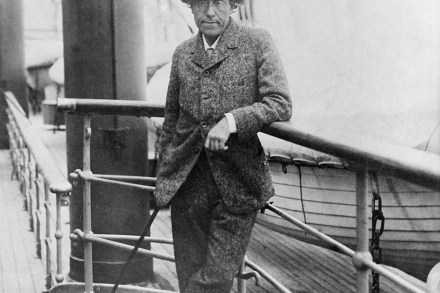
Robert Seethaler is known for celebrating the unsung: commonplace characters – peasants, labourers or shop assistants – who draw us into their quiet lives. But the protagonist in The Last Movement is a celebrated historical figure: Gustav Mahler. For those in search of biographical information, as W.H. Auden put it, a shilling life will give you all the facts. Today we’d go online. How will Seethaler, a distinguished miniaturist, deal with an icon? We meet the composer in 1911 aboard the SS Amerika on his final journey across the Atlantic, homebound and dying. A respectful ship’s boy brings him a tray of tea as he sits on the sundeck, wrapped in a blanket, contemplating the ocean and his turbulent life.
Self-betterment through contemplation of the Seven Deadly Sins

From our UK edition

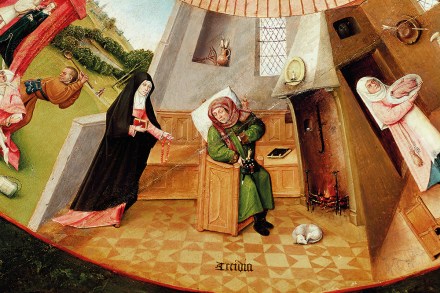
What mistake did Narcissus make when he looked into the water? To fall in love with his own ravishing self, we might think. But to the medieval mind, that wasn’t his problem at all. In John Gower’s 14th-century poem ‘Confessio Amantis’, Narcissus falls in love all right – but with someone else entirely. His fault isn’t that he loves himself; it’s that he doesn’t even recognise himself. Then, as now, as Peter Jones argues in this revelatory exploration of late medieval psychology, the path to self-betterment went through self-knowledge. Like our own, it was ‘a civilisation geared towards understanding the human mind’.

When did you last see your siblings?

From our UK edition

I recently arranged to have dinner with my brother and sister. No big occasion. Just a casual pub meal on a normal weeknight. As the eldest, my sister naturally chose the venue. As the youngest, my brother kept us entertained. Me, the middle child, I mostly sat and listened. It was fun. We caught up on news, reminisced, laughed and, true to form, studiously avoided any old hurts. As Catherine Carr reminds me in this lively and revealing book on the ins and outs of siblinghood, these two people have known me longer than almost anyone on the planet. When my parents pass, no one but them will understand what I mean by ‘guggy’ (a ragged baby blanket that never left my side) nor recall the giddy excitement of spending our sweetie money after Sunday morning swimming.

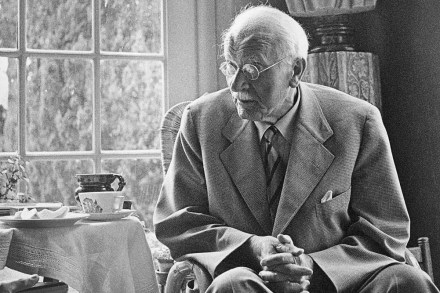
Carl Jung, the man behind the psychobabble

A surefire way to alienate people is to talk about the dream you had last night. In polite society, we’re generally told nobody cares about the goings-on of our subconscious and that it’s probably best to keep quiet. Nothing, then, quite prepares one for the oneiric delights to be found in Jung’s Life and Work, a new edition of the collected interviews between Professor Carl Gustav Jung, the renowned Swiss psychiatrist and founder of modern analytic psychology, and his former student, Aniela Jaffé. The tone is set in the very first interview, where Jung recalls a childhood dream involving a gigantic “erect phallus” reaching “almost to the ceiling” equipped with an all-seeing eye and seated on a plush golden throne.

carl jung

What Freud would say about Andrew Mountbatten-Windsor’s teddy bears

It is widely known that when a Duke of York is down, he is down, and the recent hit-piece in Heat – "'Pathetic' Andrew’s tantrums over prized teddy bears" – found a new way of kicking Andrew Mountbatten-Windsor. Its royal source said that "being forced to move [out of Royal Lodge] has sent him into a full-on meltdown because he keeps telling people the bears won’t cope with the change… as he says, it’s their home too." When it was reported last month that Andrew’s teddy bear collection was being sent to a south London storage facility, I was on the verge of feeling sorry for him; until I realized I was actually feeling sorry for the bears. There are no wonderful games to play in a lock-up. Of course I anthropomorphize teddy bears: that is what they are for.

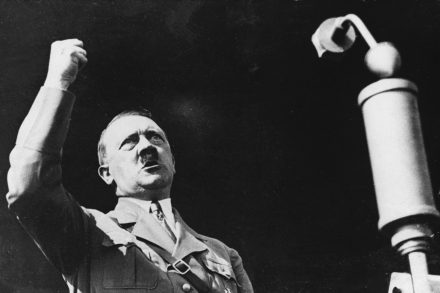
Why are we so obsessed with Hitler’s penis?

We care about Adolf Hitler’s penis, as a society. Quite a lot, it seems. A British documentary claims, finally, to have solved the mystery of the Nazi leader’s schwanz – was it big or was it small? – and to have proven, beyond a shadow of a doubt, that the famous chant of “Hitler’s only got one ball,” a favorite among British soldiers, wasn’t just an idle insult. The key evidence is genetic: a blood-stained piece of fabric from the Hitler bunker. The documentary filmmakers tested it against a sample from one of Hitler’s closest living relatives to make sure the blood was his. And it was. That meant his genome could be sequenced and then analyzed for genetic clues about his personality, health and, of course, his manhood.

Hitler

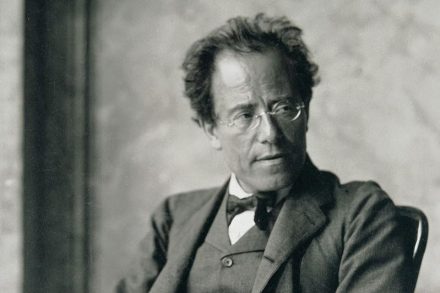
Inside Mahler’s mind

The arc of Gustav Mahler’s career was staggering. Born in 1860 to a poor Jewish family in Bohemia, through tenacity and talent he climbed to dizzying heights, nabbing the conductorship of the Vienna Hofoper, New York’s Metropolitan Opera and the New York Philharmonic. He became a celebrity, hounded by paparazzi as he zipped back and forth across the Atlantic by steamer, a forerunner of today’s globetrotting conductors with their NetJet commutes.  Yet Mahler was plagued throughout his life by nagging existential fears, serious illness and marital strife. He poured this angst into his composing. “Why have you lived?” Mahler wrote in a letter to a friend. “Why have you suffered? Is it all some huge, awful joke?

mahler

Candace Owens: on the Macron lawsuit, anti-Semitism and Trump

Candace Owens joined Freddy Gray on the Americano show last Friday to discuss her recent lawsuit with the Macrons, Trump's intervention, the Epstein Files and accusations of anti-Semitism. Here are some highlights from their conversation. Why did Macron and his wife sue Candace Owens? Freddy Gray: Candace is being sued or threatened with legal action by the Macrons, Emmanuel and Brigitte Macron, the President and First Lady of France. Because, Candace, you believe that Brigitte Macron is a man. Why do you think the Macrons are choosing to sue you? Candace Owens: Because they were trying to stop the story. I think it was an effective PR strategy.

Freddy Gray and Candace Owens on the Macron lawsuit

The United States cannot afford a 10 a.m. to 4 p.m. president

In 1927, Sigmund Freud published a book about religion called Die Zukunft einer Illusion (The Future of an Illusion). As a contribution to the understanding of religion, it is, like much of Freud’s work, both banal and outrageous. But it occurs to me that its catchy title as well as its main thesis — religion, Freud wrote, was invented to fulfill “the oldest, strongest and most urgent wishes of mankind” — has a certain pertinence to the large-scale entertainment now being offered to the public by Democrats eager to salvage the reputation of President Joe Biden.

president biden

What Prince Harry gets wrong about therapy

From our UK edition

Prince Harry’s endorsement of therapy will likely turn some of us off ever seeking it out. Insisting that therapy has changed him for the better, he is urging his family to partake so that they too can ‘speak his language’ of simultaneously loaded and empty terms – such as ‘authenticity’. ‘If I didn’t know myself, how could members of my family know the real me?’ he said. This non-sequitur subverts the conventional wisdom that sometimes others can know you better than you know yourself. Yet tiring as all the Prince’s interventions are, a peremptory dismissal of psychoanalytic practice would be a mistake. In fact, psychoanalysts would probably refuse to accept the Prince is speaking their language anyway.

Stupendously good: Much Ado About Nothing, at the Lyttelton Theatre, reviewed

From our UK edition

Simon Godwin’s Much Ado About Nothing is set in a steamy Italian holiday resort, the Hotel Messina, in the 1920s. A smart move, design-wise. The jazz age was one of those rare moments in history when every member of society, from the lowliest chambermaid to the richest aristocrat, dressed with impeccable style and flair. The show is stupendously good to look at it and it kicks off with a thrilling blast of rumba music from a jazz quartet on the hotel balcony. Even sceptics of jazz need not fear these players. The musical score is a triumph for one simple reason: there are no jazz solos. https://www.youtube.com/watch?

My wife is caught in a web of fear

From our UK edition

Even in my shed at the bottom of the garden I can hear the screams coming from the house. Shrieks of pure terror, often sustained for several seconds, followed by desperate cries for help. No, my family’s not being assailed by a serial killer. Spider season is here and Caroline is an arachnophobe. One a scale of one to ten, I’d give her about an eight on the irrationality scale. She doesn’t insist that I search every nook and cranny of our bedroom to make sure it’s spider-free before she can go to sleep. But she has surrounded the bed with conkers. She’s a great believer in the spider-repelling properties of horse chestnuts, even though there’s no scientific evidence for it.

America’s race to the bottom

America has become a nation of butt fetishists. I’m not judging. I’m not calling for a moral crusade; it’s far too late for morality in America. I’m just observing the passing of one dispensation in manners and the establishment of another, like Talleyrand after the French Revolution. The bottom is one of the few areas in which the US can claim to lead the world. California, with its porn and internet industries, saturates the global imagination with images of the callipygous American butt in action. Rap videos, a hybrid of music and porn, teach twerking to the innocents of Asia. Anal sex has become so vogueish that Teen Vogue advises its readers on how to do it. This reflects the pornification of absolutely everything in the names of entertainment and personal freedom.

bottom sex positive selfie

My thrilling rendezvous with the sausage lady

From our UK edition

One day last week we did a wine run up to Manosque in the foothills of the Alps, leaving early in the morning. Catriona drove, big Vernon squeezed into the back seat and made a nest for himself among a fortnight’s recycling rubbish. Along the road up to Manosque the almond trees were in blossom, and in the gardens yellow forsythia and mimosa. But last year’s dead leaves still clung about the naked branches of the forest. Manosque it was because we’re massive fans of a local red called La Blaque. But on the way we passed a Louis Latour wine outlet. Catriona likes their Viré-Clessé white so we stopped for a tasting.

Do Jews think differently?

From our UK edition

Sixteen years into a stop-go production saga, I got a call from the director of The Song of Names with a suggested script change. What, said François Girard, if one of the two protagonists was perhaps, er, not Jewish? My reply cannot be repeated. I was, for a minute or so, completely speechless. My novel, winner of a 2002 Whitbread Award, is the story of two boys bonding in wartime London. One is a refugee violinist from Poland, the other a middle-class kid of average abilities. ‘I am genius,’ says Dovidl to Martin. ‘You are — a bit everything.’ Beyond bomb sites, their friendship is rooted in a common heritage. The bond is savagely betrayed when Dovidl vanishes. Martin spends the rest of his life obsessively in pursuit.

Was there some Freudian symbolism in Lucian’s botanical paintings?

From our UK edition

In early paintings such as ‘Man with a Thistle’ (1946), ‘Still-life with Green Lemon’ (1946) and ‘Self-portrait with Hyacinth Pot’ (1947–8) Lucian Freud portrayed himself alongside striking plant forms, giving equal weight to the vegetable and the human. Similarly, his first wife, Kitty, was depicted in portraits from the same period more or less obscured by a fig leaf held in front of her face, or apparently threatened by the leafy branch of a plant thrusting into the picture plane.

Why was Sigmund Freud so obsessed with Egypt?

From our UK edition

Twenty years ago, I visited the ancient Egyptian city of Amarna with a party of American journalists. Even in those days this place, near Asyut on the Middle Nile, was regarded as a dodgy destination for western tourists. As a tribute to the value of an entire CBS television crew as a terrorist target, we were accompanied by a squad of heavily armed, black-clad Egyptian special forces. But the sense of daring adventure was dented when, shortly after arriving at the ruins, we were joined by a couple of intrepid Germans who had come in a taxi. The Germanic world has long been fascinated by Amarna and its ruler, the pharaoh Akhenaten — which is why many of the best finds from the place are in Berlin — and none more so than the founder of psychoanalysis.

Transgender dogma is naive and incompatible with Freud

Although partisans of LGBT+ like to dismiss psychoanalysis as out of date, many of them fully participate in the ongoing repression of basic Freudian insights. If psychoanalysis taught us anything, it is that human sexuality is immanently perverted, traversed by sadomasochist spins and power games, that in it, pleasure is inextricably interlinked with pain. What we get from many LGBT+ ideologists is the opposite of this insight, the naive view that, if sexuality is not distorted by patriarchal or binary pressure, it becomes a happy space of authentic expression of our true selves. Suffice it to remember what happened with Girl (2018), a Belgian film about a 15-year-old girl, born in the body of a boy, who dreams of becoming a ballerina.

therapists freud

A time for reflection | 8 March 2018

From our UK edition

The precarious stasis of late pregnancy offers the narrator of Jessie Greengrass’s exceptional first novel a space — albeit an uncomfortable one — for reflection. She sifts through her own immediate and past experience: caring for her dying mother in her early twenties; her relationship with her partner Johannes; her childhood; the birth of her first child. This fragmented narrative is intercut with the stories of Wilhelm Conrad Röntgen, the inventor of the X-ray; Sigmund and Anna Freud; and the 18th-century anatomist, surgeon and empiricist John Hunter — along with other brief cameos from the history of science, from the Lumière brothers to the engraver Jan van Rymsdyk.

Mysticism and metamorphosis

From our UK edition

‘I frankly hate Descartes,’ states a character in Nicole Krauss’s new novel, Forest Dark: ‘The more he talks about following a straight line out of the forest, the more appealing it sounds to me to get lost in that forest …’ Like the author, this character is called Nicole, lives in Brooklyn, and is a writer and mother. Struggling with her work and her marriage, life is indeed a ‘forest dark’, and we follow her through the tangle of it.