Lucy Beresford

Michael Arditti is the Graham Greene of our time

From our UK edition

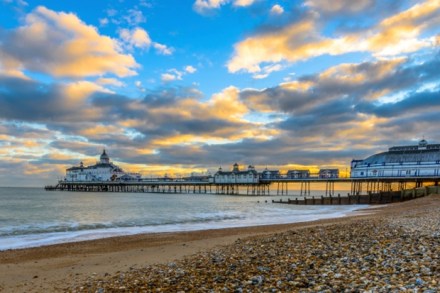
Duncan Neville is an unlikely hero for a novel. Approaching 50, divorced and the butt of his teenage son Jamie’s utter contempt, Duncan is also the eloquent yet mild-mannered editor of the Francombe Mercury, a local newspaper on its last legs. Francombe too has seen better days, not least since its pier burnt down in 2013 (an event covered fulsomely in the Mercury). While Duncan negotiates a good take-over deal for Mercury staff and their pensions, he’s also trying to prevent the ruined pier from being developed into a sex theme park by his schoolboy nemesis Geoffrey Weedon. The fact that Duncan’s ex-wife Linda is married to Geoffrey’s brother doesn’t help. Thank goodness then for Ellen, a new arrival to Francombe after the jailing of her fraudster husband.
Brian Aldiss unpicks the Jocasta complex

From our UK edition

What if the gods of Greek myth had parallels with Freud’s notion of the unconscious? This is just one idea explored in Brian Aldiss’s sassy retelling of the stories of two prominent women of Thebes. In two novellas, Jocasta, Wife and Mother and Antigone, Aldiss puts both women and their emotional lives centre-stage, as they grapple with events familiar to us from mythology and the plays of Sophocles. Jocasta in particular is presented to us as on the cusp of two worlds, embedded in a lusty and violent culture governed by animal instincts, yet deeply thoughtful and curious about her own feelings.

A year of living dangerously

From our UK edition

After 14 months working as an inter-dealer bond broker, posh totty Thompson was fired in February 2008 for gross misconduct. Her crime? Writing a warts-and-all article of the broking industry which was published in The Spectator. Enjoy- ment of this memoir (basically an extension of that original piece) will, I suspect, depend on either an underlying interest in the technicalities of Collateralised Debt Obligations, or an ability to stomach anecdotes about vomiting. It’s a macho tale, choppily told, of lap-dancing clubs, benders at Nobu, prescription drugs, and c-bombing (it’s a See You Next Tuesday thing). Unsurprisingly, the unintended subtext of this story is more compelling.

Ways of escape

From our UK edition

At a time in modern, secular Britain when religion is seen not as the saviour but as the cause of many of society’s problems, we have become skilled not so much at turning the other cheek as turning a blind eye. Thank God (maybe literally) for writers like Michael Arditti, whose invigorating novels dare to shake us out of our complacency. Arditti returns to the ecclesiastical territory he charted in previous works, in particular the award-winning novel Easter.

No sex please, we’re credit-crunched bankers

From our UK edition

For testosterone-driven City high-fliers, the world has fallen apart, says psychotherapist Lucy Beresford — and one result is a dramatic rise in sexually disturbed behaviour There’s no doubting the trauma in today’s City: redundancy is rife and those who still have jobs are struggling to cope with an utterly changed financial world. No wonder a spate of banking suicides has made headlines. But stress is also showing itself in a more private way: in the bedroom. In the past six months, clinicians have seen a dramatic rise in sexually disturbed behaviour, ranging from a 20 per cent rise in sexually transmitted diseases among over-35s, to sex addiction and its flipside, sexual anorexia.

Scapegoats, hate figures and superheroes

From our UK edition

Psychotherapist and former banker Lucy Beresford says we’re all in denial about our guilt for the debt crisis During the recent economic nervous breakdown, pundits everywhere put forward every possible financial cause. But they only told part of the story. Economics is also governed partly by human behaviour. So a fuller understanding of the crisis, and our reactions to it, requires psychological interpretation. Trouble is, it makes for such uncomfortable reading: like alcoholics refusing to admit our addiction, we are in acute denial about our collective guilt. It’s easy to see why people reacted to the financial meltdown by panicking. We are group creatures after all, and historically our very survival depended on being able to detect correctly the signals within the tribe.

Too French by half

From our UK edition

Take Harold Pinter: dismissed at the outset for having written an impenetrable play, but who nearly 50 years on ends up being awarded the Nobel Prize for literature. I ask you, who’d be a critic? I mention this by way of an apology should, in 50 years’ time, Simon Liberati pick up a gong of similar importance. Because right now, his debut makes little sense. It’s very French, in a surreal, self-absorbed type way. At its core lies an exposé of a debauched layer of society, comprising a flaky group of world-weary, heroin-addicted teenage prostitutes and equally louche adults. The novel’s semi-hero is Claude, a man of ‘Luciferian beauty’ who in his forties is haunted by the memories (or apparitions) of girls he has slept with and pimped for.

The double-edged symbolism of Mbeki on the shoulders of white rugby victors

From our UK edition

South Africa is buzzing — and not just in the afterglow of victory in the Rugby World Cup. Johann­esburg, built in the 1880s on the back of mineral excavation, is experiencing a contemporary form of gold rush. At the gleaming international airport, yuppies of every hue shape deals on their laptops. A ride into town takes you past shopping malls almost as large as the gold dumps on the outskirts, into a city of building sites. Another sports fixture, the 2010 soccer World Cup which South Africa will host, is often touted as the trigger for this construction boom, but much of it would clearly have happened anyway. Parts of the smart northern suburbs are gridlocked by road-closures related to the building of Gautrain — a 25 billion rand (£1.

Too much in the sun

From our UK edition

Reading this languid, chapterless novel is like spending the summer in Tuscany. The plot drifts along, punctuated by a few sharp shocks, just as a day at the villa might combine exquisite lethargy with a brisk dip in the pool or sumptuous meals. Sometimes there’s an obvious sting in the tail for such indolence: the cost, the sunburn, the extra calories consumed. In Esther Freud’s latest, set in the Tuscan hills, the sting is more subtle, less conclusive: avoiding responsibility can have consequences. Lara is invited by her historian father Lambert to stay a few weeks at the villa of an old friend. Even though Lara is now 17, she has spent little time in Lambert’s company. For most of the book she remains gawky around him.

Golf and global brands signal rising prospects for the Himalayan kingdom

From our UK edition

The hills are alive with the sound of golf balls. The hills in question are the highest in the world: the Himalayas. And golf is the new buzzword in Nepal. A global sport, golf attracts high-net-worth tourists, especially from South Korea and China, which have recently begun direct flights to Kathmandu’s Tribhuvan Airport. That’s good news for the Nepalese economy. Golf tourists, bags crammed with gleaming titanium Big Bertha drivers, spend more per head per day than the penny-pinching backpackers who previously made up Nepal’s tourist population. Caddies get decent cash tips and entrepreneurship flourishes among the children who perch on the perimeter wall, waiting to sell you back your golf ball after you’ve shanked it into the trees.

Shoppers think fresh – and think less of products endorsed by World Cup losers

From our UK edition

Middle-class Delhi-ites have fallen in love — with supermarkets. The ‘Organised Retail’ concept has exploded here, as mini-chains such as Big Apple, Food Bazaar and Reliance Fresh seek to get a head-start over the likes of global brands such as Wal-Mart and Tesco — both rumoured to be looking for sites in the capital. Big Apple (slogan: ‘Think Fresh’) consisted in 2005 of just one store employing 30 people; by August 2007, the group hopes to have opened 300 stores. Analysts say the market is growing at over 25 per cent annually.

On the couch

From our UK edition

Yes, it’s that time of year again. Living rooms up and down the country will reverberate to the sound of families rowing, and the television being turned on to provide distraction. But whereas a generation ago the nation could be united by watching the only film on offer, The Sound of Music on BBC1, today’s British viewing habits, like so much else in modern life, are fragmented. Videos, DVDs, umpteen movie channels on satellite, by and large you will choose the films you watch this Christmas — and your choices will say more about you than you think. Many people choose films they have already seen. Ritual is very important in terms of making us feel secure about ourselves and our place in the world.

The gateway to African economic revival in a place once famous only for a hijacking

From our UK edition

‘We men don’t want to wear condoms, we want the West to find a cure.’ This dilemma, faced by HIV counsellors at the Mildmay Centre near Entebbe, mirrors that experienced by those hoping to help Uganda financially. Mukasa, a handler at the chimpanzee sanctuary on Ngamba Island, 45 minutes from Entebbe by speedboat, gives me the analogy: the chimps there are hand-reared orphans. Five times a day food for them is tossed over the fence. A Pavlovian response has developed: they come whooping through the undergrowth at set times — and can never be released into the wild, as they would not survive. They are literally sustained by handouts.

Summer reads

From our UK edition

Summer reads: doesn’t the very phrase conjure up unfortunate images of lobster sunburn? Summer reads: doesn’t the very phrase conjure up unfortunate images of lobster sunburn? But what to do, when a long summer stretches ahead and there are still hours in the day to kill after you’ve finished watching the footie, or the live feed of Big Brother 7? (I know! compulsive viewing, isn’t it? But that’s for another article.) So, whether you intend to laze on your yacht, trek for gorillas, brave the Bognor rain, or find yourself stranded at Gatwick, everyone needs an undemanding book somewhere in their Louis Vuitton. You don’t have to be so well-heeled to enjoy Plum Sykes’ second novel, The Debutante Divorcée (Fig Tree, pp. 250, £12.

Emotional incontinence

From our UK edition

This year will be remembered as the one in which the psychopathology of Britain slipped down the toilet. Just last month the imagination of the nation’s television viewers was captured — some would say hijacked — first by the comedy show Little Britain, with a series of sketches about a geriatric woman who is oblivious of her own urinary incontinence, and, secondly, by the sight (courtesy of infrared cameras) of Carol Thatcher taking a night-time pee beside her camp bed on I’m a Celebrity — Get Me Out of Here! And there’s no point in telling yourself that I’m the sad one for watching these programmes, or that they are fringe entertainment.

Recent first novels

From our UK edition

I selected Overnight to Innsbruck by Denyse Woods by chance from the reviewing shelf and discovered a real treat of a read. It is pleasantly old-fashioned in having a strong, page-turning plot, and credible characters who panic and fret in recognisably authentic ways, yet bristling with smart, contemporary dialogue and psychological insight.