Shostakovich

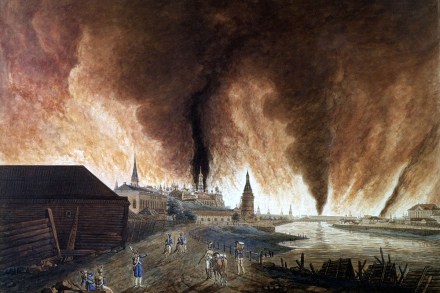
The history of Moscow was one of extreme violence from the start

‘Moscow is hard to love,’ Simon Morrison writes at the beginning of this engaging book, ‘but I love it.’ He deliberately sets out unconstrained by academic pieties, despite holding the post of Professor of Music and Slavic Languages and Literatures at Princeton University. He says he wrote A Kingdom and a Village ‘out of nostalgia for pre-oligarch decrepitude, when the world looked at Moscow with pity’. The Orthodox Church and the security services have been conjoined from the 16th century to the present The book is tripartite. The first part begins in 1147, when a prince named Yuri built a fort on a hill above a river. (When the authorities

The awful calamity of Stalin being a music lover

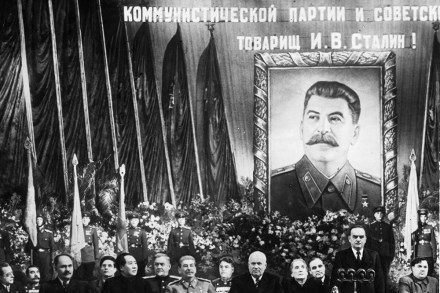
At around 9 p.m. on 5 March 1953 Sergei Prokofiev died of a brain haemorrhage on the sofa of his Moscow flat. He was 61, and had struggled for years with ill health. He had long complained of pain in his soul. Less than an hour later, the source of that pain, Joseph Stalin, died of a heart attack in his dacha on the outskirts of Moscow. Prokofiev’s death wasn’t so much forgotten as ignored. The leading music magazine Sovetskaya muzyka devoted the first 115 pages of its new issue to Stalin; only then did it mention Prokofiev. A million people thronged the streets to see Stalin lie in state;

Igor Levit deserved his standing ovation; Shostakovich, even more so

Music and politics don’t mix, runs the platitude. Looks a bit tattered now, doesn’t it? For Soviet musicians, of course, it wasn’t a question of whether you were interested in politics. Politics was unambiguously interested in you. Shostakovich wrote his 24 Preludes and Fugues for piano between 1950 and 1951, in the teeth of Stalin’s postwar crackdown, and in adopting the model of Bach, he seems to have been looking for a safe path forward: music that was politically neutral. He dedicated the Preludes and Fugues to the pianist Tatyana Nikolayeva, whose surprise victory at the 1950 Bach competition in Leipzig had been exploited by state propagandists. Bach himself was

Boringly postmodern and an ideological fantasy: Slavoj Žižek reviews Matrix Resurrections

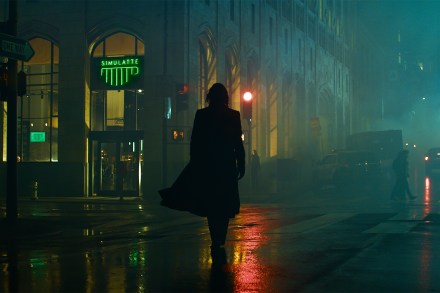
The first thing that strikes the eye in the multitude of reviews of Matrix Resurrections is how easily the movie’s plot (especially its ending) has been interpreted as a metaphor for our socio-economic situation. Leftist pessimists read it as an insight into how, to put it bluntly, there is no hope for humanity: we cannot survive outside the Matrix (the network of corporate capital that controls us), freedom is impossible. Then there are social-democratic pragmatic ‘realists’ who see in the movie a vision of some kind of progressive alliance between humans and machines, sixty years after the destructive Machine Wars. In these wars ‘scarcity among the Machines led to a