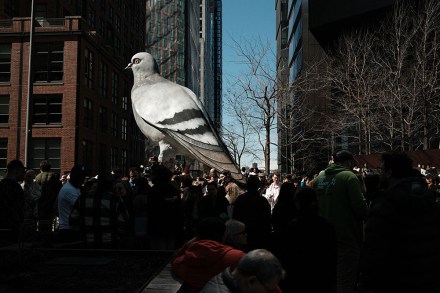
The new fourth plinth is decidedly misjudged
From our UK edition
As I sat down to write this article, an artist friend phoned me to deliver a pithy but convincing defence of public art: it exists, he said, to extract high culture from its supposedly elitist setting, making it visible to an audience who might otherwise feel excluded. This made me think back to my own formative encounters with the art world in the late 1990s and 2000s, most of which I owe to public commissions in the northeast of England. At that moment, a Newcastle-based commissioning body called Locus+ was in close dialogue with some of the world’s best artists: they had Douglas Gordon set fire to a grand piano and Chris Burden sail a model ship from the Fair Isle to Newcastle. They enabled Fiona Banner to melt down a Tornado warplane and reconstitute it as a giant bell.