Science

It’s not science I don’t trust – it’s the scientists

Everyone knows the real reason people like Donald Trump are sceptical of climate change is that conservatives are fundamentally anti-science. Some doubt science because it conflicts with their religious beliefs; others because its implications might mean radically shifting the global economy in an anti-growth or heavily statist direction, which goes against their free-market ideology; others because, being conservative, they are prisoners of their dogmatism, need closure and fear uncertainty. I hear this all the time from lefties on social media. And there seems to be some evidence to support it.
Mind your language | 16 August 2018

From our UK edition

David Greig has written the international festival’s flagship drama, Midsummer. This farcical romance is performed as a party piece by four actors supported by a plinky-plonky band playing satirical ballads. We meet two boozy drifters, Bob and Helena, who enjoy a night of rampant sex aftera chance encounter in an Edinburgh pub. Will their affair live or die? Well, since the show starts with two older actors reminiscing about the characters’ past we knowin advance how it all ends. An odd way to kill suspense. The lovers have little in common apart from alcoholism and the madcap plot sends them hurtling through a set of mishaps and scrapes as their romance develops. They get tied up in a bondage club.

The selective breeding of pets: how far should we go?

It was in his play Back to Methuselah that George Bernard Shaw honoured a lesser known aspect of Charles Darwin’s originality as a thinker, when he described him as ‘an intelligent and industrious pigeon fancier’. Britain’s greatest natural scientist was indeed a keeper of fowl, with pigeons among his favourites. The habit arose from Darwin’s instinctual recognition that in the animal-rearing experiments conducted over millennia by our ancestors, we had inadvertently stored away crucial evidence about the way in which all of life can change in response to environmental stimuli.

Pet perversions

It was in his play Back to Methuselah that George Bernard Shaw honoured a lesser known aspect of Charles Darwin’s originality as a thinker, when he described him as ‘an intelligent and industrious pigeon fancier’. Britain’s greatest natural scientist was indeed a keeper of fowl, with pigeons among his favourites. The habit arose from Darwin’s instinctual recognition that in the animal-rearing experiments conducted over millennia by our ancestors, we had inadvertently stored away crucial evidence about the way in which all of life can change in response to environmental stimuli.

Unintelligent design

From our UK edition

On Wednesday, BBC Four made an unexpectedly strong case that the human body is a bit rubbish. Our ill-designed spines, for example, guarantee that many of us will suffer from chronic back pain. Our joints wear out long before we do. Our skin even gets damaged by sunlight. So what can be done about it? Obviously the answer is not much — but that didn’t prevent Can Science Make Me Perfect? With Alice Roberts from pretending to give it a go. The premise was that Roberts would draw on other, less incompetently constructed life forms to create an improved version of herself — the way she’d be if evolution hadn’t cocked things up so badly. As befits someone whose name appears in programme titles, Roberts clearly relished her God-like role.

Might LSD be good for you?

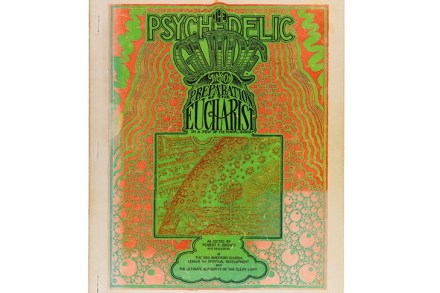
When Peregrine Worsthorne was on Desert Island Discs in 1992, he chose as his luxury item a lifetime supply of LSD. He may, according to the American journalist Michael Pollan’s fiercely interesting new book, have been on to something. Acid has a bad name these days: either a threat to the sanity of your children, or a naff 1960s throwback favoured by the sort of people who sell you healing crystals at markets in Totnes. Yet in LSD-25, psilocybin, DMT, mescaline and others we have a family of molecules with startlingly powerful effects on the human mind. They are not addictive, carry little or no physiological risk, and their association with the desire to jump out of windows has been distinctly exaggerated. They might even be good for us.

The acid test

When Peregrine Worsthorne was on Desert Island Discs in 1992, he chose as his luxury item a lifetime supply of LSD. He may, according to the American journalist Michael Pollan’s fiercely interesting new book, have been on to something. Acid has a bad name these days: either a threat to the sanity of your children, or a naff 1960s throwback favoured by the sort of people who sell you healing crystals at markets in Totnes. Yet in LSD-25, psilocybin, DMT, mescaline and others we have a family of molecules with startlingly powerful effects on the human mind. They are not addictive, carry little or no physiological risk, and their association with the desire to jump out of windows has been distinctly exaggerated. They might even be good for us.

The power of words | 3 May 2018

From our UK edition

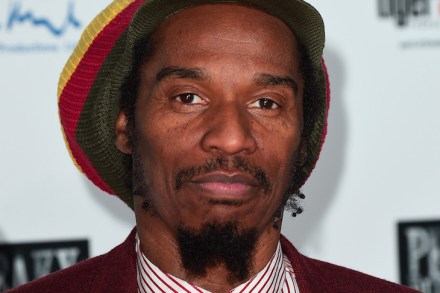
‘For me rhyming was normal,’ said Benjamin Zephaniah, reading from his autobiography on Radio 4. Back in the 1960s, on Saturday afternoons in their house in Hockley, Birmingham, where Zephaniah grew up with his seven siblings, the drinks trolley would come out and the record player be plugged in — Desmond Dekker, Millie Small and Prince Buster — ‘the lyrics of Caribbean life’. The church, too, gave him a love of words and vocal performance, Zephaniah delivering his first gig by reciting a list of the books of the Bible both ways, forwards and in reverse order. The music and the poetry were part of everyday life, ‘it was how we communicated’.

Why it’s time to stop fetishising experts

From our UK edition

Something extraordinary and largely unreported has just happened in a court in San Francisco. A federal judge has said that there is no Big Oil conspiracy to conceal the truth about climate change. In fact, Judge William Alsup — a Clinton appointment, so he can hardly be accused of right-wing bias — was really quite snarky with the plaintiffs who claimed there was such a conspiracy. The case was brought by the cities of San Francisco and Oakland, which have taken it upon themselves to sue the five big western oil majors — Chevron, ExxonMobil, Conoco-Phillips, BP and Royal Dutch Shell — for allegedly engaging in a Big Tobacco-style cover-up to conceal the harm of their products.

Why the arts are needed to put the ‘A’ into ‘STEAM’

From our UK edition

Amongst the good places to be in Britain, the National Theatre and the RSC in Stratford-upon-Avon are up there. What I see or do when in these places is almost secondary to being there.  Soaking it up in the National Gallery is a close second. Knowing that this country once had the courage to provide the necessary subsidy to create a national theatre; it is daily fillip to see what a beacon our two great theatres are for work that makes us think about how we live. This feeling is compromised by knowing what is going on in maintained schools at the moment. Writing in The Guardian, the Director of the National Theatre, Rufus Norris, asked why we are squeezing the creativity from our schools.

Talking heads | 16 November 2017

From our UK edition

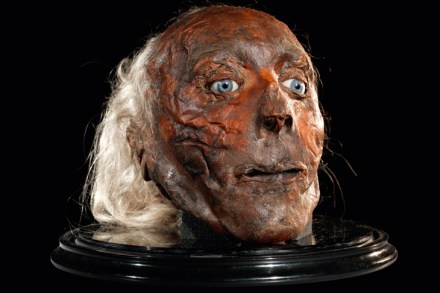
Under the central dome of UCL — an indoor crossroads where hordes of students come and go on their way to lectures and lunch — there’s an intriguing exhibition on at the moment about death. ‘Human remains are displayed in this exhibition’, it says in white lettering on the floor atall four entrances, to warn any passing snowflakes. The real head of Jeremy Bentham, who died in 1832, glass eyes staring out at you from behind a vitrine, is indeed a bit queasy-making. This is the central object of the exhibition. Bentham still has his long dark-grey hair at the back and sides of his bald pate, and his whole head is leather-brown from the tanning treatment after his death. He looks as if he’s grinning or grimacing.

Darkness visible | 16 November 2017

From our UK edition

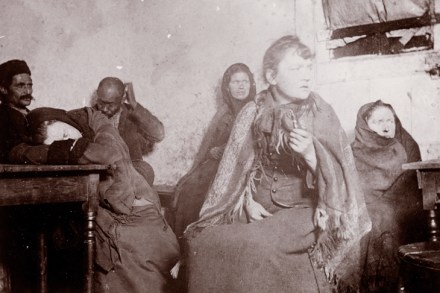
All photography requires light, but the light used in flash photography is unique — shocking, intrusive and abrupt. It’s quite unlike the light that comes from the sun, or even from ambient illumination. It explodes, suddenly, into darkness. The history of flash goes right back to the challenges faced by early photographers who wanted to use their cameras in places where there was insufficient light — indoors, at night, in caves. The first flash photograph was probably a daguerreotype of a fossil, taken in 1839 by burning limelight.

Perception vs objective reality

From our UK edition

I hate to tell you this, but every time you watch television you are being duped. In fact there are only three accurate things you will ever see on television. These are the colours red, green and blue. Each pixel on a screen can transmit three colours only. If blue alone is illuminated, the screen is blue. And it really is blue. But TV yellow is a big fat lie. It looks yellow. But it isn’t really yellow. It’s a mixture of red and green light which hacks our optical perception so we think we are seeing yellow. That’s because humans, indeed all higher apes, are mostly trichromats. We have three different types of cones in the retina, each sensitive to a different part of the colour spectrum.

Frills and furbelows

From our UK edition

Over the winter of 1859–60, a handsome young man could be seen patrolling the shores of the Gulf of Messina in a rowing boat, skimming the water’s surface with a net. The net’s fine mesh was not designed for fishing, and the young man was not a Sicilian fisherman. He was the 25-year-old German biologist Ernst Haeckel from Potsdam searching for minute plankton known as Radiolaria. In February he wrote excitedly to his fiancée, Anna Sethe, that he had caught 12 new species in a single day — ‘among them the most charming little creatures’ — and hoped to make it a full century before leaving. Haeckel had a degree in medicine but no interest in treating patients, whose visits he curtailed by holding surgeries from 5 to 6 a.m.

Oh brave new gender-fluid world…

From our UK edition

Later this year, the Advertising Standards Authority will reveal to the world their list of rules designed to wipe out ‘gender stereotyping’ in TV ads. I’m already looking forward to it because the ASA’s first thoughts on the matter, published in July, were fascinating. An ad for baby milk which showed a girl growing up to be a ballerina was deemed quite unacceptable; KFC got flack for featuring one man teasing another for not being manly enough. Stereotypes on TV contribute to ‘unequal outcomes’ in reality, explained ASA’s chief exec. Of course no one wants boys and girls to feel forced to conform — some boys are feminine, some girls boyish — but that wasn’t the issue here.

Frater, ave atque vale

From our UK edition

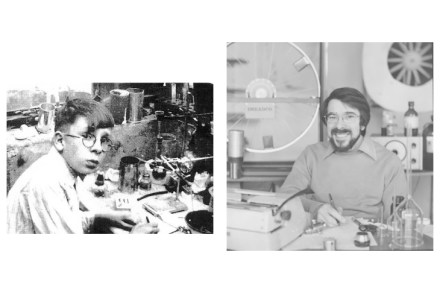
As his obituaries pointed out, my brother David made a name for himself with his unrideable bicycle; his ‘perpetual motion’ machine — a bicycle wheel still rotating in a frame on our mantelpiece (it attracted 1.1 million hits on a German website); and his theory that the arsenic found in Napoleon’s hair and fingernails was down to his wallpaper. The papers naturally got all this wrong (‘Napoleon killed by wallpaper’ they intoned, as did Andrew Roberts), and the image of the potty prof emerged. In fact, his purpose was serious. He was equally serious about our children — after a failed marriage, he had none of his own, to his great regret — and at lunch every Sunday the idiosyncratic scientist and dedicated uncle came together.

Starting block

From our UK edition

Conor McPherson’s new play is set in dust-bowl Minnesota in 1934. We’re in a fly-blown boarding house owned by skint, kindly Nick who has designs on a sexy widow with a big inheritance coming. Good opening. Roll the story. But there’s more. Nick’s useless son is a depressed novelist entangled with a beautiful governess betrothed to a rich man she doesn’t love. An even better opening. Roll the story. But wait. Nick has a black maid called Marianne whom he rescued as a baby and raised as one of the family. An interesting complication. Roll the story. No wait. Marianne claims to be pregnant but declines to reveal whether the father is a rapist or an honourable suitor. And local gossips whisper that her baby bump is fictional. Fascinating.

Playing Stalin for laughs

From our UK edition

Christopher Wilson’s new novel is much easier to enjoy than to categorise. And ‘enjoy’ is definitely the right word, even though The Zoo tackles subject matter that should, by rights, make for a punishingly bleak read. The narrator is 12-year-old Yuri, whose misfortunes start with the fact that he’s growing up in Moscow in 1953 — and that a road accident when he was six damaged his brain, leaving him with a curious set of symptoms that couldn’t be worse suited to life under Stalin: a total lack of guile, a tendency to ask awkward questions and a face so angelically trustworthy that everybody tells him their deepest secrets.

Size matters | 29 June 2017

From our UK edition

Trust scientists to ruin all our fun. The spectacularly beautiful 2014 film reboot of Godzilla, it turns out, is anatomically misleading. At 350ft tall, such a beast would simply collapse under its own weight, because an animal’s mass cubes with a doubling of its size, while the strength of its supporting limbs only squares. The basic principle was known to Galileo, and it turns out that the simple observation that things do not scale linearly can tell us much else besides, as this quite dazzling book amply demonstrates.

Sado-erotic review

From our UK edition

The Olivier describes Salomé by Yaël Farber as a ‘new’ play. Not quite. It premièred in Washington a couple of years ago. And I bet Farber was thrilled at the chance to direct this revival at the National’s biggest and best equipped stage. She approaches the Olivier’s effects department like a pyromaniac in a firework factory. She wants everything to go off at once. And it does. Goatherds yodel. Bells bong. Flutes warble. Birds parp. A revolving conveyor belt twirls spare actors around the stage in dizzy circles. Chord surges swell and fade on the soundtrack. Kneeling shepherdesses sift mounds of soap powder into mahogany salad bowls.