Science

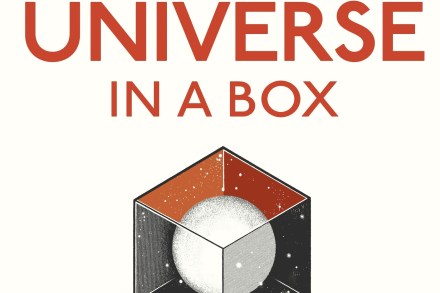
Andrew Pontzen: The Universe In A Box

From our UK edition

53 min listen

My guest in this week's Book Club podcast is the cosmologist Andrew Pontzen. His The Universe In A Box: A New Cosmic History describes how we have learned to simulate first the weather, and then the universe itself – and how we discovered that those simulations don't just mimic reality but allow us to learn new things about it. Dark matter, the Big Bang and the scientific importance of suboptimal pizza: it's all here.

The Age of Unreason

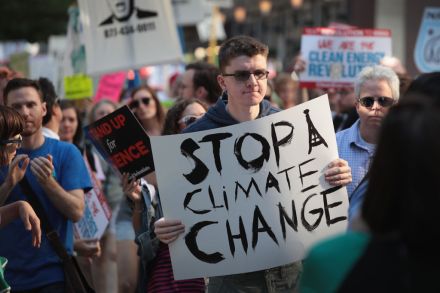
The present time, which has justly been called the Age of Unreason, is also an exceptionally confused and neurotic one. Indeed, it is unreasonable because it is confused and neurotic, a fact that its blind faith in liberalism and science make it unable to recognize. Confronted by what it views as the existential crisis of climate change caused by human activity, progressive liberalism promotes the widening illusion that Homo sapiens is actually and morally responsible for endangering “the planet”; that humans can accomplish anything, including reversing and even halting the process, supposing they have the moral will to do so.

unreason

The science of horse racing

From our UK edition

Everybody in racing is looking for an edge. With 7-4 the field, the punter is looking for a 2-1. The racecourse executive wonders which pop group will add 4,000 to the gate if booked for after-racing entertainment. The jockey on a confirmed front runner plans to slip the field out of the stalls. Trainers all seek an extra ingredient to help win them races consistently. At Sarsen Farm, a state-of-the-art new yard in Upper Lambourn built on the site of what was once a decrepit farmhouse then a Jockey Club tractor depot, Daniel and Claire Kubler are hoping that what a famous if ungrammatical advertisement for white goods used to call ‘the appliance of science’ is going to do the trick for them.

The Doomsday Clock has been corrupted by ideology

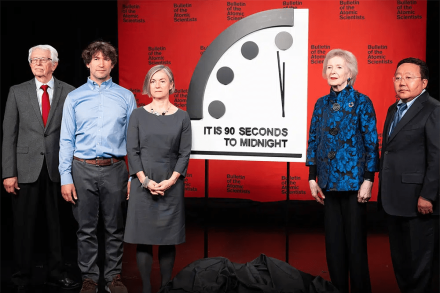
Ever since I can remember, I have always been aware of something called the “Doomsday Clock,” a symbolized calculation produced by a panel of prominent scientists of just how close humanity is to destroying itself. Published on the cover of every issue of the Bulletin of the Atomic Scientists, a journal founded in 1945 by Manhattan Project physicists, the clock’s hands would move toward or away from the dreaded midnight hour depending on how near Armageddon was believed to be. As a kid, the Doomsday Clock seemed an appropriate warning of how the conflict between the US and the Soviet Union might accidentally spin out of control.

How science became politicised

From our UK edition

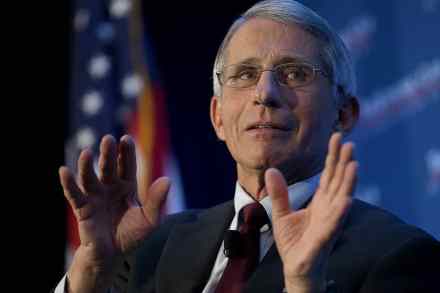
Here’s a paradox. Over the past two-and-a-half years, a cadre of senior politicians and their ‘expert’ advisers across the world have successfully promoted a series of controversial public policies by claiming they’re based on ‘the science’ rather than a particular moral or ideological vision. I’m thinking of lockdowns and net zero in particular. Yet at the same time, this group has engaged in behaviour that has undermined public confidence in science. Why appeal to the authority of science to win support for a series of politically contentious policies – and then diminish its authority? Take Anthony Fauci, for instance, who recently announced he’s stepping down as chief medical adviser to Joe Biden.

In search of the peripatetic philosopher Theophrastus

From our UK edition

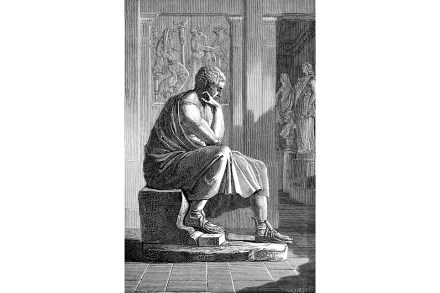
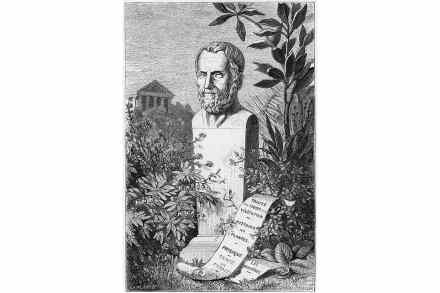
Publishers lately seem to have got the idea that otherwise uncommercial subjects might be rendered sexy if presented with a personal, often confessional, counterpoint. The ostensible subject of Laura Beatty’s book is the pioneering Greek botanist and philosopher Theophrastus. He was a friend of Aristotle’s, and was once thought his intellectual equal, but is now little known except to a few classicists and historians of science. But since no one wants to publish a straight book on Theophrastus, we get instead a book that is at least as much about Laura Beatty, her library researches, her travels in Greece and her kitchen garden. Her publishers describe the book as ‘genre-defying’.

A tribute to my friend James Lovelock

From our UK edition

The scientist James Lovelock died this week at the age of 103. He was best known for his Gaia theory, which found that Earth is a self-regulating system formed by the interaction between living organisms and their surroundings. Here, Bryan Appleyard, who co-wrote 'Novacene: The Coming Age of Hyperintelligence' with Lovelock, pays tribute to his friend: James Lovelock died this Tuesday on his 103rd birthday. I had known him since 1988 when I met him at his then home in Devon. He later moved to Dorset where he lived with his wife, Sandy, in a coastguard’s cottage overlooking Chesil Beach. He loved the landscapes of the west of England. In fact, he was a member of that diminishing tribe known as patriots. He was born in 1919 in the immediate aftermath of the first world war.

Is losing God making America miserable?

The number of Americans who believe in God has reached an all-time low, according to a Gallup survey that’s been tracking our nation’s “values and beliefs” since 1944. For a God fearin’ woman such as myself, it’s a disheartening statistic. But we are told never to abandon hope, and recent events — the Supreme Court rulings against abortion and in favor of prayer, a million swing voters switching their registrations to Republican, Keeping Up with the Kardashians finally airing its last season — betoken a more God-centered future. Gallup reports: The vast majority of US adults believe in God, but the 81 percent who do so is down six percentage points from 2017 and is the lowest in Gallup’s trend.

god

NPR memo: rat out your unmasked colleagues so we can fire them

Cockburn missed the office during the pandemic. After months cooped up, he was eager to return to the hustle and bustle, the gossip, the happy hours, the flirting with married secretaries, the subsequent HR meetings and informal warnings. Thank goodness, therefore, that Cockburn doesn’t work at NPR, the nationwide radio network headquartered right here in DC — as over there they seem much less keen for a return to normalcy. Cast an eye over this memo sent out to NPR employees regarding their in-office mask mandate: https://twitter.com/DylanByers/status/1527359877554704392 Station staff are reminded that: masking is still required, unless recording alone in a studio, working alone in an office with the door closed, or actively eating or drinking.

npr

The dangerous rise of academic diversity quotas

Who should be the custodians of science? For centuries, scientists themselves have been. Now, their custodianship is under threat. Science has long operated as a sort of guild, with the guild managing its own practice and traditions. This holds for the guild’s continuity: admission of aspiring members to the guild is controlled by the guild itself. For the sciences, aspiring members must clear a competitive series of hurdles: apprenticeship (graduate school), journeyman (post-doctoral fellow and assistant professor), then full membership (tenured professor). For the past few decades, science’s stewardship has been shifting into the hands of an arriviste managerial class with no idea what science is or any real respect for it.

The musical note that can trigger cold sweats and sightings of the dead

From our UK edition

Imagine that all the frequencies nature affords were laid out on an extended piano keyboard. Never mind that some waves are mechanical, propagated through air or some other fluid, and other waves are electro-magnetic and can pass through a vacuum. Lay them down together, and what do you get? The startling answer is a surprisingly narrow piano. To play X-rays (whose waves cycle up to 30,000,000,000,000,000,000 times per second), our pianist would have to travel a mere nine metres to the right of middle C. Wandering nine and a half metres in the other direction, our pianist would then be able to sound the super-bass note generated by shockwaves rippling through the hot gas around a supermassive black hole in the Perseus cluster – a wave that cycles just once every 18.

It’s a miracle this exhibition even exists: Audubon’s Birds of America reviewed

From our UK edition

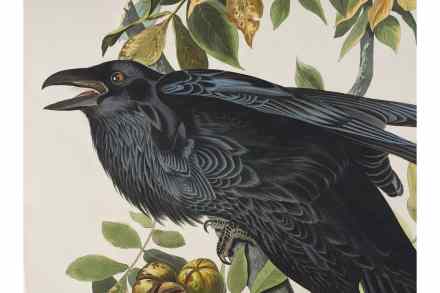
In 2014, an exhibition of watercolours by the renowned avian artist, John James Audubon, opened in New York. The reviews, from the New York Times to the Guardian, were unambiguously enthusiastic, celebrating the painter as a legendary genius who ‘exceeded the limits of his era’. Fast forward eight years, and a rather different vibe hangs over the latest outing of his bird portraits, one that reflects both the limits of that era and the limits of the man. Visitors to the National Museum of Scotland’s Audubon’s Birds of America are welcomed with an acknowledgment that the artist was ‘full of contradiction and controversy’. His charge sheet is substantial.

Biden’s science advisor falls to the woke

Last month, President Biden tapped Dr. Eric Lander to be his science advisor and lead a new "war on cancer" initiative. Just five days later, he was unceremoniously dumped. Nominees come and go all the time, of course, yet there was no doubt over Lander's scientific and managerial qualifications. He is a professor of biology at MIT and Harvard University. He was instrumental in steering the Human Genome Project to a point of actual utility, providing detailed genetic maps of heritable diseases, and proceeding from those clues to novel treatments. He is a skilled political operative, hobnobbing with the wealthy and powerful on his way to becoming the president and founding director of the Broad Institute of MIT and Harvard.

eric lander science

Get rid of masks on planes

Officials at the Transportation Security Administration are telling media outlets that their agency is poised to extend mask wearing on airplanes for another month while they await guidance from the Centers for Disease Control and Prevention. Like everything else, through the length of the pandemic, this move lacks logic. The idea that a piece of cloth will protect you while you sit sandwiched between 200 other passengers inches away from you is an idea only our incompetent and compromised CDC could invent. Then, a short while into your flight, all of the passengers remove their magic cloth covering and eat and drink, spitting their particles into the air to travel about the cabin.

masks

Too many scientists spoil the job market

In January, the American Association for the Advancement of Science released its 2021 annual report on diversity equity and inclusion, Nurturing Diversity, Equity and Inclusion in the Scientific Enterprise. The message? Those who are non-white, non-male, non-straight, etc., are apparently being barred from exploring science’s “endless frontier.” Such a thing could only come about if the sciences were governed by a kind of Jim Crow. For the good of science, this needs urgent correction. The AAAS will point the way. The claim seems odd.

Know your left from your right: the brain’s divided hemispheres

From our UK edition

The dust jacket of The Matter With Things quotes a large statement from an Oxford professor: ‘This is one of the most important books ever published. And, yes, I do mean ever.’ Can any contemporary work withstand such praise? The ‘intelligent general reader’ (the book’s target audience) should, however, not be discouraged, for Iain McGilchrist has to be taken seriously: a Fellow of All Souls, eminent in neurology, psychiatry and literary criticism, a thinker and — it’s impossible to avoid the term —a sage. His previous book, The Master and His Emissary, was admired by public figures from Rowan Williams to Philip Pullman. Some consider McGilchrist the most important non-fiction writer of our time.

Why we should study literature, not science

From our UK edition

Gstaad Who was it who said good manners had gone the way of black and white TV? Actually it was yours truly after watching the slobs parading up and down Gstaad’s main street. That was last year, but the bad news is that this year slobovia has come to stay again. Mind you, Alexandra and I had planned to have 50 friends for a party to celebrate 50 years of my enslavement, but Mister Omicron arrived and put a damper on our plans. The tent on the lawn and the oompah band were cancelled, and the New Year’s Eve blast turned into a smallish affair. The good news is that there are still a few people who don’t adhere to the online culture of today, that of anger, incivility and non-stop use of the F-word.

The merry old land of Dr. Oz

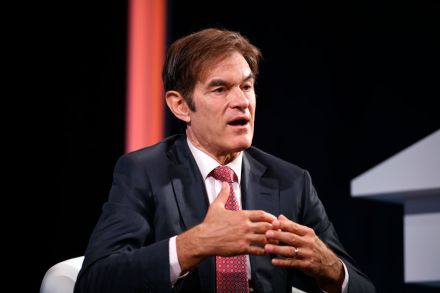
The long preen through the institutions continues. The latest celebrity to decide his presence is desperately needed on the political stage is Mehmet Oz, the famous TV doctor, who is running for Senate as a Republican in Pennsylvania. Dr. Oz's candidacy is expected to be less a tonic for what ails us than a ginseng extract supplement paired with an omega-3 multivitamin. Oz's detractors have accused him of using his popular daytime TV show to peddle junk cures, a charge that's certain to be front and center if he makes it out of the GOP primary. Oz has promoted "miracle" weight loss solutions, including claiming that green coffee extract can burn off the pounds. He's touted a tropical fruit called the garcinia cambogia as a great way to slim down.

How we can keep innovating

If the history of humanity is the history of big ideas — from the wheel to space flight, cave painting to the multiplayer game, monotheistic religion to special relativity — then the same is true of our future. By the 1960s the developed world had witnessed 200 years of extraordinary activity on every front. This was the era of the moonshot; of political obsession with technological mastery; of experimentation in music, culture, knowledge and relationships. Humanity had undergone a big-ideas revolution and the expectation was that progress would keep accelerating. In 1967, Herman Kahn, the futurist and theorist of nuclear war, and fellow futurist Anthony J. Wiener published The Year 2000: A Framework for Speculation Over the Next Thirty-Three Years.

stagnation

The forgotten Einstein: how John von Neumann shaped the modern world

From our UK edition

More than anyone else, John von Neumann created the future. He was an unparalleled genius, one of the greatest mathematicians of the 20th century, and he helped invent the world as we now know it. He came up with a blueprint of the modern computer and sparked the beginnings of artificial intelligence. He worked on the atom bomb and led the team that produced the first computerised weather forecast. In the mid-1950s, he proposed the idea that the Earth was warming as a consequence of humans burning coal and oil, and warned that ‘extensive human intervention’ could wreak havoc with the world’s climate.