Science fiction

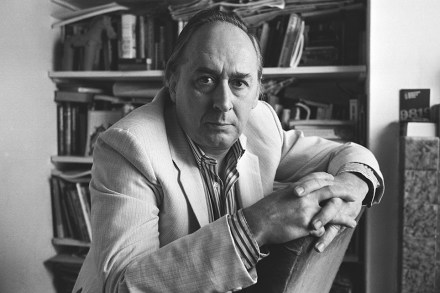
J.G. Ballard’s surreal fiction continues to resonate through the century

In 1951, when J.G. Ballard was 20, Pandora and the Flying Dutchman premiered in London. Directed by Albert Lewin and starring James Mason, Ava Gardner and a solid cast of English actors, it was filmed on the Catalan coast by Jack Cardiff in lush MGM colour. Man Ray contributed designs based on the work of de Chirico. Set in an Anglo-Spanish colony, it featured a Surrealist painter, a racing car driver and a toreador. All love the mysterious Pandora, who is unable to love anyone until the Dutchman drops anchor. To prove his passion for Pandora one suitor takes poison while another pushes his beloved car over a cliff.

An entertaining demolition of futurology

From our UK edition

Half of the British political world thinks we are insufficiently scared about the present; the other half thinks we are insufficiently excited about the future. The latter is a non-partisan movement, or at least a cross-partisan one. From fully-automated luxury communism, through centrist Abundance, to the more right-coded Looking for Growth, all the way to Anglo-futurism (somehow paradoxically simultaneously futurist and reactionary), policy thinkers are rejecting incrementalism and learned helplessness and articulating provocative future visions that could – with a tweaked planning system and Natural England ritually immolated – lie just a couple of parliaments away. All these movements could usefully learn from Could Should Might Don’t. It is less clear that anyone else will.

The young Anton Chekhov searches for his voice

From our UK edition

This book collects 58 pieces of fiction that Anton Chekhov published between the ages of 20 and 22. Many appear in English for the first time. In her introduction, Rosamund Bartlett refers to the material with disarming candour as a ‘wholly unremarkable debut’. Is there ever any point in publishing juvenilia? In his first years as a medical student Anton Pavlovich dashed off these pieces for a few kopecks a line (his father, born a serf, was a bankrupt shopkeeper). Ranging in length from three paragraphs to 76 pages, they appeared under pseudonyms in lowbrow comic magazines that included another Spectator (founded in Moscow in 1881).

Andor is Star Wars for grown-ups

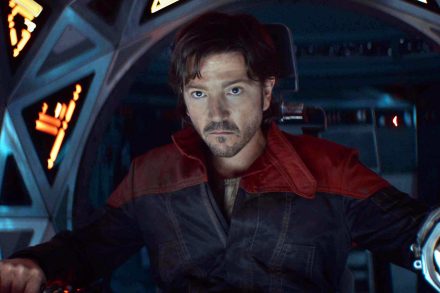
The critical reception to the second series of Andor has been nothing short of ecstatic. At the time of writing, it has a hugely impressive, near-unprecedented 99 percent “Fresh” rating on Rotten Tomatoes, far in excess of any other Star Wars movie or television spin-off. Its creator and showrunner Tony Gilroy, who has been open in the past about his relative disdain for fantasy in general and Star Wars in particular, has been doing the interview circuit and making it clear that he has no interest in fan service. He told the Daily Telegraph, “Some people have a problem: ‘It’s not for kids. There aren’t enough creatures in it.’ Well, I don’t make that show. Sorry.

andor

Asteroid 2024 YR4 and the geekoisie

"Giant Asteroid" has been a popular also-ran in the last three presidential elections, at least judging from bumper stickers, and those wiseacres who preferred planetary annihilation to Hillary, Biden, Kamala and Trump may finally get their wish in 2032, when the newly discovered asteroid 2024 YR4 has — according to current calculations, liable to change — about a 3 percent chance of hitting Earth. The geekoisie has been all a-twitter over this forecast, as visions of tsunamis and extinction-level events and the hot astrophysicists who adorn disaster movies dance in their heads.

asteroid

Michael Moorcock: celebrating 60 years of New Worlds

From our UK edition

43 min listen

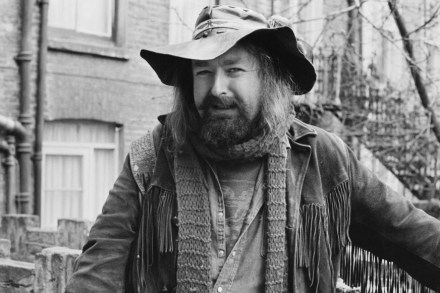
My guest in this week's Book Club podcast is the writer, musician and editor Michael Moorcock, whose editorship of New Worlds magazine is widely credited with ushering in a 'new wave' of science fiction and developing the careers of writers like J G Ballard, Iain Sinclair, Pamela Zoline, Thomas M Disch and M John Harrison. With the release of a special edition of New Worlds, honouring the 60th anniversary of his editorship, Mike tells me about how he set out to marry the best of literary fiction with the best of the pulp tradition, how he fought off obscenity charges over Norman Spinrad's Bug Jack Barron, about his friendship with Ballard and his enmity with Kingsley Amis – and why he's determined never to lose his vulgarity.

The mystery of Area X: Absolution, by Jeff VanderMeer, reviewed

From our UK edition

I have to confess that I am not a fan of horror fiction. I have a stack of unread H.P. Lovecrafts sent to me by enthusiasts. M.R. James scares me silly. Even Elizabeth Bowen’s ghost stories remain neglected among her other much-loved books. I have, however, been impressed over the years by writers usually identified as belonging to the movement described in the late 1990s by M. John Harrison as the New Weird, which marries chiefly supernatural themes to realism or naturalism. As a stylist, Harrison remains the greatest of these writers. They included Angela Carter, China Miéville and Jeffrey Ford. The movement is naturally associated with the science fiction New Wave, whose best known practitioner was J.G.

A major operatic rediscovery: Birmingham Opera Company’s New Year reviewed

From our UK edition

This prophecy Merlin shall make, for I live before his time. One of the most thrilling aspects of the Tippett revival has been the discovery that his late masterpieces seem to have been fitted with a four-decade time-fuse. Works that prompted bafflement in the 1970s and 1980s, and then sat there for years looking like duds, are suddenly acquiring their targets. A quarter of a century after Tippett’s death, they’re blinking into life, locking on, and detonating in huge, psychedelic sunbursts of precision-targeted beauty and truth.

A cabinet of curiosities: You, Bleeding Childhood, by Michele Mari

From our UK edition

Michele Mari is one of Italy’s most eminent writers. A prize-winning novelist, poet, translator and academic, he is hardly known to anglophone readers, but that is about to change. You, Bleeding Childhood, a collection of 13 stories written over a period of 30 years, offers a portal into Mari’s surreal, unsettling world: a place of childhood memories, obsessions and a passion for literature and science fiction.         Mari inhabits Borges’s labyrinthine territory. His prose style shares the gleaming formality of Nabokov, but he’s his own man, nonchalantly mixing high and low culture: the literary canon and classic comic books, Dante and pulp.

Christopher Priest was a grievously underrated novelist

There really ought to be a word to describe the dispiriting realization that a great writer has slipped through our fingers without the culture at large ever quite appreciating what’s been lost. The novelist Christopher Priest, who died earlier this year of cancer at the age of eighty, was one such figure. It would be glib to describe him as the nearly-man of English fiction, for this wasn’t quite the case — instead his career represented a sequence of missed opportunities for the world beyond his chosen genre to recognize his skill and quiet profundity. In some ways, the early part of his publication history closely resembles that of J.G. Ballard without the mid-career renaissance Ballard enjoyed.

Priest

How progressive will the new Doctor Who be?

The fourteenth series of Doctor Who returns to international screens imminently — and this time there’s a twist. Thanks to the heavy financial investment of Disney+, who have become co-financiers with the BBC, the show now has a considerably higher budget than it has done before, of around $130 million per season. Little wonder that the BBC’s director-general Tim Davie commented, only slightly tongue in cheek, that “we’ve got to thank – a lot – our partners, Disney+, who came on board so that the Doctor can travel even more widely across the planet in a slightly flashier Tardis.

doctor who

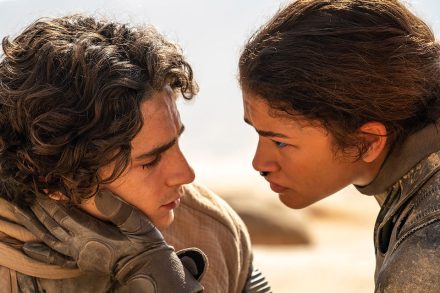
Dune, an enduring monument to cultural appropriation

One of the Ukraine war’s minor celebrities is Ramzan Kadyrov, a Russian politician and Islamic hardliner who rules his native province of Chechnya as a personal fiefdom. Kadyrov and his combative underlings have been active on social media from the beginning of the conflict, posing with guns and trophies and boasting about their martial prowess.  Before they became villains in the Western press, tarred by their association with Russian aggression and Islamic fundamentalism, the Chechnyan mountain clans’ struggle for independence was a Victorian cause celebre, akin to Western support for Ukraine today.

dune

The frustrating promise of infinite freedom in video games

Starfield is intermittently, unexpectedly profound. As my custom spaceship lands on one of the game’s thousand planets, and my customized character steps into the neon lights of a strange alien city, I’m struck by the sheer scale of this digital universe. This is the game I dreamed of as a sci-fi nerd child and teen, burying myself in The Icarus Hunt, The Long Earth, Foundation, Hyperion, Dune and boundless other sci-fi novels that transported me from a rural Australian library and into space. And here I am, transported there again, through an Asus M16 gaming laptop. There’s a big galaxy out there, and it’s yours to explore. And yet, however vast, it’s a desolate universe.

starfield

The balance of power between humans and machines

From our UK edition

The twin poles of the modern imaginarium about technology and society can be represented by two masterpieces of popular culture. In James Cameron’s film The Terminator (1984) and its sequels, a global computer system called Skynet becomes sentient and proceeds to try to exterminate the human race by means of time-travelling Austrian bodybuilders. In Iain M. Banks’s ‘Culture’ novels, by contrast (beginning with Consider Phlebas, 1987), a space-faring humanlike species has created superintelligent machines, known as Minds, which automate all the labour of production, leaving people free to pursue artistic activities and extreme sports.

Among the giants: Titanium Noir, by Nick Harkaway, reviewed

From our UK edition

Roddy Tebbit is a quiet, tidy professor researching lake algae. His calendar is largely empty and his apartment has no family photographs. A colleague remembers him as ‘shy to the point of being rude’. Why somebody would put a bullet in his skull is unclear, yet this is how the cynical gumshoe Cal Sounder discovers him at the beginning of Nick Harkaway’s slick novel Titanium Noir. We soon find out that the dead man’s unremarkableness was deceptive. On the mortuary slab he easily clears seven feet end to end, and though he has the face of a man in his mid-forties, his driving licence puts him in at the start of his tenth decade.

Crimes of the Future is David Cronenberg at his best

Canada’s all-time greatest writer-director has come a long way since his film Videodrome proclaimed “Long live the New Flesh” nearly forty years ago. Because his films are often horrifying, many mistake David Cronenberg for a purveyor of horror films, and to be sure he singlehandedly invented the now-fashionable “body horror” genre. But only a few of his films are horror movies per se, and they are way in the past. The subsequent fifteen aren’t so much scary as disturbing: think the experimental gynecological implements in Dead Ringers. And a couple are unapologetically transgressive: think the death-by-car-accident fetishists in his 1996 adaptation of J.G. Ballard’s Crash.

cronenberg

Travels in time and space: Sea of Tranquility, by Emily St. John Mandel, reviewed

From our UK edition

It’s a bold writer who confronts a major historical moment such as a pandemic before it’s over, but Emily St. John Mandel has a claim to fictionalised outbreaks. Her 2014 novel Station Eleven presciently envisioned a devastating flu. That book was televised by HBO and became a major hit, and this latest touches on the same ground. As J.G. Ballard proved, revisiting a subject – as a painter might – can be a fertile approach in speculative fiction. Sea of Tranquility initially adopts a time-leaping structure reminiscent of David Mitchell’s Cloud Atlas (which itself sprang from Italo Calvino’s masterpiece If On a Winter’s Night a Traveller). In 1912, we meet a young English aristocrat exiled to Canada for his radical views.

How science fiction novels read the future

The pandemic is not quite over, but we are getting used to its inconveniences. What disaster will be next? An antibiotic-resistant strain of the bubonic plague? Climate collapse? Coronal mass ejection? Will the next catastrophe be natural — perhaps a massive volcanic eruption, the likes of which we have not seen for more than two centuries, since Tambora in 1815? Or will it be a manmade calamity — nuclear war or a cyberattack? And might we inadvertently descend into a new form of AI-enabled totalitarianism in our efforts to ward off such calamities? To all these potential disasters it is impossible to attach more than made-up probabilities. So what can we do about them? The best answer would be that we should strive to imagine them.

science fiction

What Sci Fi novels can teach us about uncertainty

From our UK edition

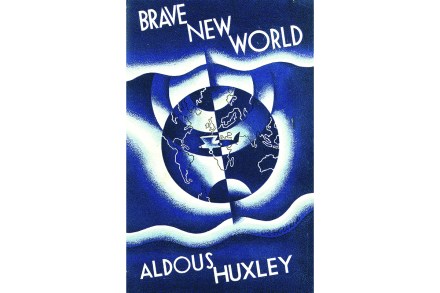
In times of great uncertainty - and Eurovision humiliation aside, 2021 surely qualifies - many are tempted to examine 'speculative fiction' from the past, to understand the present. 1984 has had a good year, and seems much less dated than anything actually from 1984, such as Wham!, The Karate Kid or Roland Rat. Huxley’s Brave New World is now the standard rebuttal to Orwell - with Forster's The Machine Stops, in at least a respectable third place. But what of the pulpier end of the market? Those privately educated literary figures were not the only ones peering into the future before The Last War and it can be illuminating to reflect on what visions were hammered out in the actual brave new world of America, on the production line of science fiction periodicals like Astounding!

Ridley’s game

An epic new sci-fi series executive-produced by the director of Blade Runner and Alien: who wouldn’t want to watch Ridley Scott’s Raised by Wolves? Myself for one. When I heard the name, I assumed Raised by Wolves was an update of the forgettable 2013 sitcom based on Caitlin Moran’s chaotic childhood in the industrial city of Wolverhampton, England. Caitlin’s very strong on stuff like vaginas and the importance of female empowerment, but I’d rather be stuck aboard an attack ship on fire off the shoulder of Orion than have to endure any of that. To be honest, I’m not sure that Scott’s drama is any more enticing than Moran’s sitcom.

raised by wolves