Simon Evans

Simon Evans

Simon Evans is a standup comedian who has performed everywhere from Live at the Apollo to the News Quiz. His series of comedy lectures on economics 'Simon Evans goes to market' is broadcast on Radio 4.

Beyond 1984: why I’m listening to George Orwell

From our UK edition

One of the great things about touring in the age of audio books, is that you can use your time driving between gigs, with nothing more to concentrate on than other half-tons of steel and rubber hurtling down 'Smart' motorways at suddenly varying speeds, to really binge on reading. I’d long been meaning to expand my knowledge of George Orwell. I’m pretty familiar with his better, or at least better known, essays and I have of course regularly scaled his Two Last Peaks, Animal Farm, and 1984. I've read Animal Farm so often that it has become a sort of catechism, and if it had a tune I could probably sing it right through.
The problem with holidays

From our UK edition

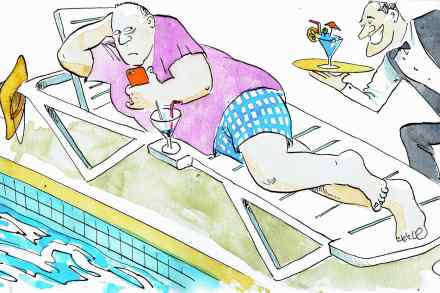
Of all the things sacrificed to public health in the last eighteen months, I think the one I regret the least is the default poolside Summer holiday. I first began to understand something about it, and the counter intuitive aspects of human happiness, on holiday in Cozumel, off the coast of Mexico, in 1999. I was staying at an all-inclusive hotel, not the sort of thing I would normally have done, being more of a self-identified 'traveller' at the time, happier with ad-hoc hostels and thumbing from town to town. I immediately resented the little coloured wristband that alerted the staff to the level of service and the range of free cocktails I was entitled to. But this was the cheapest and easiest way to spend a week scuba diving, which I was eager to try.

The problem with Brighton’s summer hordes

From our UK edition

I expect there are those among you who are pleased to see their home towns returning to something like normality this summer. Well, not me. Brighton and Hove was bliss during lockdown. Without the endless Southward drift of London chaff – pronounce that word anyway you feel works, hard F or soft – my adopted home regained something of the elegance that had led Noel Coward to include it and its seagulls in a list of things that have style. Now, it has become once again the Brighton that Keith Waterhouse said, had the perpetual air that of a town that is helping the police with their inquiries.

What Sci Fi novels can teach us about uncertainty

From our UK edition

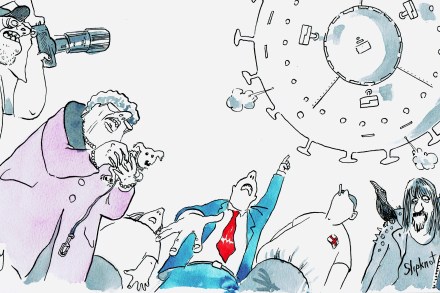
In times of great uncertainty - and Eurovision humiliation aside, 2021 surely qualifies - many are tempted to examine 'speculative fiction' from the past, to understand the present. 1984 has had a good year, and seems much less dated than anything actually from 1984, such as Wham!, The Karate Kid or Roland Rat. Huxley’s Brave New World is now the standard rebuttal to Orwell - with Forster's The Machine Stops, in at least a respectable third place. But what of the pulpier end of the market? Those privately educated literary figures were not the only ones peering into the future before The Last War and it can be illuminating to reflect on what visions were hammered out in the actual brave new world of America, on the production line of science fiction periodicals like Astounding!

How to dip into political philosophy

From our UK edition

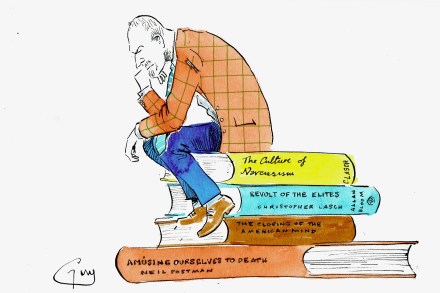
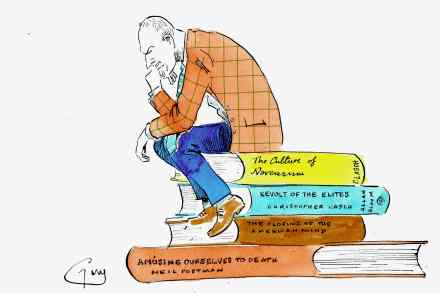
Beneath the polarised political spats that characterise our national conversation, there is a surprising degree of consensus between left and right on what is wrong with society. Selfishness, corruption, tribalism and a failure to build for the long term – these are universally decried. We can all see the same glitching appliances, but we seem determined not to follow the leads back to the same plugs. There appear occasionally thinkers that dig beneath the political fray and offer insight into how these political differences have come about. Three such writers that were published a generation ago, and have since been proved unequivocally right, are now available in my new preferred medium, the audio book. I thought it might prove instructive to revisit them.

The rise of racist fonts

From our UK edition

So many headlines over the last year have read more like deadpan satire than actual news that it’s hard to believe we don't live in an episode of Chris Morris’s still unequalled The Day Today. Take this example last week from the Guardian: 'Tom Hanks’s son criticized for using "racist" font on merchandise collection.' As I sat down to interrogate Times New Roman’s imperialist past to ensure my letter to the editor wouldn’t be similarly charged, I discovered CNN had run an entire feature on those belittling artefacts of Orientalism, the 'Chop Suey' fonts.

What does science say about souls?

From our UK edition

Until the mid 19th Century, most of us believed that we had a soul. It was what separated us from the animals. This belief could be modified to accommodate slavery, Malthusian economics and to allow dogs into Heaven, but the principle was pretty stable. A hundred years later, thanks largely to Darwin, and innovations such as quantum mechanics and Auschwitz, such a view seemed childlike, romantic, or in the case of the Clergy, downright dogged. The 'soul' became just another invention of the under-informed, over-excited primitive imagination, like faeries, Valhalla and insidious whispering serpents. We have Science now.

Why alpha males don’t wear ties

From our UK edition

Claire Robinson, in (where else?) The Guardian, this week, announced that 'the phallic necktie is an outdated symbol of white male rule in New Zealand's parliament': 'The necktie echoes the shape of the codpiece… designed … to emphasise a European nobleman’s importance through his large phallic size. It is arrow shaped and directs the eye of an onlooker down towards a man’s groin.' Blimey. Newly elected Māori Party co-leader, Rawiri Waititi, meanwhile, refused to wear one in Parliament, referring to it as a 'colonial noose'.  Waititi carried the day. Ties are no longer obligatory law-maker apparel in the happy, Covid-free home of the Bungee Jump and Cloudy Bay. The kind of men who do like to assert alpha status no longer use ties.

Homer is a hard read – made easy with earbuds

From our UK edition

Mention Homer now and most people will picture yellow, rather than bronze. But Homer Simpson’s comic status as a modern anti hero only makes sense with a knowledge, however vague, of the heroes in The Iliad and The Odyssey.  They underpin the last three thousand years of western culture. Achilles, Hector, Odysseus and Helen… these are the chess pieces that poets, painters and sculptors have been playing with ever since. Odysseus, the Trickster, is there at the dawn of classical literature – and then again, Romanised as Ulysses, at the dawn of Modernism. What a gift. Trust the Greeks. Still, there is a reason no-one reads them anymore – at least, not for fun.

James Corden and the problem with post-Trump comedy

From our UK edition

With admirable and determined positivity, James Corden and the Late, Late Show released a Les Mis-themed video last night, bidding a fond adieu to the Trump era. It was a coup — if you’ll forgive the word — de théatre. Corden and his team are well-versed in the well-oiled machinery of the viral video. And this one was no exception.  The Les Misérables number 'One Day More' was transposed from its original setting on the eve of the 1832 Paris Uprising to the eve of the departure of Trump, plucked as he was by helicopter like a thorn from the lion’s paw of American democracy after four short, limping years. It was neatly done.

In defence of audiobooks

From our UK edition

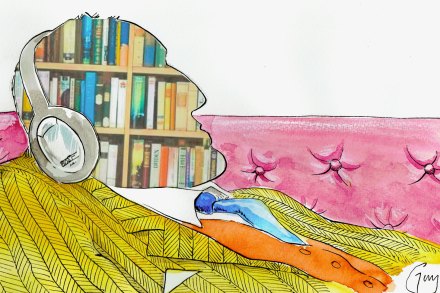
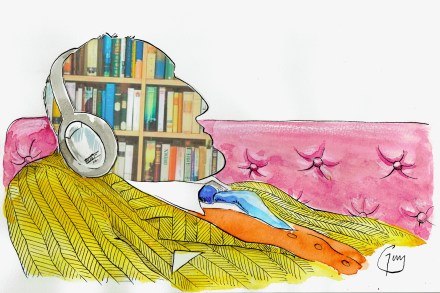
A certain stigma has attached itself to audiobooks. To the old school bibliophile, they are the literary equivalent of pre-chewed steak. The sceptics may have a point. After all, reading is tiring for the same reason that chewing is - work is being done. The brain is just a lump of clever fat, of course, rather than bunched muscle, but it still uses up some 20 per cent of the calories we consume and so it shouldn’t really be surprising that we get tired reading. Taking the sequenced squiggles on the page and converting them into the architecture of a story, a philosophy or a verse, is hard. Children find it hard, students find it very hard and the vast majority of adults find it gets harder and harder as time goes on. This is bad news for books.