Schools

School portraits: snapshots of four notable schools

From our UK edition

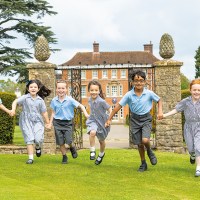
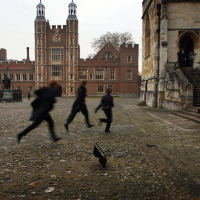
Queen Ethelburga’s, York Set in 220 acres of beautiful countryside between Harrogate and York, Queen Ethelburga’s College is an award-winning day and boarding school that welcomes girls and boys aged from three months to 19 years and boarders from Year 3. It is known for its high-ranking academic performance. College, one of its two senior schools, placed second nationally last year for A-levels and 18th for all-round academic performance. The other senior school, Faculty, which offers more ‘creative and vocational subjects’, climbed several places to third in the north for A-levels and seventh for overall performance. The college places emphasis on growing pupils into resilient, caring and confident adults.

Russia lives on in my mind

From our UK edition

My kids, at our local comprehensive, go on school trips to Leigh-on-Sea. I went to a much fancier school, so I went on school trips to Leningrad and Moscow. The first time must have been in 1990. We were all going through dramatic changes; and so was Russia – not that as cossetted, self-absorbed 16-year-olds we were able to take much serious notice. We joked, nervously, gauchely, ahead of our departure about the likelihood that an Aeroflot flight could be relied upon to get us there in one piece. We practised our rudimentary GCSE Russian: ‘Chto eto? Eto GUM!’ (What’s that? That’s [the department store] – GUM.’) ‘Gdye Dom Knigi?’ (Where’s the bookshop?) ‘Chepukha! Vzdor!’ (Rubbish! Nonsense!

Four bold but real predictions for public schools this year

Last year’s report card for public schools? A resounding “must do better.” Trans athletes ruined competitive sports, the 1619 Project rewrote American History class and non-gendered bathrooms received their first human litter boxes.  As the final school bells rang on the 2023-23 school year for many Americans, popular opinion of our public schools plummeted. One Gallup poll showed just a quarter of Americans now have either a “great deal” or “fair amount” of confidence in public schooling. That represents a stark downward trend from around 1975 when more than 60 percent were confident in what schools were offering our youngsters. While trust tanked and academics atrophied, spending on education has climbed in direct inverse.

schools

Portrait of the week: A concrete crisis, Labour reshuffle and Gabon coup 

From our UK edition

Home More than 100 schools were told to close buildings before the new term because they contained the wrong kind of concrete. The Health and Safety Executive said that reinforced autoclaved aerated concrete (Raac) ‘is liable to collapse with little or no notice’. In total, 156 schools are affected, of which 104 require urgent attention and 52 have already received repair works. But in Scotland, where 35 council-run schools had been found to contain Raac, none had to close.

Why public schools never have enough money

The new school year is just a few weeks away, and that can only mean one thing: right on cue, school districts are once again bemoaning a “lack of funding.” It’s the same story every year. Along with notices advertising the local high school drama department’s production of Grease come headlines announcing the school district is in dire straits and schools will literally fall to pieces if they aren’t pumped full of life-saving funding, stat. Year after year, it’s the same old song and dance: school funding increases, and the next year they need even more. Why is it never enough, though, and where does all the money go?

schools

From ABC to AK-47: Russia’s new wartime curriculum

From our UK edition

Russia’s education system is about to undergo a radical transformation. Next month, when the new academic year begins, classes will be required to teach teenagers how to assemble, handle and clean Kalashnikov rifles, how to use hand grenades and how to administer first aid in combat. This military training for sixth-formers – 16 and over – will be taught as part of their ‘fundamentals of life safety’ classes. Such classes have existed in various forms since the 1980s. In the past children have been taught quite practical skills, including how to stay safe in terrorist attacks, deal with radiation poisoning following the Chernobyl nuclear disaster and, more recently, the basics of online safety.

The politics of exam results

From our UK edition

August always means an anxious wait for results days, but this year pupils will be feeling particularly apprehensive. England’s exams regulator, Ofqual, has said that national results will be lower than last year’s and are expected to be similar to those before Covid. Some reports estimate that around 50,000 A-level students will therefore miss out on getting the A* and A grades they could have expected if they took their exams last year. They will also face intense competition for top university places given the record numbers of international students applying too. Readjusting after the grade inflation of the pandemic was always going to be painful. In 2019, 25.

On the ground with the Muslim Montgomery County parents protesting the school board’s LGBT curriculum

Rockville, Maryland Hundreds of protesters rallied to protest a school board in one of America’s most liberal counties that plans to mandate the teaching of books they brand "sexualized" to public-school children as young as three years old in public schools. The rally-goers, almost all of whom were first-generation Americans or immigrants themselves, demanded that Montgomery County Public Schools restore their ability to opt out of a curriculum they say violates their First Amendment rights.

montgomery county parents protest muslim

Why civics test scores are falling in American schools

Twenty years ago, one of the most popular bits on late-night television was “Jaywalking,” where Tonight Show host Jay Leno quizzed passersby on world events, geography, history and more. He would ask random people on the street about literature, who the vice president was, or who we fought in World War Two. The clips that made the cut inevitably involved embarrassingly ignorant answers. Today, America is a nation of Jaywalking Allstars; whereas it was once a punchline for someone to be that ignorant, ignorance is now the norm. In early May, news emerged about record low scores for history and civics for eighth grade students nationwide.

test scores

Britain’s schools are facing an epidemic of bad behaviour

From our UK edition

Something troubling is happening in Britain’s schools. This week, the government released its findings from the first national survey into pupil behaviour in classrooms. The results are a hard lesson to learn. But, as a teacher who has witnessed chairs being thrown and pupils urinating on teachers’ cars, it doesn’t come as a surprise. Over 40 per cent of students say that they feel unsafe each week because of poor behaviour, according to the survey. Students have the lowest perception of how well behaviour is going in school. This suggests that teachers and school leaders have normalised lower standards and expectations, to the point that roughly six weeks of lesson time is lost due to disruption a year. Poor behaviour also seems to have worsened in recent years.

Why are my son’s teachers constantly on strike?

From our UK edition

It is a bright Wednesday morning in May. My son, T, a Year 8 pupil, should be at school and I should be working, but instead we are playing tennis. We are also listening to ‘Romeo and Juliet’ by Dire Straits because he’s supposed to be studying the play in class so I figure I can cover both PE and English literature in the next half an hour before we head home and I start the work I’m meant to be doing. For them academies are a Tory ruse designed to hand over control of schools to nasty capitalists My son isn’t ill and isn’t playing truant. His school, along with five others in Lewisham, south London, is in the middle of 13 days of strike action called by the National Education Union (NEU).

How to bag the best spot in the supermarket car park

From our UK edition

Our local Sainsbury’s, though admirable in every other way, has a slightly inflated estimate of the disabled population of Seven-oaks, with all the plum parking spaces near the entrance reserved for blue badge holders. Every time I drive in, a voice from my inner bastard says: ‘Jeez, if it weren’t for all these bloody disabled spaces, I’d be able to park right next to the door.’ This of course is rubbish, because if those spaces were not designated as disabled, other people would have parked in them first. It is a perfect example of asymmetry of perception. In fact, next time you go shopping, it might pay to adopt the trademark Sutherland method of superstore parking, which is to park as close as possible to one of the trolley return points in the car park.

How to succeed in exams

From our UK edition

Exams start on Monday. Thousands of A-level and GCSE pupils will be swotting hard for them right now. Some will do well; others won’t. Knowledge and ability are the two obvious keys to success. But there’s another factor that’s often overlooked: exam technique. Having taught thousands of students of all abilities at several leading schools, I know this is a vital reason why some teenagers are more successful than others: they use the right exam techniques under pressure. So what are these techniques?  First and foremost, arrive early. Exams need a clear head and turning up at the last minute is certain to be stressful.

Will school choice destroy the Democratic Party?

Only occasionally in American history does an issue surface that challenges not only the values of an established political party but the party’s ability to function. If any such issue has emerged in our own time, it's clearly school choice. The evolution of such a diverse educational marketplace — private schooling, homeschooling and tutoring, among other options — will severely reduce the Democratic Party’s election workforce, squeeze its finances and even discredit its basic philosophy. Consider first the workforce. If nothing else, the widespread subsidy of K-12 grade schooling in venues not run by teachers' unions would deplete the enormous army of campaign workers that Democrats have come to depend upon during every election cycle.

school choice

Homeschooling is having a moment

A public school teacher for three decades, my mother kept me out of them for nearly a third of that time. Her refusal to allow me to partake of the public education system that paid her bills echoed a memorable quote of G.K. Chesterton’s: “Everyone goes to the elementary schools except the few people who tell them to go there.”  If the recent numbers are any indication, more people have followed her example. In 2019, about 2.8 percent of US students were homeschooled. By 2020, that number had jumped to 5.4 percent. And in 2021, it was up to 11.1 percent. Research from Stanford and the Associated Press places the overall increase in enrollment since the beginning of the pandemic at 30 percent.  Around the country, red-state politicians are taking notice.

homeschooling

Four ways to stop public school lunches from making kids fat

The Kraft Heinz company has developed a pair of Lunchables meals slated to be served in school cafeterias starting next fall. The initiative has reignited a worthy debate over the nutrition found — and mostly not found — in school lunches. Folks are making a big fuss over the debut of Lunchables, as if the plastic packages of cardboard coasters that pass for pizza are somehow playing sloppy seconds to the gourmet wonders our schools have been crafting up to this point. Unless things have significantly improved since I graduated, Lunchables might actually be an upgrade from what most cafeterias specialize in — mystery meat sandwiches and those limp, anemic crinkle fries that led to my lifelong loathing of ketchup.

lunch

Bring back the handwritten school report

From our UK edition

The end of term is here and parents up and down the country will be awaiting the arrival of their child's end-of-term report. But I hope they won’t be expecting too many pearls of wisdom from the impersonal emails that will ping into their inboxes shortly.   Ten or a dozen years ago (the exact date varied, school by school), in an act of educational vandalism, handwritten school reports were abolished. Edicts were issued by school ‘senior management teams’ and grudgingly, reluctantly, teachers put their fountain pens and little bottles of Quink back into their desks, never to be taken out again.   The personal touch in the reporting process disappeared with them.

What teachers really want for Christmas

From our UK edition

As the end of term approaches parents may be wondering what to buy their child’s teacher for Christmas. It’s the season of goodwill, after all. It’s also a golden opportunity to win a way to Sir or Miss’s heart, so they’ll continue to take good care of little Olivia or Oliver in the new year. The days of apples left on desks are long gone, so what to give teacher might cause some confusion. Money is tight this year, an added complication – although at some of the independent schools where I’ve taught gifts seem to become more extravagant each December. So what kind of presents do we teachers really want? The short answer, especially at the end of a long, tiring term is: ‘Something alcoholic, of course – preferably wine or designer gin.

Virginia elementary school to host Satanic after-school program

An elementary school in Chesapeake, Virginia, will allow an "After School Satan Club" hosted by the Satanic Temple, according to a flyer for the program. B.M. Williams Primary School will hold the monthly event starting December 15 in its library. The flyer states that children will work on science and community service projects, puzzles and games, nature activities, and crafts. It includes a cartoon of Satan dressed as a professor and claims that Lucifer is merely a literary figure who represents the human mind and spirit. Children who attend the program, the group says, will learn "critical thinking" skills.

When will Fauci admit the ‘open schools’ parents were right?

“Was it a mistake in so many states, in so many localities to see schools closed as long as they were?” an ABC reporter asked Dr. Anthony Fauci on October 16. His response: “I would say that what we should realize, and have realized, that there will be deleterious collateral consequences when you do something like that…” That was news to all of us parents who were called racists for raising the issue when it counted. For speaking of “deleterious consequences” during the height of the pandemic, we “open schools" parents were demonized and shut down. As the Chicago Teachers’ Union put it in a characteristic (but now deleted) tweet from December 2020, our push to reopen schools was “rooted in sexism, racism and misogyny.