Schools

The ancients knew the value of practical education

From our UK edition

The welfare state was designed to serve everyone’s needs. But those needs were defined by the state. So schools teach fronted adverbials (but what about hindmost ones, eh?) and trigonometry, and may (absurdly) have to teach maths to all up to 18. Do these really fulfil the needs of all our children, far too many of whom are not (apparently) leading happy, useful lives? In the ancient world education was for the sons of the elite, to prepare them to run the country. But some elite Romans did without it. When Marius, who early on made his mark in battle and was picked out as a likely leader of men, became consul in 107 bc, the historian Sallust put a speech into his mouth in which he contrasted himself, the outsider, with the educated elite.

Labour should work with schools, not tax them out of existence

From our UK edition

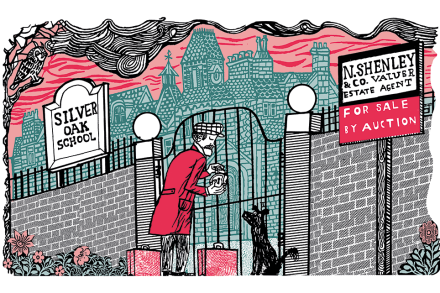
Keir Starmer insists his plan to place VAT on independent school fees is not ideological. It’s a ‘difficult decision’, he says, but necessary to raise revenue which will be used to hire 6,500 teachers for state schools. He wants the independent sector to ‘thrive’. Few would deny that state schools need better funding, but it is important to question whether the policy will be successful at raising money and also to examine what a thriving independent sector looks like, how it can contribute to education more broadly – and how the VAT plan threatens all that. Labour has claimed for some time that the policy would raise £1.7 billion. This initial figure was based on a 2011 Fabian Review article that simply calculated 20 per cent of the sector’s fee income.

The real threat to schools? Falling birth rates

From our UK edition

Labour’s proposal to impose VAT on private school fees will, we are often warned, lead to state schools becoming overloaded as parents withdraw their children from the independent sector and try to find alternative arrangements. That may turn out to be true in some areas in the short term, but in the longer term there is a different problem facing the state and independent sectors alike: a falling population of school-age children. It isn’t excessive class sizes which threaten to be an issue so much as shrinking classes, leading to school closures and amalgamations with other institutions. London classrooms appear to be emptying – in 2022, 15.5 per cent of primary school places were unfilled For nursery and primary schools in England, pupil numbers peaked in 2019.

Why state schools need old boys’ clubs too

From our UK edition

Ask a certain type of class warrior about the old boys’ network and they’ll tell you of ruddy-faced men in club ties, offering each other’s offspring summer internships. Or perhaps they’ll talk of thrusting bankers, who as children shared showers and a chilly dormitory, plotting to hire old school friends over more deserving candidates. Wink wink, nudge nudge, chortle chortle. What websites like ToucanTech and Gravyty have developed is essentially social media in a school tie There is probably still a little bit of truth in that. But in the past few years, it’s become much easier for any school to run an alumni network. Many independent schools, and an increasing number of state schools, have built dedicated websites where former students can find one another.

The rise of the state-private pupil

From our UK edition

When is a state school pupil not a state school pupil? When he has a private tutor. That’s when he becomes a state-private hybrid. So, when parents pore over the university admissions and the A-level grades of state secondary schools, they should ask themselves whether all those results are attributable to the school or whether there may have been outside help. Not that anyone’s going to tell you. In a fee-paying school you don’t normally need to go outside; that’s why you pay those whopping fees. Granted, exams are overrated but the world being what it is – obsessed with top universities – lots of parents will do whatever it takes to get their child into one. And so they hire a private tutor.

Tried and tested by the Common Entrance Exam

From our UK edition

This is about something that did not happen to me at school, an exam I dreaded, but never had to take. It was the only examination that ever really worried me, and it was called Common Entrance. Do not confuse it with modern imitations bearing the same name. In those days, preparing for it involved (for me, anyway) translating English into Latin and French (a proper knowledge of irregular verbs and a wide vocabulary in both those languages was required). It also demanded thorny and tricky types of mathematics, an astounding grasp of largely Imperial geography – and a full knowledge of English history since the Conquest. I actually understood the jokes in 1066 and All That, for which modern children would need a decoder.

Why is no one marching against VAT on school fees?

From our UK edition

How passively we respond to revelations of Labour’s real direction of travel. As millions of pensioners brace for the confiscation of winter fuel payments and other Budget tax raids, shouldn’t they be pinning on their medals, raising their banners and marching down Whitehall – alongside columns of private school parents, furious at the imposition of VAT on fees? Yet so far barely a whimper of protest, as though those affected are racked with guilt at having kept the Tories in power for so long. In response to the school-fee fait accompli, Eton with its mile-long waiting list will hit parents with a full 20 per cent VAT hike from January, taking the annual cost per pupil to £63,000.

What are the most ‘unsettling’ artworks to hang in 10 Downing Street?

From our UK edition

The art of politics Keir Starmer moved a portrait of Lady Thatcher from one room at 10 Downing Street to another because he found it ‘unsettling’. Some more possibly unsettling artworks that have hung at No. 10: — ‘More Passion’, by Tracey Emin, featuring the words ‘More Passion’ in neon, was installed by David Cameron in 2011. In 2022 Emin wrote on Instagram about her unhappiness that it was still there after the revelation of Boris Johnson’s lockdown parties. His ‘behaviour and lack of contrition’, she said, were ‘bizarre’. — Annabel’s – a series of lino cuts depicting Sloanes revelling at the Mayfair nightclub in the hedonistic mid-1980s – also hung in Downing Street during Johnson’s premiership.

The real crisis in our school system

From our UK edition

For years, each school in England has been put in one of four categories: ‘outstanding’, ‘good’, ‘requires improvement’ and ‘inadequate’. While undoubtedly crude, the system offered clarity to parents. Bridget Phillipson, the Education Secretary, has now abolished this categorisation structure but not yet said precisely what will replace it. Children are returning to school in the middle of uncertainty. Are politicians blind to the staggering inequality within a state system that educates 93 per cent of pupils? The National Education Union has long urged schools to ignore Ofsted ratings and to stop referring to them on their gates. Phillipson’s reform seems to nod towards this.

Is there a solution to chronic absenteeism in schools?

I hated going to school so much as a kid that to this day, the sight of Back to School! signs printed in cutesy kiddy font on glowing school-bus yellow that fill stores every August strikes me with dread. I want to punch them. My elementary school years were fine; I attended a teeny-tiny Catholic school where I think most of the dedicated teachers qualified for food stamps. I knew my classmates so well that they were essentially extended siblings (and a couple of them still are). I graduated first in my class (out of ten) and was star of the pathetic basketball team. High school was a Catholic school too, but insular and snooty. I was an outsider there, from “over the mountain.” I wasn’t bullied or anything, but no matter what, I always felt like I was imprisoned.

absenteeism

In defence of strict teachers

From our UK edition

Labour have become alarmed by the strict, ‘cruel’ approach to discipline in schools and the rise in the number of pupils being excluded. Teachers will need to be more relaxed about ‘bad behaviour’. But though moving the goalposts of acceptable behaviour may reduce the exclusion figures, it is bound to increase the burden of disruptive behaviour on teachers and other pupils. My own experience of teaching tells me that the new guidelines will increase bullying and reduce special needs inclusion, undermine the most disadvantaged families and ultimately increase educational inequality. So why are they doing it?

Letters: Why marriage matters

From our UK edition

Pretender to the crown Sir: Kate Andrews combines detail and analysis with a sprinkling of satire to devastating effect in her article on Kamala Harris (‘Trump’s new rival’, 27 July). The news anchor she describes in the first sentence (‘I’m struck just in your presence’) is more partisan than journalist, and would give Ofcom good reason to clutch its pearls if they popped up on GB News. Here is someone who identifies as, but isn’t actually, a news anchor. Rather like Harris, who identifies as a politician but hasn’t gone to the trouble of securing any actual votes. Perhaps this is why the Democrats have the overwhelming support of Hollywood, whose whole business is, after all, pretence.

The cult of Bedales

From our UK edition

Another of my ageing Bedales school cohort has died and so there’s an ad hoc reunion in his honour at the pub in Steep, the bucolic village near Petersfield, scene of our youth, where we used to sneak out to smoke and drink when the teachers weren’t looking. Which they often weren’t. Bedales implanted itself here in deepest Hampshire in 1900, a pioneering co-educational boarding school, quickly patronised by British and European progressivist-bourgeois-bohemian-leftist artists, writers and intellectuals. It has been chi-chi ever since. Since the place was co-educational, plenty of sex education went on behind the bike sheds From its rustic origins, the school has grown and grown and now dominates the no longer quite so sleepy village.

Why Elon Musk is right to leave California

From our UK edition

Not long before Joe Biden finally accepted defeat, Gavin Newsom, the 56-year-old governor of California, was on the stump for him in Bucks County, Pennsylvania, shirt undone two daring buttons, sleeves rolled up, silver hair gelled just so. Newsom, who is now being mentioned as Kamala Harris’s running mate, models himself on Bill Clinton. People who’ve worked with him say he practises Clintonian gestures in the mirror, though the look he’s achieved is more Harley Street gynaecologist. How can Gavin Newsom sleep knowing he’s encouraged children to think of their parents as the enemy? ‘If Donald Trump succeeds, God help us, we will roll back the last half-century,’ Newsom told the Pennsylvania crowd. ‘It’s America in reverse.

The intersectional feminist rewriting the national curriculum

From our UK edition

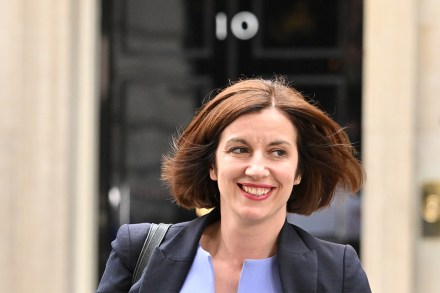
The appointment of Becky Francis CBE to lead the Department for Education’s shake-up of the national curriculum is typical of Labour’s plan to embed their ideology across our institutions – or rather entrench it, since the long march is almost complete. On the face of it, Professor Francis is ‘unburdened by doctrine’, to use Sir Keir Starmer’s phrase about how Labour intends to govern. As former director of the Institute of Education and current CEO of the Education Endowment Foundation, she has the outward appearance of a technocrat. But scratch the surface and, like so many Labour appointees, she emerges as a long-standing adherent of left-wing identity politics.

Have you had the school gate VAT chat?

From our UK edition

Another day closer to the general election and I’m at my daughter’s prep school in Oxfordshire. As has come to be the norm, I’m having a ‘VAT chat’ with a fellow mother. Of course, we’ve known about Labour’s plan for months. It will lead to a likely 20 per cent rise in private-school fees. Recently, however, these VAT chats have intensified and become louder. ‘To think that other parents would vote Labour given what’s coming enrages me,’ a friend says I begin with my usual opening gambit. ‘Isn’t it awful?’ I say, trying to convey my real sense of desperation that I will have to take my daughter out of the school that she loves, that our way of life is for the chopping block.

Labour’s plans to rewrite the National Curriculum

From our UK edition

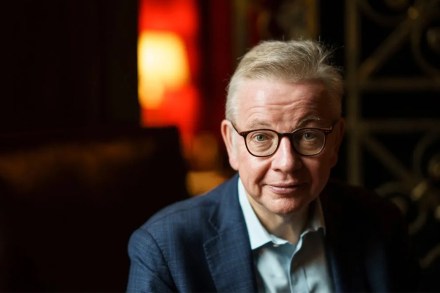
Michael Gove’s decision to stand down in this election was a reminder that the one really bright spot in the past 14 years was the education reforms he steered through between 2010 and 2014. These policies were vindicated in the most recent PISA (Programme for International Student Assessment) survey, which showed England climbing the OECD’s international league table and outperforming Scotland, Wales and Northern Ireland. In maths, England rose from 17th place in 2018 to 11th in 2022, whereas Scotland, significantly above England in 2010, fell below the OECD average. I was involved in the most successful of these reforms, the free schools programme.

The triumph of Katharine Birbalsingh

From our UK edition

There are two questions that need to be asked of any society: what is it that is going wrong; and what is it that’s going right that should be done more? It’s only natural to focus on the first question – not least because it is easier. But it is the second question that should be asked more. Whenever I think of the few things that are going well in Britain, I think of the Michaela Community School in Wembley, London. I have visited the school a couple of times. It sits in one of London’s most deprived communities. Set up under the era of Michael Gove’s free schools scheme, it is the creation of Katharine Birbalsingh. Pupils are almost all from non-advantaged backgrounds.

Stop worrying if your child is a picky eater

From our UK edition

One parent in our class WhatsApp chat raised a pressing concern: her daughter was coming home every day with a full water bottle. Were other parents faced with the same unsettling discovery? There followed a lengthy discussion of how much water was left in each child’s bottle. Some children, when confronted, testified that they had drunk water during the day and then filled up the bottle at school. Anyone who expects children to enjoy cooked courgette has forgotten what it was like to be a child This was not good enough for the concerned parent. She took the matter to the teacher. ‘I am concerned my daughter is not given enough opportunity to drink water during the school day,’ read her message. She shared it with the group – and the teacher’s response.