Saudi arabia

Andy Khawaja: ‘the whistleblower’

From our US edition

It’s after 2 a.m. in Club 38, a nightspot in an old railway shed in Beirut. The DJ is in the cab of a rusty train. Lights sweep across a dense crowd below. My host is Andy Khawaja, a Lebanese-American businessman. We’re sitting at the club’s VIP table and he’s scrolling through photographs on his phone. Here he is with Hillary Clinton at a fundraiser. Here, he’s shaking hands with President Trump in the Oval Office. The men he’s with in the club have shaved heads, bushy beards, tattoos. I wonder if they’re mafia, militia, or mukhabarat (secret police). When I get up and walk to the restroom, a burly minder with a Glock in his waistband follows a step behind. He turns on the tap and hands me a towel.

khawaja

Shaken Saudis hedge their bets on détente with Iran

From our US edition

After the assassination of General Qasem Soleimani a month ago, Iran offered Saudi Arabia and its Sunni Gulf allies a stark choice. Stick with your newfound ally Israel and risk having your cities bombed to smithereens in the event of military escalation with the United States, or work on a peace deal with Tehran and stay out of the fray. The Iranians had already proven their ability to launch devastating missile strikes against Saudi Arabia's oil facilities, and the ineffectiveness of the US defensive anti-missile systems supposedly protecting them. Now it is clear that the shaken Saudis have decided to hedge their bets on détente with Iran.

saudis

Donald Trump has just blown up his goal of isolating Iran

A blood red flag was raised over the Jamkaran mosque in the Iranian holy city of Qom last week, one normally reserved to commemorate the death of martyrs. This time, it was intended as a call to arms. ‘We have unfurled this flag so that all [Shia] believers in the world gather around it to avenge Qassem Soleimani’s blood unjustly shed,’ said the mosque’s leader. In Tehran, there were calls for bloody retribution for the air strike that killed Iranian general Soleimani — and everywhere, talk of all-out war. If it was also intended to strike the fear of Allah into the hearts of Iran’s Sunni Arab enemies, it certainly succeeded. In Riyadh, there was panic.

Trump’s common-sense response to the Saudi shooter

From our US edition

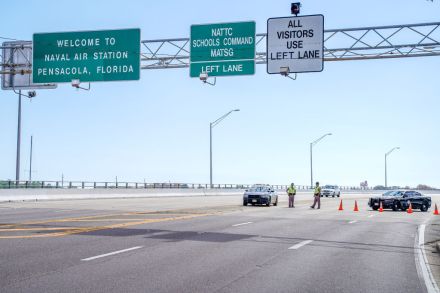
Observing the rocky relationship between the United States and Saudi Arabia is like watching two men balancing on a log in the middle of a fast-flowing river. Even when both manage to get what appears to be a secure foothold, you know it is only a matter of time before they go hurtling back into the water. The latest fall out between the two countries centers on the Saudi Air Force's Mohammed Saeed Alshamrani, who last week murdered three sailors and wounded eight others at Pensacola navy base before being shot dead himself. Amid initial reports that he may have acted in conjunction with a number of other Saudis, wild analogies were quickly drawn with the September 11 attacks on the Twin Towers and the Pentagon, carried out by mostly Saudi hijackers.

pensacola saudi

Portrait of the week: Bercow steps down, Hoyle steps up and an election begins

Home Sir Lindsay Hoyle, the Labour MP for Chorley and deputy Speaker since 2010, was elected Speaker by the Commons. His first words were: ‘No clapping.’ Nigel Farage, the leader of the Brexit party, proposed an electoral pact with the Conservatives, but only if Boris Johnson, the Prime Minister, repudiated the agreement on Brexit that he had made with the European Union. When this was not forthcoming, he said: ‘We will contest every single seat in England, Scotland and Wales.’ But he declined to stand for parliament himself (which he had done seven times before, without success). Philip Hammond, the former chancellor of the Exchequer, decided against standing as an independent in the election after all.

Jamal Khashoggi’s assassination was one of the century’s blackest farces

The story of Jamal Khashoggi’s death is well known. A prominent Saudi journalist, he walked into his nation’s consulate in Istanbul on 2 October 2018 to obtain divorce papers permitting him to marry his fiancée Hatice Cengiz. Eighteen minutes later, he was drugged and then murdered by a hit squad sent from Riyadh. After another six minutes, a bone saw brought in by a forensic doctor was heard chopping up the body, although the parts were never found. The killers, all senior intelligence figures, returned home in private jets. This act of savagery, which showed stunning contempt for diplomatic norms, rightly sparked an international storm.

Portrait of the week: A Supreme Court ruling, Labour’s messy conference and Donald Trump’s ‘impeachment’

Home Eleven justices of the Supreme Court ruled unanimously that in advising the Queen to prorogue parliament ‘the Prime Minister’s advice to Her Majesty was unlawful, void and of no effect’. This was because the prorogation had ‘the effect of frustrating or preventing, without reasonable justification, the ability of parliament to carry out its constitutional functions’. The court was not ‘concerned with the Prime Minister’s motive’. The court cited the Case of Proclamations (1611) to show that the limits of prerogative powers were determined by the courts. The judgment overturned the decision of the High Court that the prorogation should not even be considered by the courts.

The alliance between America and Saudi Arabia is over

The oil-for-security alliance between the US and Saudi Arabia, forged in 1945 when Franklin D. Roosevelt met King Abdul Aziz aboard a US Navy destroyer, is now over. Just look at the American reaction to the attack by Iran on Saudi oil facilities. Secretary of State Mike Pompeo duly called it an ‘act of war’; the Wall Street Journal told us the attack was ‘the big one’. But then nothing: President Donald Trump merely shrugged and declared the US energy independent. ‘We don’t need Middle Eastern Oil & Gas,’ he said. Industry experts warned that such an assessment was premature; but oil prices stabilised and the sound of war drums faded. We are witnessing the beginning of a new geopolitics in the Middle East.

The negotiator or Bolton Lite? Reading Robert C. O’Brien

From our US edition

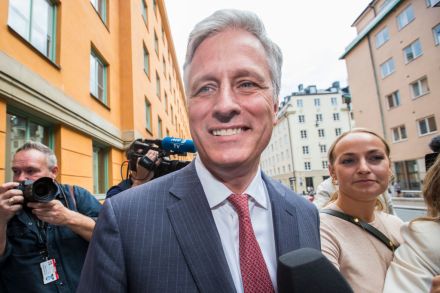
President Trump proudly unveiled a new national security adviser on Wednesday who looks the part: Robert C. O’Brien, the State Department’s special presidential envoy for hostage affairs. A tanned Californian, with a successful law career based in Los Angeles, O’Brien has spent time in mid-level State Department roles when not making his living in international arbitration. He is a comparatively unknown figure and so the question hangs in the air: is Trump’s new NSA a sober diplomat, 'Bolton Lite', or something else? O’Brien was not an immediate public contender for the job. But DC insider speculation proved fruitless. Purported favorites like belligerent ambassador Ric Grenell, realist Ret. Col.

Robert C. O’Brien

Why I prefer cows to humans

Gstaad   The cows are coming down, the cows are coming down, and I’m off to the Bagel. My Swiss neighbours have cut, raked and baled the grass that the sweet four-legged ones with bells around their necks will be eating all winter while indoors. They will parade through the town next week, and it will certainly be an improvement after the kind of tourists we’ve been getting of late. Give me four-legged beings any old day — and I really mean that. I’ll give you a brief example. Last week, when I was in the Gstaad local bank, a couple came in and went to the teller next to mine. As I had to wait for something complicated (gone are the days when one could send moolah with a simple name and address), I couldn’t help but overhear their conversation.

An oil price spike doesn’t mean a recession is on the way

An oil price surge from $60 to $72 per barrel, as happened after the drone attack on Saudi Arabia’s Abqaiq refinery caused a sudden 6 per cent cut to global supply, would once have been taken as a sure signal of economic troubles ahead. A 1990s study of postwar oil prices plotted against employment and other data by Professor Andrew Oswald of Warwick University showed that every spike in energy costs had shortly been followed by recession. The theory still held in 2008: even though the ‘Great Recession’ was attributed to financial mayhem, it came soon after a speculative oil peak of $147.

Robert C. O’Brien, Trump’s good soldier

From our US edition

With the appointment of Robert C. O’Brien to serve as national security adviser, Donald Trump will once more disappoint his America First backers. They were hoping that Ret. Col. Douglas Macgregor would get the nod. Instead, Trump has gone with a Republican establishment figure who views China as the biggest threat to American national security. As always, Trump was bullish on his new hire: 'I have worked long & hard with Robert. He will do a great job!' As Trump national security adviser number 4, O’Brien is expected to bring some calm to the roiling waters of the NSC, where its heads have repeatedly capsized, whether it's Michael Flynn, H.R. McMaster, or John Bolton.

robert c. o’brien

Emmanuel Macron could be the big loser from the Saudi drone attack

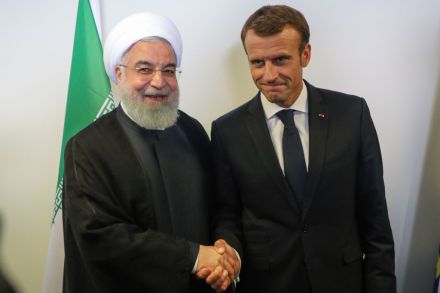
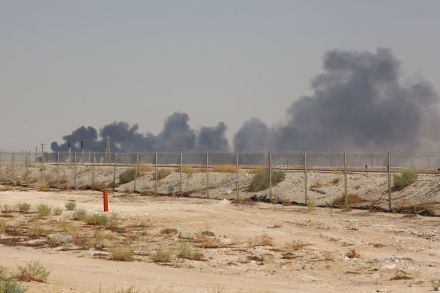
Saudis woke up last Saturday to find the crown jewel of their oil industry in smoke. The attack on the al-Abqaiq oil processing facility, allegedly conducted by cruise missiles and launched from a staging area inside Iran, resulted in the sharpest single-day increase in crude prices since the 1991 Gulf War. Saudi Arabia’s largest oil installation, however, wasn’t the only thing that went up in smoke last weekend. The volley of missiles screeching into Saudi airspace may have also ruined French president Emmanuel Macron’s attempt to deescalate tensions in the Persian Gulf and save the 2015 Iran nuclear deal from a slow and agonising death.

Tulsi Gabbard, conservative crush

From our US edition

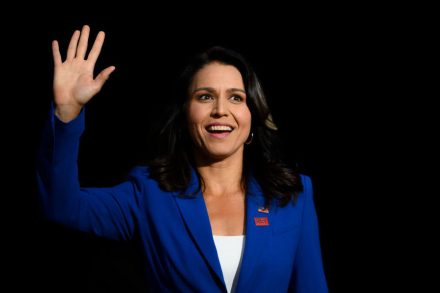
Conservative sadbois like two things: hot moms and Middle Eastern despots. Enter Tulsi Gabbard, the comely representative for Hawaii’s second congressional district. The single lock of gray hair tucked behind her ear and her array of red pants-suits give her an almost Palinesque allure. Her secret friendship with Bashar al-Assad and visceral hatred for the House of Saud brings us all back to our political puberty: hiding copies of The American Conservative under our beds, taking them out only when our parents weren’t home and fantasizing madly about the end of American Empire. Knowing only that, we can hardly blame an aging fogey who finds himself crushing on Rep. Gabbard.

tulsi gabbard

How drones are dramatically changing warfare

From our US edition

The attack on Saudi Arabia’s oil facilities by Houthi rebels using a fleet of 10 drones loaded with explosives has caused serious damage and will result in a global production cut of around five percent. The Houthi strike was the second aimed at Saudis oil facilities after a previous effort last month resulted in minimal damage. The Houthi drones were likely supplied by Iran, which has a large drone fleet and has been arming the rebel group in Yemen for years. Saudi Arabia is likely to launch retaliatory strikes against both the Houthis and Iran. Drones have become a new frontier in warfare allowing activist groups and nations access to a potent weapon that can be used for surveillance or as a remotely piloted bomb.

drones oil saudi arabia

Diplomacy by deference

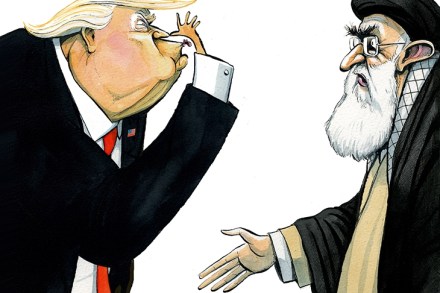
Iran’s seizure of a British-owned oil tanker transiting the Persian Gulf has let loose a fresh round of media war chatter. Yet should another Persian Gulf War actually occur, who would benefit? Not America, that’s for sure. The central theme of present-day US policy regarding Iran is deference. Nominally, US policy is made in Washington. Substantively, it is framed in Riyadh and Jerusalem, with the interests of the United States figuring only minimally in determining the result. I am not suggesting that President Donald Trump supinely complies with secret marching orders from Saudi Crown Prince Mohammad bin Salman and Israeli Prime Minister Benjamin Netanyahu.

Pompeo summons up fresh Iran sanctions from the Gulf

From our US edition

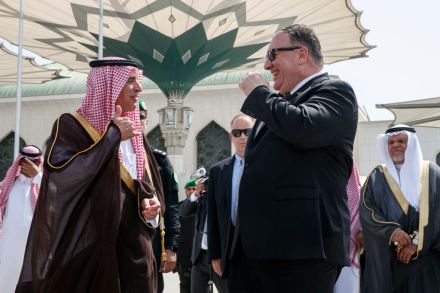
'First, I think it’s really important to understand that the Iranians are sowing disinformation,' Mike Pompeo told reporters Sunday en route to the Kingdom of Saudi Arabia and the United Arab Emirates  ('two great allies in the challenge that Iran presents.')'You’ll see too,' the secretary of state continued, 'that our campaign that began when President Trump took office will continue. On Monday, there’ll be a significant set of new sanctions.' Sure enough, this afternoon Trump announced intensified sanctions on Iran’s Supreme Leader.With that, the secretary was off, jetting from Joint Base Andrews to Riyadh and Abu Dhabi.

iran sanctions

Kenneth Starr’s new group makes Saudi Arabia and UAE uncomfortable

From our US edition

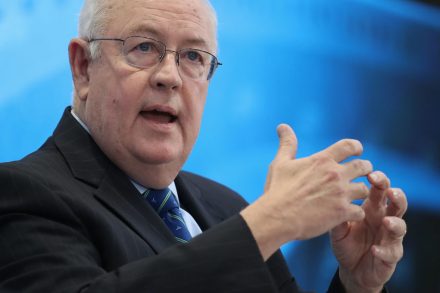
It fell under the radar when it was announced, but a new project with some major names from the political right have come together to fight fraud and corruption in the Middle East at a pivotal time for US relations in the tumultuous region. Launched last month at the National Press Club in Washington, the Global Justice Foundation includes former Clinton-era independent counsel Kenneth Starr and Sidney Powell, a former federal prosecutor who has been outspoken in calling out corruption in the Deep State’s war against President Donald Trump. The first case the group has highlighted is Tameer Holding, which they claim is among the largest-ever cases of real estate fraud in the Middle East.

kenneth starr

Iran trumps Trump

From our US edition

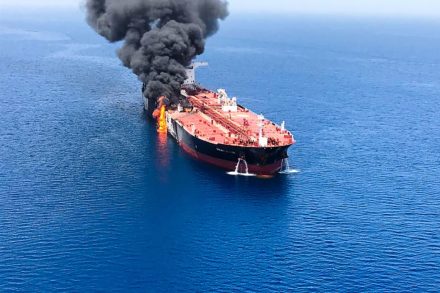
It’s not every day that global diplomat and ex-Swedish prime minister Carl Bildt makes a fool of himself on Twitter. On some days, Carl’s too busy to tweet. But on Friday, the Stockholm speculator went full wag-the-dog. https://twitter.com/carlbildt/status/1139117308838891520 ‘Are there state or non-state actors that have an interest in provoking a conflict between Tehran and the US? It is difficult to see any other motive behind the tanker attack.

oil iran

How tech oppresses women in developing nations

From our US edition

Tech liberates Western women, but it oppresses women in developing nations – not that the tech giants care. Across the globe, tools that empower American women are being reconfigured to cage and degrade women. From the recent innovation that can ‘out’ women in porn, to Saudi Arabia’s use of women-tracking apps, to the surveillance potential of China’s Uighur-tracking systems, women are being colonized by tech. From the washing machine to the smart phone, technology has allowed women to be in control of their own time and space. If we’re walking home late at night, being able to reach out and let a friend know where we are gives a sense of security.

tech oppresses women