Russian revolution

The dreadful fate of Queen Victoria’s granddaughters

‘Cela me revolte,’ wrote Queen Victoria in her diary in 1894 when her adored granddaughter Alexandra of Hesse announced her engagement to the Tsarevich Nicholas, ‘to feel that she has been taken possession of and carried away by those Russians.’ The sisters all look alike in the photos: uncomfortable dress, priceless jewellery, grimace, hair in bun  The queen was proprietorial about the four surviving daughters of her late daughter Alice, who had died of diphtheria, aged 35, when little Alix was only six. To lose one of those granddaughters to the Russians had been bad enough.

The Marxist writer who railed against Lenin

From our US edition

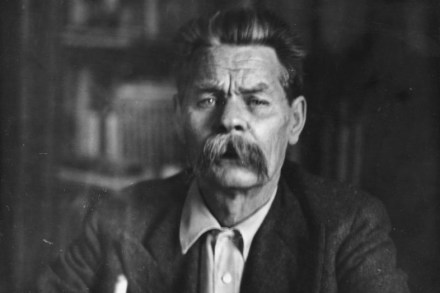
The writer Maxim Gorky edited the Menshevik newspaper New Life during its short run from May 1, 1917 to July 16, 1918, before Vladimir Lenin gave the personal order to shut it down. Gorky was a one-time friend of Lenin’s and a committed socialist (when Lenin gave the order to shut down New Life, he is reported to have said, “Gorky is one of us”), but he was also a frequent critic of the Bolshevists. In his column for the paper, which ran under the heading “Untimely” — because it focused on culture and morality rather than on practical matters of the revolution — he complained frequently about the politicking of party leaders and the stupidity of the masses.

Fall and decline

From our US edition

In December 1921, a twenty-two-year-old Ernest Hemingway, then the European correspondent for the Toronto Star, came across the oddest group of immigrants in history — the White Russians who had fled the Bolshevik Revolution. “Paris is full of Russians,” Hemingway told his readers. “They are drifting along in Paris in a childish sort of hopefulness that things will somehow be all right, which is quite charming when you first encounter it and rather maddening after a few months. No one knows just how they live, except by selling off jewels and gold ornaments and family heirlooms that they brought with them to France.” Hemingway neatly summarized the meat of this gripping latest book by Helen Rappaport, the author of The Romanov Sisters and Caught in the Revolution.

russian

Like eating 58 luxury chocolates: The Flying Lovers of Vitebsk reviewed

The Flying Lovers of Vitebsk begins with a phone conversation between a pretentious art critic and a man called Marc. This turns out to be Marc Chagall, the expressionist painter, who was born in Vitebsk in Belarus in 1887. It would have been helpful to include his name in the title. Emma Rice, the director, relies on her usual blend of dances, songs and pretty lighting to tell her tale. She has very low expectations of her audience. The sad characters cry. The happy characters laugh. The amorous characters dance rapturously. Everyone sings a lot. The script consists mainly of plot points written in clunky, airless prose. ‘It was the best exhibition I’ve ever had,’ announces Marc after an early success in Berlin.