Russia

A mole in the CIA: The Seventh Floor, by David McCloskey, reviewed

From our UK edition

David McCloskey, whose Damascus Station was a brilliant debut, has followed it in quick succession with a Russian-based story, Moscow X, and now The Seventh Floor. The pace of all three books is matched by the speed with which they have been produced; and for all The Seventh Floor’s strengths,the haste is beginning to show. Like the earlier two thrillers, it starts with a bang – or rather a crunch, when a Russian spy, called home peremptorily from Greece by his superiors, bites into a disguised cyanide capsule before the State security apparatus can question him. Almost simultaneously, another Russian spook, named Golikov, has a clandestine meeting in Singapore with Sam Joseph, a CIA officer known to us from Moscow X.

Why Trump bullies Nato

From our UK edition

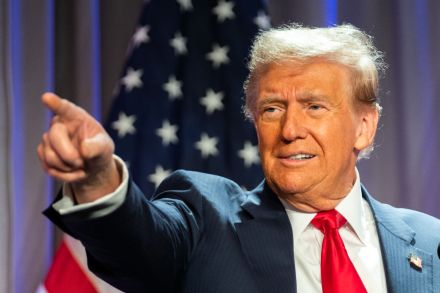
President-elect Donald Trump has in recent years talked about ‘buying’ Greenland. Until recently his comments attracted little attention but recently he shocked the world by threatening the use of economic coercion or military force to fulfil his wish. Male gorillas in the forests of west Africa engage in chest-beating to see off their rivals but Nato, to which the Kingdom of Denmark has belonged since its foundation in 1949, is meant to be a zoo park in which all the wardens sign up for a working partnership. What is behind this public breach in diplomatic etiquette? Americans can point to earlier times when they expanded their territory by purchase, not to mention conquest.

Give Trump’s realism a chance

From our UK edition

In one place at least, the reaction to Donald Trump’s threats to annex Greenland, Canada and the Panama Canal has been one of unequivocal joy. That is Russia – and for obvious reasons. Most Russians have long seen US language about the ‘rules-based order’ as a mere mask for US empire and US national interests. In their view, Trump has now removed the mask. Even more importantly, for the Russian establishment Trump’s words are a confirmation that he and Vladimir Putin see international affairs in very much the same way: as a matter of spheres of influence, transactionalism, and the ruthless defence of national interests.

Ed Miliband doesn’t understand how energy pricing works

From our UK edition

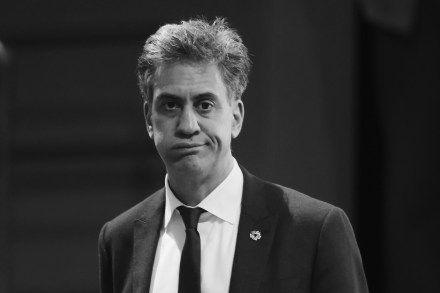
Are we about to find out the full foolishness of Ed Miliband’s policy of blocking licences for new oil and gas extraction in the North Sea? While it may come as a surprise to some, until New Year’s Eve Europe was still receiving gas supplies from Russia – not through the Nord Stream 1 pipeline which was sabotaged in 2022, but via an unlikely route through Ukraine. These taps have now been turned off, after an agreement for Russia to supply gas to Europe came to an end. That leaves the continent facing a similar situation, if less acute, to that which it faced in 2022. It must look elsewhere to make up for lost Russian gas.

Where have Russia’s Zs gone?

From our UK edition

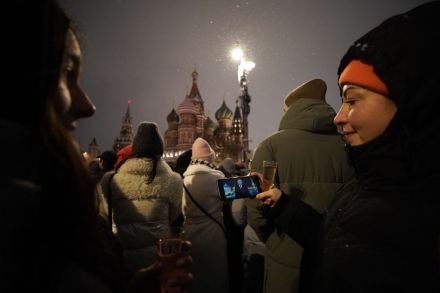
A social media post on 30 December: photographs of admittedly-splendid new year decorations in Moscow, archly captioned ‘back to 2021.’ The poster is alluding to the fact that obscene and extravagant references to Putin’s war in Ukraine – notably the letter Z, which has come to symbolise it – were notably absent from city decorations this new year. Moscow’s mayor, Sergei Sobyanin, has never seemed especially enthused about the war. He has done what the Kremlin required – diverted resources to help raise ‘volunteer regiments’; wallpapered the city with recruitment adverts; renamed Europe Square Eurasia Square – but he has avoiding too close an identification with the war, unlike so many of his less-secure counterparts across the country.

Vodka and the Beatles on a New Year’s Eve in Narva

From our UK edition

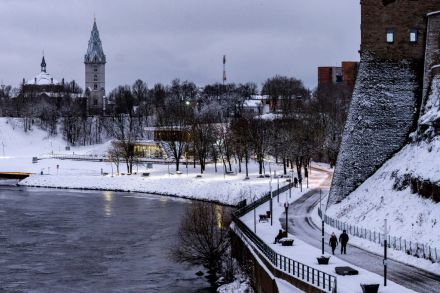
Narva, the northern Estonian city right on the border with Russia, has been much in the news of late. Not only is it where the Estonians expect any Russian invasion to take place – most of the rest of the frontier passes straight through the middle of Lake Peipus – but it has also become the scene of constant provocations from the Kremlin. There have been border-demarcation symbols snatched by night, local sat-nav jamming, and a host of psychological wind-ups. In the past month reports have come of a clunky Russian surveillance-zeppelin flying over Narva, sporting the letter ‘Z’. This city – in which an estimated 96 per cent of people speak Russian as their first language – is one we may well be hearing more of in the next few years.

Portrait of the week: Reform’s rising membership, peerages and an 11lb puffball

From our UK edition

Home Nigel Farage, the leader of Reform UK, said that the party now had more members than the Conservatives. On Christmas Day, 451 migrants crossed the Channel; another 1,000 arrived in the next three days but three died off Sangatte. Lord Mandelson, having failed to be elected Chancellor of Oxford University, was appointed ambassador to the United States. Sue Gray, the Prime Minister’s former chief of staff, was made a peer with 29 other Labour nominations; among the six Conservative nominations were Nigel Biggar, a retired Oxford professor who has identified some good aspects of the British Empire, and Toby Young, founder of the Free Speech Union and an associate editor of The Spectator.

The heterodox cabinet

As Inauguration Day approaches, the second Trump administration is staffing up. The president-elect’s picks are more or less what everyone expected, outside of a few curveballs. To be honest, the lack of outrage from Trump critics is the big surprise: apparently Trump Derangement Syndrome is a passing fever; even many who’ve argued against him seem to see some logic in the administration of outsiders he’s been signaling he’ll pick for years. In Washington, where almost nothing changes from administration to administration, these cabinet picks might actually be able to effect some meaningful disruption. In almost every role that matters, Trump has opted for a nominee who has been an extreme critic of the very body he or she is set to oversee.

cabinet

Why Ukraine killed Igor Kirillov

From our UK edition

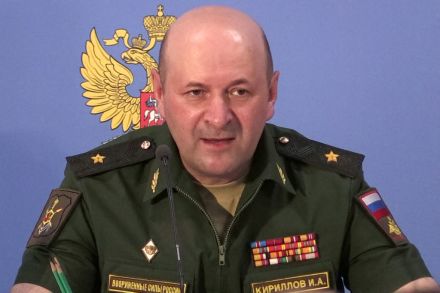
Another one down. This morning, Lt. Gen. Igor Kirillov, head of RKhBZ, Russia’s Radiological, Chemical and Biological Defence Troops, was heading out of his block of flats in Moscow’s Ryazansky Avenue, accompanied by his aide, when a bomb placed inside an electric scooter exploded. Both men were killed in the latest Ukrainian assassination operation targeting Russian officers accused of war crimes. The timing was hardly coincidental. The 54-year-old Kirillov has been under British sanctions since 2017, both because of RKhBZ’s activities (including supporting the Syrian use of chemical weapons) and also his role as a propagandist, spreading such falsehoods as the claim that Ukraine hosted secret western biological warfare laboratories.

The dreadful fate of Queen Victoria’s granddaughters

From our UK edition

‘Cela me revolte,’ wrote Queen Victoria in her diary in 1894 when her adored granddaughter Alexandra of Hesse announced her engagement to the Tsarevich Nicholas, ‘to feel that she has been taken possession of and carried away by those Russians.’ The sisters all look alike in the photos: uncomfortable dress, priceless jewellery, grimace, hair in bun  The queen was proprietorial about the four surviving daughters of her late daughter Alice, who had died of diphtheria, aged 35, when little Alix was only six. To lose one of those granddaughters to the Russians had been bad enough.

Trump is already the diplomat-in-chief

The United States only has one president at a time. Until January 20, that’s Joe Biden. But President-elect Donald Trump and his skeleton foreign policy team are waiting in the wings, plotting policy behind the scenes on issues — Ukraine, Gaza, Iran, Middle East peace — that have stymied the Biden administration for the last year. In fact, Trump is already influencing the respective calculations of allies, partners and adversaries before he even steps foot in the Oval Office. And Biden’s advisors seem perfectly fine with it. Trump fancies himself as a master negotiator, somebody who’s inherently skilled at poking, pressuring and sweet-talking the opposite side of the table until he gets what he wants.

diplomat

The deepening unpopularity of Zelensky

From our UK edition

Perhaps all political careers must end, inevitably, in failure. But few politicians have had careers as meteoric, as surprising, as consequential or as heroic as that of Ukraine’s President Volodymyr Zelensky. In just five years he has gone from TV comedian to victor of the biggest presidential landslide in his country’s history to inspiring wartime leader who impressed the world with his resolve and personal bravery. But now with the war entering its third (and probably last) winter, Zelensky’s extraordinary story as Ukraine’s leader has reached its final chapter.

Is Ukraine heading towards a Korean-style demilitarised zone?

From our UK edition

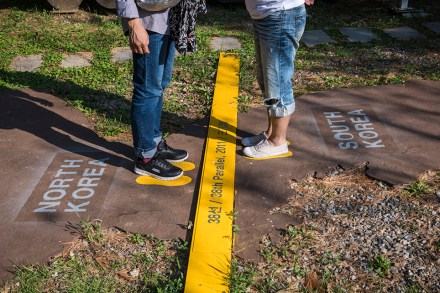
It is the strangest place, the demilitarised zone (DMZ) that separates South Korea from North Korea. It is simultaneously a historic battlefield, a sombre graveyard, a tourist honeypot full of coach parties from Seoul, and a Cold War frontier, hotly defended on either side. One minute you are looking at a kiddies’ funfair, or a shop that sells ‘souvenir North Korean money’, the next you are staring at endless barbed wire and monuments to failed North Korean defectors, shot dead as they attempted to cross the two-and-a-half-mile strip of landmines. Which itself has turned into an Edenic eco-haven, full of deer and eagles, as the humans have vanished.

How to negotiate with Russians

From our UK edition

Russians are notorious for an aggressiveness at the negotiating table. In 2017 I met a group of diplomats from eastern Europe who highlighted this. They made the point that western commentary understates, if anything, the Russian habit in official talks to insult and intimidate. Apparently Putinite finger-wagging is the least of it and street-language curses and threats are completely normal. Countries to the east of the river Elbe are still regarded in the Kremlin as Russia’s eternal zone of influence. But Russian politicians also know how to diversify their table manners. They can recognise an opportunity when they see one, and Vladimir Putin expects to deploy gentler manners with Donald J. Trump.

Russia’s sabotage campaign against the West

From our UK edition

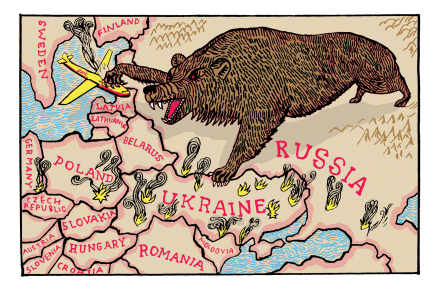
When a DHL cargo plane crashed while approaching Vilnius airport on Monday, killing one of the crew, it looked like technical failure, but given that Russia was believed to be behind a series of incendiary devices which ignited on DHL flights and in warehouses this summer, inevitably many feared Moscow’s hand. The suspicion is likely to be the point. In the past year, the Russians have stepped up their disruptive activities in Europe, from cyber-attacks to assassinations, with the apparent aim of generating chaos and a climate of fear as much as anything else.

Portrait of the week: Storm Bert, Israel-Hezbollah ceasefire and Putin gives cockatoos to North Korea

From our UK edition

Home A white paper outlined measures to counter economic inactivity (which had risen by September to 41.2 per cent among those aged 16 to 24): everyone aged 18 to 21 would be offered an apprenticeship, training, education or help to find a job; Jobcentres would be rebranded as the National Jobs and Careers Service. Rachel Reeves, the Chancellor of the Exchequer, said: ‘What I haven’t heard are many alternatives’ to the tax rises imposed by October’s Budget; she was speaking to the Confederation of British Industry. A petition on the parliament website, accusing Labour of breaking promises and calling for a general election, gathered more than 2.

Here’s what Putin wants from Ukraine

From our UK edition

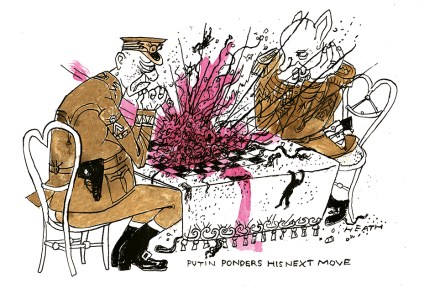
Donald Trump is still two months away from becoming the 47th president of the United States, and yet his return to the Oval Office in January has already provoked a flurry of policy U-turns by the White House and rising expectation, even in Moscow, of a deal to end the war in Ukraine. Elements of a potential settlement reportedly agreeable to President Putin emerged on Reuters today based on kite-flying suggestions by Russian officials. While there is nothing particularly new in the broad outline of Moscow thinking, the fact that Russian officials are pushing it out in some detail reflects an awareness in the Kremlin that with Trump in power, the potential for a deal that will satisfy Putin after 1,000 days of war might be on the cards.

Could Ukraine go nuclear?

From our UK edition

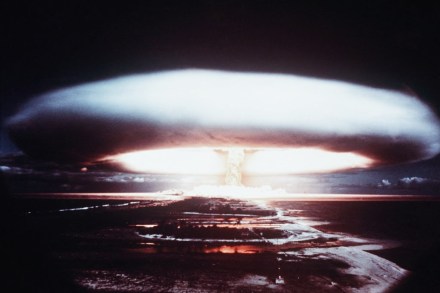
Should Ukraine have nuclear weapons? This is a question that was raised, a little insincerely, by President Zelensky recently as he discussed Nato membership and its alternatives. If Ukraine was not in Nato, Zelensky mused, the only alternative would be to look for protection of another kind: nuclear arms. A recent story in the Times said that Ukraine could make a ‘rudimentary’ nuclear bomb ‘within months’ if Donald Trump withdrew Ukraine’s military assistance. Russia has not used its nuclear weapons, but they have been the major reason no western power has directly intervened on Ukraine’s side. Ukraine had its own nuclear arsenal after the fall of the Soviet Union left it with a significant stockpile.

Could Trump save Ukraine?

From our UK edition

One thousand days into Vladimir Putin’s full-scale invasion of Ukraine, three facts seem to be evident. First, Russia is losing. It is using its soldiers like human ammunition, burning through its economic reserves and mortgaging its future to Beijing. Second, Ukraine is losing faster than Russia. Ukraine’s forces are beleaguered along a too-long front and increasingly reliant on what looks like press-ganging for recruits. The country’s energy infrastructure is 80 per cent damaged or destroyed. The third fact: Donald Trump's election is throwing all the old assumptions about the war into doubt. It is a sign of the odd times in which we live...

How Biden is preparing for a Trump presidency

President Joe Biden delighted Kyiv officials and war hawks — and infuriated the incoming Trump administration (and, separately, the Kremlin) — on Sunday by authorizing Ukraine to send long-range missiles into Russia. Ukraine had been begging for approval to conduct strikes deep into Russia with Army Tactical Missile Systems (ATACMs) for years, only to receive the go-ahead in the final months of Biden’s lame-duck presidency. The decision is being reported as a response to Russia importing 10,000 North Korean troops a few weeks ago, but the timing feels curious.

joe biden