Russia

Friends, Romans and Russians

From our UK edition

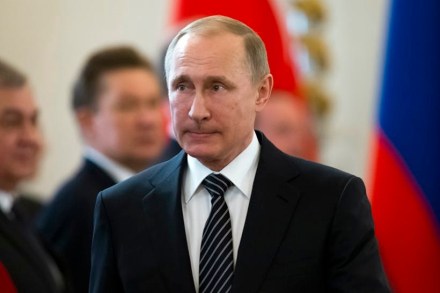
President Vladimir Putin, who still supports Bashar al-Assad in Syria, needs help if he wishes to be seen as a member of the civilised world. Rome might provide it. From 509 bc Rome had been a republic, controlled by a senate, consuls and people’s assemblies, all (it was argued) balancing each other out. During that period Rome mastered all Italy, defeated the powerful state of Carthage, and brought much of North Africa, France (Gaul), Spain, Greece and the Levant under its control. It did so not primarily because it was an aggressive, warlike state: so was every other state it faced in that dog-eats-dog ancient Mediterranean world. For all its triumphs, Rome suffered 90 military defeats in that time; the Celts (390 bc) and Hannibal (218-202 bc) nearly brought it to its knees.

Syria used to be Putin’s great asset. Now, it’s a huge liability

From our UK edition

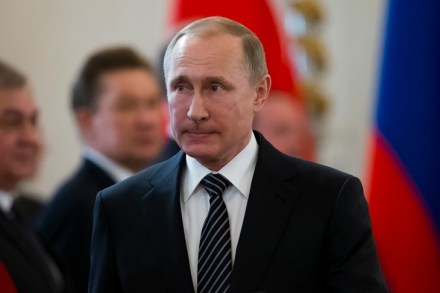
For Vladimir Putin, Syria has been the gift that kept on giving. His 2015 military intervention propelled Russia back to the top diplomatic tables of the world — a startling comeback for a country that had spent two decades languishing in poverty and contempt on the margins of the world’s councils. At home, the war took over as a booster of Putin’s prestige just as the euphoria over the annexation of Crimea was being eroded by economic bad news caused by low oil prices and sanctions. In the Middle East, Russia was able to show both friends and enemies that it was once again able to project power every bit as effectively as the Soviet Union had once done.

Our message to Assad: kill a lot more of your people, but nicely. And please spin it out

From our UK edition

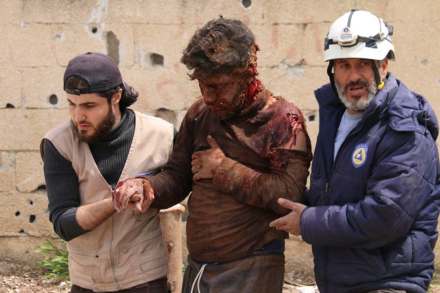
Let me take this opportunity to join with our Prime Minister and Foreign Secretary in commending President Trump’s swift and decisive military action against the Syrian government as being ‘appropriate’ — one of my favourite words and one which I like to use every day, regardless of whether it is appropriate to do so. The important thing was not of course the destruction of a few Syrian planes and, collaterally, a few Syrian children. The crucial point is that this moderate and judicious use of expensive missiles ‘sends out a message’ to President Assad. And the message is very simple. We will no longer tolerate Syrian children being killed by hugely unpleasant chemical weapons such as sarin or chlorine gas.

What the papers say: Did Boris bungle his first big test?

From our UK edition

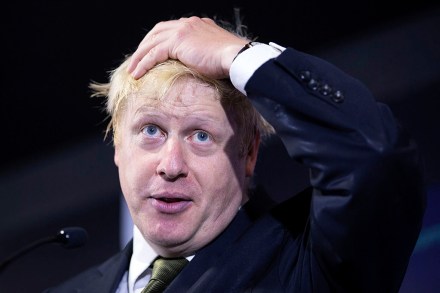
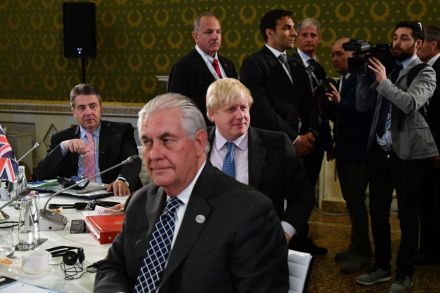
Boris Johnson fell flat on his face at yesterday’s G7 summit. Having called for tougher sanctions against Russia to punish the Kremlin for its support for the Assad regime in Syria, Boris laid the ground for the G7 to announce a firm crackdown. In the end, the G7 steered clear of any new sanctions, saying that it didn’t want to push Putin into a corner. So where does this leave Boris? Boris Johnson’s ‘first big foray into geopolitical diplomacy foundered’, says the Daily Telegraph. The paper says that there are some crumbs of comfort for Boris though. Despite the criticism being directed at the Foreign Secretary, Boris can claim some credit for ‘bringing the US more into line with Britain’s approach’.

Putin’s Syria problem

From our UK edition

For Vladimir Putin, Syria has been the gift that kept on giving. His 2015 military intervention propelled Russia back to the top diplomatic tables of the world — a startling comeback for a country that had spent two decades languishing in poverty and contempt on the margins of the world’s councils. At home, the war took over as a booster of Putin’s prestige just as the euphoria over the annexation of Crimea was being eroded by economic bad news caused by low oil prices and sanctions. In the Middle East, Russia was able to show both friends and enemies that it was once again able to project power every bit as effectively as the Soviet Union had once done.

The G7 proves too weak to hold Putin to account

From our UK edition

The G7 has failed to agree on any new sanctions on Russia following the Syrian regime’s use of chemical weapons last week. This is a blow to Boris Johnson, who has been pushing hard for targeted sanctions on Russian and Syrian military figures thought to be linked to last week’s attacks. But it is worth noting who blocked this push for new measures: the Italians and the Germans. Those who regularly say that the EU is the best way to stand up to Putin’s Russia and that Brexit is, therefore, a mistake, should reflect on this. The Syrian regime is a client of Russia’s; most of Assad’s military success in recent months has been down to Moscow’s help. Putin must, therefore, take responsibility for the Syrian government’s behaviour.

What the papers say: It’s time to crack down on council fat cats

From our UK edition

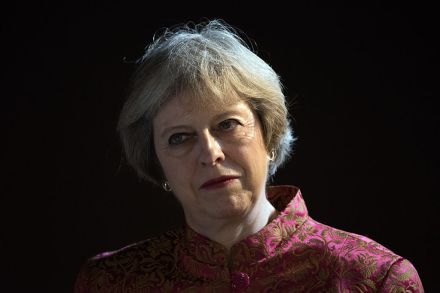
Theresa May’s £150,000 pay packet is dwarfed by that of many council employees up and down the country. Nearly 600 council staff now earn more money than the Prime Minister each year, and a report from the Taxpayers Alliance reveals that thousands of local authority employees earn six-figure sums. With many councils talking up fears about funding social care - and upping tax to pay for it - how much longer can these wages be justified? For many households facing rising council tax bills, the news that 539 council staff earn more than the PM will come as ‘a further gut-wrenching blow’, says the Daily Mail. The paper reports that nearly 2,500 council workers earn £100,000 a year or more - with Southwark alone handing 44 staff six-figure pay packets.

The enigma of the Trump-Putin story

From our UK edition

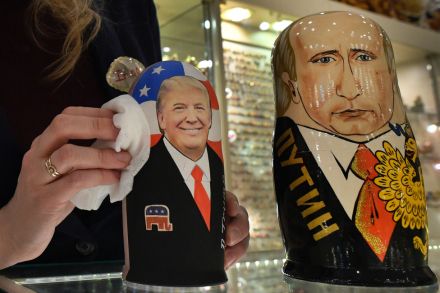
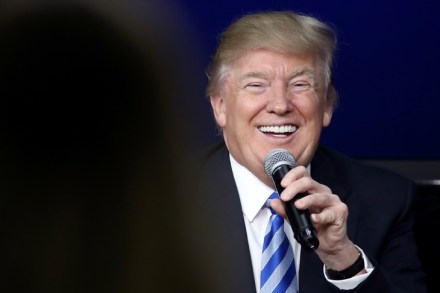
Donald Trump’s Washington is a city of many secrets, but no mysteries. So much about the Trump-Putin story remains unknown, and possibly will never be known. But the fundamentals have never been concealed. In order to help elect Trump as US president, Russian operatives engaged in a huge and risky espionage and dirty tricks operation. Trump and his team publicly welcomed and gratefully accepted help from WikiLeaks, widely regarded as a front for Russian intelligence. Trump surrounded himself with associates and aides, including a campaign chairman and a national security adviser, who had in the past received pay from Russian state TV and pro-Putin oligarchs.

Diary – 6 April 2017

From our UK edition

Donald Trump’s Washington is a city of many secrets, but no mysteries. So much about the Trump-Putin story remains unknown, and possibly will never be known. But the fundamentals have never been concealed. In order to help elect Trump as US president, Russian operatives engaged in a huge and risky espionage and dirty tricks operation. Trump and his team publicly welcomed and gratefully accepted help from WikiLeaks, widely regarded as a front for Russian intelligence. Trump surrounded himself with associates and aides, including a campaign chairman and a national security adviser, who had in the past received pay from Russian state TV and pro-Putin oligarchs.

Russia is a new front for radical Islam

From our UK edition

Moscow Russia’s REN TV, which published the first image of a person who planted a bomb on a train in St Petersburg’s metro, reported that the security services are not ruling out the possibility that his clothes and beard may have been a disguise used to fool the authorities. But since racial profiling is practised as a matter of course in Russia, it would seem peculiar for a would-be terrorist to dress up in an Islamic disguise, especially considering that there are even more police than usual out on the streets and in the metros of major Russian cities after the recent anti-corruption protests.

Ten killed in St Petersburg blast

From our UK edition

Ten people have been killed and dozens injured in an explosion on the St Petersburg metro. The blast happened onboard a train travelling between the Sennaya Ploshchad and Tekhnologichesky Institut stations in the city centre. Russian news agency Interfax said that at least 50 people were hurt. There are reports that the device which exploded was a nail bomb left in a briefcase on the train. The country's president Vladimir Putin, who was in St Petersburg at the time of the blasts, expressed his condolences for those caught up in the incident. Putin described the explosions as a 'possible terrorist attack'. He said: 'I have already spoken to the head of our special services, they are working to ascertain the cause of the blasts.

We should worry more about Putin’s Russia than Muslim fanatics

From our UK edition

Last week’s events in London raised a recurrent dilemma for journalists, including me. It is a huge story when a terrorist kills four people then is shot down in Palace Yard, Westminster. Yet dare we say how fortunate we are that since 9/11 Muslim terrorists have proved incapable of mounting an attack remotely as lethal as that on the Twin Towers? An intelligence officer told me recently that he worries far more about Russia than about Muslim suicidalists, and this must be the rational assessment. The public needs awakening to the menace posed by Vladimir Putin’s adventurism. Meanwhile, Khalid Masood’s dreadful deed reflects the flailings of a death cult.

Diary – 30 March 2017

From our UK edition

Last week’s events in London raised a recurrent dilemma for journalists, including me. It is a huge story when a terrorist kills four people then is shot down in Palace Yard, Westminster. Yet dare we say how fortunate we are that since 9/11 Muslim terrorists have proved incapable of mounting an attack remotely as lethal as that on the Twin Towers? An intelligence officer told me recently that he worries far more about Russia than about Muslim suicidalists, and this must be the rational assessment. The public needs awakening to the menace posed by Vladimir Putin’s adventurism. Meanwhile, Khalid Masood’s dreadful deed reflects the flailings of a death cult.

How Lenin manipulated the Russian Revolution to his own ends

From our UK edition

The centenary of the Russian Revolution has arrived right on time, just as the liberal democratic world is getting a taste of what it’s like to feel political gravity give way. In 2017, Lenin lives. ‘In many ways he was a thoroughly modern phenomenon,’ writes Victor Sebestyen in Lenin the Dictator, the kind of demagogue familiar to us in western democracies, as well as in dictatorships. In his quest for power, he promised people anything and everything. He offered simple solutions to complex problems. He lied unashamedly. He identified a scapegoat he could later label ‘enemies of the people’. He justified himself on the basis that winning meant everything….

High life | 23 March 2017

From our UK edition

A cloudless sky, crunchy spring snow, longer, warmer days. I’ve finally got in some good skiing, twisting around moguls like an arthritic champ. It’s all in the mind, as my old wrestling coach used to tell me. If you think the other guy’s better, you’re bound to lose to him. The same goes for the slope. If it scares you, stay in the club and have another drink. Otherwise, attack it with gusto and feel like a champ again. The same applies to the fairer sex. If you’re too nervous to speak to her, keep moving. We have four of the prettiest young women at The Spectator, all taken alas, and I’ve managed not to make a fool of myself with any of them (well, a tiny bit with one of them, but what the hell, no one’s perfect).

Up the revolution!

From our UK edition

From ‘The Russian revolution’, 24 March 1917: Even now, though the Revolution is young, the Russians have proved that they are fit and worthy to exercise the full benefits of self-government. In the highest spheres of government they had hitherto been always thwarted, but no one who has watched the progress and expanding influence of the Zemstvos and the Municipalities can deny that Russians have long displayed the capacity for local self-government. Such a Revolution as has just occurred was inevitably born in violence, but the violence was much less than might have been expected.

An epic for our times

From our UK edition

Trailing rave US reviews, fan letters from Yann Martel and Khaled Hosseini and a reputation as ‘Doctor Zhivago for the 21st century’, comes this outstanding historical saga from debut novelist Sana Krasikov. It’s a dazzling and addictive piece of work from an author born in the Soviet Republic of Georgia whose family emigrated to New York when she was eight. Not only is this novel accomplished and packed with believable detail and entertaining dialogue, it also feels curiously relevant, tip-toeing around the complicated relationship between the United States and Russia during and after the Cold War. Raised in 1930s Brooklyn, Florence Fein escapes a stifling existence with a seemingly glamorous job entertaining Soviet dignitaries on business trips to the US.

Poison, spies and lies

From our UK edition

 Washington DC   Roger Stone — political consultant, agent provocateur, friend and confidant of Donald Trump — arrives for lunch with a bodyguard in tow. ‘I’ve had way too many death threats,’ he explains. He says he’s recovering from poisoning by polonium, a radioactive substance used to kill the Russian defector Alexander Litvinenko in London. Litvinenko, he says, had ‘a much larger dose, probably done by British intelligence’. But the British government named the Russian agents responsible, I reply. ‘What was the proof?’ he asks. ‘It’s all mirrors. You know that.’ Stone blames his ‘poisoning’ on ‘the deep state’, a term that in Trumpworld means the intelligence community.

The Left’s great Russian conspiracy theory

From our UK edition

The chattering classes have officially lost it. On both sides of the Atlantic. Of course they'd been teetering on the cliff edge of sanity for a while, following the bruising of their beloved EU by 17m angry Brits and Hillary’s loss to that orange muppet they thought no one except rednecks would vote for. But now they’ve gone over. They’re falling fast. They’re speeding away from the world of logic into a cesspit of conspiracy and fear. It’s tragic. Or hilarious. One or the other. Exhibit A: this week’s New Yorker. It’s mad. It captures wonderfully how the liberal-left has come to be polluted by the paranoid style of McCarthyist thinking since Trump’s victory.

The Spectator podcast: Sturgeon’s second stab

From our UK edition

On this week’s episode we question whether Nicola Sturgeon might be tempted by a second independence referendum, consider the increasingly frosty relations between the USA and Russia, and ask whether city dogs are a menace to sheep. First, Theresa May was in Scotland this week for meetings with Nicola Sturgeon ahead of Scottish Tory conference. Thanks to Brexit, the Scots appear to have another opportunity to try and go it alone, but with support for independence still routinely polling below 50 per cent, will she pull the trigger?