Russia

I’ve found a lovely new home – in Russia

From our UK edition

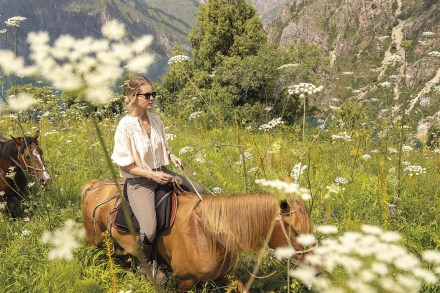
Staraya Russa. About two thirds of the way from Moscow to St Petersburg, in the historic Novgorod Oblast, once the eastern outpost of that much preferable European union, the Hanseatic League. Beautiful cathedral square, lakes and forests, timber-clad museum where Dostoevsky wrote The Brothers Karamazov. There’s a rather grand house for sale — about 5,000 sq ft, five beds, nice garden — for £143,416. From where I’m sitting, as terrified Tories insist the polls are narrowing and Magic Grandpa is within inches of winning, you’d be mad not to. From where you’re sitting, too, a little later in this awful week, if the Tories were right to be terrified. Staraya Russa. No infantile gender wokeist faddism there, believe me.

The ‘Russians’ of Brighton Beach

This article is in The Spectator’s November 2019 US edition. Subscribe here. At the very southern tip of Brooklyn, far from the hip avocado cafés and right before you hit the sea, there sits the neighborhood of Brighton Beach. Nicknamed ‘Little Odessa’ after the waterfront city in Ukraine, the area is home to primarily Russian-speaking immigrants from the former Soviet Union. It’s a jumble of identity. The immigrants are mostly Jews from Ukraine, hence the nickname, but also Russia, Belarus and the other Soviet republics. So what to call these people in America? In Russia, in Ukraine, in Belarus, our identity cards never described us as Russian, Ukrainian, Belarusian. We were just Evrei, Jews.

brighton beach russians

Exclusive: Dominic Cummings’s secret links to Russia

From our UK edition

This week, a malign foreign actor invaded the British media, spreading disinformation and seeking to meddle in the general election. A malevolent force exploiting our democracy to advance its own interests. That’s right, Hillary Clinton has been in London. She has another book to promote, The Book of Gutsy Women, and she’s again talking about male authoritarian-ism, why Britain needs to be ‘forward-looking’ (i.e. not leave the European Union), and the menace of Russia. It doesn’t take an intelligence expert to decode her message: ‘I didn’t win in 2016 and I’m still livid.

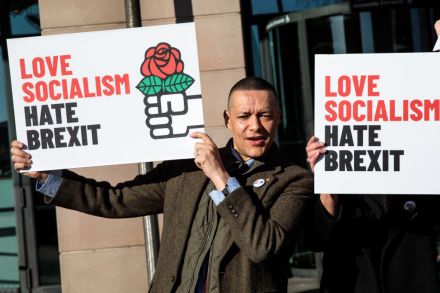
Clive Lewis’s Russia confusion

From our UK edition

When Labour was hit by a cyber attack this morning it wasn't long before the finger of blame was pointed at Russia. Corbynista MP Clive Lewis suggested it was 'dirty tricks'. He wrote: But Mr S. recalls Lewis hasn't always been so quick to jump to conclusions. In the aftermath of the Salisbury poisonings in 2018, when damning evidence suggested Russia was to blame, Lewis was one of those calling for 'a level, calm head'. He told his local paper: 'This attack on British soil was completely outrageous. When we know beyond reasonable doubt then I think the response needs to be proportionate and strong. But we need to make sure on issues like this that the information is right.' Lewis has since clarified his comments in relation to today's attack. Time for a 'level, calm head' perhaps?

Hysteria about Russian interference is becoming a joke

From our UK edition

The murder of Russian defector and fierce Putin critic Alexander Litvinenko was a radioactive wake-up call to many in the West about the nature of the Russian regime. Eight years later, the annexation of Crimea and subsequent invasion of eastern Ukraine in 2014 were also rightly condemned around the world. It's safe to say these events – and the ongoing allegations of Russian meddling in western democracies – have made it an interesting time to be a Russian in this country. Yet while this topic has been a rich vein of material for a comedian, the extent of hysteria about Russia’s involvement in every aspect of our daily lives is now getting beyond satire. We’re told the Russians were responsible for Brexit.

The Russian attempt to swing 2020 for Trump

American intelligence is warning of a concerted effort overseen by Russian president Vladimir Putin to swing next year’s presidential election in favor of Donald Trump. Reports prepared by the National Security Agency and the Central Intelligence Agency are unequivocal, detailing a two-pronged Russian strategy: sow dissension inside America by manipulating social media and attack the voting process itself. There is also concern that a new front could be opened in this battle by the use of deepfakes, videos generated using artificial intelligence that recreate the image and voice of anyone, who can be made to say and do anything. The leading Democratic candidate, for example, could be seen to suggest pardoning Patrick Crusius, the man who killed 22 people in El Paso in August.

russian

Is this the only Catherine the Great review to mention the age gap?

Catherine the Great is the vanity project of star and executive producer Helen Mirren. One way you can tell it's a vanity project is that Mirren is 74 years old while the character she plays — at least at the start of the mini-series — is 33 years old. Now I don't wish to be ungallant. It's certainly true that Mirren has always scrubbed up well. She is a very handsome woman and she knows she is a handsome woman, as reflected by all those films and TV series earlier in her career — not, though, The Queen, as far as I recall — when she appears with her kit off.

catherine the great

The age of invective

A healthy democracy requires free speech and free assembly, tolerance for different views, and peaceful transfers of power among contending parties. It requires honest elections, where losers do more than concede. They acknowledge the legitimacy of the outcome, as Al Gore did in a highly-contested 2000 president contest. These fundamental pillars of liberal self-government are now being challenged across Europe and the United States. It is crucial to recognize the challenge, call out the worst violations, and push back. Vitriolic, white-hot rhetoric now paints political opponents not as loyal opponents but as traitors, determined to overthrow not only specific leaders but the democratic system itself.

invective

Pulling US troops out of Syria will prove to be the right decision

This article is in The Spectator’s November 2019 US edition. Subscribe here. Whenever neoconservatives and liberals chant in unison about American policy in the Middle East — as when they championed the Iraq invasion, for example, or the overthrow of Colonel Gaddafi in Libya, or the thwarted attempt to topple the Assad regime in Syria — it means we are being told a pack of lies. Par for the course is the hysterical response to President Donald Trump’s ‘betrayal’ of the Kurds in the wake of Turkey’s invasion of northern Syria. Turkey’s goal was to repatriate at least two million of 3.6 million Syrian refugees inside Turkey in a border zone controlled, until the invasion began, by the US-allied, Kurdish-led Syrian Democratic Forces.

turkey syria kurds

Felix Sater, superspy

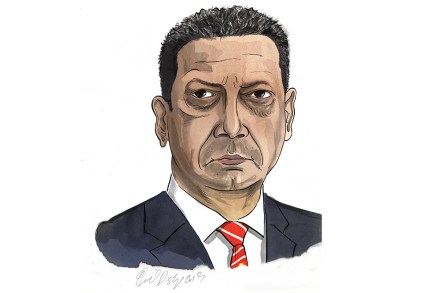
Felix Sater is mad at me. He telephones to say that after I called him a ‘mobster’ in The Spectator, his kids were unable to leave the house. ‘Paul, I am not a mobster. Do I know mobsters? Absolutely, lots of them...I was involved with all five [New York crime] families...I’ve known a lot of unsavory characters in my life...I was never a mobster.’ As one of the characters he’s known is Donald Trump — they were in business together — Sater’s life became public property as soon as Trump announced he was running for president. Since then, the labels stuck on Sater include: violent felon, stock fraudster, money-launderer, FBI informant, spy, double agent, triple agent, the Russian Mafia’s connection to the Trump Organization.

felix sater

Back to the drawing board for gay media’s pederasty pushers

One night in November 2013, I found myself slurping down sturgeon caviar and salted pork with about a dozen slobbering, obese, gay oligarchs at a dacha outside Moscow. I’d been sent to Russia to report on the lives of gays there under a vague, new law that prohibited ‘LGBT propaganda' and a journalist invited me out to the country for the night to meet some local influential homosexuals. At first, the scene had all the trappings of the odd and colorful situations that I lived to write about. I’d been in Russia about a week and after speaking to activists, American expats, journalists and everyday Russians, a more nuanced portrait of the country emerged than the hysteria Western media pumped out for months over the anti-gay legislation.

pederasty gay

Why did you participate in the FaceApp challenge?

Perhaps you’re one of the millions of people who decided to download FaceApp and participate in the '#FaceApp Challenge.' If so, I have just one question: why?As Kristina Libby, a writer for Popular Mechanics, notes, 'You may have unintentionally given access to your likeness to malicious actors … to do whatever they want with that content … for life.'FaceApp burst onto the scene in 2017, when it was downloaded more than 80 million times. Thanks to the 'make yourself older' challenge, the app is in recent days experiencing a renaissance of sorts. By using neural networks to simulate what an individual looks like as they age⁠ (adding wrinkles, sagging skin, yellowing teeth, etc), the company behind the app encourages users to share their images.

faceapp challenge

Mitt Romney called. He wants his foreign policy back

‘Eight years ago, I argued that Russia was our number one geopolitical adversary,’ Mitt Romney said this week in his maiden Senate speech. And who could forget Barack Obama’s burn in the televised presidential debate of 2011? ‘The 1980s are now calling to ask for their foreign policy back,’ Obama said. Four years later, with the US and Russia at loggerheads and Russian ‘collusion’ a theme of the 2016 election, Romney was vindicated. But it was Obama who was the outgoing president.

mitt romney

Maria Butina: jailed for the crime of being Russian

Maria Butina was not a Russian spy. She did not trade sex for influence. She had nothing to do with any clandestine espionage activity, nor did she ever hide her dealings with American political officials. In fact, she unabashedly loved America – perhaps to a fault. But she’s currently sitting in jail, and almost no one will say a word in her defense. The ordeal to which she’s been subjected is jaw-dropping for its recklessness and absurdity. There’s so much that’s wrong with this case, it’s almost hard to know where to begin. Maybe the most obnoxious malfeasance was committed by moralizing media members who saw fit to cast judgment on her personal romantic decisions – as if that was ever remotely any of their business in the first place.

maria butina

Russia and China are watching Iran, and waiting

As US-Iran tensions rise, America’s sway over its allies is falling. Last week, Major General Christopher Ghika, the British officer second in command of anti ISIS forces in Iraq and Syria, publicly contradicted the rationale behind American troop build-ups in the region. US Central Command was quick to rebuff Ghika, but Britain’s Ministry of Defence supported him. Other NATO allies, too, are balking at confrontation with Iran. Spain has withdrawn a frigate from the American-led, Gulf-bound carrier group. Federica Mogherini, the EU’s High Representative for Foreign Affairs, has called for ‘maximum restraint’. If there is to be a third Gulf War, the US might find itself with fewer friends than in the last.

iran

Mr Pompeo goes to Sochi

On Tuesday, Secretary of State Mike Pompeo traveled to Sochi to meet Russian Foreign Minister Sergei Lavrov and, of course, Russian President Vladimir Putin. It was the first such trip by a high-ranking US official since the release of the Mueller report in April. During his meeting with Lavrov, Pompeo struck a conciliatory tone while calling for cooperation more between the United States and Russia. If that sounds familiar that’s because it is. US-Russia diplomatic efforts always start pushing in the same direction, then something goes wrong. ‘We have differences.

mike pompeo putin sochi

The great folly of US-Russia misunderstandings

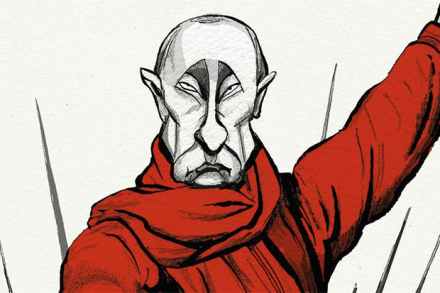
Vladimir Putin is not nearly as clever as American liberals like to believe. His meddling in the 2016 election backfired, after all — spectacularly. The Kremlin did not expect Donald Trump to win, just as no one in Washington did. If Trump had lost, the Kremlin’s gambit would have paid off: stolen emails would have damaged America’s newly elected president as she faced a hostile, Republican-controlled House and Senate. She could hardly expect cooperation from them on Russian sanctions or anything else, and the GOP could be counted on to react to another Democratic administration by adopting an oppositional foreign policy.

us-russia

Do we need a Brexit inquiry?

From our UK edition

How will future generations revisit the Brexit years? Through what glass will we be seen? This spring and, I suspect, for many seasons to come, we’re in too deep for any attempt to stand back and assess. There has been much talk (particularly by some of my fellow Remainers) of a review along the lines of the Chilcot inquiry after the Iraq war; but even with the benefit of time, Brexit will not lay itself open to easy analysis. Almost by their nature, inquiries start from the assumption that something went terribly and avoidably wrong, and culprits in the form of guilty individuals or badly mistaken assumptions are sought.

Robert Mueller pursued every avenue to dispel the collusion myth

If the report released Thursday proved anything, it was that Robert Mueller and his team of prosecutors had an extremely broad mandate to investigate all conceivable angles of the theory that Donald Trump and/or his associates colluded with Russia to influence the 2016 election. Page after page of the report describes the elaborate lengths Mueller went to ascertain whether there was any truth to this theory. And using the most emphatic language available to a prosecutor working within the confines of his legal remit, Mueller concluded with virtual certainty: No. There was no collusion.

robert mueller collusion impeachment

The Mueller report: if not collusion, then obstruction?

From our UK edition

When Robert Mueller was appointed as Special Counsel, ‘[t]he President slumped back in his chair and said, “Oh my God. This is terrible. This is the end of my presidency. I’m fucked.”’ This is just one of the beautifully telling vignettes from the Mueller report, published today. Another is Donald Trump saying to his lawyer, Michael Cohen, that the campaign for the presidency was a great ‘infomercial’ for the Trump Organization’s hotels and real estate. In these pages, Trump is the man we always supposed him to be – crude, crass, a candidate and a president who ignores the rules out of a mixture of bombast and ignorance.