Russia

Is Trump’s unified Republican front fracturing over Russia?

For the most part, President Trump hasn’t had to worry too much about the loyalty of his fellow Republicans on Capitol Hill. Sure, he needed to make a trip to the other side of Pennsylvania Avenue to pressure a few Republican holdouts to support his “big, beautiful” package of tax cuts and spending cuts, but the rank-and-file has tended to blindly follow whatever the White House wants.  Yet over the last several days, a slight divide has emerged between Trump and Republicans – or more specifically, Trump and Senate Republicans – on Ukraine and Russia policy.

russia republican

J.D. Vance makes nice with Munich

It was an emollient J.D. Vance who showed up at the Munich Leaders Meeting in Washington, DC. Gone was the Vance who dissed the Europeans in Munich on February 15 by complaining that they were practicing censorship of political views and who met with a representative of the far-right Alternative für Deutschland party. Gone was the Cerberus who barked at Ukrainian President Volodymyr Zelensky on the Oval Office on February 24 that he had exhibited a dismaying lack of gratitude toward America for its assistance to his beleaguered nation. Gone was the Ohio senator who declared in July 2024 that he didn’t give a fig about Ukraine’s fate and was more interested in pursuing an Asia First policy.

jd vance
biden russia

Biden has learned nothing from his foreign-policy experience

Historically, ex-presidents spend their golden years on the speaking circuit, writing their memoirs or planning for the inauguration of their presidential libraries. What they don’t do is lash out at their successors when they disagree with a policy or decision. Joe Biden, however, has no intention of keeping quiet. A little more than three months after vacating the White House, Biden is unencumbered from conventional decorum and feels free to speak his mind. Last month, he gave his first post-presidency speech in Chicago, where he blasted the Trump administration for taking a sharp hatchet to the federal workforce, including the Social Security Administration.

A mammoth 100 days of Trump’s America First foreign policy

One hundred days into the second Donald Trump presidency, his presence in the Oval Office represents the largest sea change in US foreign relations since the end of the Cold War.  Within the space of fewer than four months, Trump has forced Ukraine to deal with reality, by delivering hard truths about what ending the war will require. He has deployed J.D. Vance to shock the international system, with tough messages to our allies in Europe and Asia. Trump’s declaration of a litany of cartels as foreign terror organizations has kicked off a redirection of our relationship with Mexico, Panama and the Western hemisphere. His close relationship with Israel, a clear break with Joe Biden’s approach, has shifted expectations for the Middle East.

foreign

My DC bunker

Washington, DC My office this week has been the Starbucks on Capitol Hill. Any random subscriber to my Substack can get a half-hour with me if they book a slot. I do this a lot when I travel and oddly, given the rot of this rotting world, I rarely come away with the feeling that here were 30 precious minutes I’ll never see again. I often want to spend an hour or two. And no one yet has killed or even attacked me. A leftist policy wonk did show up without an appointment, but he just wanted to talk about Ezra Klein. One of this week’s characters was a Russia expert at a foreign policy thinktank, who seems to really know his stuff. He filled in important nuances ofthe Prigozhin coup. Yevgeny Prigozhin never meant to overthrow Vladimir Putin, he said.

curtis yarvin dc

Donald Trump, Putin and the Concert of Arabia

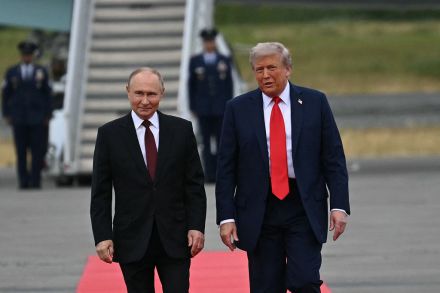
For Donald Trump and Vladimir Putin, it’s a case of “Today Ukraine, tomorrow the world.” In their much-hyped phone call this week, the Russian leader didn’t seem to give much away: a step toward a sort-of ceasefire, a prisoner swap, and a few other odds and ends. But Putin knows that Trump wants much more than just an agreement on the Donbas. Settling the most significant conflict in Europe since World War Two is merely a prelude to a much bigger deal in the Holy Land — a truly historic arrangement that could fulfill Trump’s desire to be seen as a legendary peacemaker. That’s why Trump sent Steve Witkoff, his special envoy to the Middle East, to Moscow last week to pre-negotiate with Putin.

putin

Trump’s foreign policy isn’t unprincipled

"He [Donald Trump] sees American leadership as merely a series of real estate transactions." That was the verdict of the Democratic senator Elissa Slotkin following the President’s address to Congress. Trump 2.0 does, admittedly, have the appearance of a political version of The Art of the Deal, in which the Donald is prepared to leverage a bilateral compact with every country in the world — so long as the price is right. There are no friends in The Art of the Deal, no permanent friends anyway, only prospective business associates. Ukraine wants the flow of armaments to resume? Sign over the rights to half your natural resources.

Trump

The problem with putting US nukes in Poland

Nuclear weapons are becoming a major issue for Poland. One way or another, both the Polish president and prime minister want their country to host tactical nuclear weapons as a deterrent against President Putin’s Russia. In the latest — but by no means the first — statement on this issue, President Andrzej Duda revealed that he recently discussed stationing American tactical nuclear weapons in Poland with Keith Kellogg, the US special envoy for Ukraine. In an interview with the Financial Times, Duda said: “I think it’s not only that the time has come, but that it would be safer if those weapons were already here.

Will Putin give peace a chance?

At a summit meeting in Moscow, Ronald Reagan was asked about his basic approach. He famously answered, “Here’s my strategy on the Cold War: we win, they lose.” Vladimir Putin has the same strategy for Ukraine. That is certainly his first response to President Trump’s offer to mediate an end to the war and bring a reluctant Ukraine to the negotiating table. If “we win, they lose” is Putin’s final response, then the war cannot end without Ukraine’s surrender or Russia’s collapse. Putin’s initial reply, filled with his maximalist demands, indicates he is still committed to the conquest of his neighbor, whose independence and sovereignty he has long rejected.

putin

‘I had two jobs: to run the country and to survive’: an interview with President Trump

From the moment you enter Donald J. Trump’s Oval Office, you are surrounded, not by staff or Secret Service, but by presidents. In his second term, he has chosen to envelop himself in Americana to an unprecedented degree. He faces Franklin D. Roosevelt whenever he sits at his desk. Looking back are Teddy Roosevelt, Lincoln, McKinley, Polk, Jackson, Jefferson, and alone among them as a non-president, Franklin. Ronald Reagan looks over his shoulder for every decision he makes. “We took them out of the vaults. We have incredible vaults of things,” he tells me. “They have 3,900 paintings.” It’s a roster of the greatest American leaders assembled in an oval around him in their most sterling depictions. They serve as motivation.

Why Putin could reject a ceasefire

With all the good news coming out of the Jeddah talks about a 30-day ceasefire in Ukraine, there’s only one question that needs to be answered: Will President Putin be interested in any kind of deal right now? President Trump is convinced that Putin wants peace. But if the Russian leader truly wants to end his war, will he do so on America’s terms, or will he wait until he achieves one of his main objectives — the total subjugation of the four provinces in eastern Ukraine that he claimed to have annexed in the first seven months of the invasion? At a ceremony in St. George’s Hall at the Kremlin in September 2022, Putin declared that Russia now had four new regions: Donetsk, Luhansk, Kherson, and Zaporizhzhia.

Putin

Why Europe needs to take the Putin threat more seriously

Russia’s war on Ukraine presages a dire future for all of Europe unless Vladimir Putin’s military is decisively defeated. That is the powerful and persuasive argument advanced in Keir Giles’s new book. To appreciate fully the importance of his contentions, you must acknowledge not only Giles’s own status as a supremely well-connected senior fellow at the famed Chatham House think tank in London but even more so the all-star cast of international military luminaries who have publicly endorsed his analysis: the now-retired US generals John Allen and Ben Hodges, UK general David Richards, Australian general Mick Ryan, plus former Estonian president Toomas Hendrik Ilves. Giles’s assertions thus should be taken with the utmost seriousness.

Giles

Will Trump’s pause of Ukrainian military aid force Zelensky to the negotiating table?

The decision couldn’t have come as a surprise to Ukrainian president Volodymyr Zelensky. And if it did, then his capacity to read the room is even worse than imagined. Last night, the Trump administration paused all US military aid to Ukraine. The move came after an extremely tumultuous few weeks, which started on February 19 when Zelensky claimed that Trump was living in a Kremlin-orchestrated disinformation bubble. Trump wasted no time howling back by calling Zelensky a dictator because he canceled elections during a time of war. The spat accelerated on Friday, when the two men, egged on by Vice President J.D.

ukraine military aid pause

All along Trump’s aim has been to dispose of Zelensky

So much for the flurry of visits by European leaders such as French president Emmanuel Macron and British prime minister Keir Starmer this past week to placate, prod and persuade President Donald Trump to back Ukraine in its struggle against Russia. Kyiv’s lonely battle to retain its sovereignty just got a little bit lonelier as Trump, Vice President J.D. Vance and Ukrainian president Volodymyr Zelensky quarreled during a televised meeting in the Oval Office.   The president and his deputy disrespected Zelensky by telling him that he was being “disrespectful.” It ended with Zelensky being dismissed from the White House, a canceled press conference and the mineral deal with Ukraine in a state of inanition.  https://www.youtube.com/watch?

zelensky
ukraine zelensky white house

Zelensky’s White House visit goes off the rails

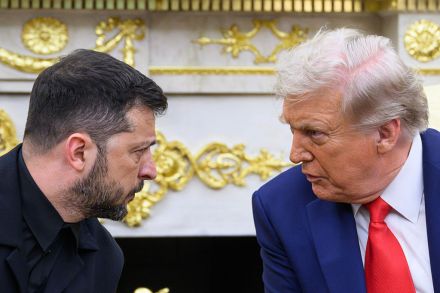
An astonishing flare-up in the White House between President Donald Trump, Vice President J.D. Vance and Ukrainian president Volodymyr Zelensky appears to have thrown any Russia-Ukraine peace deal — or US-Ukraine mineral deal — into jeopardy. Trump met Zelensky at the door of the White House where he gave reporters a thumbs up ahead of his arrival. However, the mood quickly turned sour when they sat down for initial remarks ahead of talks and a press conference where the pair were expected to sign the US-proposed minerals deal with Ukraine. Sat in the Oval Office, Trump was accompanied by key members of his team including J.D. Vance and Marco Rubio.

Europe learns the facts of MAGA life

Panic, even hysteria, has swept Europe. Its leaders realize that in their case Trump should be taken literally as well as seriously, and he seems prepared to trade the transatlantic alliance for détente with Russia. Eight decades of good times for the continent might be coming to a dramatic end. Trump demonstrated contempt for Europe during his first term; however, his top aides moderated his antagonism, carrying on policy as normal. While out of office he evidently decided never again. Today he is firmly driving American foreign policy. As ever, Trump’s tactics are often dubious, even counterproductive. However, only shock treatment is likely to cause Europe to take its own defense seriously.

europe

The Caviar Kaspia experience

It’s been almost 100 years since Arcady Fixon, a refugee from the Russian Revolution, opened the doors of Caviar Kaspia on Place de la Madeleine in Paris, and began beguiling his fellow exiles and the crème of Paris society with the exotic flavors of his homeland: shiny black caviar, served with blinis or potatoes, and ice-cold vodka. After being passed down through family hands, Caviar Kaspia is now owned by the charismatic entrepreneur Ramon Mac-Crohon, who has ensured that the place has lost nothing of its prerevolutionary charm: Nicolas II’s seal sits alongside antique porcelain in a display cabinet, and Nicolas Swertschkoff’s Troika, depicting a Russian horse-drawn sledge moving through snow, still hangs in the dining room.

Were Trump’s comments about Ukraine a gambit to bring about peace?

If you have a pot that needs stirring, call Donald Trump.  A couple of days ago Trump made heads explode when he claimed (among other things) that Volodymyr Zelensky was “a dictator without elections” who started the war with Russia. “Oh my God, can you believe it? Trump doesn’t know Russia was the aggressor in the war. What an idiot.” The BBC, CNN and many other news sites ran little “fact-checking” stories. Politicians dusted off their most serious faces to deplore Trump’s lies/exaggerations (the US hasn’t given $350 billion to Ukraine, it was “only” $180 billion or whatever)/historical ignorance. “Ukraine did not start the war,” CNN intoned. “Russia started the war by invading Ukraine in 2022.

trump ukraine

Donald Trump speaks his ‘Truth’ about Ukraine in attack on Zelensky

Negotiating peace can be delicate business. Often it requires a steady hand, a strong sense of compassion and inexhaustible patience. As Senator George J. Mitchell, a leading architect of the Northern Ireland peace process, once wrote, "In order to understand what another person is saying, you must assume it is true and try to imagine what it might be true of." Cockburn was reminded of Mitchell's sage words when he read the president's Truth Social post about Volodymyr Zelensky on Wednesday afternoon, which he republishes in full below: Think of it, a modestly successful comedian, Volodymyr Zelenskyy, talked the United States of America into spending $350 Billion Dollars, to go into a War that couldn’t be won, that never had to start, but a War that he, without the U.S.

donald trump zelensky

What does Putin want from America?

If I had a penny for every time I have been told that Russian president Vladimir Putin only wants respect. Or that he is only interested in eastern Ukraine. Or that if Kyiv is only denied NATO membership, then he will call off the tanks. Well, in the last seven days President Donald Trump has given Putin all this and more. And, though it is still early days, so far the war is showing no sign of slowing. And what has the man who wrote The Art of the Deal asked for in exchange for all this diplomatic largesse? Absolutely nothing. In fact, the only substantive demand Trump has made so far is of the Ukrainians. Last week Washington sent Treasury secretary Scott Bessent to Kyiv with an extraordinary demand.

Putin